
Timing is everything when it comes to growing potatoes. Plant too early, and frost can damage emerging shoots; plant too late, and heat stress may reduce tuber formation and overall yield. For home gardeners and small-scale growers aiming for a bountiful, flavorful harvest, understanding the precise window for planting potatoes—based on climate, variety, and soil conditions—is essential. Unlike many vegetables that thrive in warm summer months, potatoes are cool-season crops with specific temperature requirements during germination and tuber development. This guide breaks down the science and practice behind scheduling your potato planting for maximum success, whether you're cultivating russets for roasting or fingerlings for salads.
Definition & Overview
Potatoes (Solanum tuberosum) are starchy, underground tubers belonging to the nightshade family. Originating in the Andes Mountains of South America over 7,000 years ago, they were domesticated by indigenous peoples before spreading globally through European exploration. Today, they rank among the world’s most important food crops, valued not only for their caloric density but also for culinary versatility—from mashed and roasted to fried and baked.
Botanically, what we eat is a modified stem called a tuber, which stores energy for the plant. These grow beneath the surface as the plant develops aboveground foliage. While often associated with fall harvests, potatoes require a carefully timed spring planting to mature properly before summer heat sets in. The ideal planting period balances soil warmth, frost risk, and daylight length—all critical factors influencing sprouting, root establishment, and tuber set.
Key Characteristics of Potato Growth Cycles
- Temperature Sensitivity: Seed potatoes sprout best when soil temperatures reach 45–55°F (7–13°C). Tuber initiation slows or stops above 80°F (27°C).
- Frost Tolerance: Emerged foliage can withstand light frosts (32°F/0°C), but repeated freezes harm growth.
- Daylight Influence: Most varieties are short-day plants, forming tubers as days begin to shorten after summer solstice.
- Growing Season Length: Early varieties take 70–90 days; mid-season, 90–110 days; late-season, 110–135+ days.
- Soil Preference: Loose, well-drained loam with pH between 5.0 and 6.0 reduces scab disease risk.
When to Plant: Regional Guidelines and Timing Windows
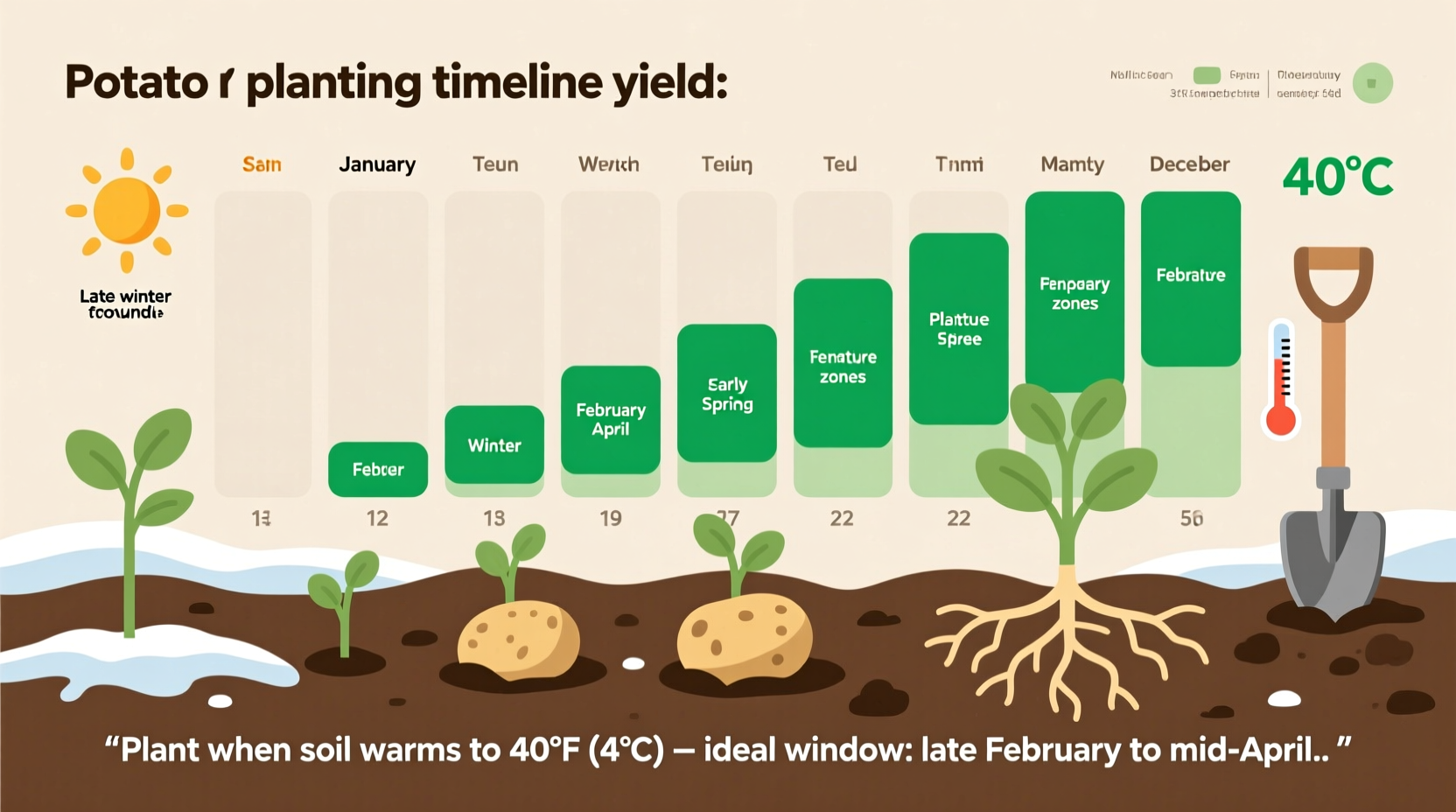
The single most reliable indicator for planting potatoes is **soil temperature**, not calendar date. However, general rules based on local climate zones offer practical starting points.
Cold Climates (USDA Zones 3–5)
In regions like the northern Midwest, New England, and Canada, the ground thaws slowly. Planting typically occurs between **late March and mid-April**. Wait until the soil reaches at least 45°F at a 4-inch depth. Use a soil thermometer for accuracy. A common rule of thumb: plant around two to three weeks before the last expected frost date, allowing plants to emerge just after the worst cold has passed.
Moderate Climates (USDA Zones 6–7)
In areas such as Virginia, central California, and Oregon, planting begins in **early to mid-March**. Soil warms earlier due to milder winters. Gardeners here can safely plant once the soil is workable and no longer waterlogged. Many opt for successive plantings—one in early spring for new potatoes, another in late summer for a fall crop.
Warm Climates (USDA Zones 8–10)
In southern states like Texas, Florida, and coastal California, traditional spring planting risks summer heat. Instead, potatoes are often planted in the **fall or winter**—typically **October through December**—for a late winter or early spring harvest. This reverse schedule avoids high soil temperatures that inhibit tuber formation.
“Planting potatoes isn’t about the calendar—it’s about syncing with the soil. If your thermometer reads below 45°F, hold off. Cold, wet soil leads to rotting seed pieces.” — Dr. Linda Peterson, Extension Horticulturist, University of Maine Cooperative Extension
Practical Usage: How to Prepare and Plant for Success
Knowing when to plant is only half the equation. Proper preparation ensures strong emergence and healthy tuber development.
Step-by-Step Planting Guide
- Choose Certified Seed Potatoes: Never use grocery-store potatoes, which may carry diseases or be treated with sprout inhibitors. Purchase certified disease-free seed stock from reputable suppliers.
- Chitting (Optional but Beneficial): Place seed potatoes in a cool, bright location (50–60°F) 2–4 weeks before planting. This encourages pre-sprouting, leading to faster emergence and potentially higher yields.
- Prepare the Bed: Till soil to a depth of 8–10 inches. Incorporate compost or well-rotted manure to improve drainage and fertility. Avoid fresh manure, which increases scab risk.
- Planting Depth and Spacing: Cut larger seed potatoes into chunks (each with 1–2 eyes), let them cure for 24 hours, then plant 3–4 inches deep, 12 inches apart, in rows spaced 30–36 inches apart.
- Hilling: When plants reach 6–8 inches tall, mound soil around the base, leaving the top leaves exposed. Repeat every 2–3 weeks until hilling reaches 8–12 inches. This prevents sun exposure (which causes greening) and encourages more tuber production along the buried stem.
Pro Tip: In heavy clay soils, consider raised beds or straw mulch planting (also known as “mulch culture”). Lay seed potatoes on cleared ground and cover with 12 inches of straw. Tubers form inside the mulch layer, making harvest easier and reducing pest pressure.
Variants & Types: Matching Variety to Planting Schedule
Not all potatoes are created equal. Choosing the right type for your climate and desired harvest time dramatically affects outcomes.
| Variety Type | Days to Maturity | Best Use | Recommended Planting Window | Notes |
|---|---|---|---|---|
| Early Season (e.g., 'Yukon Gold', 'Red Norland') |
70–90 days | New potatoes, boiling, salads | Spring (after last frost) | Harvest young for tender skin; susceptible to heat stress if planted late |
| Mid-Season (e.g., 'Kennebec', 'Carola') |
90–110 days | All-purpose (roasting, mashing) | Late spring | Balanced yield and storability; good disease resistance |
| Late Season (e.g., 'Russet Burbank', 'Katahdin') |
110–135+ days | Baking, long-term storage | Early to mid-spring | Require full season; excellent shelf life when cured properly |
For warmer zones, select heat-tolerant varieties like 'Sebago' or 'Desiree'. In cooler regions, prioritize cold-hardy types such as 'German Butterball' or 'Purple Viking'.
Comparison with Similar Root Crops
Potatoes are sometimes confused with other underground edibles, but their cultivation differs significantly.
| Crop | Planting Time | Soil Temp Requirement | Tuber Formation Trigger | Storage Life |
|---|---|---|---|---|
| Potato | Early spring or fall (depending on zone) | 45–55°F | Shortening days + cool soil | 6–12 months (cured) |
| Sweet Potato | Late spring, after last frost | 65°F minimum | Warmth and long days | 3–6 months |
| Jerusalem Artichoke | Early spring | 40°F | Minimal day-length sensitivity | Several weeks (perishable) |
| Turnip/Rutabaga | Summer (for fall harvest) | 40–95°F | Cooling temps + short days | 2–5 months |
Unlike sweet potatoes—which are tropical vines requiring warm soil and long growing seasons—potatoes need cooler conditions during key developmental stages. Misidentifying these needs leads to poor yields or complete crop failure.
Practical Tips & FAQs
Q: Can I plant potatoes after the last frost?
A: Yes, and in many cases, it's advisable. While seed potatoes can tolerate cold soil, emerged foliage benefits from avoiding hard freezes. Planting 2–3 weeks before the last frost allows roots to establish before top growth appears.
Q: What happens if I plant too early?
A: In cold, saturated soil, seed pieces may rot before sprouting. Additionally, premature emergence followed by a hard freeze can kill young shoots, delaying growth and reducing final yield.
Q: Can I grow potatoes in containers?
A: Absolutely. Use large pots (at least 15 gallons) filled with potting mix. Plant one seed potato per container, and add soil or mulch as the plant grows. Container gardening offers better temperature control and easier harvest.
Q: How do I know when the soil is warm enough?
A: Insert a soil thermometer 4 inches deep in the morning. Take readings over 2–3 days. Consistent readings above 45°F indicate readiness. Alternatively, test soil workability: if it crumbles easily, it’s dry and warm enough.
Q: Should I water after planting?
A: Only if the soil is dry. Overwatering newly planted seeds invites rot. Once sprouts appear, maintain consistent moisture—about 1 inch per week—but avoid soggy conditions.
Q: Can I grow a second crop in summer?
A: In zones 6 and colder, yes—plant a second round of early varieties in late June or July for an autumn harvest. In warmer zones, summer planting fails due to heat; instead, focus on fall planting for winter harvest.
Checklist: Pre-Planting Readiness
- ✅ Last frost date confirmed
- ✅ Soil temperature ≥ 45°F at 4-inch depth
- ✅ Seed potatoes chitted (optional)
- ✅ Garden bed prepared and amended
- ✅ Row markers or stakes ready
- ✅ Mulch or compost on hand for hilling
Expert Insight: Case Study – Extending the Harvest Window
A backyard gardener in Zone 5B (Indiana) achieved a six-month potato harvest by staggering plantings:
- April 1: Planted 'Red Norland' for early June harvest (new potatoes).
- May 15: Planted 'Kennebec' for late August harvest (main season).
- July 1: Planted 'Yukon Gold' under shade cloth to mitigate heat; harvested in October.
By selecting appropriate varieties, adjusting planting times, and using organic mulch to regulate soil temperature, this grower maintained a continuous supply without refrigeration. The key was aligning each planting with seasonal temperature curves and protecting developing tubers from summer heat.
Summary & Key Takeaways
Maximizing potato yield and quality hinges on precise timing rooted in local conditions. The best time to plant potatoes is when soil temperatures consistently reach 45–55°F, typically 2–3 weeks before the last frost in spring—or in fall/winter for warm climates. Choose varieties based on your region’s growing season length, and prepare soil thoroughly to support healthy tuber development.
Remember:
- Use certified seed potatoes, never grocery-store ones.
- Chitting improves sprout vigor and field emergence.
- Hilling is non-negotiable for maximizing yield and preventing greening.
- Heat above 80°F halts tuber formation—time plantings to avoid peak summer.
- In warm zones, reverse the calendar: plant in fall, harvest in spring.
Final Advice: Keep a garden journal. Record planting dates, soil temps, variety performance, and harvest notes. Over time, you’ll refine your ideal planting window for your microclimate—turning guesswork into guaranteed results.