The modern wardrobe thrives on flexibility—on pieces that transition seamlessly from morning errands to evening drinks, from home lounging to impromptu work meetings. Two dominant fashion trends have risen to meet this demand: athleisure dresses and casual knits. Both promise comfort and style, but when it comes to true versatility, one may outshine the other in practicality, adaptability, and long-term wearability. Understanding their strengths, limitations, and how they integrate into diverse lifestyles is essential for making informed choices in today’s fast-evolving fashion landscape.
The Rise of Comfort-Driven Fashion
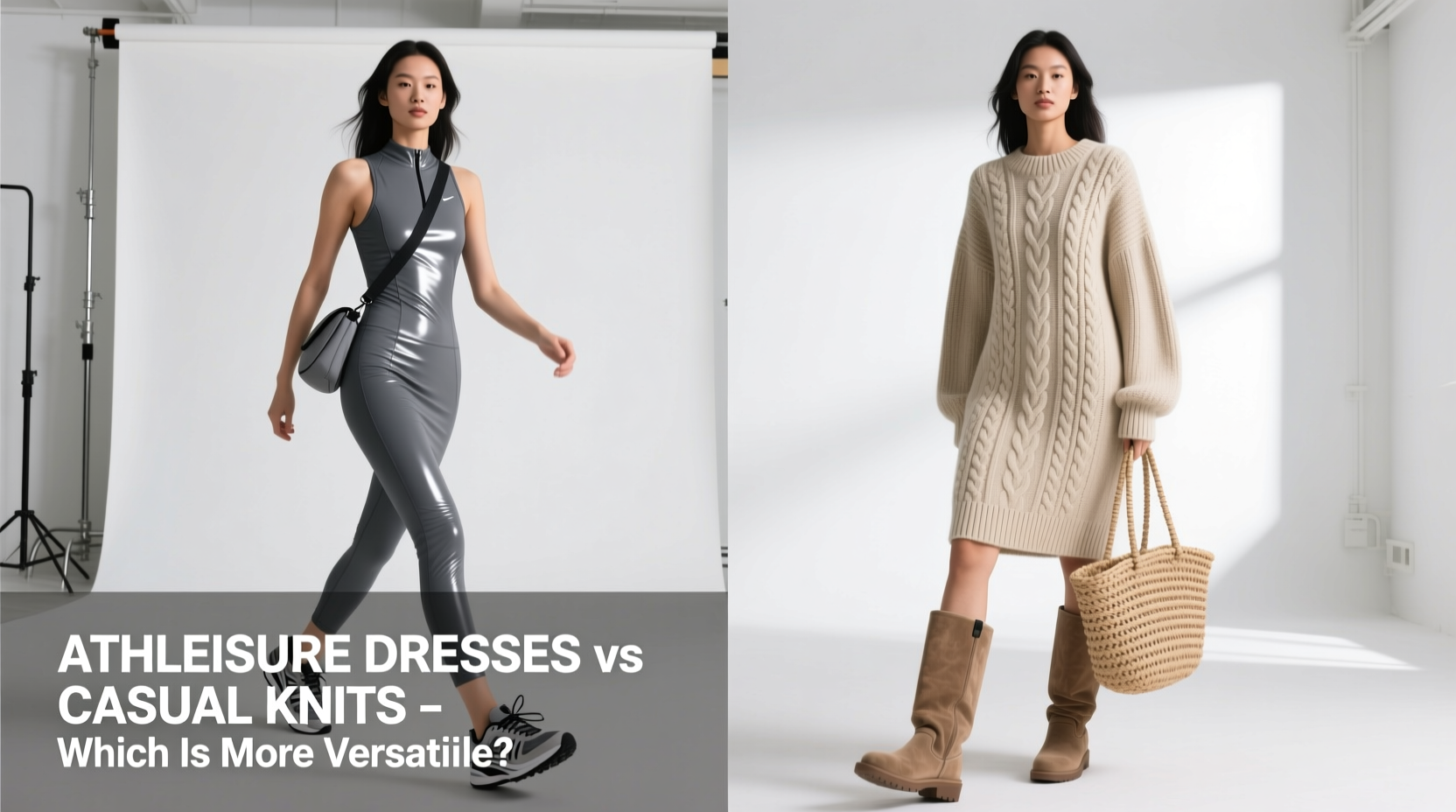
Over the past decade, the line between activewear and everyday clothing has blurred significantly. The global shift toward remote work, hybrid lifestyles, and wellness-centric values has redefined what we expect from our clothes. We no longer want to choose between looking polished and feeling comfortable. This cultural pivot gave rise to two key categories: athleisure dresses—hybrid garments blending athletic elements with dress silhouettes—and casual knits, soft, relaxed sweaters, cardigans, and knit dresses rooted in timeless textile tradition.
Athleisure dresses often feature moisture-wicking fabrics, stretchy trims, built-in bras, or sporty zippers, borrowing design cues from yoga pants and performance tops. Casual knits, by contrast, emphasize texture, drape, and warmth, typically made from cotton, wool, cashmere, or sustainable blends like TENCEL™ lyocell. While both prioritize ease, their applications differ in subtle but meaningful ways.
Defining the Categories: What Sets Them Apart?
To assess versatility, we must first understand what each category entails.
Athleisure Dresses
These are full-length garments designed with athletic inspiration. Think jersey-knit sheath dresses with racerback details, wrap-style midi dresses with thumbhole sleeves, or tunic-length styles paired with leggings. They’re engineered for movement, often using synthetic blends (polyester, spandex, nylon) for durability and shape retention. Many include functional elements like zip pockets, adjustable straps, or breathable mesh panels.
Casual Knits
This broader category includes loose-fitting cardigans, cropped pullovers, slouchy turtlenecks, and knit dresses made from natural or semi-synthetic fibers. Their appeal lies in tactile comfort and seasonal adaptability. A chunky oatmeal-colored cardigan can be thrown over a tank in spring or layered under a coat in winter. Unlike athleisure, casual knits rarely prioritize performance; instead, they focus on aesthetic cohesion and emotional comfort.
Tip: When evaluating versatility, consider not just how many occasions a piece fits, but how easily it adapts across seasons, settings, and styling approaches.Versatility Showdown: Functionality Meets Flexibility
Versatility isn’t just about wearing something frequently—it’s about whether a garment can serve multiple roles without compromising style or function. Let’s break down five critical factors: adaptability, layering potential, occasion range, care requirements, and longevity.
1. Adaptability Across Settings
Athleisure dresses excel in active environments. Wearing one to a weekend hike, then transitioning to brunch with a denim jacket and sneakers, feels natural. However, they struggle in formal or even smart-casual office settings unless explicitly styled up with tailored outerwear and elevated accessories.
Casual knits, particularly fine-gauge cardigans or minimalist turtlenecks, offer greater stylistic neutrality. Paired with tailored trousers, they read as professional; worn over a slip dress, they add bohemian flair. This chameleon-like quality gives knits an edge in urban environments where transitions between roles happen rapidly.
2. Layering Potential
Athleisure dresses are standalone pieces. Their fitted cuts and technical fabrics make them poor bases for additional layers. You wouldn’t typically wear a blazer over a racerback tank dress without disrupting the silhouette.
In contrast, casual knits thrive as layering components. A lightweight merino sweater works under a trench coat; an open-knit cardigan drapes perfectly over a collared shirt. This modularity allows knits to extend their usefulness across temperature shifts and social contexts.
3. Occasion Range
| Occasion | Athleisure Dress Suitability | Casual Knit Suitability |
|---|---|---|
| Gym or Yoga Class | High – Designed for activity | Low – Not intended for movement |
| Casual Day Out | High – Effortless and functional | High – Easily dressed up or down |
| Workplace (Casual Office) | Moderate – Only if styled carefully | High – With proper pairing (e.g., with blazer) |
| Dinner or Social Event | Low – Often too sporty | High – Luxe knits elevate instantly |
| Travel | High – Wrinkle-resistant, stretchy | Moderate – Can wrinkle, vary by fiber |
The table reveals a crucial insight: while athleisure dominates in motion-oriented scenarios, casual knits cover a wider spectrum of non-athletic events. For individuals whose lives aren’t centered around fitness, knits provide broader utility.
4. Care and Longevity
Athleisure dresses require frequent washing due to sweat exposure and synthetic materials prone to odor retention. Over time, elastic degrades, colors fade, and pilling occurs—especially at friction points like underarms. Many lose their shape after repeated machine washes.
Casual knits, particularly those made from natural fibers, demand gentler care but reward it with longevity. Hand-washing or delicate cycles preserve structure, and proper storage prevents stretching. High-quality knits can last years with minimal signs of wear, especially if rotated regularly.
“Versatility isn’t just about how many ways you *can* wear something—it’s about how many ways you *will* wear it over time. That’s where material integrity and emotional attachment come in.” — Lena Torres, Sustainable Fashion Consultant
Real-World Example: One Week, Two Wardrobes
Consider Sarah, a freelance designer living in Portland, Oregon. Her week includes client Zoom calls, school drop-offs, coffee dates, and weekend hikes. She decides to test two approaches:
- Week 1: Builds her outfits around a navy athleisure dress—worn three times, mostly for errands and outdoor walks. On day four, she attempts to wear it to a virtual meeting but feels underdressed. By day six, it needs washing and isn’t ready for a last-minute gallery visit.
- Week 2: Centers her looks around a beige ribbed-knit turtleneck and a charcoal cardigan. The turtleneck pairs with jeans for errands, under a blazer for video calls, and with a silk skirt for dinner. The cardigan layers over dresses, tanks, and shirts. Both pieces are worn four times each, require only one wash, and receive compliments for their “effortless polish.”
Sarah concludes that while the athleisure dress served its niche well, the knits offered more consistent value across her varied schedule. The ability to mix, match, and restyle without laundering after every use made them more practical overall.
Actionable Checklist: Choosing What Works for You
Not all lifestyles are the same. Use this checklist to determine which trend aligns best with your daily rhythm:
- Do you engage in physical activity more than three times a week? → Lean toward athleisure.
- Are most of your social or work interactions indoors or digitally? → Prioritize knits.
- Do you travel frequently and need wrinkle-resistant fabrics? → Athleisure has advantages.
- Do you value timeless aesthetics over trend-driven designs? → Knits typically age better.
- Is easy care a top priority? → Synthetics (athleisure) tolerate frequent washing better than delicate knits.
- Do you live in a climate with distinct seasons? → Knits layer more effectively year-round.
- Are you building a capsule wardrobe? → Knits integrate more easily with existing staples.
Expert Insight: The Psychology of Wearability
Fashion psychologists note that perceived versatility is influenced by more than functionality—it’s also tied to confidence. A piece must not only fit various situations but make the wearer feel appropriate within them.
“When people say a garment is ‘easy to wear,’ they often mean it reduces decision fatigue. Knits tend to do this better because they don’t carry strong contextual baggage—unlike athleisure, which still signals ‘workout mode’ to many observers.” — Dr. Miriam Chen, Behavioral Researcher at the Institute for Style & Identity
This perception gap matters. Even if an athleisure dress could technically be styled for dinner, the mental hurdle of overcoming its “gym” association may deter wear. Knits, especially in neutral tones, avoid such cognitive dissonance.
Step-by-Step Guide: Maximizing Versatility in Your Closet
Whether you lean toward athleisure or knits, follow these steps to extract maximum utility from either category:
- Assess Your Weekly Routine: Map out your typical activities—meetings, exercise, social events, travel. Identify which settings dominate.
- Choose Base Colors Wisely: Opt for neutrals (black, gray, camel, navy) that pair with multiple bottoms and outer layers.
- Invest in Quality Over Quantity: One well-made knit or durable athleisure piece outperforms three cheaper versions in both wear frequency and longevity.
- Test Styling Combinations: Before purchasing, visualize at least three different outfit combinations for the item.
- Evaluate Post-Wear Satisfaction: After wearing, ask: Did I feel confident? Was it comfortable? Would I reach for it again tomorrow?
- Rotate and Rest: Allow knits to air out between wears; let athleisure dry fully to prevent odor buildup.
FAQ: Common Questions About Athleisure and Knits
Can I wear an athleisure dress to the office?
Yes, but only in very casual workplaces. Pair it with structured outerwear like a wool blazer, ankle boots, and minimalist jewelry to neutralize the sporty vibe. Avoid styles with visible logos, mesh inserts, or compression features.
Are casual knits suitable for warm climates?
Absolutely. Lightweight knits in cotton, linen, or bamboo blends offer breathability and sun protection. Look for open weaves, short sleeves, or cropped lengths to stay cool while maintaining coverage.
How do I keep my athleisure dress from looking dated?
Stick to classic silhouettes—solid-color shift or sheath styles—rather than trendy cuts like cut-outs or exaggerated hoods. Focus on fabric quality; high-spandex content with UV protection and odor resistance extends relevance.
Conclusion: Why Casual Knits Hold the Edge
While athleisure dresses serve a valuable purpose—particularly for active individuals seeking streamlined dressing solutions—they remain contextually limited. Their strength lies in performance, not adaptability. Casual knits, by contrast, operate as foundational wardrobe elements capable of bridging gaps between comfort and elegance, seasonality and spontaneity.
Versatility isn’t solely about comfort or convenience; it’s about sustained relevance. A $120 athleisure dress worn eight times over a year offers less return than a $90 knit sweater worn twenty times across seasons. Beyond economics, knits foster creativity in styling, reduce laundry burden, and align with slower, more intentional fashion practices.
If your life involves more sitting than sprinting, more conversations than cardio, and more transitions than treadmills, casual knits are likely the more versatile choice. That doesn’t mean eliminating athleisure entirely—but rather positioning it as a specialist tool, not a wardrobe cornerstone.
💬 What’s your go-to versatile piece? Share your favorite athleisure or knit staple in the comments and help others discover new ways to blend comfort with style.