For nearly a decade, celestial motifs, planetary pendants, and astronaut charms have dotted fashion runways, influencer feeds, and boutique displays. What began as a niche fascination with cosmic aesthetics evolved into a full-blown jewelry movement—blurring the line between science fiction and wearable art. But as 2024 unfolds, a quiet shift is taking place. The once-ubiquitous astronaut charm has vanished from new collections. Meteorite rings are no longer trending on social media. And luxury brands are pivoting toward earthbound themes like flora, fauna, and ancestral symbolism.
This isn’t just a seasonal dip—it may signal that the era of space-inspired jewelry has officially peaked. But was it ever really about space at all?
The Rise of Space Jewelry: From Nostalgia to Novelty
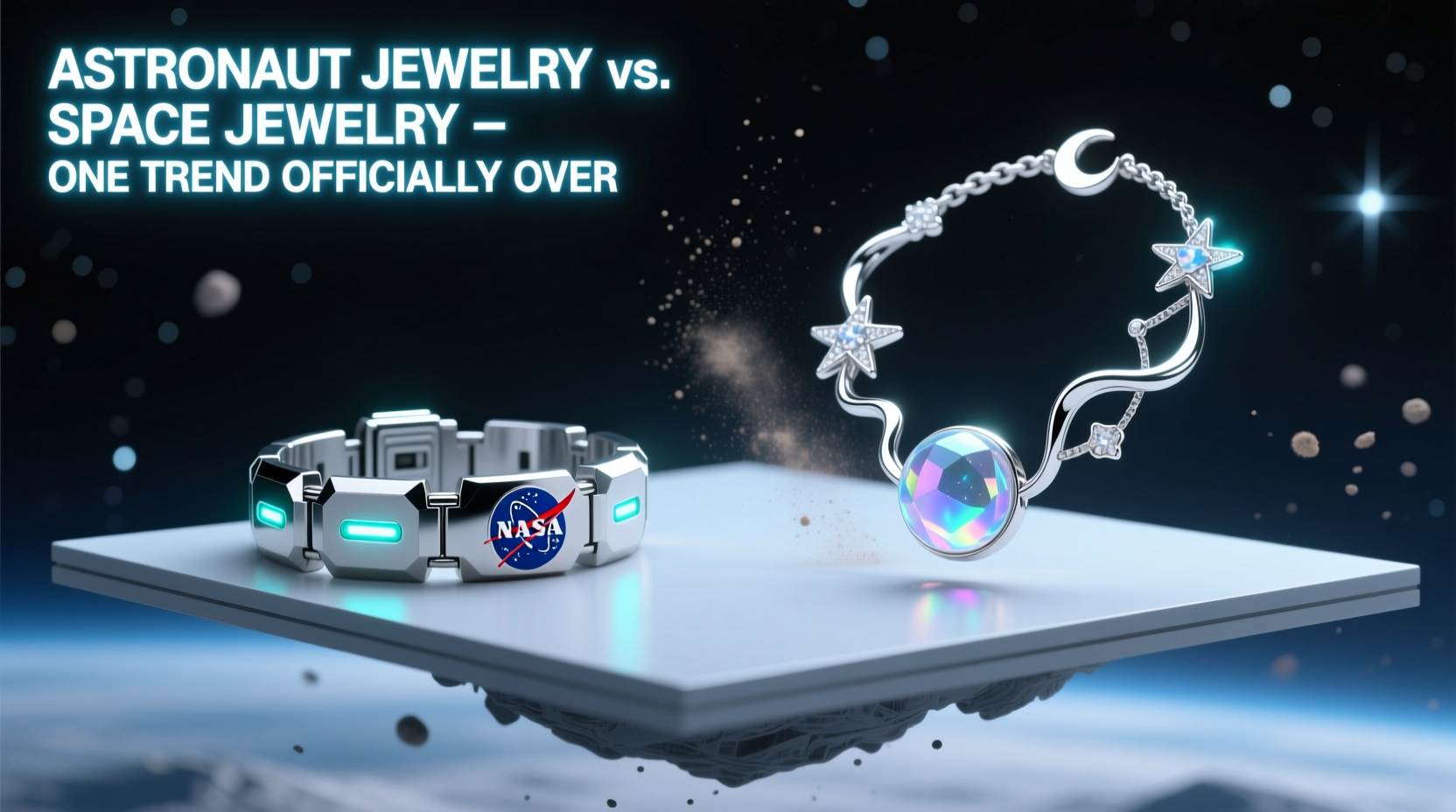
The fascination with space-themed accessories emerged in the mid-2010s, fueled by renewed public interest in space exploration. Private companies like SpaceX reignited excitement around Mars missions, while films like *Interstellar* and *Ad Astra* brought cosmic visuals into mainstream culture. Jewelry designers responded by incorporating rockets, constellations, and floating astronauts into their pieces.
Astronaut jewelry, in particular, stood out. Unlike abstract star motifs or zodiac signs, the astronaut figure carried narrative weight—a symbol of human ambition, isolation, and discovery. It resonated especially with millennials and Gen Z, who grew up amid digital globalization and climate anxiety, seeking meaning in metaphors of escape and transcendence.
Brands such as Chrome Hearts, Missoma, and even high-end houses like Cartier experimented with space elements. Limited-edition meteorite-inlaid watches and moon rock replicas created buzz, positioning space jewelry not just as fashion but as collectible storytelling.
“We weren’t selling pendants—we were selling portals to other worlds.” — Lena Torres, former design director at Nebula & Co.
Astronaut Jewelry vs. Space Jewelry: Understanding the Difference
Though often used interchangeably, “astronaut jewelry” and “space jewelry” represent distinct aesthetic and conceptual categories:
| Feature | Astronaut Jewelry | Space Jewelry (General) |
|---|---|---|
| Core Symbol | The human figure in a spacesuit | Planets, stars, galaxies, rockets |
| Emotional Tone | Loneliness, courage, adventure | Mystery, wonder, romance |
| Design Complexity | High (detailed helmets, suit textures) | Variable (minimalist stars to intricate nebulae) |
| Target Audience | Collectors, sci-fi fans, statement wearers | Broad appeal, especially gift market |
| Material Trends | Silver, black rhodium, enamel details | Gold-plated brass, lab-grown gems, glow-in-the-dark resin |
The key distinction lies in anthropomorphism. Astronaut jewelry centers on the human presence in space—the fragile body encased in technology. In contrast, general space jewelry romanticizes the cosmos itself, often stripping away human context entirely.
Tip: When evaluating vintage space jewelry, check for hallmarks indicating use of aerospace materials (e.g., genuine meteorite fragments or titanium from decommissioned satellites).Why the Trend May Be Fading
Several converging factors suggest that space jewelry, particularly astronaut-themed designs, has lost its cultural momentum:
- Over-saturation: By 2022, nearly every fast-fashion brand had released a “galaxy collection,” diluting the original mystique.
- Shifting consumer values: Buyers now favor sustainability and heritage craftsmanship over speculative futurism.
- Lack of innovation: After years of similar rocket pendants and Saturn rings, few designers introduced fresh interpretations.
- Cultural fatigue: As real-world space missions face delays and controversies, public enthusiasm has cooled.
Additionally, younger consumers are turning toward more personal forms of self-expression—birthstone stacking, ancestral symbols, and hand-engraved talismans—that emphasize identity over escapism.
Mini Case Study: The Fall of Starborn Collective
Starborn Collective, a Brooklyn-based brand launched in 2018, built its reputation on hand-carved astronaut lockets made from recycled satellite aluminum. At its peak, it generated $2.3 million in annual revenue and was featured in *Vogue* and *Wired*. However, by late 2023, sales had dropped 68% year-over-year. Founder Mira Chen cited declining engagement on Instagram and difficulty securing press coverage as key challenges.
“We thought we were ahead of the curve,” Chen said in a recent interview. “But we realized we were riding a wave that had already crested. People don’t want to dream about leaving Earth—they want to heal it.”
In early 2024, Starborn rebranded as Terra Forma, shifting focus to botanical silverwork inspired by endangered plant species. Pre-orders for their new moss-agate pendant line sold out in 72 hours.
Are There Still Opportunities in Cosmic Design?
While mass-market space jewelry appears to be waning, niche opportunities remain—especially when grounded in authenticity and technical innovation.
Some independent jewelers are exploring collaborations with aerospace institutions, using certified meteorite fragments or lunar simulants in limited runs. Others are integrating augmented reality: scanning a comet-shaped ring reveals a 3D animation of its namesake’s orbit.
Moreover, astrological jewelry—distinct from broader space themes—is experiencing a resurgence. Zodiac cuffs, eclipse earrings, and moon-phase bracelets continue to sell well, particularly among consumers interested in spirituality and mindfulness.
“The difference is intention. Wearing a Leo sign isn’t about space travel—it’s about self-understanding.” — Dr. Amara Lin, cultural anthropologist specializing in adornment rituals
Checklist: Evaluating the Longevity of Your Space Jewelry Purchase
- ✅ Is the piece made with authentic materials (e.g., Gibeon meteorite, aerospace-grade titanium)?
- ✅ Does it come with certification or provenance documentation?
- ✅ Is the design unique, or does it replicate common tropes (floating astronaut, Saturn ring)?
- ✅ Is the brand committed to ethical sourcing and small-batch production?
- ✅ Does the piece hold personal significance beyond trend value?
FAQ
Has any major jewelry brand discontinued its space-themed line?
Yes. Pandora quietly retired its “Universe” charm series in Q1 2024 after three consecutive quarters of declining sales. Similarly, Swarovski ended its Galaxy Collection without a replacement.
Can I resell vintage astronaut jewelry for profit?
Only select pieces retain value. Early editions from designers like Alex Monroe or those featuring real meteorite inlays may appreciate. Mass-produced items from department stores generally do not.
Is space jewelry coming back in a different form?
Potentially. Experts predict a possible revival through biotech integration—such as jewelry grown from lab-cultured coral designed to mimic alien landscapes—but this remains speculative.
Conclusion: Beyond the Final Frontier
The decline of astronaut and space jewelry doesn’t mark the end of imagination in design—it signals a maturation. Consumers are no longer satisfied with superficial nods to the cosmos. They demand depth, story, and substance. The era of slapping a rocket on a chain and calling it “futuristic” is over.
That doesn’t mean the stars are off-limits. It means the next generation of cosmic jewelry must earn its place—not through novelty, but through meaning. Whether through scientific collaboration, emotional resonance, or artistic reinvention, the future of celestial adornment lies not in escaping Earth, but in reimagining our connection to the universe.
🚀 Still wearing your astronaut pendant with pride? Share your thoughts or styling tips in the comments—let’s celebrate the legacy of space jewelry, even as we move beyond it.








