In an era dominated by screens—laptops, smartphones, tablets, and televisions—digital eye strain has become a common complaint. Symptoms like dry eyes, blurred vision, headaches, and difficulty focusing are familiar to millions who spend hours in front of glowing displays. Enter blue light glasses: trendy, widely marketed, and often praised as a solution to screen-related discomfort. But do they actually help reduce eye strain, or is their perceived benefit merely a product of the placebo effect? To answer this, we need to examine the science of blue light, how our eyes respond to digital screens, and what clinical research says about the effectiveness of these tinted lenses.
The Science Behind Blue Light and Eye Strain
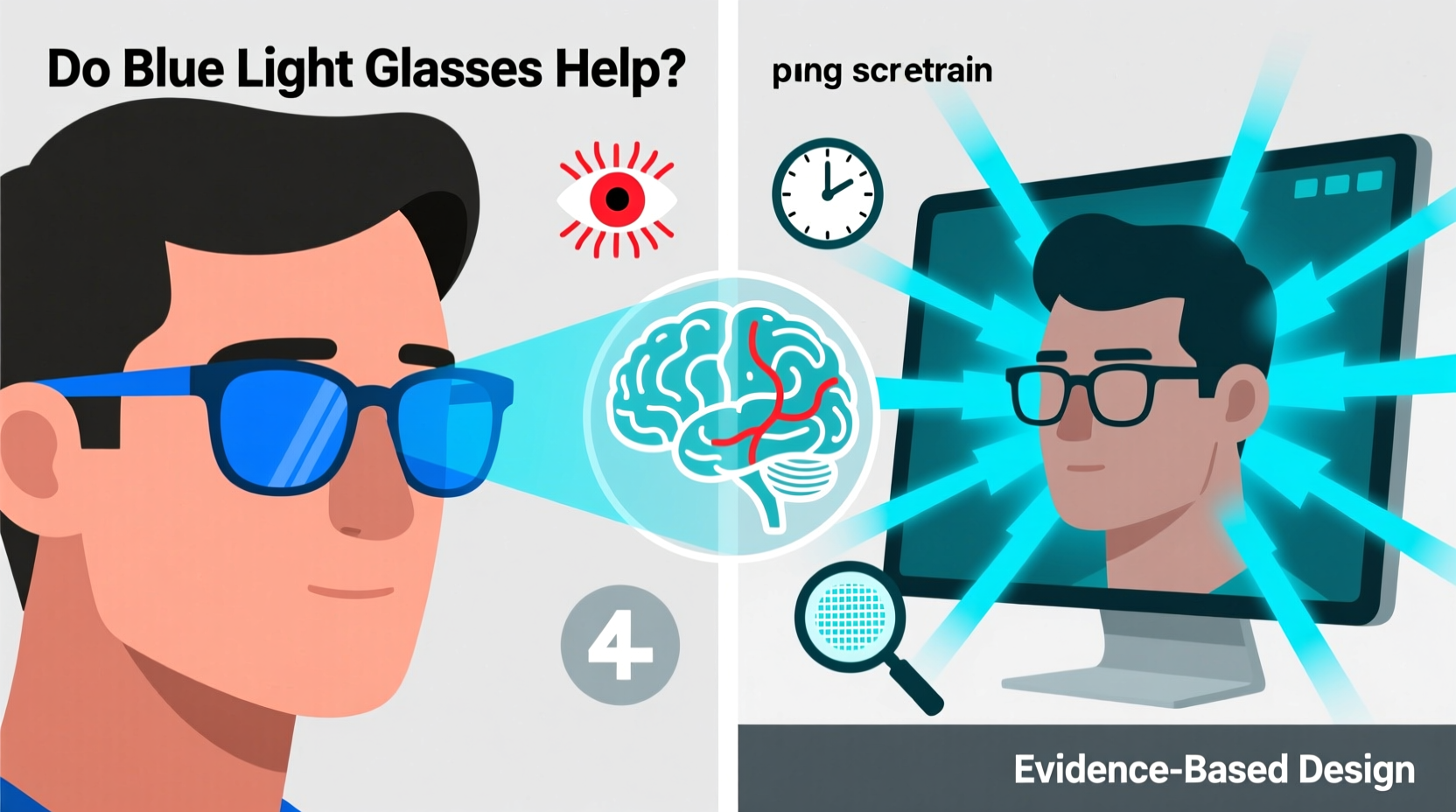
Blue light is part of the visible light spectrum, with wavelengths between approximately 380 and 500 nanometers. It's naturally emitted by the sun and plays a role in regulating circadian rhythms, boosting alertness, and improving mood during daylight hours. However, artificial sources—especially LED-backlit screens—also emit significant amounts of blue light, particularly in the high-energy visible (HEV) range.
The concern stems from the idea that prolonged exposure to HEV blue light may contribute to visual fatigue. Unlike other wavelengths, blue light scatters more easily, which can reduce visual contrast and make it harder for the eyes to focus. This scattering effect may increase glare and lead to eye strain over time, especially in low-light environments where screen brightness dominates ambient lighting.
Additionally, blue light suppresses melatonin production, a hormone critical for sleep regulation. While this doesn't directly cause eye strain, disrupted sleep patterns can exacerbate fatigue and lower tolerance for visual stress, creating a feedback loop that worsens symptoms.
“While blue light exposure at night affects sleep, its direct link to long-term eye damage or chronic eye strain remains unproven in human studies.” — Dr. Laura Chen, Optometrist and Vision Researcher, University of California, Berkeley
What Does the Research Say?
Clinical evidence on blue light glasses is mixed, and conclusions vary depending on study design, sample size, and outcome measures. Several randomized controlled trials have attempted to assess whether wearing blue light-blocking lenses improves symptoms of digital eye strain or enhances sleep quality.
A 2020 meta-analysis published in Ophthalmic & Physiological Optics reviewed 17 studies involving over 700 participants. The researchers found no statistically significant improvement in eye strain symptoms among those using blue light filters compared to control groups. While some individuals reported subjective relief, objective measurements—such as blink rate, tear film stability, and accommodative response—showed minimal change.
Another study conducted by the University of Manchester in 2017 concluded that the discomfort associated with screen use was more likely due to factors like poor ergonomics, extended focus without breaks, and reduced blinking—not blue light itself. In fact, when participants wore amber-tinted lenses (which block blue light), they reported slightly better comfort—but so did those wearing clear lenses with no filtering properties, suggesting a strong placebo component.
However, not all findings dismiss the benefits entirely. A smaller 2019 trial in Chronobiology International showed that office workers who wore blue light glasses for two weeks experienced modest improvements in sleep onset and self-reported daytime alertness. Though eye strain wasn’t the primary focus, better-rested individuals naturally report fewer visual complaints.
Tip: If you're considering blue light glasses, look for lenses that filter 20–40% of blue light—not total blockage, which can distort color perception and isn’t necessary for most users.Placebo Effect: Why People Still Feel Better
The placebo effect is powerful, especially when it comes to subjective symptoms like fatigue, pain, and discomfort. When people believe they are taking protective action—like wearing special glasses—they often perceive improvements even if the intervention has no physiological impact.
Several psychological mechanisms contribute to this:
- Expectation bias: Users expect relief, so minor changes in sensation are interpreted as improvement.
- Hawthorne effect: Simply paying more attention to eye health (e.g., adjusting screen brightness, taking breaks) while using the glasses leads to real behavioral changes.
- Confirmation bias: Positive anecdotes reinforce belief, while negative results are dismissed as “not working yet” or “I didn’t wear them enough.”
In practice, many users report feeling less eye fatigue after adopting blue light glasses. But surveys also show that similar relief occurs when people implement basic ergonomic adjustments—suggesting that the glasses may serve more as a behavioral cue than a medical solution.
Mini Case Study: Sarah’s Remote Work Routine
Sarah, a 34-year-old graphic designer, began experiencing frequent headaches and dry eyes after transitioning to full-time remote work. She worked 9–10 hours daily across dual monitors and often used her phone late into the evening. After reading online reviews, she purchased a pair of blue light glasses advertised to “reduce glare and improve focus.”
Within a week, Sarah claimed her eyes felt “less tired” and her sleep improved. But upon closer reflection, she realized she had also started following the 20-20-20 rule (looking at something 20 feet away for 20 seconds every 20 minutes), adjusted her monitor height, and limited screen time after dinner—all around the same time she began wearing the glasses.
When she temporarily stopped wearing the glasses but kept her new habits, her symptoms remained under control. Only when she reverted to marathon work sessions without breaks did discomfort return—regardless of whether she wore the lenses. For Sarah, the glasses acted as a catalyst for healthier behaviors, not a standalone fix.
Effective Alternatives to Relieve Digital Eye Strain
If blue light glasses offer limited measurable benefit, what actually works? Ophthalmologists and vision scientists agree that environmental and behavioral factors play a far greater role in preventing and managing eye strain.
Step-by-Step Guide to Reduce Eye Strain
- Optimize your workspace lighting: Ensure ambient room lighting matches screen brightness. Avoid working in a dark room with a bright screen, as this increases pupil constriction and visual stress.
- Follow the 20-20-20 rule: Every 20 minutes, look at an object at least 20 feet away for 20 seconds. This relaxes the ciliary muscle responsible for focusing.
- Blink consciously: Screen use reduces blink rate by up to 60%, leading to dry eyes. Make a habit of full, deliberate blinks to maintain tear film.
- Adjust screen settings: Lower brightness, increase text size, and use warm color temperature modes (like Night Shift or f.lux) in the evening.
- Position your screen correctly: Place the top of the monitor at or slightly below eye level, about 20–28 inches from your face.
- Use artificial tears if needed: Over-the-counter lubricating drops can relieve dryness, especially in air-conditioned or heated environments.
- Get regular eye exams: Uncorrected vision problems like astigmatism or presbyopia can mimic or worsen digital eye strain.
Checklist: Daily Habits to Protect Your Eyes
- ☑ Apply the 20-20-20 rule throughout the day
- ☑ Keep screen brightness aligned with room lighting
- ☑ Position monitor at arm’s length and proper height
- ☑ Use warm screen mode after sunset
- ☑ Take a 5-minute break every hour
- ☑ Stay hydrated to support tear production
- ☑ Schedule annual eye check-ups
Comparison Table: Blue Light Glasses vs. Proven Eye Strain Solutions
| Solution | Scientific Support | Cost | Effectiveness | Key Benefit |
|---|---|---|---|---|
| Blue light glasses | Limited / Mixed | $20–$100 | Low to Moderate (subjective) | Potential sleep improvement if worn in evening |
| 20-20-20 rule | Strong | Free | High | Reduces focusing fatigue |
| Ergonomic screen setup | Strong | Free–$$ | High | Prevents neck and eye strain |
| Warm screen filters (software) | Moderate (for sleep) | Free | Moderate | Supports circadian rhythm |
| Artificial tears | Strong (for dry eye) | $5–$15 | High (for dryness) | Immediate symptom relief |
| Regular eye exams | Very Strong | $50–$200 (insurance may cover) | Very High | Detects underlying vision issues |
Frequently Asked Questions
Do blue light glasses protect against macular degeneration?
No conclusive evidence shows that blue light from screens causes age-related macular degeneration (AMD). The amount of blue light emitted by digital devices is significantly lower than natural sunlight. While UV and blue light from the sun may contribute to retinal damage over decades, screen-based exposure is not considered a risk factor for AMD.
Can I wear blue light glasses all day?
You can, but it’s not necessarily beneficial. During daytime hours, blue light helps regulate alertness and mood. Wearing strong blue-blocking lenses all day may disrupt your natural circadian rhythm, potentially leading to drowsiness or reduced concentration. Reserve them for evening screen use if sleep is a concern.
Are there any risks to wearing blue light glasses?
There are no major health risks, but overly yellow or orange tints can distort color perception, which may be problematic for designers, photographers, or anyone relying on accurate color rendering. Additionally, relying solely on glasses without addressing root causes of eye strain (like poor posture or inadequate lighting) may delay more effective interventions.
Conclusion: What Should You Do?
Blue light glasses are unlikely to be a magic bullet for digital eye strain. While some users experience subjective relief—possibly due to placebo effects or coinciding behavioral changes—their clinical efficacy remains questionable. Real, lasting improvements come from sustainable habits: optimizing your workspace, taking regular visual breaks, managing screen brightness, and staying aware of your body’s signals.
That said, if wearing blue light glasses encourages you to reflect on your screen habits and adopt healthier routines, they may still hold value—not as a medical device, but as a mindfulness tool. Pair them with proven strategies, and you’ll be far more likely to see meaningful results.
💬 Have you tried blue light glasses? Did they help—or was it something else? Share your experience in the comments and help others separate marketing from reality.








