
In the world of rugged smartwatches, two names stand out: Apple Watch Ultra and Garmin Epix. Both are engineered for durability, packed with advanced sensors, and built to withstand extreme conditions. Yet they serve different audiences, reflect contrasting philosophies, and deliver unique experiences. Choosing between them isn’t just about specs—it’s about aligning technology with lifestyle. Whether you're a weekend hiker, a triathlete, or someone who values seamless integration with daily digital life, understanding the core differences is essential.
Design and Build: Toughness with a Purpose
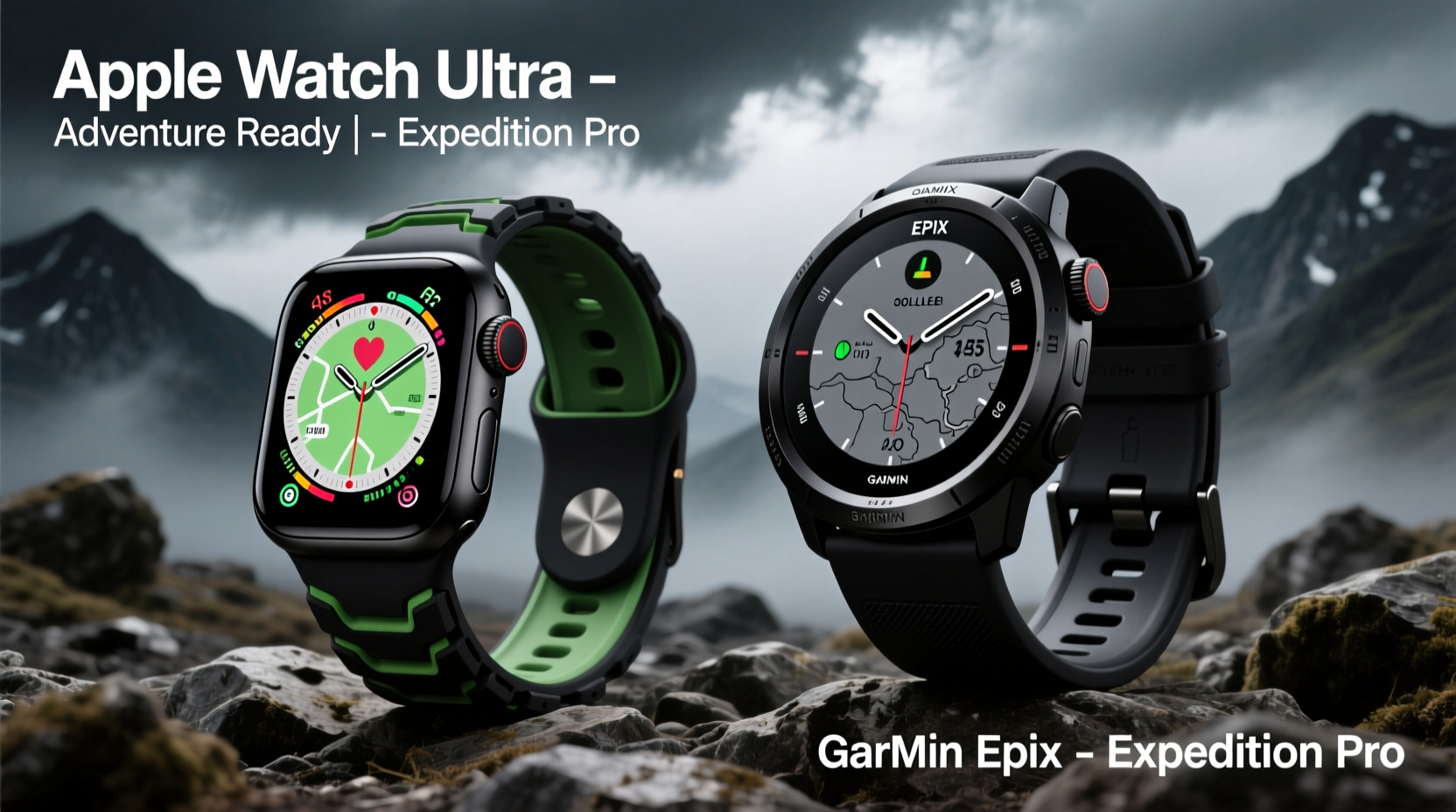
The Apple Watch Ultra and Garmin Epix share military-grade durability standards—both meet MIL-STD-810H for shock, temperature, and water resistance (up to 100 meters). But their design languages diverge sharply.
Apple's approach is minimalist yet bold. The Watch Ultra features a titanium case, flat sapphire front crystal, and a distinctive orange crown for quick identification. It weighs 61.3 grams and has a 49mm case, making it the largest Apple Watch ever—but still designed to integrate smoothly into urban life. Its flat edges and optimized lugs make strap changes effortless, and the default Alpine Loop band is both durable and comfortable for extended wear.
Garmin Epix Gen 2 (or Gen 3, depending on release timing) takes a more traditional outdoor instrument aesthetic. With a fiber-reinforced polymer chassis and sapphire lens, it maintains a rugged profile while offering a slightly larger 51mm footprint. It’s heavier at around 75 grams but balances well on larger wrists. The always-on AMOLED display is brighter in direct sunlight, and the physical button layout ensures reliable operation with gloves—critical in alpine or winter environments.
Tip: If you frequently wear gloves during activity, prioritize watches with physical buttons—touchscreens can fail in wet or cold conditions.Display and Usability: Touch vs Tactical
The interface experience separates these devices as much as any other factor. Apple Watch Ultra runs watchOS, featuring a fully touch-driven, gesture-rich environment. Notifications, apps, and health tracking are deeply integrated with the iPhone ecosystem. Swiping, tapping, and digital crown scrolling feel natural for users already invested in Apple’s ecosystem.
Garmin Epix uses a hybrid input system: touchscreen plus five physical buttons. This allows full control without touching the screen—ideal when hands are wet, muddy, or gloved. The menu structure is hierarchical and functional rather than flashy. While less intuitive at first, experienced outdoor users often prefer this precision under stress.
The Epix’s AMOLED screen peaks at 1,000 nits, outperforming the Ultra’s 2,000-nit maximum brightness in practical daylight readability due to anti-reflective coatings and lower glare. However, Apple’s animation smoothness and app responsiveness give it an edge in everyday usability.
“Smartwatches for adventurers must work when conditions compromise dexterity. Physical controls aren’t retro—they’re resilient.” — Dr. Lena Torres, Human Factors Engineer at Outdoor Tech Labs
Performance and Battery Life: Endurance vs Ecosystem
Battery life is where Garmin dominates. The Epix delivers up to 16 days in smartwatch mode and 35 hours in GPS-only mode. With multi-band GNSS and music playback, it still manages over 20 hours—enough for most ultramarathons or backcountry trips without recharging.
In contrast, the Apple Watch Ultra offers approximately 36 hours in typical use and up to 60 hours in Low Power Mode. While impressive for a device running a full operating system, it pales next to Garmin’s efficiency. For anyone planning multi-day excursions off-grid, this becomes a decisive limitation.
However, the Ultra compensates with richer connectivity. It supports cellular calling, messaging via iMessage, streaming music from Apple Music, and even unlocking your iPhone or car. These integrations matter if your \"rugged\" use still overlaps with city commutes, meetings, or social interactions.
| Feature | Apple Watch Ultra | Garmin Epix |
|---|---|---|
| Battery Life (Smartwatch Mode) | Up to 60 hours (Low Power) | Up to 16 days |
| GPS-Only Mode | ~36 hours | ~35 hours |
| Multi-Band GNSS | Yes | Yes |
| Cellular Option | Yes | No (on most models) |
| Music Storage & Streaming | iCloud, Apple Music, Spotify | Offline playlists (downloaded), limited streaming |
| Operating System | watchOS | Garmin OS |
Fitness and Adventure Tracking: Depth vs Integration
Both watches offer comprehensive fitness tracking, including heart rate, blood oxygen, sleep staging, and advanced metrics like HRV (Heart Rate Variability). But their focus differs.
The Apple Watch Ultra shines in structured training environments. It includes a depth sensor and dive app suitable for recreational scuba diving up to 40 meters, making it one of the few non-dedicated dive computers approved for such use. Triathletes appreciate its automatic workout transition detection and precise GPS tracking across swim, bike, and run disciplines.
Garmin Epix goes deeper into performance analytics. It provides training load focus, recovery advisor, aerobic/anaerobic efficiency scores, and detailed post-workout insights. For endurance athletes, the ability to download courses, follow turn-by-turn navigation, and access topographic maps directly on the wrist is invaluable. The ClimbPro feature helps mountaineers track ascent segments in real time, adjusting pace based on elevation gain.
Additionally, Garmin offers incident detection and assistance with location sharing—useful for solo trekkers. Apple matches this with fall detection and emergency SOS, but relies more heavily on cellular connection for reliability.
Mini Case Study: Trail Runner in the Rockies
Consider Sarah, an experienced trail runner preparing for a 50K mountain race in Colorado. She trains six days a week, analyzes her recovery data closely, and often runs alone in remote areas with spotty signal.
She tested both watches over three weeks. With the Apple Watch Ultra, she appreciated the seamless sync with her iPhone, timely notifications, and crisp music playback during long runs. However, she had to charge every two days and found herself conserving battery during longer weekend routes.
Switching to the Garmin Epix, she gained confidence from the 14-day battery life and offline topo maps. The ClimbPro feature helped her pace steep ascents, and she used the route-retrace function after missing a trail marker. Though she missed iMessage alerts, the trade-off in autonomy was worth it for race prep.
Sarah ultimately chose the Epix—not because it was “better,” but because it better supported her specific athletic goals and environmental demands.
Who Should Choose Which Watch?
The decision ultimately hinges on how you define “rugged.” Is it about surviving harsh elements? Or about maintaining functionality across diverse scenarios—including urban ones?
Choose the Apple Watch Ultra if:
- You're deeply embedded in the Apple ecosystem (iPhone, AirPods, MacBook).
- You value seamless communication (calls, texts, email) on your wrist.
- Your adventures are day-long or accessible with charging options.
- You want a single device that transitions from gym to office to trail.
- You enjoy third-party apps like Strava, Nike Run Club, or meditation tools.
Choose the Garmin Epix if:
- You engage in multi-day backpacking, mountaineering, or ultra-distance events.
- You rely on precise navigation and offline mapping.
- You analyze training data rigorously and follow structured coaching plans.
- You operate in extreme cold or wear gloves regularly.
- You prioritize battery longevity over smartphone-like features.
Step-by-Step: How to Decide Between Them
- Assess Your Primary Use Case: Are you mostly active outdoors for extended periods, or do you split time between urban and wild settings?
- Evaluate Battery Needs: Can you realistically charge every night? If not, lean toward Garmin.
- Check Smartphone Compatibility: Apple Watch Ultra only works with iPhone. Garmin pairs with both iOS and Android.
- Try the Interface: Spend time navigating menus. Do you prefer touch or buttons?
- Review App Requirements: Need Apple Pay, iMessage, or Find My? Stick with Apple. Prefer specialized sports analytics? Go Garmin.
- Consider Long-Term Support: Garmin typically supports devices with software updates for 5+ years; Apple phases out older models faster.
- Set a Realistic Budget: Both start around $800, but bands, subscriptions (Garmin Connect IQ, Apple Fitness+), and accessories add cost.
FAQ
Can the Apple Watch Ultra replace a dedicated GPS watch for serious athletes?
For many, yes—but with caveats. It tracks GPS accurately and supports triathlon, swimming, and hiking. However, its shorter battery life and fewer advanced performance metrics make it less ideal for ultra-endurance or expedition-level activities compared to Garmin.
Is the Garmin Epix too bulky for daily wear?
It depends on your wrist size and preferences. At 51mm, it’s large, but many users adapt quickly. If you alternate between formal attire and outdoor gear, consider the smaller Garmin Fenix series. For those prioritizing utility over subtlety, the Epix’s size is justified by its capabilities.
Do either of these watches support third-party apps effectively?
The Apple Watch Ultra supports thousands of apps via the App Store, including fitness, productivity, and lifestyle tools. Garmin offers Connect IQ apps, which are more limited but highly optimized for outdoor functions like tide charts, hunt timers, or aviation data.
Final Verdict: Match the Tool to the Task
The Apple Watch Ultra and Garmin Epix aren’t rivals in the traditional sense—they represent two valid paths in wearable evolution. One enhances connected living in tough conditions; the other empowers self-reliant exploration beyond connectivity.
If your idea of adventure ends within reach of a power outlet and your phone’s signal, the Apple Watch Ultra delivers unmatched polish, integration, and convenience. It’s the ultimate hybrid—a luxury smartwatch built like a tool.
If your expeditions push beyond civilization, demand weeks of uptime, and require precise navigational guidance, the Garmin Epix stands ready. It’s not as sleek, nor as socially connected, but it won’t quit when you need it most.
Ultimately, neither is universally superior. The right choice depends on where—and how—you live your active life.
💬 Which rugged smartwatch fits your lifestyle? Share your experience or questions below—your insight could help others make the right call.