
For many anime enthusiasts, diving into a long-running or multiverse series is both thrilling and daunting. The excitement of exploring expansive worlds like those in \"Fate,\" \"Re:Zero,\" or \"The Melancholy of Haruhi Suzumiya\" can quickly turn frustrating when the viewing order isn’t clear. While official recommendations exist, fan-made watch orders—often shared on forums, Reddit, or YouTube—frequently mislead newcomers. These guides sometimes prioritize chronology over narrative flow, confuse movie releases with TV continuity, or overlook crucial production context. As a result, viewers miss emotional payoffs, character arcs, and plot twists meant to unfold in a specific sequence.
The problem isn't just confusion—it's diminished enjoyment. Watching an anime out of its intended order can spoil surprises, distort pacing, and even make storylines seem disjointed or poorly written when they’re actually masterfully structured. This article examines the most common errors in popular anime watch orders, explains why they happen, and provides accurate guidance to help fans experience these stories as creators intended.
Why Watch Order Matters More Than You Think
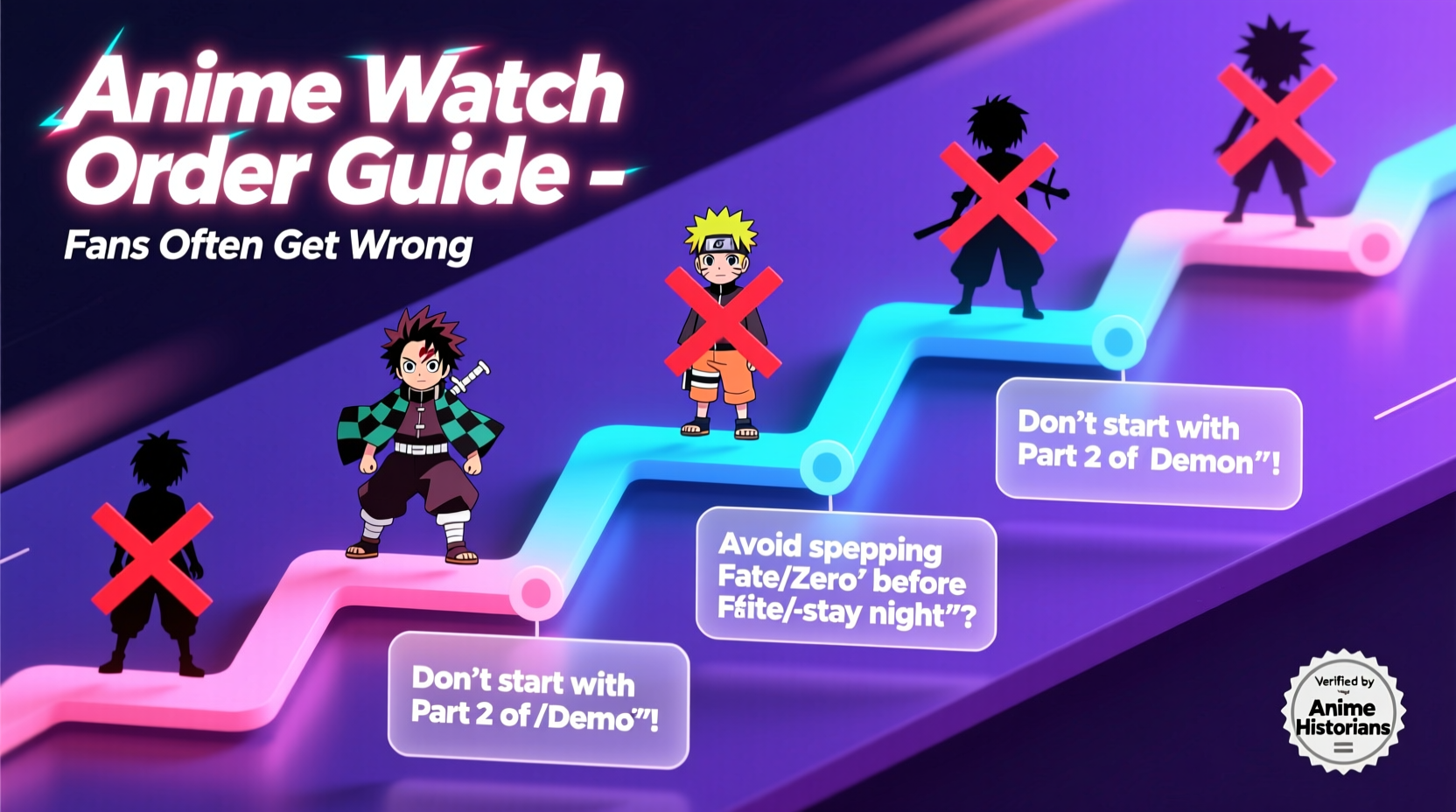
Anime isn't always produced or released in chronological story order. Some series are designed to be watched using a nonlinear approach that enhances mystery, suspense, or emotional impact. Directors and writers carefully plan release sequences to control information flow, character development, and thematic buildup. Ignoring this intentional structure risks undermining the entire experience.
Take, for example, *The Melancholy of Haruhi Suzumiya*. The first season aired in a non-chronological order, which initially confused audiences. However, this was a deliberate creative choice by the production team to mirror the protagonist’s unpredictable worldview. When later DVD releases included a “chronological” option, fans assumed it was superior—but many critics and creators argued that the original broadcast order preserved the intended sense of disorientation and surprise.
“Anime is not just about story—it’s about experience. The way episodes unfold over time shapes how we connect with characters.” — Akira Tanaka, Anime Studies Scholar at Kyoto University of Arts
This philosophy applies across genres. Whether it’s the psychological unraveling in *Monster*, the time-loop tension in *Steins;Gate*, or the layered revelations in *Evangelion*, watching in the wrong order doesn’t just rearrange scenes—it alters meaning.
Top 5 Most Misunderstood Anime Watch Orders
Below are five major franchises where fan-recommended watch orders frequently go astray—often due to outdated sources, oversimplified timelines, or misunderstanding of canon.
1. Fate Series: Chaos in the Grail War Timeline
The *Fate* franchise is notorious for its tangled web of prequels, sequels, alternate universes, and spin-offs. With entries like *Fate/stay night*, *Fate/Zero*, *Fate/Apocrypha*, and *Fate/Grand Order*, fans often default to a strict chronological order—watching *Fate/Zero* first because it technically happens before *Fate/stay night*. But this is a critical mistake.
*Fate/Zero* was written as a prequel after *Fate/stay night*, and while it enriches the lore, it assumes familiarity with key characters and themes introduced in the original. Watching it first removes dramatic irony and spoils pivotal character fates. The recommended path is:
- Fate/stay night: Unlimited Blade Works (2014, Studio DEEN or Ufotable)
- Fate/Zero
- Fate/stay night: Heaven’s Feel trilogy
2. Re:Zero – Skipping the First Arc Due to Pacing
Some viewers suggest skipping the first few episodes of *Re:Zero* because of slow pacing or protagonist bias. Others recommend jumping straight into Season 2. This undermines the entire premise of the series.
The early episodes establish Subaru’s personality, his initial naivety, and the brutal consequences of his death-reset ability. Without witnessing his repeated failures and emotional breakdowns in the first arc—particularly during the “trial” at Roswaal’s mansion—the growth in later seasons lacks weight. Watching out of order robs the story of its psychological depth.
3. Puella Magi Madoka Magica – Watching the Movie Before the Series
A common error is beginning with *Madoka Magica: Rebellion*, the sequel film, thinking it's part of a trilogy. In reality, the movie is a dense, symbolic continuation that assumes complete knowledge of the original 12-episode series. Even watching the recap films before the show ruins the central twist revealed halfway through Episode 3.
The correct order is simple:
- Watch the original 2011 series first.
- Then view the two compilation movies (*Beginnings* and *Eternal*) if desired for visual upgrade.
- Only then proceed to *Rebellion*.
4. Sword Art Online – Ignoring Movie and Spin-off Placement
Fans often assume all *Sword Art Online* content follows a linear progression. However, the movie *Ordinal Scale* takes place between Seasons 2 and 3, yet many guides list it at the end. Watching it late spoils character returns and emotional moments in Season 3.
Additionally, spin-offs like *Sword Art Online Alternative: Gun Gale Online* exist in a parallel universe and should not be integrated into the main timeline. Treating them as canonical disrupts narrative coherence.
5. The Melancholy of Haruhi Suzumiya – Choosing Chronological Over Broadcast
As mentioned earlier, the 2006 season of *Haruhi Suzumiya* was intentionally aired out of chronological order. Many modern guides push viewers toward the “remastered chronological” version available on streaming platforms. While easier to follow, this strips away the surrealism and unpredictability that defined the series’ original impact.
The broadcast order builds mystery around Haruhi’s powers and the nature of time manipulation. Seeing events in timeline order too soon reveals answers the show meant to withhold.
Common Mistakes That Lead to Wrong Watch Orders
Why do so many fans get this wrong? Several recurring issues contribute to misinformation:
| Mistake | Why It’s Problematic | How to Fix It |
|---|---|---|
| Treating all sequels as direct continuations | Ignores alternate timelines or standalone entries (e.g., Fate/Apocrypha) | Check production notes and creator statements |
| Assuming chronological = best | Disregards directorial intent and narrative design | Prioritize broadcast or recommended order |
| Relying solely on streaming platform sorting | Platforms often sort by release date, not narrative logic | Cross-reference with official sites or studio FAQs |
| Following outdated Reddit threads | Old posts may lack new OVAs, movies, or retcons | Look for updated guides from 2022 onward |
| Mixing canon and non-canon content | Spin-offs like novels or games aren’t always animated faithfully | Stick to anime-original or officially adapted arcs |
Step-by-Step Guide to Finding the Right Watch Order
Instead of relying on crowd-sourced lists, use this method to determine the optimal viewing sequence for any anime series:
- Identify the Original Release Format: Was the anime originally aired weekly? Released straight to Blu-ray? Knowing this helps determine whether the episode order reflects creative intent.
- Consult Official Sources: Check the production studio’s website (e.g., Ufotable, Aniplex) or the anime’s official Twitter/X account for recommended viewing orders.
- Distinguish Canon from Non-Canon: Determine which movies, OVAs, or specials are part of the main storyline. For example, *Fullmetal Alchemist: Conqueror of Shamballa* is a sequel to the 2003 anime, not *Brotherhood*.
- Review Creator Interviews: Directors like Hideaki Anno (*Evangelion*) or Gen Urobuchi (*Madoka*) have spoken extensively about narrative structure. Their insights often clarify confusing sequences.
- Verify with Trusted Curators: Use reputable databases like Anime News Network (ANN), MyAnimeList (with caution), or Crunchyroll’s curated playlists rather than random forum posts.
Real Example: How One Fan Ruined Evangelion for Themselves
Mark, a longtime anime fan, decided to finally watch *Neon Genesis Evangelion* after hearing years of praise. Excited to understand the story fully, he looked up a “complete chronological order” on a popular wiki. It suggested starting with the rebuild movies (*Evangelion: 1.0–3.0+1.0*) before watching the original 1995 series.
He followed the guide, thinking he’d get the full picture. Instead, the movies’ abstract visuals and sudden tonal shifts left him confused. When he later watched the original series, the character development felt redundant, and the infamous ending lacked impact because he’d already seen alternate versions of the characters’ fates.
Only after reading an interview with director Hideaki Anno did Mark realize the original series was meant to be experienced first—a raw, psychological journey that the rebuild films were designed to reinterpret, not replace. He rewatched the 1995 series from the beginning and described the second experience as “revelatory.”
Essential Checklist for Getting Watch Order Right
- ✅ Start with the earliest released anime entry unless advised otherwise.
- ✅ Verify whether sequels or prequels were made for completion or standalone enjoyment.
- ✅ Note the difference between remakes (e.g., *FMA: Brotherhood*) and alternate adaptations (*FMA 2003*).
- ✅ Watch recap or compilation films only after completing the original series.
- ✅ Separate spin-offs and alternate universe stories from the main timeline.
- ✅ Look for post-credits scenes that set up future installments.
- ✅ Recheck viewing orders when new seasons or films are released.
Frequently Asked Questions
Should I watch anime in English release order or Japanese air date?
Always prioritize the Japanese air/release date. International licensing delays can shuffle availability, but the original broadcast sequence reflects the creators’ intended pacing and cliffhangers.
Are “director’s cut” versions the same as chronological edits?
No. A “director’s cut” usually contains extended scenes or revised animation within the same narrative framework. It does not reorder the story. Always watch the original version first, then explore extended cuts.
Can I skip filler arcs safely?
Sometimes. In long-running shonen series like *Naruto* or *One Piece*, filler can be skipped, but some contain important character backstory or foreshadowing. Use resources like AnimeFiller.com to identify safe skips.
Conclusion: Respect the Craft Behind the Sequence
Anime is more than serialized entertainment—it’s a crafted art form shaped by directors, writers, and animators who consider timing, emotion, and revelation as essential tools. When fans impose personal preferences or incomplete data onto viewing orders, they risk flattening nuanced storytelling into a checklist of episodes.
The next time you start a complex anime series, resist the urge to optimize for “completeness” or “chronology.” Instead, seek the order that preserves mystery, emotional payoff, and authorial intent. Consult trusted sources, question viral guides, and remember: the best way to honor a story is to experience it as it was meant to be seen.
💬 Have you ever watched an anime in the wrong order? What did you learn? Share your story in the comments and help others avoid the same pitfalls.








