When it comes to managing hairpieces—whether for performance, fashion, or personal enhancement—one of the most persistent concerns is tangling. Tangles not only compromise appearance but also shorten lifespan and increase maintenance effort. For those torn between anime cosplay wigs and daily wear extensions, a key deciding factor is often which option stays smoother, more manageable, and tangle-free over time. While both serve distinct purposes, their materials, construction, and usage patterns lead to significant differences in how they resist matting and knotting.
This article dives deep into the structural and practical reasons behind tangling in both wig categories, compares fiber technologies, evaluates real-world durability, and offers actionable strategies to minimize knots regardless of your choice. Whether you're a seasoned cosplayer or someone integrating extensions into everyday styling, understanding these nuances can save time, reduce frustration, and preserve your investment.
Fiber Composition: The Root of Tangling Behavior
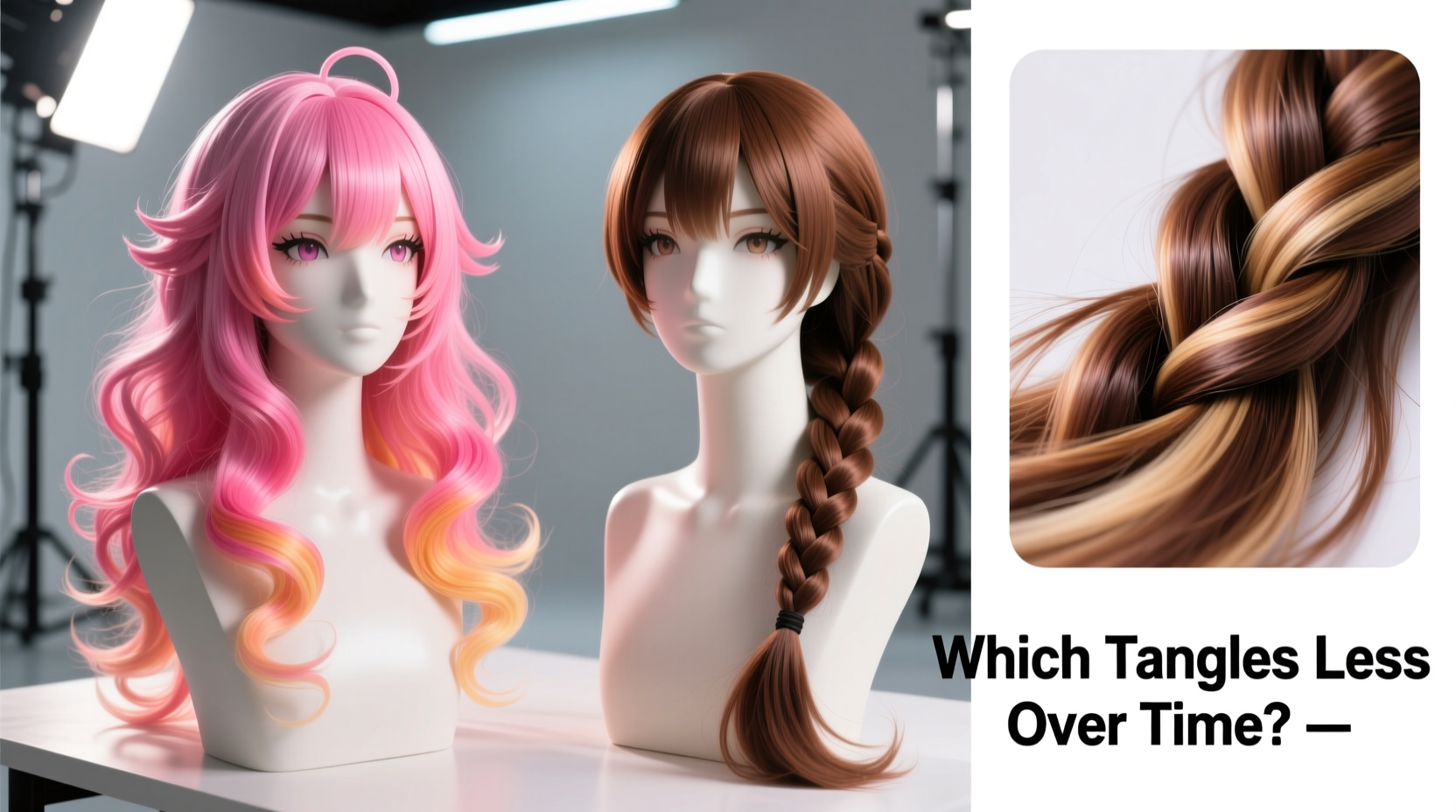
The primary determinant of how easily a wig or extension tangles lies in its fiber composition. Most anime cosplay wigs are made from synthetic fibers—typically Kanekalon or Toyokalon—while high-quality daily wear extensions are usually crafted from human hair or premium heat-resistant synthetics designed to mimic natural movement.
Synthetic fibers used in cosplay wigs are engineered for volume, color vibrancy, and style retention. They hold curls and sharp shapes exceptionally well, which is ideal for replicating exaggerated anime hairstyles. However, this same structure makes them prone to static buildup and surface friction, especially when exposed to dry air or frequent handling. Because these fibers lack the cuticle layer found in human hair, they don’t naturally repel one another, increasing the likelihood of interlocking strands.
In contrast, human hair extensions have a cuticle layer that, when aligned properly (as in Remy hair), allows strands to glide smoothly past each other. Even non-Remy human hair, while more susceptible to tangling than Remy, generally performs better than basic synthetic fibers due to its organic texture and moisture absorption properties.
Tip: Always store synthetic wigs on a stand or in a breathable bag—never crumpled in a drawer—to prevent deformation and premature knotting.Construction and Wefting Techniques
Beyond fiber type, how the wig or extension is constructed plays a major role in tangling resistance. Cosplay wigs typically use wefts stitched into a cap with minimal finishing. These wefts often have loose ends or rough seams that can snag adjacent strands during wear or storage. Additionally, many budget cosplay wigs feature single-layer wefting without protective coatings, making internal friction more likely.
Daily wear extensions, particularly tape-ins, sew-ins, and clip-ins made for prolonged use, are manufactured with smoother, sealed wefts. High-end versions may include silicone backing or ultrasonic bonding to reduce friction against natural hair and neighboring wefts. This attention to detail significantly reduces the chance of tangles forming at attachment points—a common trouble zone.
Moreover, daily extensions are usually designed for layered integration with biological hair. Their density and movement are calibrated to blend seamlessly, which inherently discourages clumping. Cosplay wigs, on the other hand, prioritize bold silhouettes over subtlety, often resulting in uniformly thick sections that rub aggressively against each other with every movement.
“Cosplay wigs are built for visual impact first, wearability second. That trade-off shows up quickly in maintenance demands.” — Lila Tran, Wig Stylist & Prosthetics Technician, Anime Expo Crew
Comparative Tangling Resistance: A Side-by-Side Analysis
| Feature | Anime Cosplay Wigs | Daily Wear Extensions |
|---|---|---|
| Primary Fiber Type | Synthetic (Kanekalon/Toyokalon) | Human hair or premium synthetic blends |
| Cuticle Layer | Absent – higher friction | Present in human hair – lower friction |
| Weft Finish | Basic stitching, often unsealed | Sealed, bonded, or silicone-backed |
| Static Buildup | High – especially in dry climates | Low to moderate |
| Lifespan Under Daily Use | 3–6 months (with heavy tangling by month 2) | 6–18 months (human hair lasts longer) |
| Maintenance Frequency | Near-daily detangling required | Weekly brushing sufficient |
| Tangle Hotspots | Nape area, underlayers, near weft edges | Rare; occurs mainly at clips/tapes if misaligned |
The data shows a consistent trend: daily wear extensions outperform cosplay wigs in tangle resistance across nearly every metric. This isn’t a flaw in cosplay design—it’s a consequence of divergent priorities. One is optimized for dramatic effect in short bursts; the other for seamless integration over extended periods.
Real-World Usage Patterns and Longevity
Usage frequency dramatically influences tangling outcomes. A cosplay wig worn once per month for conventions will naturally tangle less than one used weekly for streaming or photoshoots. But even occasional wear doesn't eliminate risk if storage and post-use care are neglected.
Consider the case of Mika S., a content creator based in Seattle who uses cosplay wigs for YouTube skits. She owns six wigs in vibrant colors ranging from electric blue to cotton-candy pink. Within three months of regular filming, all her wigs developed severe matting at the nape, despite nightly brushing. After switching to a rotation system—using each wig no more than once every two weeks—and storing them on foam heads wrapped in silk scarves, she reduced tangling incidents by over 70%. Her experience underscores that even high-friction materials can be managed with disciplined habits.
In contrast, Sarah K., a corporate professional using clip-in human hair extensions five days a week, reports minimal tangling after nine months. She attributes this to consistent nighttime removal, gentle washing every three weeks, and using leave-in conditioner formulated for extensions. Her routine highlights how proper care compounds over time, especially with higher-quality materials.
Environmental factors also play a role. Dry indoor heating in winter increases static in synthetic fibers, accelerating tangles. Humidity, while reducing static, can cause human hair extensions to swell slightly, altering alignment and potentially increasing friction if not dried properly. Thus, climate-aware maintenance is essential for both types—but the margin for error is smaller with cosplay wigs.
Step-by-Step Care Protocol to Minimize Tangling
Regardless of your choice, proactive care is the best defense against knots. Follow this timeline-based routine to extend smoothness and usability:
- After Each Use (Within 1–2 Hours): Gently remove surface debris and detangle from ends upward using a wide-tooth comb. Avoid starting at the roots to prevent pulling and breakage.
- Weekly Maintenance: Wash with cool water and sulfate-free shampoo (for human hair) or wig-specific cleanser (for synthetic). Never soak synthetic wigs—rinse briefly and air dry on a stand.
- Every 3–4 Weeks: Deep condition human hair extensions with a protein mask. Do not apply conditioner to synthetic fibers, as it can degrade the material.
- Storage Routine: Store wigs upright on a polystyrene head or in a breathable cotton bag. Keep away from direct sunlight and heat sources.
- Monthly Inspection: Check wefts for fraying, clips for tension loss, and internal caps for stretching. Repair minor issues before they worsen.
Expert-Backed Checklist for Tangle Prevention
- ✅ Brush from ends to roots daily (for daily wear) or after every use (for cosplay)
- ✅ Use heat protectant before styling—even on \"heat-safe\" synthetic fibers
- ✅ Store wigs on stands, never folded or compressed
- ✅ Avoid sleeping in wigs unless specially designed for overnight wear
- ✅ Limit exposure to chlorine, saltwater, and excessive humidity
- ✅ Replace elastics and clips every 2–3 months to maintain grip without strain
- ✅ Use silk or satin pillowcases and scrunchies when wearing extensions to bed
“Tangles start where friction meets neglect. The sooner you intervene, the easier recovery becomes.” — Dr. Nadia Chen, Trichologist & Hair Prosthesis Researcher
Frequently Asked Questions
Can I use regular hair oil on cosplay wigs?
No. Most oils contain ingredients that break down synthetic fibers, leading to brittleness and increased tangling. Instead, use a dedicated wig shine spray or anti-static mist formulated for Kanekalon.
Do heat-resistant cosplay wigs tangle less?
Not necessarily. While heat-friendly fibers like Futura or Estetica are softer and more flexible, they still lack a cuticle layer and are prone to static. Their improved texture helps slightly, but they require the same careful handling as standard synthetics.
Are human hair extensions worth the extra cost for tangle resistance?
For daily or frequent use, yes. Human hair moves more naturally, absorbs moisture, and aligns better with your own hair, drastically reducing friction. Over time, the lower maintenance burden offsets the initial price difference.
Final Verdict: Which Tangles Less Over Time?
The evidence is clear: daily wear extensions, particularly those made from Remy human hair, tangle significantly less over time than anime cosplay wigs. Their superior fiber structure, advanced wefting, and compatibility with natural hair dynamics make them far more resilient to matting under repeated use. Cosplay wigs, while visually striking and stylistically versatile, are inherently more fragile and high-maintenance due to their synthetic composition and design focus on aesthetics over ergonomics.
That said, tangling isn’t inevitable. With disciplined care, proper tools, and smart storage, even a vibrant anime wig can remain manageable for multiple uses. The key is recognizing that each product serves a different purpose—and adjusting expectations and routines accordingly.
If your priority is low maintenance and long-term wearability, daily extensions are the superior choice. If you value character accuracy and bold styling for special occasions, embrace the extra upkeep as part of the creative process.
🚀 Ready to upgrade your hairpiece game? Start by auditing your current wigs and extensions—assess their fiber type, condition, and care routine. Then implement one new habit this week, like nightly brushing or proper storage. Small changes compound into lasting results.