Choosing a necklace isn’t just about design or trend—it’s about material integrity. A well-crafted piece made from high-quality materials will retain its luster, resist tarnishing, and maintain value over time. Yet, the jewelry market is flooded with imitations, misleading labels, and vague terminology that can trick even discerning buyers. Understanding what lies beneath the surface—literally—is essential for making informed, lasting purchases.
This guide breaks down the key characteristics of premium necklace materials, equips you with field-tested identification techniques, and reveals insider strategies used by jewelers and collectors to separate genuine quality from clever mimicry.
Understanding Common Necklace Materials
The foundation of any quality assessment begins with knowing what materials are commonly used in necklaces—and which ones stand the test of time.
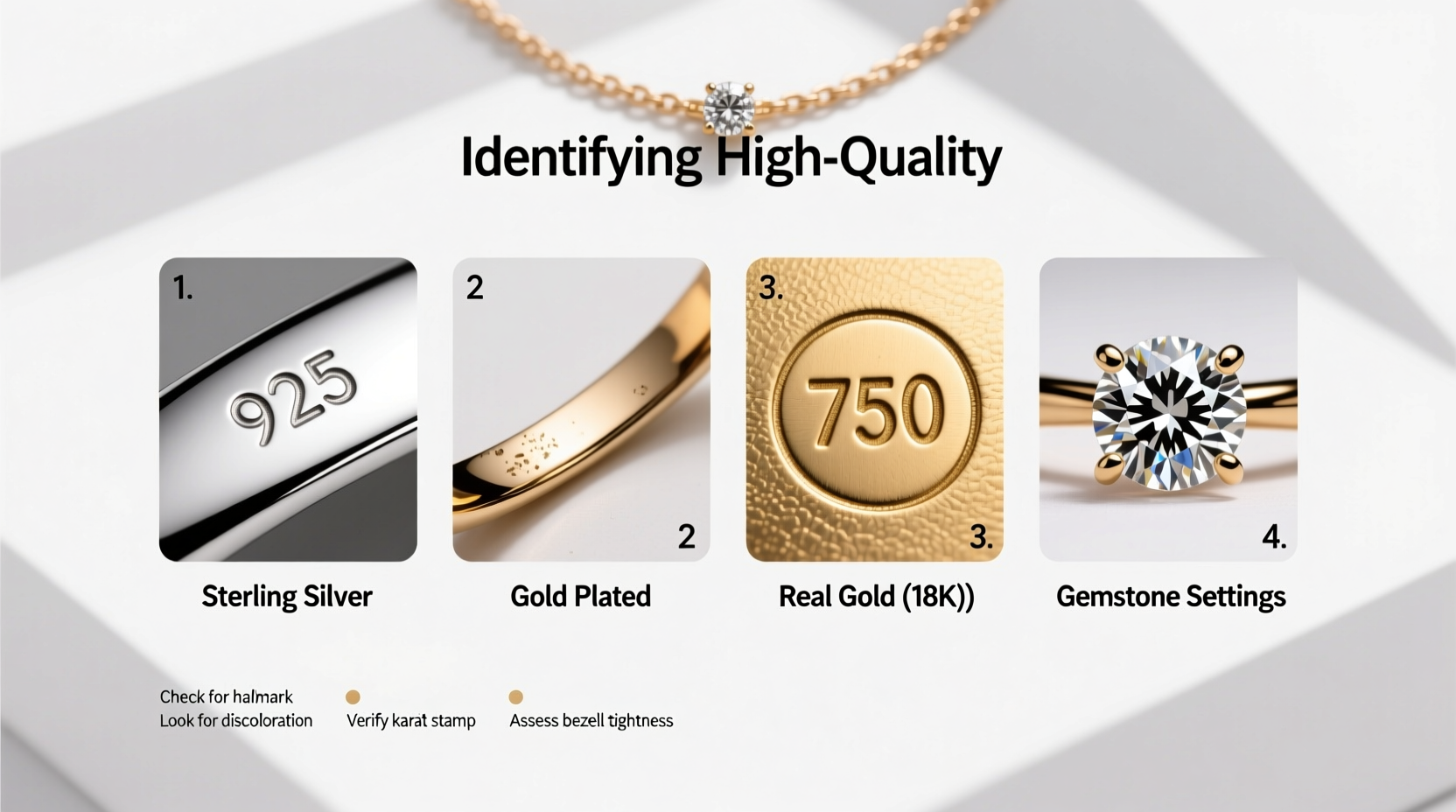
- Sterling Silver (925): Composed of 92.5% pure silver and 7.5% alloy (usually copper), this metal offers brilliance and durability. It may tarnish but is easily cleaned.
- Gold (10K–24K): Measured in karats, with 24K being pure gold. Most necklaces use 14K or 18K for balance between purity and strength. Lower karat gold contains more alloy, increasing durability but reducing gold content.
- Platinum: Dense, hypoallergenic, and naturally white, platinum is rarer and more expensive than gold. Resists corrosion and maintains its finish longer.
- Titanium & Stainless Steel: Lightweight and highly resistant to scratches and tarnish. Often used in modern or sporty designs.
- Filled, Plated, or “Vermeil”: These are not solid metals. Gold-filled means a thick layer of gold bonded to base metal; vermeil is gold-plated sterling silver. Both offer affordability but wear over time.
How to Test Material Quality at Home
You don’t need a lab to assess basic quality. Several simple, non-destructive tests can be performed with household items or close visual inspection.
- Magnet Test: Precious metals like gold, silver, and platinum are not magnetic. If a strong magnet pulls the chain, it likely contains iron or nickel—a red flag for low-grade alloys.
- Visual Inspection: Look closely at seams, clasps, and links. High-quality pieces have smooth finishes, uniform links, and no discoloration at joints. Tarnish concentrated near solder points suggests base metal underneath.
- Ceramic Scratch Test (for gold): Gently drag the piece across unglazed ceramic. Real gold leaves a golden streak; fake gold leaves a black mark. Note: This test can cause minor scratching—use cautiously.
- Acid Test Kits: Available online, these kits use nitric or aqua regia solutions to react with metal samples. While accurate, they require care and may damage the piece if not done properly.
“Over 60% of jewelry sold online as ‘solid gold’ fails basic acid testing. Always verify claims independently.” — Rafael Mendez, Certified Gemologist and Appraiser
Decoding Hallmarks and Stamps
Hallmarks are tiny stamps indicating metal type, purity, manufacturer, and country of origin. Learning to read them is one of the most reliable ways to assess quality without tools.
| Stamp | Meaning | What to Watch For |
|---|---|---|
| 925 | Sterling silver (92.5% pure) | Should not be paired with \"GP\" or \"EPNS\" |
| 14K, 585 | 14-karat gold (58.5% gold) | Look for consistent stamping on clasp and pendant |
| 18K, 750 | 18-karat gold (75% gold) | Premium grade; heavier feel expected |
| PT, 950 | Platinum (95% pure) | Rare and dense; should feel substantial |
| GF, HGE | Gold-filled or heavy gold electroplate | Not solid gold; limited lifespan |
| No Stamp | Unverified or potentially illegal in many countries | Major red flag unless antique |
Be cautious of stamps like “925 GP”—this means sterling silver with gold plating, not solid gold. Similarly, “CZ” indicates cubic zirconia, not diamond.
Real-World Example: The Tourist Market Trap
Sophie traveled to Bali and fell in love with a delicate gold pendant necklace labeled “18K.” Excited, she paid $120 in cash, received no receipt, and skipped verification. Within three weeks, the pendant turned green against her skin and began flaking.
When she took it to a local jeweler, the truth emerged: the piece was brass with a thin gold wash. There was no “750” hallmark, and a magnet test showed slight attraction due to iron content. Worse, the seller had applied a counterfeit stamp.
This is common in tourist zones where regulation is lax. Sophie’s mistake? Trusting appearance and price over verification. A quick hallmark check or professional appraisal could have saved her money and disappointment.
Tip: Never buy high-value jewelry without certification or third-party verification, especially abroad.Step-by-Step: How to Evaluate a Necklace Before Purchase
Follow this sequence when shopping—online or in person—to ensure you’re getting what you pay for.
- Inspect the Finish: Look under bright light. Premium metals reflect evenly without pitting, cloudiness, or orange undertones (common in brass).
- Check Weight: Gold and platinum are dense. A lightweight “gold” chain may be hollow or filled.
- Examine the Clasp: High-end necklaces use secure, smoothly operating clasps (lobster, spring ring, or box). Flimsy clasps suggest cost-cutting.
- Verify Stamps: Use a magnifier to confirm legible, deeply engraved hallmarks—not shallow, stamped-on fakes.
- Request Documentation: Reputable sellers provide certificates of authenticity, especially for platinum or diamonds.
- Test Responsibly: If allowed, perform a discreet magnet or scratch test. Avoid damaging the item.
- Compare Prices: If a deal seems too good to be true—like a 14K gold chain for $50—it almost certainly is.
Frequently Asked Questions
Is gold-filled jewelry worth buying?
Yes, if you want gold appearance on a budget. Gold-filled contains 5% gold by weight and can last 10–30 years with care. However, it’s not equivalent to solid gold and will eventually wear down, especially on chains subject to friction.
Why does my silver necklace tarnish so quickly?
Tarnishing is natural for sterling silver due to sulfur exposure in air, sweat, and cosmetics. Rapid tarnishing may indicate lower silver content or poor alloy balance. Store in anti-tarnish bags and polish monthly to extend shine.
Can I wear stainless steel every day?
Absolutely. Surgical-grade stainless steel (316L) is hypoallergenic, rust-resistant, and ideal for daily wear. It won’t tarnish or fade, making it excellent for active lifestyles or sensitive skin.
Essential Checklist for Buyers
Before finalizing any purchase, run through this checklist:
- ✅ Hallmark present and verified (e.g., 925, 14K, PT)
- ✅ Consistent color throughout, including clasp and connectors
- ✅ Substantial weight for the size and claimed material
- ✅ No magnetic attraction
- ✅ Smooth finish with no rough edges or visible plating layers
- ✅ Reputable seller with return policy and customer reviews
- ✅ Certificate of authenticity (if applicable)
Final Thoughts: Invest in Knowledge, Not Just Metal
The true value of a necklace isn’t just in its sparkle—it’s in its substance. High-quality materials enhance longevity, comfort, and personal confidence. By learning to identify genuine craftsmanship, you protect your investment and refine your taste.
Next time you browse a jewelry counter or scroll through online listings, approach it with the eye of an expert. Inspect, question, and verify. Whether you’re buying for yourself or as a gift, demand transparency and precision. Your collection—and your skin—will thank you.
💬 Have a necklace you’re unsure about? Share your experience in the comments—we’ll help you decode the markings and determine its true quality.