Purchasing a silver bracelet should be a rewarding experience—whether as a gift, a personal indulgence, or an investment in timeless style. But the market is flooded with imitations: plated metals, base alloys stamped with misleading marks, and even online sellers offering \"sterling silver\" at suspiciously low prices. Without proper verification, you could end up with a tarnished imitation rather than the authentic .925 silver you expected.
Sterling silver consists of 92.5% pure silver and 7.5% alloy (usually copper), which gives it durability while maintaining its luster. Recognizing genuine pieces protects your investment and ensures you're wearing quality metal that won’t irritate your skin or degrade quickly. Here are seven proven methods experts use to authenticate sterling silver jewelry—no lab equipment required.
1. Check for the Hallmark Stamp
The most immediate clue lies in microscopic engravings on the clasp or inner band of the bracelet. Genuine sterling silver is typically marked with one of several standardized hallmarks:
- .925 – The international standard for sterling silver purity
- Sterling – Often paired with .925 or used alone
- Silver 925 – A full-text variation of the numeric stamp
- 925 – Sometimes without the decimal point
Absence of any marking doesn’t automatically mean the piece is fake—older or handmade items may lack stamps—but its presence significantly increases confidence in authenticity.
Tip: Use a magnifying glass or jeweler’s loupe to inspect hard-to-read engravings. Look near the clasp or closure where manufacturers commonly place stamps.2. Perform the Magnet Test
Silver is not magnetic. If your bracelet is attracted to a strong magnet, it contains ferromagnetic metals like iron or steel—clear signs it’s not genuine sterling silver.
To conduct this test:
- Use a rare-earth magnet (neodymium), available inexpensively online.
- Hold the magnet close to the bracelet.
- Observe whether there's any pull or attraction.
If the piece sticks or feels resistance, it’s likely made from a base metal core with silver plating. Note: Some non-magnetic metals (like aluminum or lead) also won’t attract magnets, so this test rules out fakes but doesn't confirm authenticity on its own.
3. Conduct the Ice Cube Test
Silver has the highest thermal conductivity of all common metals. This means it transfers heat faster than almost anything else—which you can test dramatically using ice.
Place a small ice cube directly onto the surface of the bracelet. On real sterling silver, the ice will melt noticeably faster than on other materials—even within seconds under room temperature conditions.
This happens because silver rapidly draws heat from the surrounding environment into the ice, accelerating melting. Imitation metals like stainless steel, titanium, or plated brass won’t produce the same rapid effect.
“Thermal conductivity is one of the most underrated yet reliable home tests for silver. It’s physics-based, quick, and requires no special tools.” — Dr. Alan Pierce, Metallurgist & Jewelry Appraiser
4. Examine Tarnish Patterns and Skin Reaction
Genuine sterling silver naturally tarnishes over time due to oxidation, especially when exposed to moisture, sulfur, or air pollutants. While tarnish might seem undesirable, it’s actually a sign of authenticity.
Look for a gradual, grayish-black discoloration—not flaking or peeling. Fake silver-plated items often show wear where the thin layer chips away, revealing a different-colored metal underneath. True sterling develops uniform patina that can be polished off.
Additionally, pay attention to how your skin reacts. Authentic sterling silver rarely causes irritation unless you’re specifically allergic to copper (one of its alloy components). In contrast, cheap alloys in counterfeit pieces often contain nickel, which leads to redness, itching, or green discoloration on the skin.
5. Use the Nitric Acid Test (With Caution)
This method is more advanced and slightly invasive, so it should only be used when you're certain about ownership and willing to accept minor damage.
Nitric acid reacts differently depending on silver content:
| Silver Type | Reaction to Nitric Acid |
|---|---|
| Pure Silver | Creamy white or light beige residue |
| Sterling Silver (.925) | Light green or pale cream tint |
| Plated or Fake Silver | Bright green, violent reaction indicating base metal |
To perform the test safely:
- Make a discreet scratch on an inconspicuous area (e.g., inside clasp).
- Apply one drop of nitric acid using a dropper.
- Observe the color change immediately.
Always wear gloves and work in a ventilated space. Rinse the area after testing and neutralize with baking soda if needed.
Tip: Purchase a silver testing kit that includes nitric or acid alternatives with safety instructions. Avoid improvising with household chemicals.6. Visit a Professional Jeweler for Verification
When in doubt, trust a certified professional. Reputable jewelers have access to X-ray fluorescence (XRF) analyzers or electronic testers that determine metal composition accurately and non-destructively.
Many local jewelers offer free or low-cost assessments, especially if you're considering a purchase from a private seller or estate sale. They can also verify craftsmanship details—such as solder joints, finish quality, and hallmark legitimacy—that suggest whether a piece was mass-produced or authentically crafted.
One customer brought in a vintage-style bracelet bought online for $35 claiming “solid .925 silver.” After XRF analysis, the jeweler found only 8% silver content—the rest was zinc alloy. The buyer saved themselves future disappointment by seeking expert validation before gifting it.
Mini Case Study: The Online Bargain That Wasn’t
Sarah purchased a delicate chain bracelet advertised as “genuine sterling silver” from a third-party marketplace. It arrived with a .925 stamp and looked convincing. But within days, her wrist turned green, and dark spots began flaking off at the clasp.
She took it to a local jeweler who performed a file-and-acid test. Beneath a thin silver coating was a reddish-brown base metal—consistent with copper alloy plating. The stamp had been fraudulently added. Lesson learned: visible markings alone aren’t enough.
7. Compare Weight and Sound
Density matters. Sterling silver is dense and relatively heavy for its size. Hold the bracelet in your hand and compare it mentally to known silver items or similar-looking fashion jewelry.
Fake silver pieces tend to feel hollow, lightweight, or “plastic-like.” A solid sterling bracelet—even a slim one—should have a satisfying heft.
You can also try the ring test: Gently tap the bracelet against a hard surface (or let it dangle and strike another metal object). Genuine silver emits a soft, high-pitched ringing sound that lingers briefly. Counterfeit metals usually produce a dull thud or short clink.
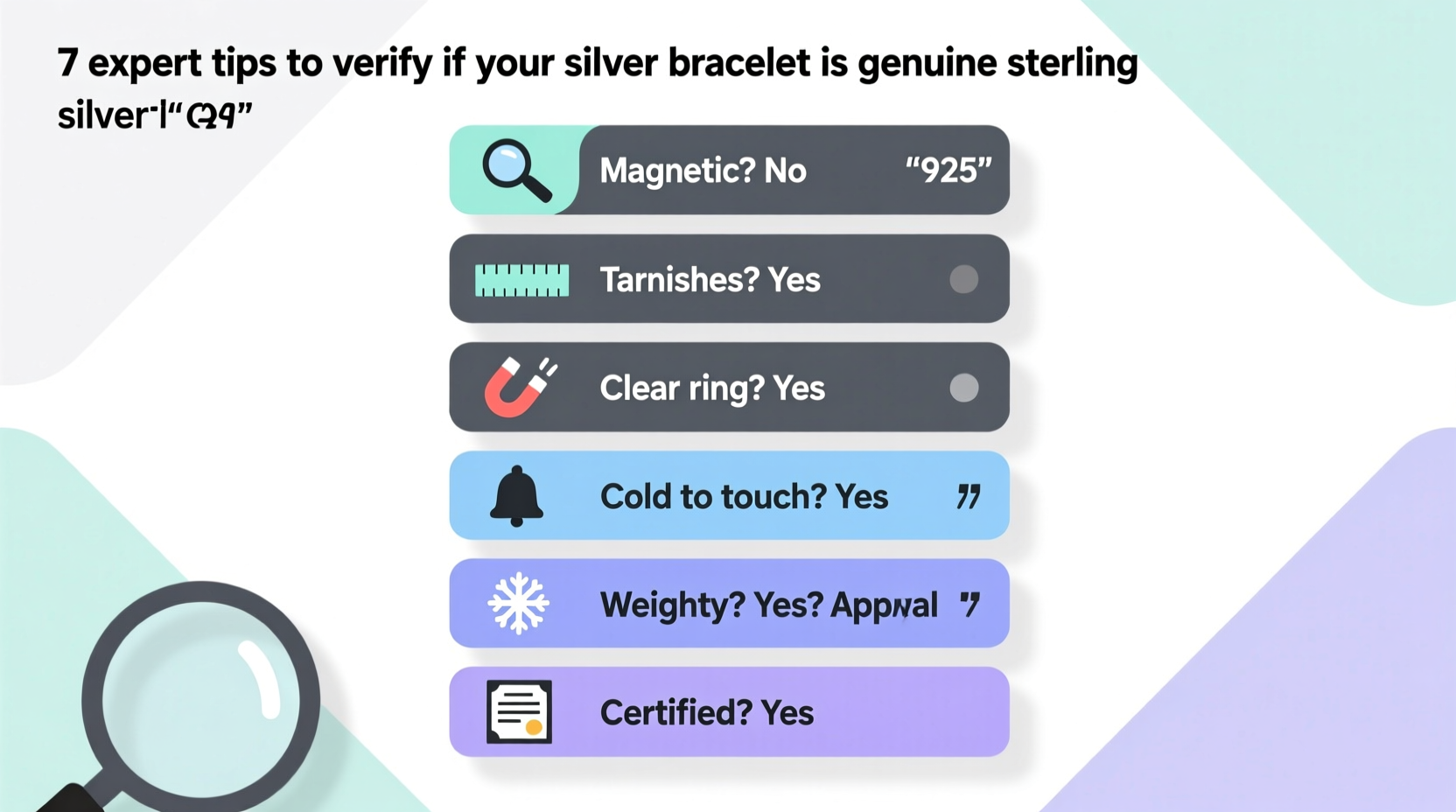
Checklist: How to Verify Your Silver Bracelet
Before buying or accepting a silver bracelet as genuine, go through this checklist:
- ✅ Inspect for a .925, “Sterling,” or “Silver 925” stamp
- ✅ Perform the magnet test – no attraction should occur
- ✅ Try the ice cube test – rapid melting suggests real silver
- ✅ Observe tarnishing behavior – uniform, polishable darkening is good
- ✅ Check for skin reactions – green marks may indicate plating
- ✅ Assess weight and sound – heavier feel and ringing tone support authenticity
- ✅ Consult a professional for definitive testing if uncertain
FAQ
Can a silver bracelet be real without a stamp?
Yes, especially if it’s handmade, antique, or imported from regions with less strict marking laws. However, absence of a stamp increases the need for additional verification through other tests.
Is sterling silver supposed to tarnish?
Yes. Tarnishing is natural and expected. It results from silver reacting with sulfur compounds in the air. Regular cleaning and proper storage slow the process, but complete prevention isn’t possible—or necessary. Polishing restores shine easily.
Are silver-plated bracelets worthless?
No, they serve aesthetic purposes and are more affordable. However, they shouldn’t be sold or marketed as solid sterling silver. Plated items eventually wear down, exposing underlying metal. Their value is primarily decorative, not material.
Conclusion
Verifying whether your silver bracelet is genuine sterling silver isn’t just about avoiding scams—it’s about valuing what you wear and understanding the craftsmanship behind it. With these seven expert-backed techniques, you can confidently assess authenticity using simple tools and observations.
Don’t rely on price, packaging, or promises alone. Empower yourself with knowledge. Whether you're building a collection, giving a meaningful gift, or preserving family heirlooms, accurate identification ensures your jewelry remains beautiful, safe, and valuable over time.
💬 Have a silver piece you’re unsure about? Try one of these tests today and share your findings in the comments. Let’s build a community of informed buyers and collectors!








