
Pregnancy transforms the body in profound ways—physically, hormonally, and emotionally. As the uterus expands and ligaments loosen due to increased relaxin levels, many expectant mothers experience back pain, pelvic instability, fatigue, and stress. Prenatal yoga offers a gentle yet powerful way to support both physical strength and mental calm throughout this journey. When practiced safely, specific yoga poses can improve circulation, enhance posture, reduce swelling, and prepare the body for labor. The following poses are carefully selected by prenatal fitness experts for their balance of stability, flexibility, and breath awareness—key components of a healthy pregnancy routine.
Why Prenatal Yoga Matters
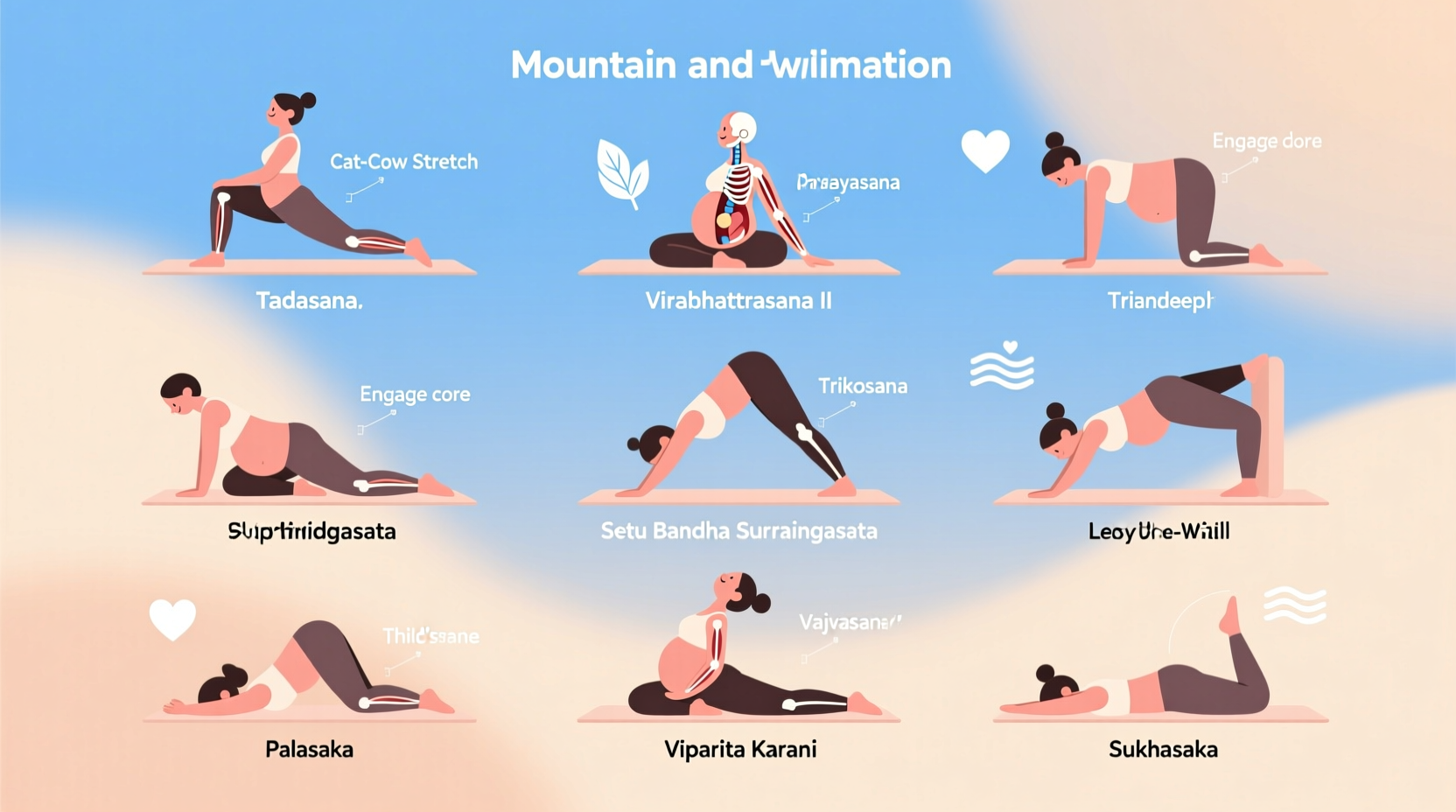
Unlike standard yoga classes, prenatal yoga is adapted to accommodate shifting centers of gravity, joint laxity, and cardiovascular changes. According to the American College of Obstetricians and Gynecologists (ACOG), moderate exercise like yoga is not only safe but beneficial during uncomplicated pregnancies. It helps regulate blood pressure, reduces the risk of gestational diabetes, and may even shorten labor duration.
The focus on mindful breathing in yoga also trains the nervous system to stay calm under pressure—a skill that becomes invaluable during contractions and delivery. Most importantly, prenatal yoga encourages body awareness, helping women tune into subtle signals of fatigue or strain before they escalate.
“Prenatal yoga isn’t about pushing limits—it’s about cultivating presence, resilience, and connection with your changing body.” — Dr. Lena Torres, Perinatal Wellness Specialist
Essential Safety Guidelines Before You Begin
Before starting any new movement practice during pregnancy, consult your healthcare provider—especially if you have conditions such as placenta previa, preeclampsia, or cervical insufficiency. Once cleared, keep these principles in mind:
- Avoid lying flat on your back after the first trimester; use an incline or side-lying position instead.
- Never push into pain. Discomfort is a signal to modify or stop.
- Use props liberally: blocks, bolsters, straps, and walls enhance safety and comfort.
- Focus on diaphragmatic breathing—slow inhales through the nose, full exhales through the mouth.
- Steer clear of deep twists, intense backbends, or hot environments (e.g., hot yoga).
Top 10 Prenatal Yoga Poses for Strength & Relaxation
The following poses are grouped by primary benefit—some emphasize core stability and pelvic support, others prioritize circulation and mental calm. Each includes modifications for all trimesters.
1. Cat-Cow Stretch (Marjaryasana-Bitilasana)
This gentle spinal wave improves mobility in the spine and pelvis while encouraging rhythmic breathing. It’s especially helpful for relieving lower back tension.
- Begin on hands and knees with wrists under shoulders and knees under hips.
- Inhale into Cow: drop the belly, lift the chest and tailbone, gaze slightly forward.
- Exhale into Cat: round the spine, tuck the chin and tailbone, engage the abdominals.
- Repeat for 8–10 breaths, syncing movement with breath.
2. Supported Child’s Pose (Balasana)
A restorative posture that gently opens the hips and releases lower back tension. Ideal for moments of fatigue or nausea.
- Kneel on the floor, big toes touching, knees wide.
- Sit hips back toward heels and drape torso between thighs.
- Support forehead on a block or cushion; arms can extend forward or rest alongside body.
- Hold for 1–3 minutes, focusing on deep abdominal breaths.
3. Warrior II (Virabhadrasana II)
Builds leg strength, enhances stamina, and promotes hip opening—all crucial for labor endurance.
- Stand with feet 3–4 feet apart, right foot turned out 90 degrees, left foot slightly inward.
- Bend the right knee over the ankle, keeping thigh parallel to the floor.
- Extend arms parallel to the ground, gaze over the right fingertips.
- Engage core and hold for 5–7 breaths. Repeat on the left side.
4. Triangle Pose (Trikonasana)
Stretches the hamstrings, relieves sciatic tension, and improves balance.
- From Warrior II, straighten the front leg and hinge at the hip to reach forward, then down.
- Place hand on shin, block, or floor; extend opposite arm upward.
- Keep shoulders stacked and eyes soft. Hold for 5 breaths per side.
5. Prenatal Pelvic Tilts (On Hands and Knees or Standing)
Strengthens transverse abdominals and supports proper pelvic alignment, reducing low back strain.
- On hands and knees: Inhale to neutral spine; exhale to gently tuck tailbone and engage lower abs.
- Or standing: Place hands on hips, gently rock pelvis forward and back, isolating movement.
- Perform 10–12 repetitions slowly, coordinating with breath.
6. Seated Forward Bend with Support (Paschimottanasana)
Calms the nervous system and stretches the entire back line. Use a bolster or pillow across the lap to avoid rounding the spine.
- Sit with legs extended, feet flexed.
- Inhale to lengthen the spine; exhale to hinge from hips, draping forward onto the support.
- Rest head and arms comfortably. Breathe deeply for 2–3 minutes.
7. Reclined Bound Angle Pose (Supta Baddha Konasana)
An essential pose for opening the inner thighs and pelvis—key preparation for childbirth.
- Lie on back with soles of feet together, knees falling outward.
- Support each thigh with a pillow or block to prevent strain.
- Place one hand on belly, one on chest; breathe into the pelvic floor.
- Stay for 5–10 minutes, ideal for evening relaxation.
8. Modified Bridge Pose (Setu Bandhasana)
Relieves swollen legs, improves circulation, and gently strengthens glutes and lower back.
- Lie on back with knees bent, feet flat and hip-width apart.
- Inhale to lift hips; slide a block under the sacrum for support.
- Keep neck long and shoulders relaxed. Hold 1–2 minutes.
9. Eagle Arms (Garudasana Arms)
Releases upper back and shoulder tension caused by postural changes during pregnancy.
- Sit or stand tall. Extend arms forward, cross right arm over left, then bend elbows to bring palms together if possible.
- Hold for 5 breaths, feeling stretch between shoulder blades.
- Switch arm positions and repeat.
10. Legs-Up-the-Wall Pose (Viparita Karani)
One of the most effective poses for reducing leg swelling and calming the mind.
- Sit close to a wall, swing legs up as you lie back.
- Hips near or against the wall, legs resting vertically.
- Place a folded blanket under the hips for added support.
- Rest for 10–15 minutes, focusing on slow exhalations.
Do’s and Don’ts of Prenatal Yoga Practice
| Do’s | Don’ts |
|---|---|
| Warm up gently with breathing and neck rolls | Jump into intense flows without preparation |
| Modify poses using props for comfort | Force flexibility—your joints are more mobile |
| Practice pelvic floor engagement (Kegels) during holds | Hold your breath or strain during poses |
| Listen to your body’s daily needs | Compare your practice to pre-pregnancy ability |
| Hydrate before and after sessions | Practice in overheated rooms or direct sun |
Real Example: Sarah’s Third Trimester Routine
Sarah, a first-time mother at 32 weeks, struggled with sciatica and insomnia. Her OB-GYN recommended prenatal yoga after ruling out complications. She began with just 15 minutes a day: starting with Cat-Cow, moving into Supported Child’s Pose, then finishing with Reclined Bound Angle and Legs-Up-the-Wall. Within two weeks, she noticed reduced nighttime cramping and improved sleep quality. By week 36, she incorporated Warrior II and pelvic tilts to build confidence in her physical strength. “I didn’t feel ‘fit’,” she shared, “but I felt capable—and that made all the difference when labor started.”
Frequently Asked Questions
Can I start prenatal yoga if I’ve never done yoga before?
Yes. Many women begin yoga for the first time during pregnancy. Look for beginner-friendly or specifically labeled prenatal classes where instructors are trained in perinatal adaptations.
When should I stop doing certain poses?
Discontinue any pose that causes dizziness, shortness of breath, abdominal tightening, or pain. After 28 weeks, avoid supine poses longer than 90 seconds unless well-supported. Always prioritize comfort over form.
How often should I practice?
Most experts recommend 3–4 sessions per week, lasting 20–30 minutes. Even 10 minutes daily can yield benefits in mood and circulation.
Conclusion: Honor Your Body, Prepare with Intention
The journey of pregnancy is not one to be powered through, but rather moved through with awareness and care. These ten prenatal yoga poses offer more than physical preparation—they cultivate a relationship between breath, body, and baby. Whether you're seeking relief from common discomforts or building inner resilience for labor, consistency and mindfulness matter far more than intensity. Start where you are, use what you have, and allow each breath to remind you that strength and softness are not opposites, but partners in the process of becoming a mother.
💬 Have a favorite prenatal pose or tip? Share your experience in the comments to inspire other expecting mothers on their journey.








