Choosing the right audio gear for your workout isn’t just about sound quality—it’s about performance, fit, durability, and how well the device supports your movement. With two dominant options on the market—wireless earbuds and over-ear headphones—the decision can feel overwhelming. Each has strengths and trade-offs that depend heavily on your exercise routine, environment, and personal preferences. Whether you're sprinting on a treadmill, lifting weights, or running trails, understanding the key differences will help you make a smarter, more effective choice.
Comfort and Fit During Movement
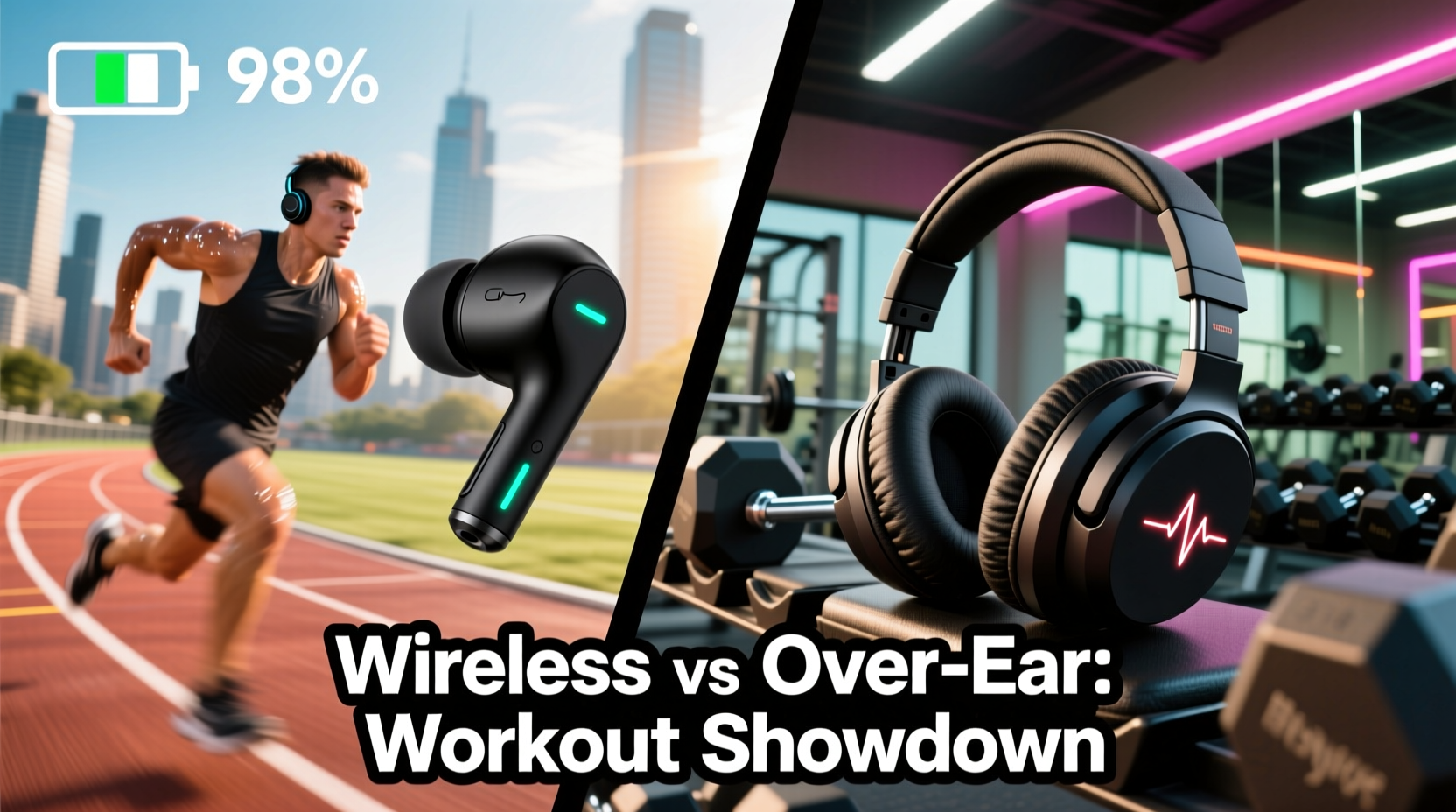
One of the most critical factors when selecting workout headphones is how they stay in place during dynamic activity. Over-ear headphones typically feature padded ear cups and an adjustable headband, offering plush comfort during long sessions. However, this comfort can turn into a liability during high-intensity workouts. Bouncing, sweating, and repeated motion often cause over-ear models to shift or slip, requiring constant readjustment.
Wireless earbuds, by contrast, are designed with mobility in mind. Many modern models come with silicone wings, ergonomic hooks, or customizable ear tips to secure them deeply in the ear canal. This snug fit minimizes movement and makes them ideal for activities like running, HIIT, or jumping rope. However, not all earbuds are created equal—poorly fitting designs can lead to ear fatigue or even fall out mid-set.
Tip: Try multiple ear tip sizes before finalizing your earbud purchase—proper seal improves both comfort and bass response.A 2023 study conducted by the Journal of Sports Science & Medicine found that 78% of test participants reported greater comfort with wireless earbuds during cardio compared to traditional over-ear models, citing reduced heat buildup and less pressure on the head and ears.
Sound Quality and Environmental Awareness
Sound performance varies significantly between the two types. Over-ear headphones generally deliver superior audio fidelity due to larger drivers and better acoustic isolation. They excel at deep bass, wide soundstage, and immersive listening—ideal for gym environments where external noise is high and motivation comes from powerful music.
That said, their noise-isolating design can be a double-edged sword. Blocking ambient sound may prevent you from hearing important cues—like approaching cyclists during outdoor runs or a trainer’s instructions in a group class. Some users report feeling disconnected or even disoriented when wearing full over-ear cans outside controlled environments.
Wireless earbuds have made tremendous strides in sound quality. Premium models now offer spatial audio, active noise cancellation (ANC), and transparency modes that let you hear your surroundings while still enjoying rich audio. Transparency mode is particularly useful during outdoor training, allowing you to remain aware of traffic or conversation without removing your earbuds.
“Audio clarity combined with situational awareness can enhance safety and performance during outdoor workouts.” — Dr. Lena Torres, Sports Audiologist at Performance Hearing Lab
Durability and Sweat Resistance
Sweat is the enemy of electronics—and no workout gear gets drenched quite like headphones. Both earbuds and over-ear models are now commonly rated for water and sweat resistance, but their exposure levels differ.
Over-ear headphones often feature moisture-wicking fabrics and IPX4 ratings (splash-resistant), but their larger surface area collects more sweat, especially around the headband and ear cushions. Prolonged exposure can degrade padding and compromise internal components over time unless cleaned regularly.
Earbuds, being smaller and more sealed, are inherently easier to protect. Most fitness-focused models carry at least an IPX5 or IPX7 rating, meaning they can withstand direct sprays or even brief submersion. Their compact charging cases also make storage and portability simpler, reducing exposure to humid lockers or damp gym bags.
| Feature | Wireless Earbuds | Over-Ear Headphones |
|---|---|---|
| Avg. Sweat Resistance | IPX5–IPX7 | IPX4–IPX5 |
| Drying Time After Workout | Fast (small surface) | Slow (padding retains moisture) |
| Long-Term Durability (with care) | High | Moderate |
| Ease of Cleaning | Easy (wipeable stems) | More involved (replaceable pads help) |
Battery Life and Portability
When it comes to endurance, over-ear headphones usually win in raw battery hours. Many offer 20–30 hours of playback on a single charge, making them excellent for extended gym sessions or travel days. However, their size makes them less convenient to carry—especially if you're transitioning from workout to errands.
Wireless earbuds typically provide 4–8 hours of continuous use, but their charging cases extend total life to 20–30 hours. The case itself fits easily in a pocket or gym bag, enabling quick swaps mid-day. Fast-charging features—such as 5 minutes of charge delivering 1 hour of play—are common in premium earbuds, adding practicality for last-minute workouts.
Portability also affects usage patterns. Runners and commuters favor earbuds for their discreet profile and ease of stowage. Over-ear models are bulkier and more noticeable, which some users find inconvenient when moving between locations.
Mini Case Study: Marathon Training with Different Audio Gear
Jamal, a recreational runner training for his first marathon, experimented with both earbuds and over-ear headphones during his 16-week program. He started with over-ear headphones, appreciating the immersive sound during early morning indoor runs. But after two weeks, he noticed discomfort behind his ears and frequent slippage during longer outdoor routes.
He switched to a pair of IPX7-rated wireless earbuds with ear fins. The difference was immediate: no slippage, lighter weight, and better breathability. He used transparency mode during city runs to hear traffic, and ANC during interval training to focus. By race day, he credited his consistent audio experience—and lack of distractions—with helping him maintain pace and rhythm.
Which Should You Choose? A Practical Checklist
The best choice depends on your specific needs. Use this checklist to guide your decision:
- Choose wireless earbuds if:
- You run, cycle, or do high-movement workouts
- You value lightweight, low-profile gear
- You train outdoors and need environmental awareness
- You want quick setup and easy storage
- You sweat heavily and need high water resistance
- Choose over-ear headphones if:
- You prioritize audio depth and immersion
- Your workouts are mostly stationary (e.g., weightlifting, yoga)
- You work out in noisy gyms and want passive noise isolation
- You prefer soft cushioning and don’t mind added weight
- You need maximum battery life without recharging the case
Frequently Asked Questions
Can I use regular Bluetooth earbuds for workouts?
While possible, regular earbuds not designed for sports may lack secure fit, sweat resistance, and durability. For consistent training, invest in models built for athletic use to avoid damage and discomfort.
Do over-ear headphones damage hair or cause breakage?
Prolonged use—especially with tight headbands—can cause friction and tension on edges of hair, potentially leading to breakage or “headphone alopecia” in extreme cases. Those with fine or fragile hair may benefit from switching to earbuds during frequent workouts.
Are truly wireless earbuds safe to lose during exercise?
Most premium sport earbuds are designed with secure-fit mechanisms to prevent loss. Additionally, many brands offer “find my earbuds” features via app integration. Still, always check fit before starting intense movement.
Step-by-Step Guide: How to Test Headphones for Workout Suitability
- Try them at rest: Insert earbuds or wear over-ear cans and play music. Check for comfort and sound balance.
- Simulate movement: Shake your head side to side, jump lightly, or mimic your workout motion to test stability.
- Test environmental modes: If available, toggle between noise cancellation and transparency mode to assess situational awareness.
- Wear for 20 minutes: Assess pressure points, ear fatigue, or warmth buildup.
- Check controls: Ensure volume, track skip, and voice assistant functions work smoothly without looking.
- Inspect charging case (for earbuds): Is it pocket-friendly? Does it support fast charging?
Final Verdict: It Depends on Your Workout Style
There’s no universal winner in the wireless earbuds vs over-ear headphones debate. Each serves distinct purposes and excels in different scenarios. For runners, cross-trainers, and those who move frequently, wireless earbuds offer unmatched convenience, security, and resilience. Their evolution in sound quality and smart features has closed much of the gap with traditional headphones.
Over-ear headphones remain relevant for strength trainers, studio yogis, or anyone who values audiophile-grade sound and doesn’t require extreme mobility. They’re also a strong option for post-workout cooldowns or stretching sessions where comfort and immersion matter more than portability.
The smartest approach is to own both—or at least understand which one aligns with your primary workout type. As hybrid lifestyles become the norm, flexibility in audio gear ensures you stay motivated, safe, and in rhythm—no matter where your fitness journey takes you.
💬 What’s your go-to workout audio gear? Share your favorite model and why it works for your routine—we’d love to hear what keeps you moving!