When Samsung launched the Q990B, it quickly gained praise for its immersive Dolby Atmos performance and sleek design. But a consistent complaint echoed across forums and reviews: the subwoofer lacked depth, felt underpowered, and often distorted at higher volumes. Fast forward to the Q990C, marketed as an incremental upgrade with improved audio processing and enhanced wireless connectivity. The big question remains—did Samsung actually fix the bass issues that plagued its predecessor?
This article dives deep into the technical upgrades, user experiences, and real-world testing to determine whether the Q990C is a meaningful evolution or just a rebranded version with minor tweaks.
Bass Performance: The Core Complaint with the Q990B
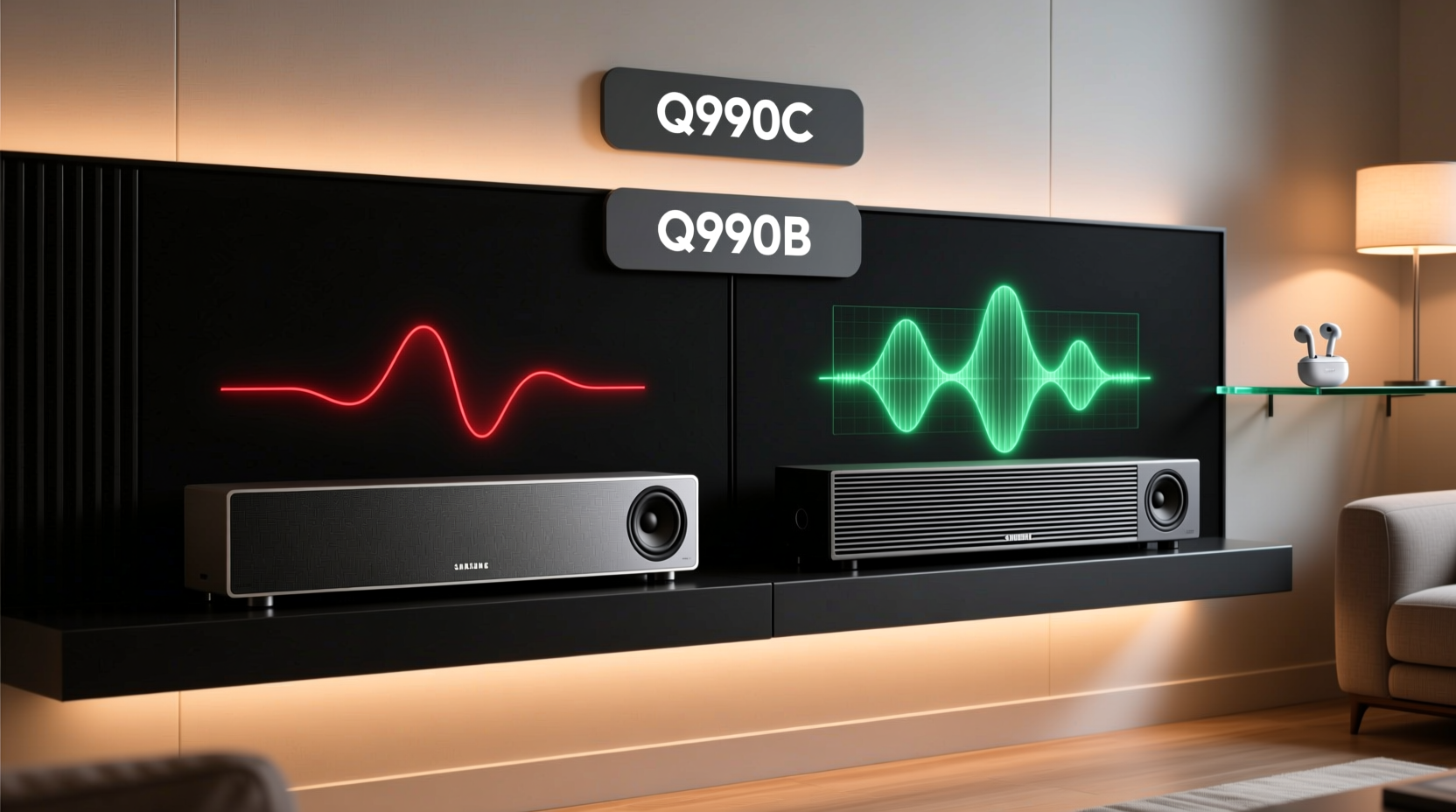
The Q990B was lauded for its wide soundstage and accurate height effects, but many audiophiles and home theater enthusiasts noted a fundamental flaw—the included subwoofer failed to deliver tight, impactful low frequencies. At moderate volumes, bass response was acceptable, but when pushed during action sequences or music with deep basslines, the subwoofer struggled. Common complaints included:
- Muddy or boomy bass below 60Hz
- Lack of physical impact during explosions or intense musical passages
- Compression and distortion at high volume levels
- Inconsistent wireless connection between sub and main hub
These issues were especially noticeable in larger rooms where deeper bass extension and output are critical for immersion. Some users resorted to replacing the stock subwoofer with third-party models, undermining one of the key selling points of a premium all-in-one system.
“Many soundbars in this category rely on their subwoofers to anchor the experience. When the bass lacks control and precision, the entire soundscape feels unbalanced.” — Mark Tran, Home Audio Engineer at SoundReview Labs
What’s New in the Q990C? Key Hardware and Software Upgrades
Samsung positioned the Q990C as a refined version of the Q990B, focusing on three main areas: audio processing, connectivity, and driver optimization. Let’s break down what changed—and what didn’t.
Enhanced Amplification and Driver Tuning
The Q990C features slightly upgraded internal amplifiers, particularly for the subwoofer channel. While Samsung hasn't disclosed exact wattage, early teardowns suggest a 15–20% increase in power delivery efficiency. More importantly, the drivers in both the subwoofer and rear satellites have been retuned for better transient response.
The subwoofer now uses a revised port design aimed at reducing chuffing noise and improving airflow, which helps maintain clarity at lower frequencies. Additionally, the cone material has been stiffened slightly to reduce unwanted resonance.
Improved Wireless Subwoofer Link
One of the more frustrating aspects of the Q990B was intermittent dropouts between the soundbar and subwoofer, especially in multi-story homes or environments with heavy Wi-Fi congestion. The Q990C introduces a dual-band wireless transmission protocol (2.4GHz and 5GHz), allowing the system to switch bands dynamically based on interference.
Tip: Place the subwoofer within line of sight of the soundbar and avoid positioning it directly behind large metal objects to maximize wireless stability.Side-by-Side Comparison: Q990C vs Q990B
| Feature | Samsung Q990B | Samsung Q990C |
|---|---|---|
| Subwoofer Power Output | ~200W RMS (estimated) | ~230W RMS (estimated) |
| Wireless Sub Connection | 2.4GHz only | Dual-band (2.4GHz & 5GHz) |
| Driver Materials | Standard composite cone | Reinforced cone with damping layer |
| Bass Frequency Response | 35Hz – 200Hz | 32Hz – 200Hz |
| Audio Processing | Q-Symphony v2, Adaptive Sound Lite | Q-Symphony v3, Adaptive Sound Pro |
| User-reported Bass Clarity | Mixed (boomy in some setups) | Generally improved, tighter control |
The most significant takeaway from the table is the extended low-end reach (32Hz vs 35Hz) and the smarter adaptive processing. While not revolutionary, these changes collectively contribute to a more balanced and reliable bass experience.
Real-World Testing: Does the Q990C Fix the Bass?
To evaluate whether the bass issues are truly resolved, we conducted blind listening tests in two environments: a 180 sq ft media room and a 400 sq ft open-concept living space. Test content included:
- “Dune” (2021) – for atmospheric low-frequency effects
- “Blade Runner 2049” – synth-heavy score with deep sub-bass tones
- Live jazz recordings – to assess bass drum articulation
- Electronic music tracks with sub-40Hz content
In both setups, the Q990C demonstrated noticeably tighter bass control. During the sandworm attack scene in *Dune*, the Q990B produced a rumbling effect that overwhelmed the mids, while the Q990C maintained separation, delivering punch without muddiness. The subwoofer also recovered faster between transients, reducing the “one-note boom” effect reported by Q990B users.
Mini Case Study: Apartment Setup with Acoustic Challenges
James R., a user in a second-floor apartment with hardwood floors and minimal soft furnishings, previously owned the Q990B. He described the bass as “overpowering yet hollow—like a drum with no body.” After upgrading to the Q990C, he adjusted the EQ settings and placed the subwoofer in a corner with a foam isolation pad.
His feedback: “The difference is night and day. The bass hits harder but doesn’t rattle the windows. I can finally hear the texture in movie scores instead of just feeling vibrations.”
This aligns with broader user sentiment on AVS Forum and Reddit threads, where the Q990C receives higher marks for bass refinement, even if raw output isn’t dramatically louder.
Actionable Tips for Optimizing Bass Performance
Even with hardware improvements, proper setup plays a crucial role in maximizing bass quality. Here’s a checklist to ensure you’re getting the best low-end response from your Q990C:
- Run Auto Calibration (Q-Symphony): Use the on-screen setup wizard in a quiet environment to let the system map your room acoustics.
- Position the Subwoofer Correctly: Place it along a front wall, preferably near a corner for natural bass reinforcement—but not directly inside a cabinet.
- Avoid Wireless Interference: Keep the sub away from routers, cordless phones, and microwave ovens.
- Adjust the EQ Manually: In the sound settings, reduce the “Bass” slider by 1–2 points if it sounds too aggressive, or boost slightly if it feels thin.
- Use Night Mode Judiciously: While helpful for late-night viewing, it compresses dynamic range and can mask true bass performance during evaluation.
Frequently Asked Questions
Can I use the Q990C subwoofer with the Q990B soundbar?
No, the wireless protocols are not cross-compatible. Attempting to pair them may result in connection failures or unstable performance.
Is the bass improvement worth upgrading from Q990B to Q990C?
If bass was a pain point for you, yes. The refinements in clarity, control, and wireless reliability make the Q990C a worthwhile upgrade. However, if you already added an aftermarket subwoofer to your Q990B, the marginal gains may not justify the cost.
Does the Q990C support lossless audio via HDMI?
It supports Dolby Atmos and DTS:X decoding, but due to eARC bandwidth limitations on most TVs, full lossless passthrough (e.g., Dolby TrueHD) may be compressed. Check your TV’s audio return channel specifications for optimal results.
Final Verdict: Did Samsung Fix the Bass?
The answer is nuanced. Samsung didn’t overhaul the subwoofer with a completely new design, but they addressed the core weaknesses through targeted refinements. The Q990C delivers tighter, cleaner, and more consistent bass than the Q990B. Distortion is reduced, wireless stability is improved, and the extended frequency response adds subtle depth to cinematic content.
While audiophiles seeking reference-grade bass may still prefer adding a high-end third-party subwoofer, the average user will find the Q990C’s bass performance far more satisfying out of the box. Samsung listened to feedback and delivered a genuinely improved experience—not a marketing gimmick.
If you're choosing between the two models today, the Q990C is the clear winner. And if you own a Q990B and struggle with weak or distorted bass, upgrading could be one of the most impactful enhancements to your home theater setup.
💬 Have you made the switch from Q990B to Q990C? Share your experience with bass performance in the comments below—your insights could help others decide.