When shopping for an affordable 4K TV, two models consistently rise to the top: the LG UN73 series and the Samsung TU7000. Both promise crisp resolution, access to major streaming platforms, and modern design—all at price points that won’t break the bank. But when every dollar counts, it’s worth asking: does the LG UN73 sacrifice too much to hit its lower price tag? Or is it actually the smarter buy compared to Samsung’s offering?
This isn't just about specs on paper. It's about real-world performance—how movies look in your living room, how smoothly apps run, and whether the brightness holds up during daytime viewing. We’ll break down both TVs across key categories, highlight where each excels, and reveal which model delivers better long-term value for budget-conscious buyers.
Picture Quality: Brightness, Color, and Contrast
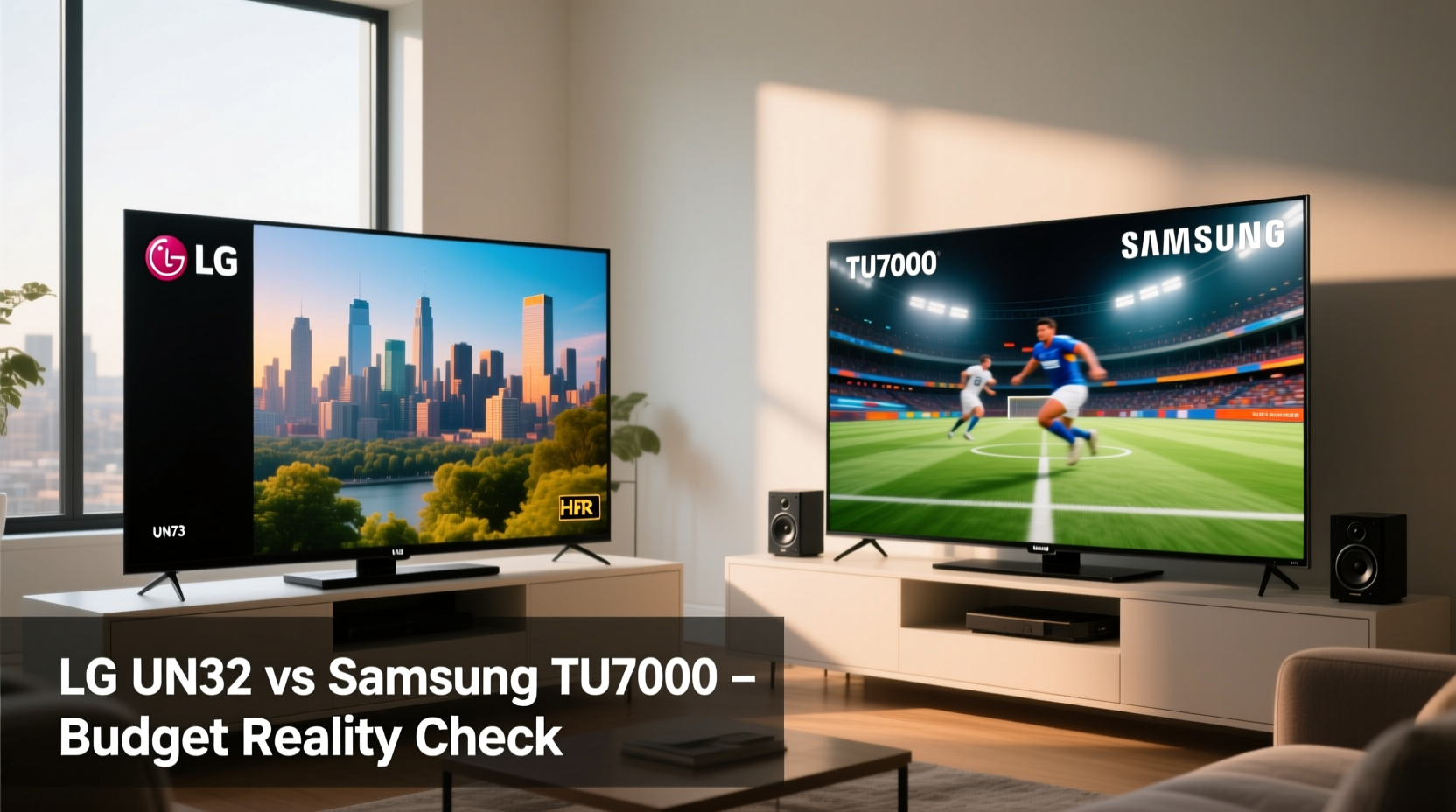
Picture quality remains the most critical factor in any TV decision. The LG UN73 and Samsung TU7000 both use LED-backlit LCD panels with 4K resolution, but their underlying technologies differ slightly.
The LG UN73 relies on a standard edge-lit LED panel, which tends to produce less uniform backlighting than full-array systems. This can lead to slight blooming around bright objects on dark backgrounds. Peak brightness is modest—around 300 nits—making it best suited for dimmer or controlled lighting environments. While colors are decent, they lack the vibrancy seen in higher-end models with wider color gamuts.
In contrast, the Samsung TU7000 uses a direct-lit system with slightly better light distribution. It also reaches similar peak brightness levels but often appears punchier due to Samsung’s more aggressive default picture settings. Its use of HDR10 helps deliver improved dynamic range, though true HDR impact is limited by hardware constraints. Motion handling is another area where the TU7000 edges ahead, thanks to Samsung’s Motion Xcelerator technology, which reduces blur during fast action scenes.
Tip: Calibrate your TV’s picture mode using built-in presets like \"Movie\" or \"Cinema\" for more accurate colors and reduced eye strain.Smart Features and User Experience
Both TVs run mature smart platforms—LG uses webOS, while Samsung employs Tizen OS. These systems are responsive, intuitive, and packed with apps, but they serve different user preferences.
webOS, found on the LG UN73, is widely praised for its simplicity. The Magic Remote with its point-and-click interface makes navigation effortless. Voice control via Google Assistant and Alexa is seamless, and multitasking features like pop-up windows add convenience. However, older versions of webOS on entry-level models like the UN73 may feel slightly slower when launching apps or switching inputs.
Samsung’s Tizen OS on the TU7000 is snappier in daily use. App loading times are generally quicker, and the home screen layout feels more modern. Universal Search allows users to find content across multiple services at once. One downside: Samsung’s remote lacks pointer functionality, making menu navigation more tedious than LG’s solution.
“Even at lower price points, smart TV experience shouldn’t be an afterthought. Responsiveness and ease of access define long-term satisfaction.” — David Lin, Home Theater Analyst at TechView Weekly
Design and Build: What You See and Feel
At first glance, both TVs appear sleek and minimalist. Thin bezels and slim profiles give them a contemporary look that blends well in modern homes. But subtle differences emerge upon closer inspection.
The LG UN73 has a slightly bulkier rear panel and uses plastic materials more liberally. The stand is narrow and centered, which may not fit all entertainment centers comfortably. Cable management is basic, with no dedicated routing channels.
The Samsung TU7000 counters with a more refined build. Its back panel is flatter and cleaner, and the included stand offers wider support. Samsung also uses higher-grade plastics that mimic metal finishes, enhancing perceived quality. Ventilation is better designed, reducing heat buildup during extended use.
| Feature | LG UN73 | Samsung TU7000 |
|---|---|---|
| Panel Type | Edge-lit LED | Direct-lit LED |
| Peak Brightness | ~300 nits | ~310 nits |
| HDR Support | HDR10, HLG | HDR10, HLG |
| Smart Platform | webOS (older version) | Tizen OS |
| Remote Type | Magic Remote (pointer) | Standard IR remote |
| Audio Output | 20W | 20W |
| HDMI Ports | 3 | 3 |
| Bluetooth | Yes | Yes |
Real-World Example: The Apartment Viewer’s Dilemma
Consider Maria, a renter in a downtown apartment with large south-facing windows. She wanted a 55-inch 4K TV under $400 for movie nights and weekend binges. Her main concern was glare during afternoon viewing.
She tested both the LG UN73 and Samsung TU7000 in-store under simulated daylight conditions. While both struggled somewhat with reflections, the TU7000’s slightly higher brightness and anti-glare coating gave her a clearer image during midday. At night, the difference narrowed, but she appreciated the smoother app transitions on Samsung’s Tizen system.
However, when she brought the LG home, she discovered the Magic Remote made browsing Netflix far easier for her parents, who visit frequently. After adjusting the picture mode to “Cinema” and enabling eco-sensor to reduce brightness automatically, she found the UN73 more comfortable for evening use.
Maria ultimately chose the LG—not because it outperformed the Samsung, but because its strengths aligned better with her household’s habits. This highlights a crucial truth: value isn’t purely technical. It’s personal.
Should You Choose the LG UN73 Over the Samsung TU7000?
The answer depends on what kind of compromises you’re willing to accept.
If your priority is smooth navigation, brighter daytime viewing, and a more polished interface, the Samsung TU7000 is the better pick. It doesn’t push boundaries, but it delivers consistent performance without obvious flaws. Its motion processing is superior for sports fans, and Tizen’s app ecosystem remains one of the most reliable in budget categories.
On the other hand, the LG UN73 isn’t cutting *critical* corners—it simplifies in areas that may not matter to everyone. The Magic Remote alone can justify the choice for households with less tech-savvy users. webOS remains one of the most user-friendly platforms available, even in its stripped-down form. And LG typically offers deeper discounts during seasonal sales, making the UN73 an even sharper deal.
Where the LG does compromise: backlight uniformity, out-of-the-box color accuracy, and slight input lag during gaming. Casual gamers might notice minor delays; competitive players should look elsewhere regardless.
Checklist: Choosing Between LG UN73 and Samsung TU7000
- ✅ Assess your primary viewing environment (bright room vs. dark room)
- ✅ Test both remotes in-store—if possible—for comfort and ease of use < li>✅ Check firmware updates; newer models may have improved processing
- ✅ Compare prices during holiday sales—LG often drops below Samsung
- ✅ Consider future upgrades—neither supports HDMI 2.1, so next-gen gaming isn’t viable
- ✅ Prioritize smart platform preference: webOS for simplicity, Tizen for speed
Frequently Asked Questions
Is the LG UN73 good for gaming?
The LG UN73 has a response time of around 13ms and moderate input lag (~50ms), which is acceptable for casual gaming but not ideal for fast-paced titles. It lacks variable refresh rate (VRR) and Auto Low Latency Mode (ALLM), so serious gamers should consider higher-tier models.
Does the Samsung TU7000 have Bluetooth audio?
Yes, the TU7000 supports Bluetooth connectivity, allowing you to pair wireless headphones or soundbars directly without needing external adapters.
Which TV lasts longer?
Both brands have strong reliability records. According to Consumer Reports’ 2023 data, LG and Samsung rank near the top for predicted TV longevity. Actual lifespan depends more on usage patterns and environmental factors than brand alone.
Final Verdict: Value Beyond the Price Tag
The LG UN73 doesn’t cut *too* many corners—it makes calculated trade-offs to stay affordable. It sacrifices some brightness and panel quality but retains core strengths like an excellent smart interface and unmatched remote usability. The Samsung TU7000 answers with stronger out-of-the-box performance and better motion clarity, appealing to those who prioritize immediacy over long-term usability.
For most budget buyers, neither TV is a mistake. But if you value ease of use, household accessibility, and potential sale pricing, the LG UN73 remains a compelling option—even if it doesn’t win on specs alone.
💬 Have you used either the LG UN73 or Samsung TU7000? Share your experience and help others decide which budget TV truly delivers.