The smartphone market evolves quickly, and by 2024, even once-flagship devices like the Samsung Galaxy S10 Plus and Galaxy Note 8 are several generations behind. Yet, they still appear frequently in secondhand listings and budget buyer discussions. The question isn’t just about availability—it’s about practicality. Is the S10 Plus still capable enough to serve as a daily driver in 2024? Or does the older Note 8 offer better value for those on a tight budget? Let’s break down real-world performance, software support, hardware longevity, and user needs to help you make a smart decision.
Performance and Hardware: Where They Stand Today
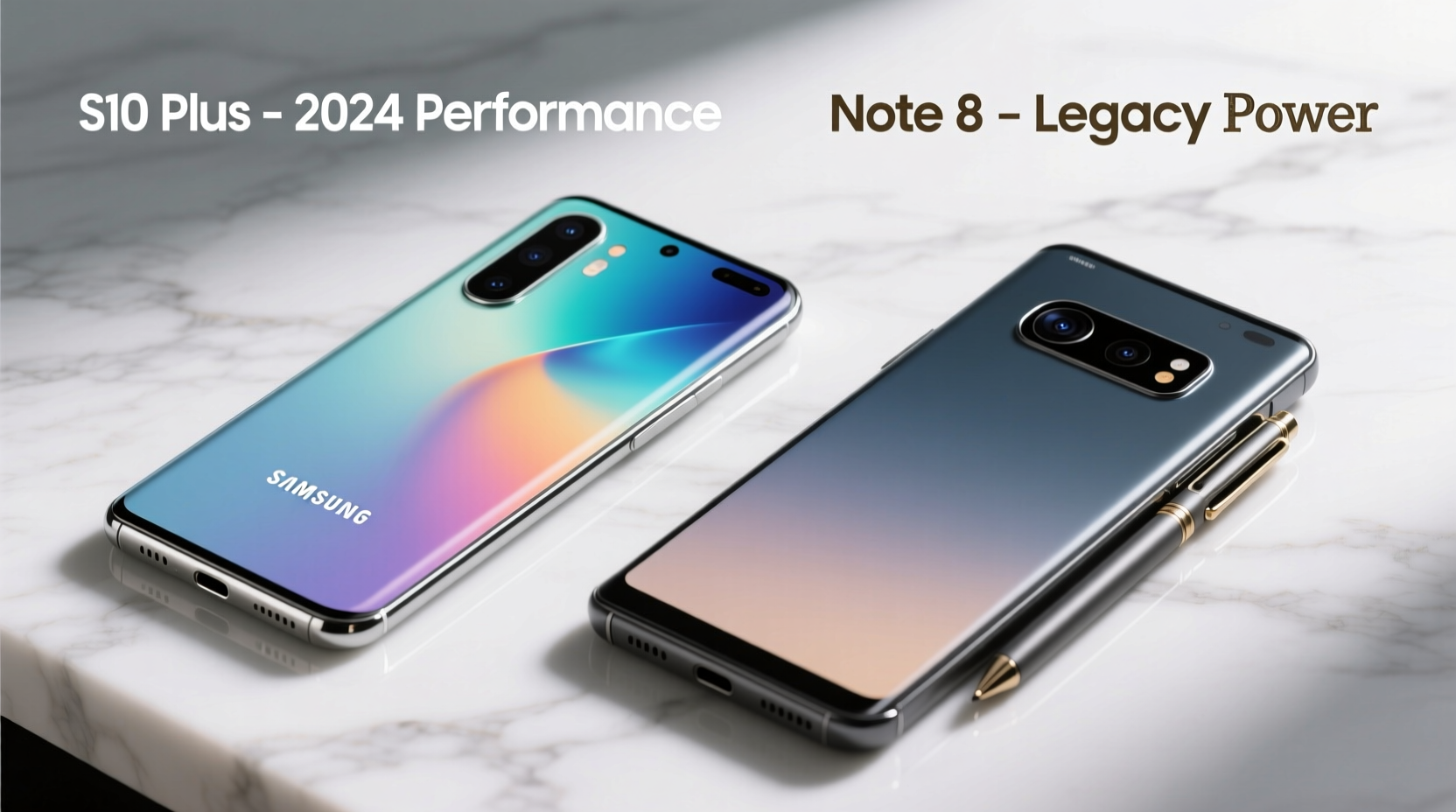
The Galaxy S10 Plus launched in early 2019 with the Qualcomm Snapdragon 855 (or Exynos 9820 in some regions), 8GB of RAM, and up to 1TB of expandable storage. At the time, it was among the most powerful Android phones available. In contrast, the Galaxy Note 8 debuted in 2017 with the Snapdragon 835, 6GB of RAM, and a maximum of 256GB storage via microSD.
In 2024, both processors are outdated compared to current chipsets like the Snapdragon 8 Gen 2 or Exynos 2200. However, the S10 Plus remains significantly more capable. It handles multitasking, modern apps, and even light gaming reasonably well. The Note 8, while once a powerhouse, now struggles with heavier applications and newer versions of Android due to its limited RAM and aging architecture.
Tip: If considering either phone, prioritize models with at least 128GB storage—cloud reliance is high, but local space prevents constant file management stress.Software Support and Security: A Critical Factor
Samsung has made strides in extending software support, offering up to four years of OS upgrades and five years of security patches for recent flagships. Unfortunately, neither the S10 Plus nor the Note 8 benefits from this policy.
- Galaxy S10 Plus: Originally shipped with Android 9 Pie and received updates up to Android 12. Security patches officially ended in 2023.
- Galaxy Note 8: Launched with Android 7 Nougat, updated to Android 9, and lost all official support by 2020.
This means both devices are vulnerable to emerging security threats and lack compatibility with newer app features. Banking apps, messaging platforms, and even Google services may begin dropping support for older Android versions. For example, Google Play Protect already warns users on unsupported Android versions about potential risks.
“Devices without regular security updates become liability points—not just for data, but for network safety.” — Lena Park, Mobile Security Analyst at TechShield Labs
Display, Battery, and Daily Usability
The S10 Plus features a 6.4-inch Dynamic AMOLED display with HDR10+ support and an ultrasonic in-display fingerprint sensor. Even in 2024, the screen remains vibrant, sharp, and readable in sunlight. The curved edges enhance immersion but can cause accidental touches if not calibrated properly.
The Note 8 has a slightly smaller 6.3-inch Super AMOLED panel, also excellent for its time, but lacks HDR support and uses a rear-mounted fingerprint sensor—a less convenient placement by today’s standards.
| Feature | Samsung S10 Plus | Samsung Note 8 |
|---|---|---|
| Launch Year | 2019 | 2017 |
| Processor | Snapdragon 855 / Exynos 9820 | Snapdragon 835 |
| RAM | 8GB | 6GB |
| Battery Capacity | 4,100 mAh | 3,300 mAh |
| Charging | Fast charging, Wireless, Reverse wireless | Fast charging, Wireless |
| Premium Features | In-display fingerprint, IP68, Stereo speakers | S Pen, Iris scanner, Dual cameras |
| Current Android Version | Up to Android 12 (no further updates) | Up to Android 9 (end-of-life) |
Battery life is another key differentiator. The S10 Plus's larger battery provides a full day of moderate use in 2024, assuming the cell hasn't degraded. The Note 8’s 3,300 mAh battery, however, rarely lasts a full day under similar conditions—even when new, it was borderline. After six-plus years, replacement is almost certainly needed.
Camera Capabilities in 2024 Standards
The S10 Plus introduced Samsung’s first triple rear camera setup: 12MP wide, 12MP telephoto, and 16MP ultra-wide. This configuration still holds up for daylight photography and offers flexibility lacking in the Note 8’s dual 12MP system (wide + telephoto).
The absence of an ultra-wide lens on the Note 8 limits creative framing, and low-light performance lags noticeably. While both phones lack advanced computational photography (like Night Mode with AI stacking), the S10 Plus delivers more consistent results thanks to better sensors and processing.
Front cameras tell a similar story. The S10 Plus has a dual front shooter (10MP main + 8MP RGB depth), enabling better portrait selfies and wider group shots. The Note 8 relies on a single 8MP front camera with decent quality but fewer options.
Tip: Clean your camera lenses regularly—dust buildup on older devices can degrade image clarity more than the sensor itself.Real-World Example: Choosing Between Them
Consider Mark, a freelance writer who travels often and needs a reliable secondary phone for emails, navigation, and note-taking. He found both the S10 Plus and Note 8 listed locally for $80. The Note 8 appealed because of the S Pen, which he used years ago for jotting ideas. But after testing both:
- The S10 Plus booted faster, switched between Chrome, Gmail, and Evernote smoothly, and had no lag during video calls.
- The Note 8 froze twice during his test, took over 10 seconds to open maps, and showed a “Google Play Services has stopped” error.
Mark chose the S10 Plus. Though he missed the S Pen, the overall responsiveness and cleaner software experience outweighed that benefit. He later installed a third-party stylus-friendly notes app, bridging part of the gap.
Step-by-Step Guide: How to Evaluate Either Phone in 2024
- Determine your primary use case: Are you using it as a daily driver, backup phone, or for a specific feature (e.g., S Pen)?
- Inspect hardware condition: Check battery health (via settings or third-party apps), screen burn-in, and physical wear.
- Verify software version: Ensure it’s running the latest possible OS. Avoid any device stuck below Android 10.
- Test core functions: Camera, Wi-Fi, Bluetooth, speakers, and fingerprint sensor.
- Assess upgrade path: If buying used, confirm whether Samsung Cloud or Smart Switch still supports data migration.
- Consider total cost of ownership: Factor in potential battery replacement ($40–$60) and lack of warranty.
Frequently Asked Questions
Can I still get security updates for the S10 Plus or Note 8?
No. Samsung ended official security updates for the S10 series in 2023 and for the Note 8 in 2020. No further patches are expected, making both devices increasingly vulnerable over time.
Is the S Pen worth choosing the Note 8 over the S10 Plus?
Only if you genuinely need handwriting input and can tolerate poor performance. The S10 Plus doesn’t support the S Pen, but many third-party capacitive styluses work adequately for light annotation. Given the Note 8’s age, its stylus advantage is outweighed by usability drawbacks.
Will popular apps still work on these phones?
Most basic apps will run, but newer versions of Instagram, TikTok, banking apps, and Zoom may eventually drop support for older Android versions. Some apps already require Android 10 or higher. Expect increasing compatibility issues through 2024 and beyond.
Final Verdict: S10 Plus vs. Note 8 in 2024
If forced to choose between the two, the Samsung Galaxy S10 Plus is clearly the better option in 2024. It has superior hardware, a longer software lifespan (even if now expired), better battery life, and a more future-ready design. While neither device should be anyone’s first choice for a primary smartphone, the S10 Plus can still function as a dependable backup or emergency phone for light tasks.
The Note 8, despite its iconic status and beloved S Pen, is too far removed from modern performance standards. Its small battery, outdated chipset, and lack of support make it a risky pick—even at very low prices.
That said, consider whether either is truly the best move. For around the same price as a used S10 Plus, you might find newer mid-range phones like the Samsung Galaxy A54, Pixel 6a, or OnePlus Nord series—devices that offer current software support, better efficiency, and longer usability.
“The sweet spot for value isn’t always the oldest flagship. Sometimes, skipping one generation saves money without sacrificing functionality.” — David Tran, Senior Editor at MobileInsight Weekly
Conclusion
The Samsung S10 Plus retains a sliver of relevance in 2024—not because it’s powerful, but because it aged more gracefully than most. The Note 8, while nostalgic, belongs in a drawer or donation box. If you're set on buying used, prioritize condition, battery health, and personal needs. But don’t let nostalgia override practicality. Technology should serve you, not frustrate you. Before settling for outdated hardware, explore what today’s budget market offers. You might find a newer, safer, and smoother experience waiting just within reach.
💬 Have experience using either the S10 Plus or Note 8 in 2024? Share your thoughts, tips, or warnings in the comments to help others decide wisely!