The transition from the iPhone X to the iPhone 12 Pro marks a significant evolution in Apple’s smartphone design language. While both devices represent pivotal moments in Apple’s history—the iPhone X introducing Face ID and edge-to-edge displays, and the iPhone 12 Pro ushering in the flat-edge aesthetic and MagSafe—many users wonder: is the iPhone 12 Pro actually that much bigger than the iPhone X? The answer isn’t just about numbers; it’s about how those changes affect your grip, pocketability, and daily use.
At first glance, the differences may seem subtle. But when you’re upgrading after years with an iPhone X, even minor dimensional shifts can influence comfort and functionality. This article breaks down every aspect of physical size, screen real estate, weight, and ergonomics to give you a clear understanding of what to expect.
Physical Dimensions: How Much Larger Is the iPhone 12 Pro?
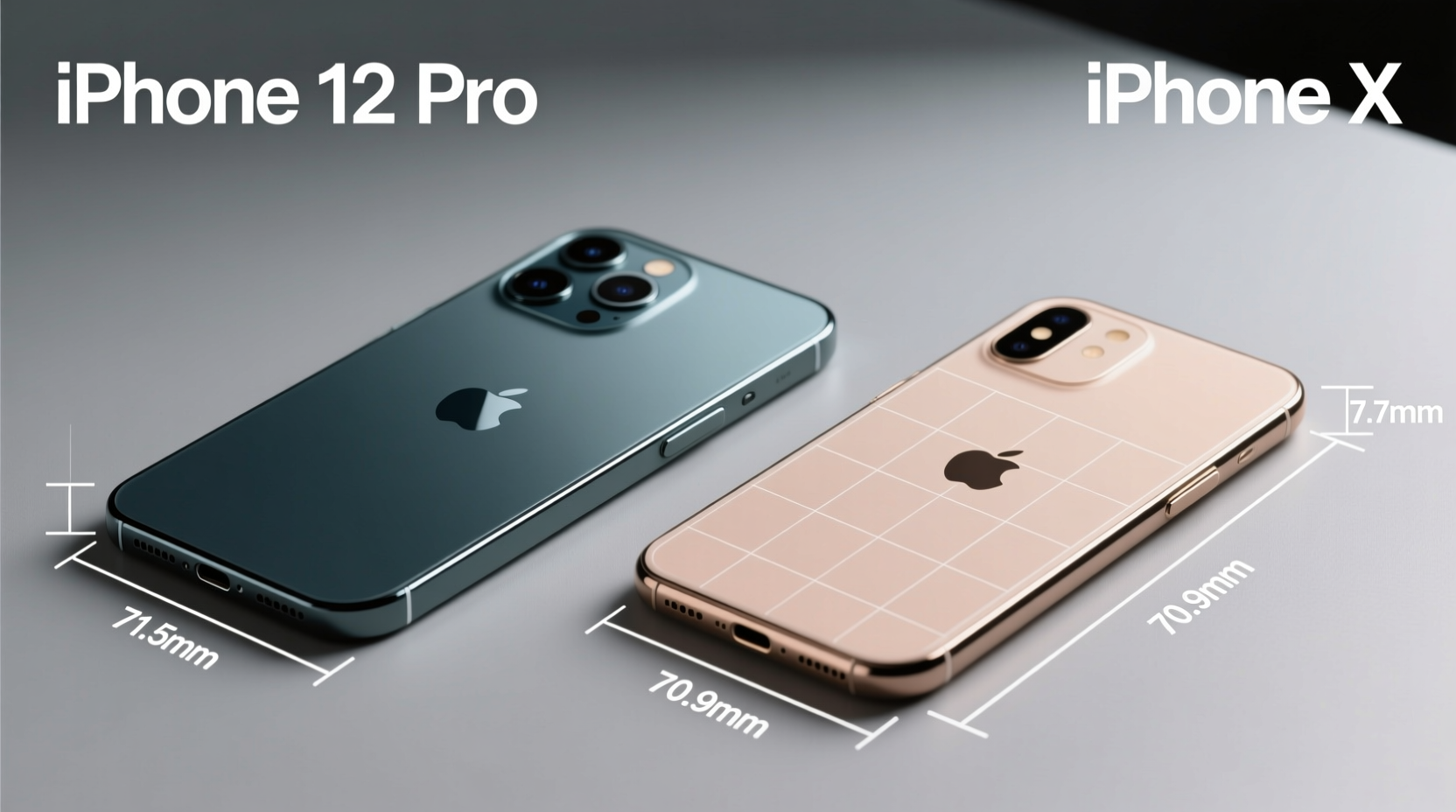
Let’s start with hard measurements. Both phones share a similar overall footprint, but the iPhone 12 Pro is slightly taller, wider, and thicker than the iPhone X. It also weighs noticeably more due to its stainless steel frame and larger internal components.
| Model | Height | Width | Thickness | Weight |
|---|---|---|---|---|
| iPhone X | 143.6 mm (5.65 inches) | 70.9 mm (2.79 inches) | 7.7 mm (0.30 inches) | 174 grams (6.14 oz) |
| iPhone 12 Pro | 146.7 mm (5.78 inches) | 71.5 mm (2.82 inches) | 7.65 mm (0.30 inches) | 187 grams (6.60 oz) |
The iPhone 12 Pro is only 3.1 mm taller and 0.6 mm wider than the iPhone X—less than the width of a pencil lead—but that small increase, combined with a heavier build, makes a tangible difference in hand feel. The thickness is nearly identical, though the 12 Pro feels denser thanks to its premium materials.
Tip: If you rely on one-handed use, test the reach of the top corners—especially for notifications or closing apps. The extra height may require slight adjustments.Display Size and Usability Differences
Both phones feature OLED displays and a resolution close to 1125x2436 pixels, but the iPhone 12 Pro has a slightly larger screen at 6.1 inches diagonally compared to the iPhone X’s 5.8 inches. This 0.3-inch difference might sound negligible, but it translates into more usable space for reading, multitasking, and media consumption.
The bezel-free design is consistent across both models, but the iPhone 12 Pro benefits from Apple’s improved Ceramic Shield front cover, which enhances durability without increasing thickness. Additionally, the flatter edges on the 12 Pro change how light reflects across the screen, giving the illusion of a broader display.
In practical terms, the larger screen allows for better split-view performance in apps like Mail or Safari when using Slide Over or Split Screen (on compatible iPadOS-style workflows). However, for everyday tasks like texting or browsing Instagram, the visual upgrade is modest unless you're particularly sensitive to screen real estate.
“The shift from curved to flat edges on the iPhone 12 series altered perceived size more than actual specs suggest. Users report the phone feeling ‘broader’ despite minimal dimensional increases.” — David Lin, Mobile Device Ergonomics Analyst
Ergonomics and Real-World Handling
One of the most common complaints from long-time iPhone X users switching to the iPhone 12 Pro is the increased weight. At 187 grams, the 12 Pro is 13 grams heavier—a 7.5% increase. That might not sound like much, but during extended use (such as watching videos or taking photos), the added mass becomes noticeable.
The stainless steel frame contributes significantly to this weight gain. While it gives the phone a more luxurious, substantial feel, it also makes it less ideal for slipping into tight pockets or using one-handed for long periods. In contrast, the iPhone X’s glass-and-aluminum body feels lighter and more balanced.
Another ergonomic consideration is the flat aluminum rails on the 12 Pro. Unlike the softly curved edges of the iPhone X, the squared-off sides can dig into your palm slightly during prolonged gripping. Some users love the retro-inspired design reminiscent of the iPhone 4 and 5, while others find it less comfortable over time.
Mini Case Study: Upgrading After Four Years
Consider Sarah, a graphic designer who used her iPhone X daily for work and personal communication from 2018 to 2022. When she upgraded to the iPhone 12 Pro, she expected a seamless transition. Instead, she noticed two immediate changes: the phone didn’t fit as easily into her favorite jacket pocket, and she had to adjust her thumb stretch to reach the upper right corner of the screen.
“It felt like I was holding someone else’s phone at first,” she said. “After a week, I got used to it, but I missed the snug fit and lighter feel of the X.”
Her experience highlights that size perception isn’t purely about millimeters—it’s about muscle memory, clothing compatibility, and usage patterns.
Storage and Portability Considerations
If you frequently carry your phone in slim jeans, purses, or holsters, the iPhone 12 Pro’s slightly larger footprint matters. Though the difference is under 4 mm in height, many third-party cases add bulk uniformly, amplifying the gap between the two models.
Moreover, the MagSafe system on the iPhone 12 Pro adds functional value but can interfere with older accessories. Wallets, stands, and car mounts designed for the iPhone X won’t align perfectly with the magnetic ring placement on the 12 Pro, potentially making the device feel “larger” due to protruding attachments.
Tip: When choosing a case, opt for ultra-slim models if you prioritize portability. Avoid bulky designs unless you need extreme drop protection.Checklist: Should You Upgrade Based on Size?
- ✅ Measure your current pocket or bag space to see if the extra 3 mm will cause issues
- ✅ Test one-handed reach to the top of the screen (especially if you disable Reachability)
- ✅ Consider whether the added weight affects comfort during long calls or video sessions
- ✅ Evaluate if MagSafe functionality outweighs potential bulk from compatible accessories
- ✅ Try holding both devices in person—if possible—at an Apple Store or friend’s place
Frequently Asked Questions
Can I use my iPhone X case with the iPhone 12 Pro?
No. Despite similarities in design, the camera layout, button placement, and overall dimensions differ enough that cases are not interchangeable. Attempting to force-fit could damage the phone or impair function.
Does the larger screen mean worse battery life?
Not necessarily. The iPhone 12 Pro features a more efficient A14 Bionic chip and optimized iOS power management, so despite the slightly larger display, battery life is comparable—and often better—than the iPhone X in real-world use.
Is the iPhone 12 Pro harder to use one-handed?
For users with smaller hands, yes—the combination of increased height and flat edges can make single-thumb navigation more challenging. However, enabling Reachability (double-tap the lower edge of the screen) mitigates this issue significantly.
Conclusion: Is the Difference Significant?
The iPhone 12 Pro is technically larger than the iPhone X, but the increase is marginal—just 3.1 mm in height and 13 grams in weight. For most users, these changes won’t be deal-breakers. In fact, many appreciate the more modern flat-edge design, improved durability, and enhanced display clarity.
However, if you value compactness, lightweight handling, and perfect pocket fit, the iPhone X still holds up remarkably well. The 12 Pro offers meaningful upgrades in performance, camera quality, and wireless charging, but its size difference, while slight, does impact ergonomics in subtle yet lasting ways.
🚀 Ready to decide? Measure your current setup, try both phones side by side, and ask yourself: do the improvements justify the shift in form? Your hands—and habits—will tell you the truth.