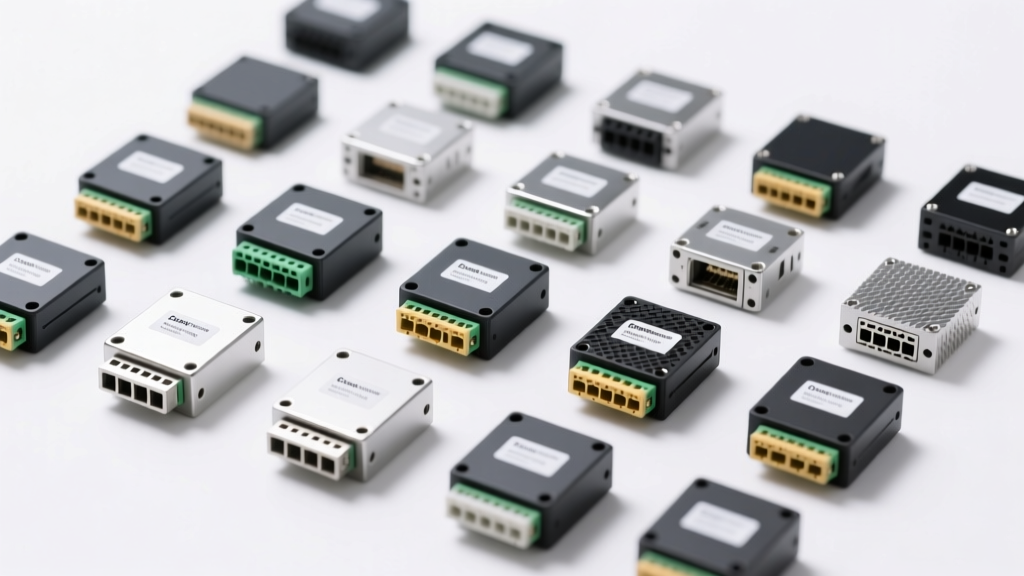
Types of IRF7779L2TRPBF MOSFETs
The IRF7779L2TRPBF is part of a family of advanced MOSFET (Metal-Oxide-Semiconductor Field-Effect Transistor) components designed for high-efficiency power management in modern electronic systems. These devices are widely used in power supplies, motor control circuits, DC-DC converters, and automotive electronics due to their robust performance under demanding electrical conditions. The family includes various P-channel and N-channel variants, each optimized for specific applications based on voltage, current, and switching requirements.
IRF7779L2 P-Channel MOSFET
A high-performance P-channel MOSFET engineered for heavy-duty applications requiring reliable power control.
Key Features
- Maximum pulsed drain current: 40A
- Drain-source voltage (Vds): Up to 100V
- Excellent thermal stability
- Robust performance in high-load environments
Considerations
- Higher on-resistance than N-channel types
- Less common in low-side switching
Best for: High-side switching, industrial power systems, and overload-protected circuits
IRF7779L2 N-Channel MOSFET
A highly efficient N-channel MOSFET optimized for fast switching and high-current applications.
Key Features
- Pulsed drain current: 45A
- Drain-source voltage: 100V
- Low gate threshold voltage
- Superior switching speed and efficiency
Considerations
- Requires proper gate drive circuitry
- Not ideal for high-side switching without bootstrap
Best for: Power supplies, motor controllers, and high-frequency switching circuits
IRF7769L2 P-Channel MOSFET
Designed for automotive and industrial applications requiring stable P-channel operation under high loads.
Key Features
- Continuous drain current: 36A
- Gate-source voltage range: -10V to -30V
- High voltage tolerance
- Excellent load-driving capability
Considerations
- Higher cost in some configurations
- Limited availability compared to N-channel
Best for: Automotive electronics, battery management, and high-side driver circuits
IRF7769L2 N-Channel MOSFET
A powerful N-channel device built for high-efficiency power conversion and motor drive systems.
Key Features
- Pulsed drain current: 50A
- Maximum Vds: 75V
- Low on-state resistance (Rds(on))
- Optimized for high-speed switching
Considerations
- Heat dissipation required at high loads
- Sensitive to overvoltage without protection
Best for: Motor drives, DC-DC converters, and power inverters
IRF7759L2 P-Channel MOSFET
A robust P-channel solution for high-power circuits that demand reliable voltage and current control.
Key Features
- Continuous drain current: 30A
- Maximum Vds: 100V
- Excellent surge protection
- Stable under voltage spikes
Considerations
- Higher power loss at full load
- Requires adequate heatsinking
Best for: Power distribution units, industrial control systems, and backup power circuits
IRF7759L2 N-Channel MOSFET
An efficient N-channel MOSFET engineered for managing high-current loads with precision and reliability.
Key Features
- Pulsed drain current: 40A
- Maximum Vds: 80V
- High current-handling capacity
- Low conduction losses
Considerations
- Gate drive design is critical
- Parasitic inductance can affect performance
Best for: High-current switching, power electronics, and energy-efficient circuits
| MOSFET Model | Channel Type | Max Vds (V) | Pulsed Drain Current | Key Applications |
|---|---|---|---|---|
| IRF7779L2 | P-Channel | 100V | 40A | Industrial power systems, high-side switching |
| IRF7779L2 | N-Channel | 100V | 45A | Power supplies, motor controllers |
| IRF7769L2 | P-Channel | 100V | 36A (continuous) | Automotive systems, load drivers |
| IRF7769L2 | N-Channel | 75V | 50A | Motor drives, DC-DC converters |
| IRF7759L2 | P-Channel | 100V | 30A (continuous) | High-power circuits, surge protection |
| IRF7759L2 | N-Channel | 80V | 40A | Power electronics, high-current switching |
Design Tip: When selecting between P-channel and N-channel MOSFETs, consider that N-channel devices generally offer lower on-resistance and higher efficiency, while P-channel types simplify high-side switching circuitry. Always ensure proper heat dissipation and gate drive design for optimal reliability and performance.
Materials Used in the IRF7779L2TRPBF MOSFET: Composition and Functionality
The IRF7779L2TRPBF is a high-performance power MOSFET widely used in switching applications such as power supplies, motor control, and DC-DC converters. Its reliability and efficiency are directly influenced by the precise selection and engineering of materials used in its construction. Understanding these materials provides insight into the device’s electrical behavior, thermal performance, and long-term durability.
Core Materials and Their Roles in MOSFET Design
Silicon (Si) – The Semiconductor Foundation
Silicon serves as the foundational semiconductor material in the IRF7779L2TRPBF. It forms the active die where the transistor structure—comprising the source, drain, and channel—is fabricated. Silicon's unique electronic properties allow for controlled conduction, enabling rapid switching between on and off states with minimal losses.
Advanced silicon processing techniques ensure the device can handle high voltages (up to 100V) and deliver continuous currents of up to 45A. The crystalline purity and structural integrity of the silicon substrate are critical to minimizing leakage current and maximizing breakdown voltage performance.
Doped Silicon – Creating N-Type and P-Type Regions
To form the essential junctions within the MOSFET, silicon is intentionally doped with specific impurities. Phosphorus is introduced to create N-type regions, which have an excess of electrons, while boron is used for P-type regions, creating electron-deficient (hole-rich) zones.
These doped regions form the body, source, and drain structures of the MOSFET. The precise control of doping concentration is crucial for setting the threshold voltage—the gate voltage required to turn the device on—ensuring consistent and reliable switching behavior across operating conditions.
Silicon Dioxide (SiO₂) – Gate Insulation Layer
A thin layer of silicon dioxide is grown on the silicon surface beneath the gate electrode. This insulating layer is fundamental to MOSFET operation, as it electrically isolates the gate from the underlying channel while allowing capacitive coupling that controls the flow of current.
The quality, uniformity, and thickness of the SiO₂ layer directly impact key parameters such as gate leakage current, threshold voltage stability, and long-term reliability. A high-quality oxide ensures minimal power loss and prevents premature device failure due to dielectric breakdown.
Metallization: Aluminum, Nickel, and Gold
Multiple metals are used for interconnections and bonding in the IRF7779L2TRPBF. Aluminum is commonly used for on-chip interconnects (gate, source, and drain contacts) due to its excellent conductivity, compatibility with silicon, and cost-effective deposition processes.
Nickel and gold are typically employed in wire bonding and lead frame connections. Nickel provides a robust diffusion barrier and enhances adhesion, while gold ensures low-resistance, corrosion-resistant bonds. These metals collectively ensure reliable electrical connectivity between the silicon die and the external package leads.
Soft Iron – Clarifying a Misconception
While soft iron is an excellent magnetic material used in transformers and inductors due to its high permeability and low coercivity, it is not a component of the IRF7779L2TRPBF MOSFET itself. MOSFETs are solid-state semiconductor devices and do not contain magnetic cores.
However, soft iron may be present in surrounding circuitry—such as in inductive loads or power supply transformers—where the MOSFET is used as a switching element. It’s important to distinguish between materials used in the MOSFET and those in associated passive components to avoid confusion in design and troubleshooting.
Package and Encapsulation Materials
Beyond the semiconductor die, the IRF7779L2TRPBF includes a protective package made from mold compound (typically epoxy resin), which shields the die from environmental factors like moisture, dust, and mechanical stress.
The lead frame is usually constructed from copper or copper alloys for superior thermal and electrical conductivity. The "PbF" in the part number indicates the device is lead-free, meaning it complies with RoHS standards and uses lead-free solder finishes, often with matte tin plating for environmental and safety compliance.
| Material | Function | Key Properties |
|---|---|---|
| Silicon (Si) | Active semiconductor channel | High electron mobility, controllable conductivity via doping |
| Doped Silicon (P/B, N/P) | Forms source, drain, and body regions | Enables formation of PN junctions and threshold control |
| Silicon Dioxide (SiO₂) | Gate oxide insulation | High dielectric strength, excellent insulator |
| Aluminum (Al) | On-chip interconnects | Low cost, good conductivity, easy patterning |
| Nickel (Ni) / Gold (Au) | Wire bonding and lead finish | Corrosion resistance, reliable electrical contact |
| Epoxy Mold Compound | Device encapsulation | Mechanical protection, moisture resistance |
Why Material Selection Matters
Note: While soft iron plays a vital role in magnetic components, it is not part of the MOSFET structure. Confusing component-level materials with system-level materials can lead to design errors. Always refer to the official datasheet and application notes from Infineon (the manufacturer of the IRF7779L2TRPBF) for accurate material and operational specifications.
Commercial Value of IRF7779L2TRPBF
The IRF7779L2TRPBF is a high-performance N-channel MOSFET that offers significant commercial value across multiple industries. Engineered for efficiency, reliability, and precision power control, this component plays a vital role in modern electronic systems where energy optimization and performance are critical. Its widespread adoption in industrial, automotive, and renewable energy applications underscores its importance in today’s technology-driven markets.
High Demand for Power Management
The IRF7779L2TRPBF meets the growing global demand for advanced power management solutions. As industries transition toward automation and electrification, the need for components capable of handling high current and voltage loads has surged. This MOSFET excels in switching applications, providing reliable control over large power demands in environments such as industrial motor drives, power supplies, and automated manufacturing systems.
- Used extensively in DC-DC converters and high-efficiency power supplies due to low on-resistance (RDS(on))
- Enables compact circuit designs by reducing heat generation and minimizing the need for additional cooling
- Supports energy-efficient operations in HVAC systems, robotics, and heavy machinery
- Helps manufacturers meet regulatory standards for energy consumption and emissions
Market Insight: The industrial power electronics market is projected to grow at over 6% CAGR, directly increasing demand for components like the IRF7779L2TRPBF.
Role in Electric Vehicles and Renewable Energy
With the rapid expansion of electric vehicles (EVs) and renewable energy infrastructure, the IRF7779L2TRPBF has become a cornerstone component in next-generation power systems. Its ability to deliver fast switching speeds and excellent thermal performance makes it ideal for use in EV battery management systems (BMS), onboard chargers, and motor controllers.
- In solar inverters, it enables efficient DC-to-AC conversion, improving overall system efficiency and reducing energy loss
- Used in bidirectional converters for energy storage systems, supporting grid stabilization and off-grid power solutions
- Supports regenerative braking systems in EVs by managing power flow between the motor and battery with minimal losses
- Contributes to longer battery life and improved vehicle range through optimized power delivery
Growth Driver: The global EV market is expected to exceed $1.5 trillion by 2030, creating sustained demand for high-efficiency MOSFETs like the IRF7779L2TRPBF.
Cost-Effective Solution for Diverse Applications
Beyond performance, the IRF7779L2TRPBF delivers strong economic value. Its durability, low maintenance requirements, and energy-saving capabilities make it a cost-effective choice for both OEMs and end users. By minimizing power losses and reducing thermal stress on surrounding components, it lowers total system costs over time.
- Reduces energy waste in power conversion circuits, leading to lower operational costs
- Extends product lifespan by maintaining stable performance under continuous load conditions
- Minimizes the need for external heat sinks or complex thermal management systems
- Ideal for high-volume consumer electronics where bill-of-materials (BOM) cost optimization is crucial
Value Proposition: Despite its premium performance, the IRF7779L2TRPBF remains competitively priced, offering a favorable balance between upfront cost and long-term savings.
Alignment with Technological Advancements
The IRF7779L2TRPBF is engineered to support cutting-edge technological trends, including smart grids, IoT-enabled devices, and Industry 4.0 automation. Its fast switching characteristics and compatibility with modern control ICs make it well-suited for applications requiring real-time power modulation and digital feedback loops.
- Integrates seamlessly with microcontrollers and PWM controllers in digital power systems
- Supports high-frequency operation essential for miniaturized power supplies in portable and wearable devices
- Used in server power supplies and telecom equipment where uptime and efficiency are paramount
- RoHS-compliant and lead-free (Pb-free), aligning with environmental regulations and sustainability goals
Future-Proof Design: The component’s scalability and reliability ensure relevance in evolving markets driven by electrification and digital transformation.
Strategic Recommendation: For distributors and design engineers, promoting the IRF7779L2TRPBF as a versatile, high-reliability solution can open opportunities in fast-growing sectors like EVs, renewable energy, and industrial automation. Bundling it with complementary components (e.g., gate drivers, thermal pads) can enhance perceived value and increase average order value.
| Application Sector | Key Use Case | Performance Benefit | Commercial Advantage |
|---|---|---|---|
| Electric Vehicles | Battery Management, Motor Control | High switching speed, low RDS(on) | Improved range, reduced energy loss |
| Solar & Wind Energy | Inverters, Charge Controllers | Efficient power conversion, thermal stability | Higher system efficiency, lower OPEX |
| Industrial Automation | Motor Drives, Power Supplies | Robust under heavy loads, long lifespan | Reduced downtime, maintenance savings |
| Consumer Electronics | Adapters, Power Banks | Compact size, low heat generation | Smaller designs, lower BOM cost |
Additional Market Considerations
- Supply Chain Resilience: The IRF7779L2TRPBF is available through major distributors with stable lead times, making it a reliable choice amid semiconductor shortages
- Design Support: Manufacturers provide detailed datasheets, SPICE models, and reference designs to accelerate product development
- Global Compliance: Meets international standards including AEC-Q101 (automotive), IEC 60747 (power semiconductors), and RoHS
- Aftermarket Demand: High failure rate of inferior alternatives increases replacement demand for authentic, high-quality MOSFETs
- Brand Trust: Produced by Infineon Technologies (formerly International Rectifier), a recognized leader in power semiconductors
Usage Suggestions for IRF7779L2T PBF MOSFET
The IRF7779L2T PBF is a high-performance, lead-free MOSFET designed for demanding power management applications. Featuring integrated P-channel and N-channel transistors in a single package, this component offers exceptional efficiency, thermal stability, and switching capability. Its robust construction and ability to handle high voltage and current loads make it a versatile solution across multiple industries, including automotive, telecommunications, industrial systems, and consumer electronics.
Important Note: The IRF7779L2T PBF is a sensitive semiconductor device. Always follow proper ESD (electrostatic discharge) precautions during handling and installation. Refer to the manufacturer's datasheet for absolute maximum ratings, thermal considerations, and recommended operating conditions to ensure reliability and longevity.
Key Applications and Usage Scenarios
- Power Amplifiers
The IRF7779L2T excels in power amplifier circuits due to its high current-handling capability and low on-resistance (RDS(on)). Its dual-channel configuration enables efficient push-pull operation, making it ideal for audio and RF amplification stages. The device maintains signal integrity under high power loads, minimizing distortion and ensuring clean output. This makes it particularly suitable for professional audio equipment, public address systems, and high-fidelity amplifiers where consistent performance and thermal resilience are critical.
- Switching Applications
With both P-channel and N-channel MOSFETs integrated into one compact package, the IRF7779L2T is engineered for high-efficiency switching in power electronics. It is widely used in DC-DC converters, voltage regulators, and switch-mode power supplies (SMPS), where precise control of current flow is essential. The device's fast switching speed reduces switching losses, improving overall system efficiency. Its ability to operate reliably under high-voltage and high-current conditions makes it a preferred choice in industrial control systems, power inverters, and renewable energy applications such as solar charge controllers.
- Motor Drivers
In automotive and industrial motor control systems, the IRF7779L2T provides robust performance as a half-bridge driver. It effectively manages bidirectional current flow required for driving DC motors, stepper motors, and small AC motors. The integrated P/N channel design simplifies circuit layout and reduces component count, enhancing reliability. Its high avalanche energy rating and thermal stability ensure dependable operation in harsh environments, such as engine compartments or factory automation systems, where temperature fluctuations and electrical noise are common.
- Load Switching in Telecom
Telecommunications infrastructure demands reliable power distribution and load management. The IRF7779L2T is ideal for load switching in telecom equipment such as base stations, routers, and network switches. It enables soft-start functionality and inrush current control, protecting sensitive downstream components. The device’s low gate charge allows for rapid turn-on/off, supporting dynamic power management in response to system load changes. Its compact footprint and high efficiency contribute to space-saving designs and reduced cooling requirements in densely packed telecom enclosures.
- Gate Driver Circuits
The IRF7779L2T is frequently employed in gate driver circuits to control high-power external MOSFETs or IGBTs. Its complementary P/N channel pair provides efficient high-side and low-side drive capability in bridge configurations. By minimizing propagation delay and cross-conduction risks, it enhances switching accuracy and reduces power loss. This application is particularly valuable in motor drives, UPS systems, and power inverters, where precise timing and low switching losses are crucial for optimal performance and energy efficiency.
| Application | Key Benefits | Typical Use Cases | Design Considerations |
|---|---|---|---|
| Power Amplifiers | Low distortion, high output power, thermal stability | Audio amplifiers, RF transmitters | Proper heat sinking, biasing, and feedback networks |
| Switching Applications | High efficiency, fast switching, low RDS(on) | DC-DC converters, SMPS, voltage regulators | Gate drive strength, switching frequency optimization |
| Motor Drivers | Half-bridge integration, high current capability | Automotive actuators, industrial motors | Dead-time control, overcurrent protection |
| Telecom Load Switching | Precise power control, inrush current limiting | Network switches, base station power rails | Soft-start circuitry, EMI filtering |
| Gate Driver Circuits | Complementary drive, low propagation delay | H-bridge drivers, inverter stages | Isolation, level shifting, shoot-through prevention |
Expert Tip: When designing with the IRF7779L2T PBF, always include a gate resistor to control switching speed and reduce ringing. Additionally, ensure adequate PCB copper area for thermal dissipation, especially in high-current applications. Simulating your circuit using SPICE models (if available) can help optimize performance before prototyping.
Best Practices for Optimal Performance
- Always consult the official datasheet for voltage, current, and thermal limits
- Use proper PCB layout techniques: minimize trace inductance and provide solid ground planes
- Implement overtemperature and overcurrent protection in critical systems
- Store and handle the device in ESD-safe environments to prevent damage
- Consider derating power specifications under continuous operation or elevated ambient temperatures
- Verify gate drive compatibility—ensure sufficient voltage to fully enhance the MOSFETs
The IRF7779L2T PBF stands out as a versatile and reliable solution for modern power electronics. Its integrated dual-channel design, combined with high efficiency and rugged performance, makes it a go-to component for engineers designing compact, high-performance systems. Whether used in automotive electronics, industrial controls, or telecom infrastructure, proper implementation ensures long-term reliability and superior operational efficiency.
Frequently Asked Questions About the IRF7779L2 MOSFET
Q1: Is the IRF7779L2 a good replacement for the IRF3002?Yes, the IRF7779L2 can serve as a suitable replacement for the IRF3002 in many applications, though careful consideration is required due to differences in specifications and packaging.
- Similarities: Both are N-channel MOSFETs designed for power switching applications, offering low on-resistance (RDS(on)) and efficient performance in DC-DC converters, load switching, and motor control circuits.
- Differences: The IRF3002 typically comes in a D2PAK package with slightly different thermal and current characteristics, while the IRF7779L2 is often found in a SO-8 package, making it more suitable for space-constrained or surface-mount designs.
- Voltage & Current Ratings: Always verify that the IRF7779L2 meets or exceeds the voltage (VDS) and continuous drain current (ID) requirements of your circuit to ensure safe and reliable operation.
- Gate Threshold Voltage: Check compatibility with your driver circuit—mismatches here can lead to incomplete turn-on or excessive power dissipation.
In summary, while the IRF7779L2 can functionally replace the IRF3002 in many cases, a thorough comparison of datasheets and PCB layout compatibility is essential before substitution.
Q2: What is the role of the IRF7779L2 in gate drivers?The IRF7779L2 plays a critical role in gate driver circuits by acting as a high-speed switching element that controls the gate voltage of larger power MOSFETs or IGBTs.
- Switching Control: It rapidly turns on and off in response to low-power control signals, delivering the necessary current pulses to charge and discharge the gate capacitance of the main switching device.
- Efficiency Enhancement: With its low RDS(on) and fast switching characteristics, the IRF7779L2 minimizes conduction and switching losses, improving overall system efficiency.
- Isolation & Drive Strength: In high-side and low-side configurations, it helps manage level shifting and provides robust drive current, ensuring clean signal transitions and reducing electromagnetic interference (EMI).
- Applications: Commonly used in half-bridge and full-bridge drivers for motor controllers, switch-mode power supplies (SMPS), and inverters.
Its reliability and performance make it an ideal choice for gate driver stages where precision, speed, and thermal stability are paramount.
Q3: What are the main applications of the IRF7779L2?The IRF7779L2 is a versatile MOSFET widely used across multiple industries due to its robust performance in power management and switching applications.
- Automotive Systems: Used as load switches for lighting, fans, pumps, and solenoids in engine control units (ECUs), body electronics, and battery management systems (BMS).
- Solar Inverters: Employed in DC-DC conversion stages and auxiliary power circuits where high efficiency and thermal resilience are crucial.
- Industrial Motor Control: Integrated into H-bridge drivers and PWM controllers for precise motor speed and direction regulation in robotics and automation.
- Telecommunications: Found in power supplies and voltage regulation modules (VRMs) for routers, base stations, and data center equipment.
- Consumer Electronics: Utilized in power adapters, LED drivers, and portable devices requiring compact, efficient switching solutions.
Its ability to handle moderate to high currents with minimal heat generation makes the IRF7779L2 a preferred component in modern electronic designs demanding reliability and energy efficiency.
Q4: What are the benefits of the IRF7779L2's silicon construction?The IRF7779L2 is built using advanced silicon semiconductor technology, which provides several key advantages for power electronics.
- High Voltage Tolerance: Silicon-based MOSFETs like the IRF7779L2 can withstand significant drain-to-source voltages (typically up to 30V or more), making them suitable for a wide range of power supply applications.
- Current Handling Capability: The silicon die is engineered to conduct high continuous and pulsed currents with low resistive losses, enhancing overall circuit efficiency.
- Thermal Stability: Silicon offers excellent thermal conductivity and stability, allowing the device to operate reliably in harsh environments such as under-the-hood automotive systems or industrial machinery.
- Mature Manufacturing Process: Silicon fabrication is well-established, ensuring consistent quality, high yield, and cost-effectiveness compared to newer materials like GaN or SiC—ideal for mass production.
- Switching Performance: Optimized silicon structures enable fast turn-on and turn-off times, reducing switching losses and enabling higher-frequency operation in power converters.
These properties make the IRF7779L2 a dependable and efficient solution for engineers designing durable, high-performance electronic systems.