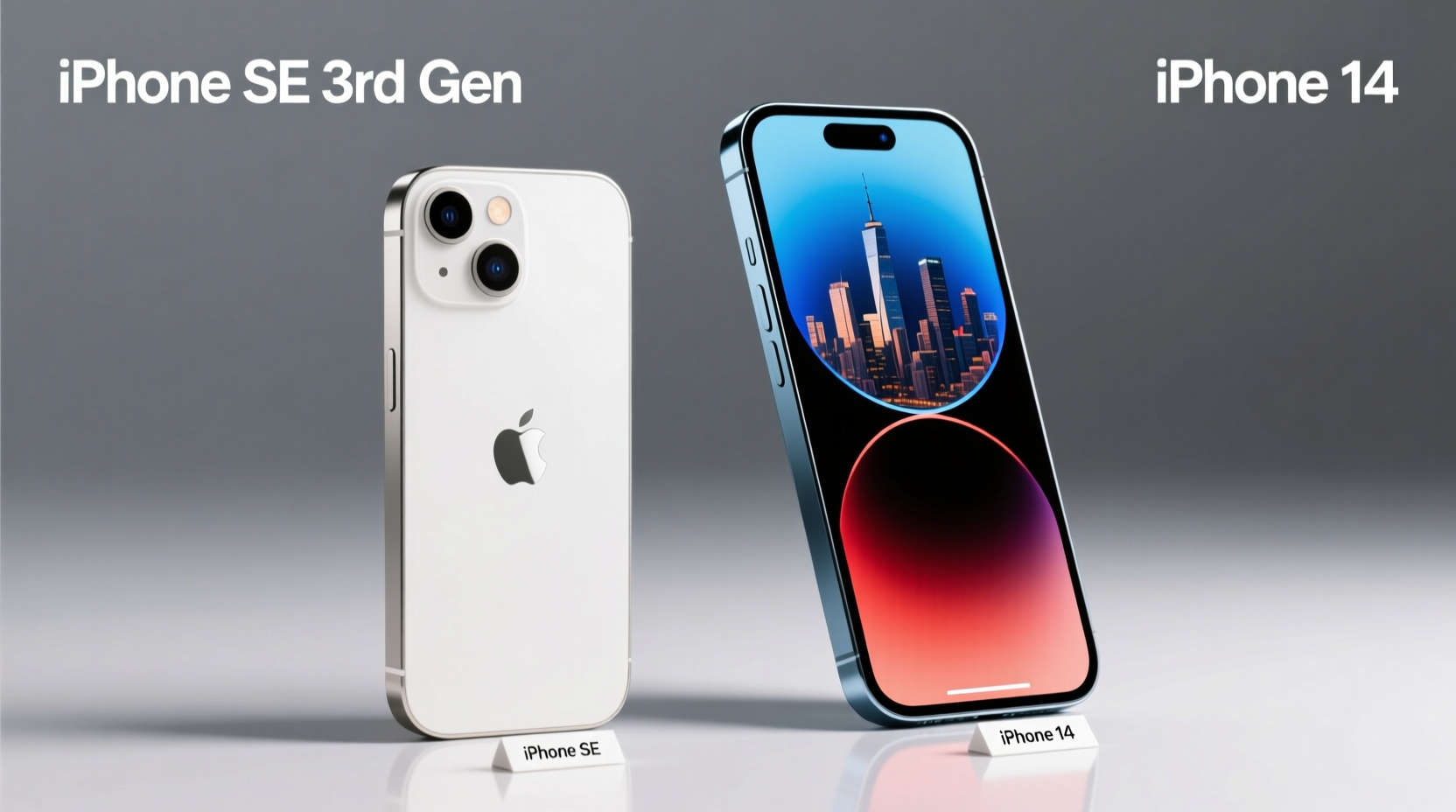
Choosing between the iPhone SE (3rd generation) and the iPhone 14 can feel like a battle between value and premium performance. The iPhone SE starts at $429, while the iPhone 14 begins at $799 — a $370 difference. For many consumers, that’s more than just pocket change; it’s a weekend getaway, a new laptop accessory, or several months of streaming subscriptions. But does the iPhone 14 deliver enough meaningful upgrades to justify its higher price? Or can the compact powerhouse known as the iPhone SE handle modern demands just as well?
The answer depends on your priorities: raw performance, camera quality, display experience, battery life, and long-term software support. Let’s break down the key differences with real-world context to determine whether spending more truly pays off.
Performance: Power Under the Hood
At first glance, both phones share Apple’s A15 Bionic chip — the same processor found in the iPhone 13 Pro. However, there's a subtle but important distinction. The iPhone SE uses a slightly older configuration of the A15 with only four GPU cores, compared to the iPhone 14’s full six-core GPU. In everyday use, this difference is nearly imperceptible. Both devices launch apps instantly, switch between tasks smoothly, and handle multitasking without hesitation.
Where the gap becomes noticeable is in graphics-intensive applications: mobile gaming, augmented reality experiences, and video editing. If you play games like Genshin Impact or edit 4K footage regularly, the iPhone 14 will render frames faster and maintain smoother gameplay over extended sessions.
Tip: For most users who aren’t heavy gamers or content creators, the iPhone SE’s performance is more than sufficient for daily tasks.Display & Design: Form Meets Function
The design philosophies of these two phones couldn’t be more different. The iPhone SE sticks with the classic Touch ID home button layout, reminiscent of the iPhone 8. It has a 4.7-inch Retina HD LCD screen — small by today’s standards, but ideal for one-handed use and those who prefer compact devices.
In contrast, the iPhone 14 features a 6.1-inch Super Retina XDR OLED display. The colors are richer, blacks are deeper, and brightness peaks at 1,000 nits (vs. 625 nits on the SE), making outdoor visibility significantly better. It also supports True Tone and HDR playback, enhancing media consumption.
The larger screen isn't just about aesthetics — it impacts usability. Reading articles, browsing social media, and watching videos are inherently more immersive on the iPhone 14. Additionally, Face ID offers a seamless unlock experience compared to the physical fingerprint sensor on the SE.
“Face ID integration has improved so much that I rarely even notice I’m unlocking my phone anymore.” — Jordan Lee, Mobile UX Designer
Camera Comparison: More Than Megapixels
Both phones have a 12MP main rear camera, but the implementation differs greatly. The iPhone SE relies heavily on computational photography using the A15 chip, which helps close the gap in daylight photos. However, the iPhone 14 brings critical hardware and software enhancements:
- Advanced Smart HDR 4 processing
- Better low-light performance via larger pixels and sensor-shift stabilization (on some models)
- Dual-camera system (main + ultrawide) starting with the iPhone 14 Pro, though the base 14 still has a single lens
- Cinematic Mode available in 4K at 30fps (SE limited to 1080p at 30fps)
In practical terms, the iPhone 14 captures sharper details, handles dynamic lighting better, and provides greater flexibility when shooting portraits or wide-angle scenes. Night mode activates automatically and produces cleaner results with less noise.
If photography matters to you — whether for sharing moments, creating content, or documenting travel — the iPhone 14 delivers noticeably superior image quality across all conditions.
Battery Life and Charging: Real-World Endurance
Battery longevity is another area where size makes a difference. Despite having a smaller battery capacity, the iPhone SE manages decent endurance due to iOS optimization. Apple rates it for up to 15 hours of video playback. The iPhone 14, however, offers up to 20 hours — an extra five hours of active use.
This translates to real advantages during busy days: longer navigation sessions, uninterrupted podcast listening, or extended video calls without needing a midday charge. Both support fast charging (up to 50% in 30 minutes with a 20W adapter) and MagSafe accessories, but neither includes a charger in the box.
| Feature | iPhone SE (3rd Gen) | iPhone 14 |
|---|---|---|
| Screen Size | 4.7\" LCD | 6.1\" OLED |
| Processor | A15 Bionic (4-core GPU) | A15 Bionic (6-core GPU) |
| Rear Camera | 12MP f/1.8 | 12MP f/1.5 w/ Sensor Stabilization |
| Front Camera | 7MP f/2.2 | 12MP f/1.9 w/ Autofocus |
| Video Recording | 4K@30fps, 1080p@60fps | 4K@60fps w/ Cinematic Mode |
| Battery Life (Video) | Up to 15 hrs | Up to 20 hrs |
| Biometric Security | Touch ID | Face ID |
| Starting Price | $429 | $799 |
Real User Scenario: Maria’s Upgrade Dilemma
Maria, a freelance graphic designer in Portland, upgraded from an iPhone 7 to either the SE or iPhone 14. She needed reliability for client communication, good photo quality for her side business in local event photography, and enough power to run design apps like Procreate and Adobe Fresco.
She initially leaned toward the iPhone SE for its affordability and compact size. But after testing both in-store, she realized how limiting the small screen was when editing illustrations. The lack of Face ID slowed her workflow, and the front camera wasn’t sharp enough for reliable video conferencing. Ultimately, she chose the iPhone 14 — and hasn’t regretted it. Her productivity increased, client calls look more professional, and her event photos receive consistent praise.
Maria’s case illustrates that while specs matter, real-world usability often tips the scale — especially when work and creativity depend on your device.
Long-Term Value and Software Support
Apple typically supports iPhones with iOS updates for five to six years. Both the iPhone SE (2022) and iPhone 14 (2022) should receive updates through at least 2028. However, future AI-driven features may favor devices with more advanced neural engines and memory bandwidth — areas where the iPhone 14 holds a slight edge.
Additionally, resale value trends show that newer designs retain value better. After two years, an iPhone 14 typically retains around 60–65% of its original price, while the iPhone SE drops closer to 50%. That difference could offset part of the initial cost if you plan to upgrade again later.
Frequently Asked Questions
Is the iPhone SE too outdated for 2024 and beyond?
No. The iPhone SE remains a capable device thanks to its A15 chip and strong iOS optimization. It handles current apps well and will likely support new iOS versions until 2027. However, future AR/AI tools may not run optimally due to hardware limitations.
Can the iPhone SE replace flagship performance?
In day-to-day tasks — messaging, browsing, email, social media — yes. But for intensive workloads like gaming, video editing, or machine learning-based apps, the iPhone 14 performs more reliably under pressure.
Does the iPhone 14 offer better durability?
Yes. The iPhone 14 has Ceramic Shield front cover and better water resistance (IP68 up to 6 meters for 30 minutes vs. IP67 up to 1 meter). This makes it more resilient in wet or accidental drop scenarios.
Final Verdict: Who Should Buy Which?
The iPhone SE is perfect for budget-conscious buyers, those upgrading from older iPhones (like the 6s or 7), or anyone who prefers a smaller, lightweight phone. It’s also ideal for secondary devices, kids, or seniors who prioritize simplicity and long-term support over cutting-edge features.
The iPhone 14 shines for users who want a modern smartphone experience: excellent cameras, vibrant display, longer battery life, and seamless biometrics. If you consume a lot of media, take frequent photos, or rely on your phone for creative work, the extra investment pays dividends in daily satisfaction and functionality.
Tip: Consider total ownership cost. If you plan to keep your phone for 3+ years, the iPhone 14’s longevity and feature set may save you from upgrading sooner.Your Next Step
Ask yourself: What do I use my phone for every day? If your routine revolves around calls, texts, light browsing, and occasional photos, the iPhone SE delivers exceptional value. But if you demand a rich visual experience, high-quality content creation, and room to grow with future software, the iPhone 14 earns its premium price.
Technology should enhance your life — not drain your wallet unnecessarily. Weigh your needs honestly, test both models if possible, and choose the phone that aligns with how you actually live.
💬 Have you made the leap from iPhone SE to iPhone 14 — or stayed loyal to the compact champ? Share your experience and help others make an informed decision!