
For many smartphone users in the mid-2010s, the leap from a flagship Android device like the Samsung Galaxy S4 to Apple’s iPhone 6s Plus wasn’t just a switch in brand—it was a shift in ecosystem, interface philosophy, and long-term usability. The Galaxy S4, released in 2013, was once the pinnacle of Android innovation. By 2015, when the iPhone 6s Plus arrived, mobile technology had evolved dramatically. But was upgrading—especially from such a capable device—truly worthwhile?
This article dives deep into the real differences between these two phones, not just on paper but in daily use. We’ll examine performance, software longevity, camera quality, user experience, and overall value to help answer whether the move was justified or simply a case of shiny new tech syndrome.
Performance and Hardware: A Generational Leap
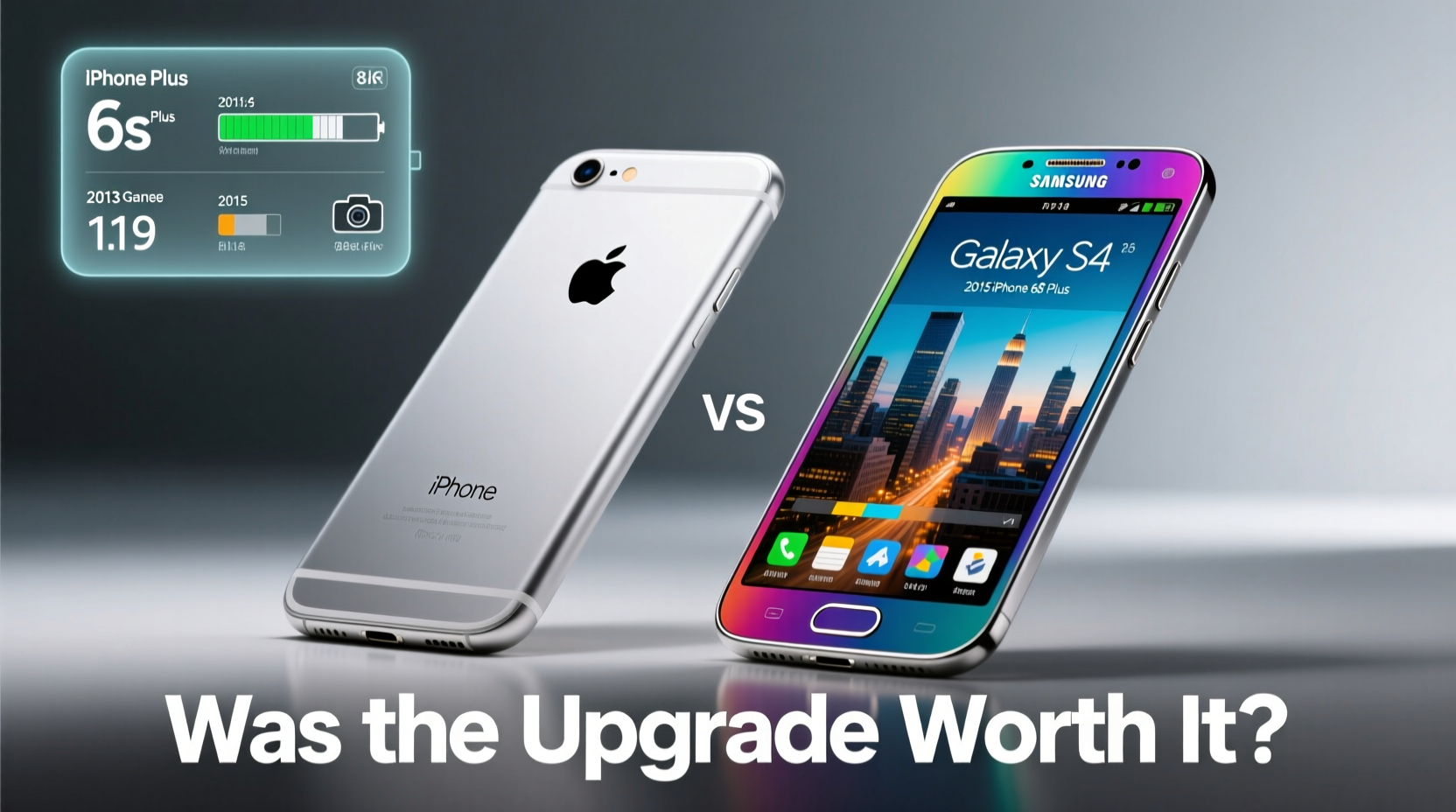
The hardware gap between the Galaxy S4 and iPhone 6s Plus reflects more than just two years of progress—it highlights a fundamental difference in how Apple and Samsung approached device optimization at the time.
The Galaxy S4 launched with Qualcomm’s Snapdragon 600 (or Exynos 5 Octa in some regions), 2GB of RAM, and a 5-inch 1080p Super AMOLED display. It was powerful for its era, running Android 4.2 out of the box. Fast forward to 2015: the iPhone 6s Plus featured Apple’s custom A9 chip, 2GB of RAM (same number, but vastly different architecture), a larger 5.5-inch Retina HD display, and support for 3D Touch.
On benchmarks alone, the A9 outperformed the Snapdragon 600 by over 200% in CPU tasks and even more in GPU-intensive applications. But raw numbers don’t tell the full story. Real-world responsiveness—app launches, multitasking, scrolling smoothness—was night and day. Users upgrading from the S4 often reported that the iPhone 6s Plus felt “snappier” and more consistent, even three years after the S4’s release.
Tip: When upgrading, prioritize processor efficiency and software support over specs like RAM or screen resolution.Software Experience and Longevity
One of the most significant factors in determining whether an upgrade is “worth it” isn’t just how the phone performs today—but how well it holds up over time.
The Galaxy S4 received major OS updates up to Android 5.0.1 (Lollipop), and security patches tapered off by late 2016. In contrast, the iPhone 6s Plus launched with iOS 9 and was supported all the way through iOS 15—six major updates over six years. This meant continued access to new features, security fixes, and app compatibility long after the S4 became obsolete.
Apple’s tight integration between hardware and software allowed older devices to run newer operating systems efficiently. Meanwhile, Android fragmentation—even on flagship devices—meant that feature parity and update speed varied widely.
“Longevity isn’t about initial power—it’s about sustained relevance. The iPhone 6s Plus remained functional and secure far longer than most Android flagships of its time.” — David Lin, Mobile Analyst at TechPulse Insights
Camera Comparison: More Than Megapixels
The Galaxy S4 came with a 13MP rear camera and a 2MP front-facing shooter. At launch, it offered solid image quality, especially in daylight. However, low-light performance and dynamic range were limited by sensor size and processing capabilities.
The iPhone 6s Plus introduced a 12MP rear camera with larger pixels, improved optical stabilization, and advanced image signal processing. While megapixels decreased slightly, actual photo quality improved significantly—particularly in color accuracy, detail retention, and video recording (introducing 4K capability).
Front-facing cameras also saw a dramatic upgrade: the 6s Plus brought a 5MP FaceTime HD camera, making selfies and video calls noticeably sharper—a major win for social media users.
| Feature | Galaxy S4 | iPhone 6s Plus |
|---|---|---|
| Rear Camera | 13MP, f/2.2 | 12MP, f/2.2 with OIS |
| Front Camera | 2MP | 5MP |
| Video Recording | 1080p @ 30fps | 4K @ 30fps, 1080p @ 60fps |
| Low-Light Performance | Moderate noise, soft details | Better exposure, reduced grain |
Real-World Upgrade Scenario: Maria’s Switch
Maria had used her Galaxy S4 since 2013. By 2015, she noticed apps took longer to load, the battery drained within a day even with light use, and Instagram stopped supporting her device. After much hesitation, she switched to the iPhone 6s Plus.
Her first week was a mix of adjustment and delight. She missed some Android customization options but appreciated the smoother animations, faster app responses, and better camera for family photos. Most importantly, she no longer worried about app compatibility. Over the next three years, she updated her iPhone twice without slowdowns. Her S4, by comparison, couldn’t run modern apps by 2017.
For Maria, the upgrade wasn’t just about better specs—it restored confidence in her device’s reliability.
Battery Life and Charging: Practical Daily Use
The Galaxy S4 had a 2600mAh battery, while the iPhone 6s Plus packed a 2915mAh unit. On paper, the difference seems minor, but real-world endurance favored the iPhone due to iOS power management and the A9 chip’s efficiency.
Many users reported that the 6s Plus delivered a full day of moderate to heavy use, including streaming, navigation, and social media. The S4, by 2015, often required midday charging even with light usage, partly due to battery degradation over time.
However, the S4 had one advantage: removable battery and expandable storage via microSD. The iPhone did not—and still doesn’t—offer either. For users who valued flexibility, this was a genuine trade-off.
Tip: If you keep phones for more than two years, prioritize build quality and software support over modularity.Step-by-Step: Evaluating Your Own Upgrade
Wondering if your old phone deserves retirement? Follow this practical timeline to decide:
- Assess performance: Are apps crashing or taking more than 5 seconds to open?
- Check software status: Is your phone still receiving security updates?
- Test battery health: Does it die before bedtime with moderate use?
- Review app compatibility: Can it run current versions of WhatsApp, Google Maps, or banking apps?
- Evaluate camera needs: Are you struggling to capture clear photos or videos?
- Consider ecosystem lock-in: Are you tied to iCloud, Google Drive, or another service?
If three or more apply, an upgrade is likely justified—not just for novelty, but for functionality.
Frequently Asked Questions
Can the Galaxy S4 still be used in 2024?
Technically, yes—but with major limitations. It cannot run modern versions of key apps like Chrome, Facebook, or banking services. Security vulnerabilities remain unpatched, making it risky for online transactions.
Why did the iPhone 6s Plus receive updates longer than the S4?
Apple controls both hardware and software, enabling tighter optimization. Samsung must coordinate with carriers and Google, slowing down updates. Additionally, Apple supports devices longer by design—often five to six years versus two to three for most Android OEMs at the time.
Was the iPhone 6s Plus better for gaming than the S4?
Absolutely. The A9 chip provided console-level performance for mobile games in 2015. Titles like *Asphalt 8* and *Infinity Blade III* ran at higher frame rates and resolutions. Even today, iOS retains better game optimization and developer support.
Final Verdict: Was the Upgrade Worth It?
For most users, yes—the jump from the Galaxy S4 to the iPhone 6s Plus represented a meaningful improvement in daily usability, longevity, and peace of mind. It wasn’t merely about bigger screens or fancier materials; it was about entering an ecosystem designed for long-term stability.
Of course, switching platforms comes with friction: relearning gestures, migrating data, adjusting to app differences. But if your goal is a device that stays fast, secure, and compatible for years, the iPhone 6s Plus delivered where the S4 could no longer keep pace.
Technology evolves quickly. What feels “good enough” today may hinder you tomorrow. The true value of an upgrade isn’t measured in megapixels or GHz—it’s in how much more you can do, reliably, without frustration.
💬 Did you make the switch from Galaxy S4 to iPhone 6s Plus? Share your experience—what surprised you, what you miss, and whether you’d do it again!