
As smartphones age, battery degradation becomes inevitable. For owners of older iPhones like the 6 and 6s, replacing a worn-out battery is a common fix. But a growing trend in DIY repair circles suggests using an iPhone 6 battery in an iPhone 6s as a cost-saving measure. At first glance, it seems logical—both devices share similar designs and release years. However, this seemingly clever workaround raises serious questions about safety, performance, and long-term reliability.
The iPhone 6 and 6s may look nearly identical, but beneath the surface, Apple made critical upgrades—especially in power management and hardware integration. Swapping components between models without full technical understanding can lead to unexpected consequences. This article dives deep into whether installing an iPhone 6 battery in a 6s is a stroke of genius or a guaranteed path to device failure.
Battery Specifications: Why Compatibility Isn’t Just About Fit
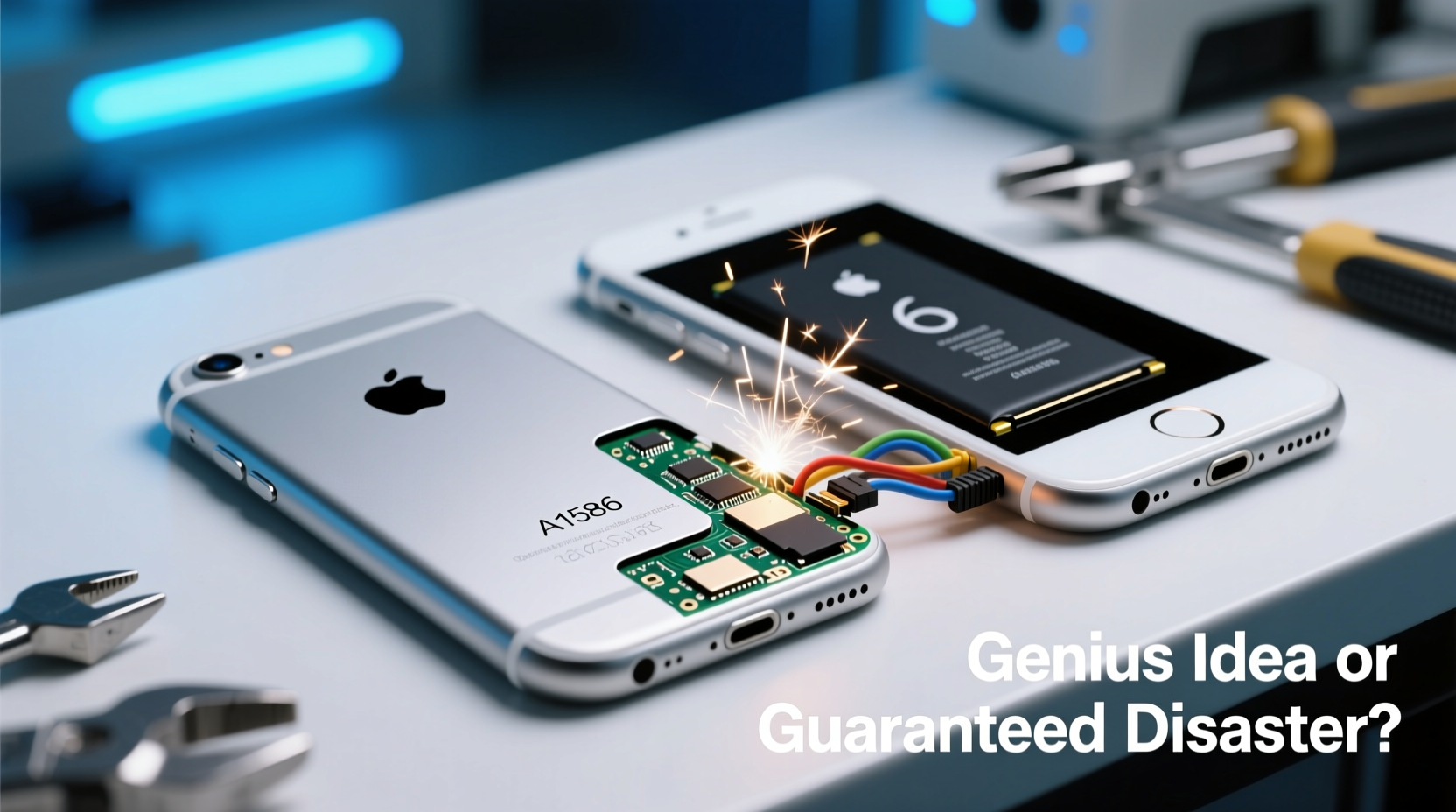
Physical similarity doesn't guarantee electrical compatibility. The iPhone 6 uses a 1,810 mAh (milliampere-hour) battery, while the iPhone 6s comes with a slightly smaller 1,715 mAh unit. On paper, the 6’s battery offers more capacity, which might seem like an upgrade. However, capacity alone doesn’t tell the whole story.
Apple engineers batteries not just for energy storage but also for precise voltage regulation, thermal response, and communication with the device’s power management system. The 6s introduced a more advanced power management integrated circuit (PMIC) and tighter firmware control over battery health reporting. Using a battery not specifically calibrated for the 6s can disrupt this balance.
Moreover, the connectors, though physically similar, may have subtle differences in pin layout or resistance calibration. Even minor mismatches can cause inaccurate battery readings, sudden shutdowns, or failure to charge properly.
“Battery swaps between models—even those that look identical—can compromise both performance and safety. The system is designed as a cohesive unit.” — Dr. Lena Park, Electronics Engineer & Mobile Hardware Analyst
Risks of Cross-Model Battery Installation
While some users report temporary success after installing an iPhone 6 battery in a 6s, long-term outcomes are far less predictable. Here are the most significant risks:
- Inaccurate battery percentage reporting: The iOS battery algorithm relies on data from the battery’s built-in management chip. A mismatched battery may feed incorrect data, leading to premature shutdowns at 20% or erratic charging behavior.
- Reduced performance throttling: iOS dynamically adjusts processor speed based on battery health. An incompatible battery may trigger aggressive throttling or prevent it altogether, risking instability.
- Overheating and swelling: If the battery delivers inconsistent voltage or lacks proper thermal safeguards, it can overheat, potentially damaging internal components or creating a fire hazard.
- Failure to pass Genuine Part check: Starting with iOS 11.3, Apple introduced battery health monitoring that flags non-genuine or mismatched batteries. While this doesn’t brick the phone, it disables certain features like peak performance mode and displays a warning.
- Voided repairability: Future repairs become more complicated. Technicians may refuse service if prior modifications are detected, especially if adhesive residue or connector damage is present.
Comparison Table: iPhone 6 vs. 6s Battery & System
| Feature | iPhone 6 | iPhone 6s |
|---|---|---|
| Battery Capacity | 1,810 mAh | 1,715 mAh |
| Voltage | 3.82V | 3.85V |
| Battery Model Number | APN: 616-0650 | APN: 616-0741 |
| Power Management IC | Standard PMIC | Enhanced PMIC with dynamic throttling |
| iOS Battery Health Support | Limited (after update) | Full support from iOS 11.3+ |
| Genuine Part Warning | No | Yes, if non-matching battery installed |
Step-by-Step: What Happens When You Install the Wrong Battery?
Understanding the technical sequence helps illustrate why this swap is problematic. Here’s what occurs during and after installation:
- Disassembly: The iPhone is opened using specialized tools. Heat is applied to loosen adhesive securing the display.
- Battery removal: The original 6s battery is disconnected and carefully peeled from its adhesive bed.
- Installation of iPhone 6 battery: The 6’s battery is connected to the logic board. It fits physically but may sit slightly differently due to shape variance.
- Reassembly and boot: The phone powers on. Initially, it may appear functional with normal boot sequence.
- Firmware handshake: iOS attempts to read the battery’s authentication chip. Mismatch triggers a “Unable to Verify Battery” message in Settings > Battery.
- Ongoing operation: Over time, users report faster drain, random restarts, or inability to reach full charge.
- Long-term degradation: Without proper calibration, the battery management system fails to optimize charging cycles, accelerating wear.
Real-World Example: A Cautionary Tale
Mark, a hobbyist technician from Austin, attempted the iPhone 6-to-6s battery swap to save $20 on a replacement part. His reasoning was simple: “If it fits and turns on, it should work.”
Initially, the phone booted fine and showed 100% charge. Over the next week, however, Mark noticed the battery dropped from 80% to 20% in under an hour. The device began shutting down unexpectedly during calls. After two weeks, the phone refused to charge past 80%, and the battery began to swell slightly, causing the screen to lift at the bottom edge.
He eventually replaced it with a genuine 6s-compatible battery. “I saved $20 but wasted three weeks of unreliable use and almost damaged the logic board,” he admitted. “Not worth it.”
Expert Recommendations and Best Practices
Reputable repair shops and electronics engineers consistently advise against cross-model battery swaps—even when parts appear interchangeable. Precision engineering means every component is tested and tuned for its specific device.
If your iPhone 6s battery is failing, consider these safer alternatives:
- Purchase a high-quality, model-specific replacement from a trusted supplier.
- Use Apple’s official battery replacement service, which ensures genuine parts and calibration.
- Choose a third-party repair shop certified by iFixit or Apple’s Independent Repair Provider program.
- Avoid ultra-cheap batteries marketed as “compatible” with multiple models—they often lack proper safety circuits.
“The smallest variance in battery chemistry or communication protocol can cascade into major system issues. Don’t treat batteries like generic USB cables.” — Carlos Mendez, Senior Repair Technician at TechFix Labs
FAQ: Common Questions About iPhone Battery Swaps
Can an iPhone 6 battery damage my iPhone 6s permanently?
It’s unlikely to cause immediate catastrophic damage, but prolonged use can stress the power management system, degrade performance, or lead to swelling that damages internal components. In rare cases, improper voltage regulation could harm the charging circuit.
Will iOS detect that I used the wrong battery?
Yes. From iOS 11.3 onward, iPhones monitor battery authenticity. If a non-matching or uncertified battery is detected, you’ll see a message in Settings > Battery > Battery Health stating “Unable to Verify This Battery.” Features like Peak Performance Capability will be disabled.
Are all third-party batteries unsafe?
No—but quality varies widely. Reputable brands like iFixit, Power Practical, or Batteroo design model-specific replacements with proper calibration chips and safety features. Avoid no-name batteries sold in bulk online.
Final Verdict: Genius Idea or Guaranteed Disaster?
Despite the allure of extra battery capacity and lower costs, installing an iPhone 6 battery in a 6s is not a smart move. Any short-term gains are outweighed by long-term risks: inaccurate battery readings, system instability, safety hazards, and loss of functionality.
Modern smartphones are tightly integrated systems where hardware and software depend on precise component matching. Treating batteries as interchangeable parts ignores the sophistication of today’s mobile engineering.
🚀 Take action: Replace your aging iPhone battery with a model-specific, high-quality unit. Your device’s performance, safety, and longevity depend on it. Share this guide to help others avoid costly mistakes.