In 2012, smartphone users faced a pivotal decision: stick with Apple’s proven ecosystem or leap into the rapidly evolving Android world with devices like the HTC One S. The iPhone 4S, released in October 2011, had solidified its place as a reliable iOS device, while the HTC One S arrived in mid-2012 as part of HTC’s premium “One” series, promising cutting-edge Android performance. For many, the question wasn’t just about specs—it was whether upgrading from the 4S to the One S represented meaningful progress or just a change of platform.
This article breaks down the real differences between these two iconic handsets, examining their hardware, software, user experience, and long-term value to determine if the upgrade was truly worth it at the time—and how they hold up today.
Design and Build Quality
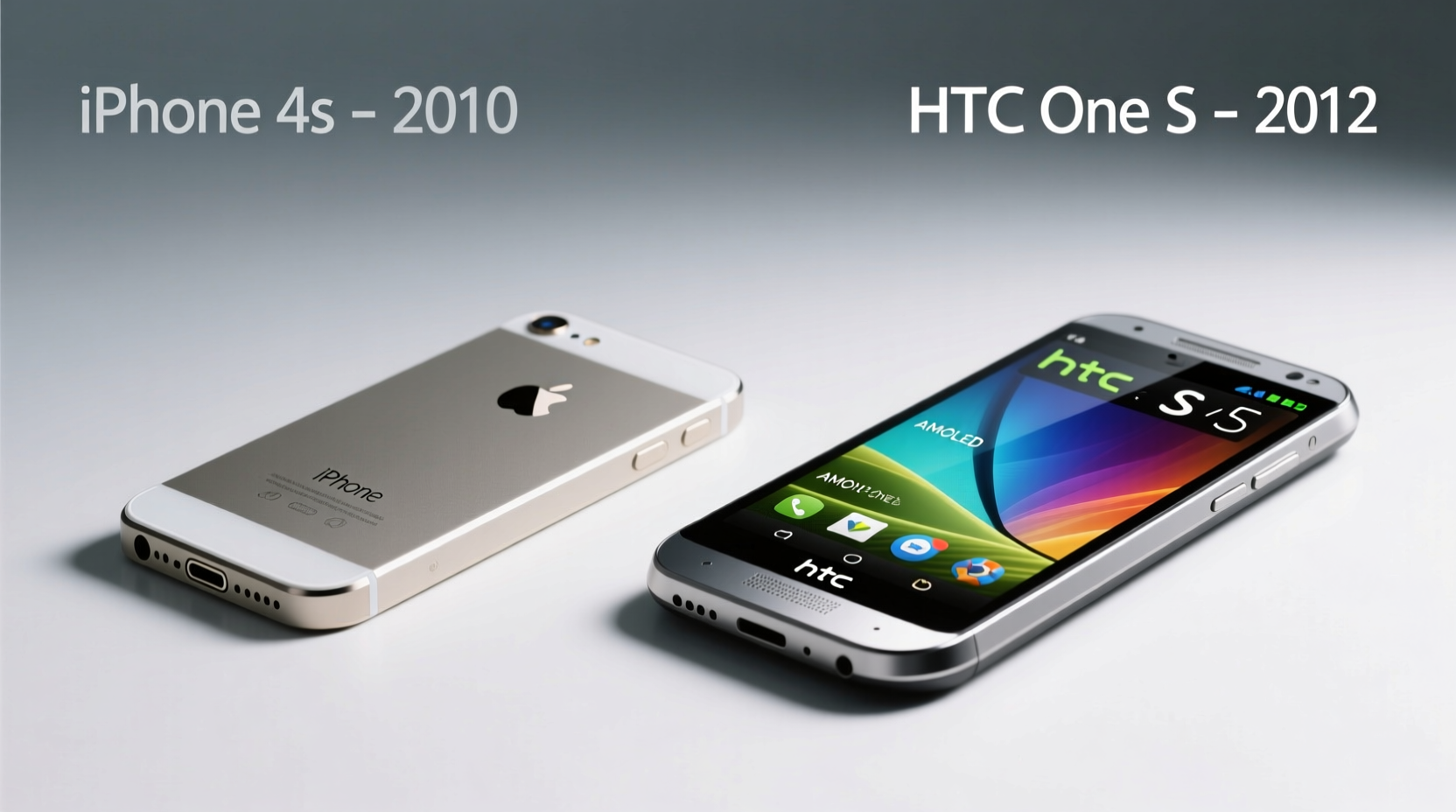
The iPhone 4S featured Apple’s signature glass-and-stainless-steel sandwich design, introduced with the iPhone 4. While elegant and precise, the 4S was prone to scratches and signal issues due to its external antenna bands. It measured 115.2 x 58.6 x 9.3 mm and weighed 140 grams—compact by today’s standards but substantial for its era.
In contrast, the HTC One S embraced a sleeker, more modern aesthetic. Its curved unibody design, available in matte black or ceramic white, used polycarbonate or aluminum depending on region. The One S was slightly larger (130.7 x 65 x 7.8 mm) but thinner and lighter at 119.8 grams. Its contoured back improved grip, and the overall feel was more refined for prolonged use.
Tip: If you prioritized pocketability and durability, the iPhone 4S offered sturdiness; if you valued slimness and ergonomics, the One S had the edge.Display and Visual Experience
The iPhone 4S came with a 3.5-inch Retina display at 960x640 pixels (326 ppi). At the time, this remained best-in-class for sharpness and color accuracy. However, by 2012, competitors were moving toward larger screens, making the 4S feel cramped for web browsing and video.
The HTC One S responded with a 4.3-inch Super AMOLED display at 960x540 resolution (256 ppi). Though lower in pixel density, the AMOLED panel delivered deeper blacks, vibrant colors, and better outdoor visibility. The larger screen made multitasking and media consumption noticeably more enjoyable.
For users accustomed to iOS’s tight integration, the jump to a bigger, more colorful Android screen felt liberating. But some missed the crispness and consistency of Apple’s display calibration.
Performance and Software Ecosystem
Under the hood, the iPhone 4S used Apple’s dual-core A5 chip and 512MB of RAM. iOS 5 and later versions ran smoothly, thanks to Apple’s tight hardware-software integration. The App Store was mature, with high-quality apps optimized specifically for iOS. Siri, introduced with the 4S, was a novelty—even if limited in functionality.
The HTC One S packed a 1.5GHz dual-core Snapdragon S4 processor and 1GB of RAM—superior on paper. It launched with Android 4.0 (Ice Cream Sandwich), overlaid with HTC Sense 4. This interface added polished animations, enhanced notifications, and social integration. The extra RAM allowed smoother multitasking and faster app switching than the 4S.
“HTC Sense struck a rare balance—Android’s flexibility with near-iOS levels of polish.” — David Pierce, The Verge (2012)
However, Android fragmentation meant updates were slower, and long-term support uncertain. The iPhone 4S received iOS updates for four years, while the One S saw only one major OS upgrade (to Android 4.1), limiting its lifespan.
Camera Comparison: Real-World Results
The iPhone 4S boasted an 8-megapixel rear camera with improved low-light performance, backside illumination, and 1080p video recording. Apple’s image processing prioritized natural tones and consistency. In good lighting, photos were among the best of any smartphone in 2011–2012.
The HTC One S featured an 8MP sensor too, but with f/2.0 aperture and LED flash. HTC promoted its ImageChip for faster capture and continuous shooting. While technically capable, the One S struggled with oversaturation and inconsistent white balance, especially indoors. Video was limited to 1080p at 30fps, matching the 4S.
In side-by-side tests, the iPhone 4S delivered more reliable results across conditions. The One S offered quicker shutter response and burst mode, appealing to casual photographers wanting speed over precision.
Feature Comparison Table
| Feature | iPhone 4S | HTC One S |
|---|---|---|
| Release Date | October 2011 | May 2012 |
| OS at Launch | iOS 5 | Android 4.0 (ICS) |
| Processor | Apple A5 (Dual-core) | Snapdragon S4 (Dual-core 1.5GHz) |
| RAM | 512MB | 1GB |
| Display | 3.5\" IPS LCD, 960x640 | 4.3\" Super AMOLED, 960x540 |
| Rear Camera | 8MP, 1080p video | 8MP, f/2.0, 1080p video |
| Battery Capacity | 1432 mAh | 1600 mAh |
| Storage Options | 16/32/64GB (no expandable) | 16GB internal + microSD support |
| Weight | 140g | 119.8g |
Real-World Upgrade Experience: A Mini Case Study
Consider Mark, a long-time iPhone user who upgraded from the 4S to the HTC One S in summer 2012. He wanted a larger screen for reading news and a faster device for multitasking. Initially thrilled by the One S’s responsive interface and richer display, he appreciated features like customizable widgets and expandable storage.
But within months, he noticed inconsistencies. Some apps lacked optimization. Over-the-air updates were delayed. After six months, HTC announced no Android 4.2 upgrade, while his friend’s iPhone 4S still received new iOS features. Mark eventually returned to iOS, citing reliability and ecosystem continuity as deciding factors.
His experience reflected a broader trend: Android offered flexibility, but iOS provided longevity and predictability.
Was the Upgrade Worth It?
The answer depends on user priorities:
- For tech enthusiasts eager to explore Android’s customization, the One S was a compelling step forward in design and performance.
- For average users valuing stability, app quality, and long-term updates, the iPhone 4S remained the safer choice.
- For photographers, the 4S delivered more consistent results despite fewer manual controls.
- For media consumers, the One S’s larger, vibrant screen enhanced video and gaming experiences.
Checklist: Was Upgrading Right for You?
Ask yourself these questions before making a similar switch:
- Do I want more control over my interface and settings? → Yes favors Android
- Am I invested in Apple’s ecosystem (iCloud, iTunes, Mac)? → Sticking with iOS makes sense
- Is battery life and long-term update support important? → iOS had the advantage
- Do I need expandable storage or FM radio? → Android wins here
- Do I prefer a compact or larger device? → 4S is smaller; One S is slimmer but taller
Frequently Asked Questions
Could the HTC One S run modern apps today?
No. With only 1GB RAM and stuck on Android 4.1, the One S lacks the hardware and OS foundation for current apps. Even in 2015, it became largely obsolete.
Did the iPhone 4S support LTE?
No. The 4S was limited to 3G (HSPA+), while the One S supported HSPA+ but not LTE either. True 4G iPhones didn’t arrive until the iPhone 5.
Which phone lasted longer in daily use?
The iPhone 4S generally outlasted the One S in terms of usable life. Apple supported it with iOS updates until 2016 (iOS 9), while HTC ended support in 2013. Users reported better long-term performance on the 4S despite older hardware.
Final Verdict and Actionable Insight
Upgrading from the iPhone 4S to the HTC One S in 2012 was exciting—but not necessarily wise for most users. The One S offered tangible improvements: a sleeker body, better screen, faster processor, and richer Android features. Yet, it fell short in long-term software support and ecosystem cohesion.
The iPhone 4S, though aging, remained polished, reliable, and future-proofed through Apple’s update policy. For users deeply embedded in iOS, the switch often led to regret. For those ready to embrace Android’s openness, the One S was one of the best gateways available at the time.
Ultimately, the upgrade was worth it only if you prioritized immediate hardware gains over long-term usability. Today, both phones are museum pieces—but their contrast teaches a lasting lesson: specs matter, but sustained software support matters more.
💬 Still nostalgic about your old smartphone? Share your iPhone 4S or HTC One S experience in the comments—what did you love, and what made you switch?