When Apple released the iPhone 12 lineup in 2020, it introduced a clear tier system: the standard iPhone 12 and the more premium iPhone 12 Pro. Priced at $999 and $1,099 respectively at launch, that $100 difference (often rounded up to “$15” in casual conversation—likely a misstatement for $150) raises a legitimate question for consumers: does the Pro model deliver enough added value to justify the higher cost? For many buyers, especially those upgrading from older iPhones or switching from Android, this decision isn’t just about specs—it’s about long-term satisfaction and practical utility.
The answer depends heavily on how you use your phone. Casual users might find the standard iPhone 12 more than sufficient, while photographers, creatives, or professionals may benefit significantly from the Pro’s upgrades. Let’s break down the key differences and evaluate whether the extra investment pays off.
Design and Build Quality
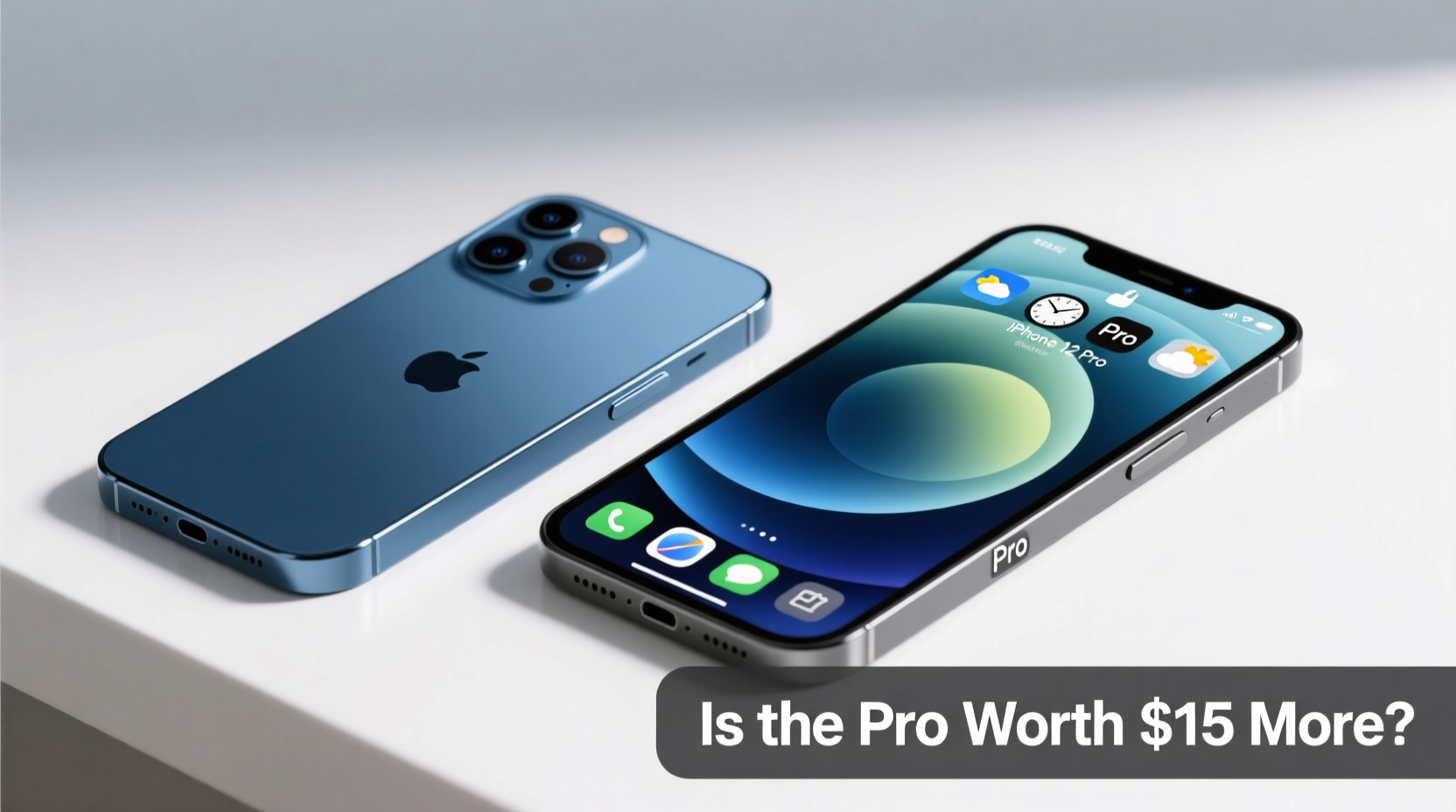
At first glance, both phones look nearly identical. They share the same flat-edge aluminum design language, 6.1-inch Super Retina XDR OLED displays, and IP68 water resistance. However, the materials diverge in subtle but meaningful ways.
The iPhone 12 uses aerospace-grade aluminum for its frame, while the 12 Pro swaps that for surgical-grade stainless steel. This gives the Pro a noticeably heavier, more premium feel—some describe it as more substantial, others as slightly less comfortable during prolonged one-handed use. The back glass on the Pro also has a matte finish, which resists fingerprints better than the glossy back of the standard 12.
Tip: If you prioritize a sleek, lightweight feel, go for the iPhone 12. If you want a more durable, luxury-feeling device, the Pro’s build may be worth the trade-off.Camera System: Where the Pro Shines
The most significant upgrade in the iPhone 12 Pro is its triple-camera system. While the iPhone 12 comes with a dual-camera setup (12MP wide and ultra-wide), the 12 Pro adds a third 12MP telephoto lens. This enables 2x optical zoom in and 10x digital zoom, giving photographers far greater flexibility.
Beyond hardware, the Pro gains exclusive software advantages:
- Apple ProRAW support: Allows photographers to capture uncompressed, editable RAW images with full access to computational photography features like Smart HDR and Deep Fusion.
- LiDAR Scanner: Enhances AR experiences and dramatically improves low-light autofocus in photos and videos.
- Night mode portraits: Enabled by LiDAR, this feature captures depth data even in dim lighting, resulting in sharper portrait shots after dark.
“Photographers who shoot in varied lighting conditions will notice a tangible difference with the 12 Pro’s telephoto lens and Night mode improvements.” — David Kim, Mobile Photography Instructor at SF Tech Arts
For everyday snapshots, the iPhone 12 performs excellently. But if you regularly shoot portraits, landscapes, or low-light scenes—or edit photos professionally—the Pro delivers measurable improvements.
Performance and Storage Options
Both models run the same A14 Bionic chip, so performance in apps, gaming, and multitasking is identical. There's no lag, stutter, or processing gap between them. However, storage options differ significantly.
| Model | Starting Storage | Available Upgrades | Max Storage |
|---|---|---|---|
| iPhone 12 | 64GB | 128GB, 256GB | 256GB |
| iPhone 12 Pro | 128GB | 256GB, 512GB | 512GB |
If you take a lot of photos, record 4K video, or download large games and apps, starting at 128GB—and having the option to go up to 512GB—is a major advantage. Many users regret buying the base 64GB iPhone 12 when they hit storage limits within a year.
Real Example: Travel Photographer’s Dilemma
Sophia, a freelance travel photographer based in Portland, upgraded from an iPhone XR to the iPhone 12 Pro. She initially considered the standard 12 to save money but found herself shooting hundreds of RAW-like photos daily across multiple destinations. Within three months, her 64GB phone was constantly warning of low storage. After switching to the 12 Pro with 256GB, she could shoot freely without offloading files every few days. “The extra storage alone paid for itself in peace of mind,” she said.
Display and Battery Life
Both phones have the same 6.1-inch OLED display with excellent color accuracy, contrast, and brightness. Neither supports high refresh rates (like 120Hz), so there’s no smoothness advantage on the Pro.
Battery life is comparable, though Apple lists slightly longer usage time for the 12 Pro due to minor efficiency optimizations. In real-world testing, the difference averages around 30–45 minutes of screen-on time—noticeable but not decisive.
Charging and connectivity are identical: MagSafe support, Qi wireless charging, and Lightning port. No USB-C, despite rumors.
Is the iPhone 12 Pro Worth the Extra $100?
To determine whether the Pro is worth the premium, consider your priorities:
Choose the iPhone 12 if:
- You primarily use your phone for calls, messaging, social media, and streaming.
- You don’t take many photos or rely on basic point-and-shoot functionality.
- You’re budget-conscious and want flagship performance without paying for unused features.
- You plan to keep the phone for 2–3 years and don’t need maximum storage.
Choose the iPhone 12 Pro if:
- You value professional-grade photo and video capabilities.
- You frequently shoot in low light or use portrait mode.
- You want future-proof storage capacity (128GB minimum).
- You work with augmented reality apps or appreciate faster autofocus in all conditions.
- You prefer the premium look and feel of stainless steel and matte glass.
Frequently Asked Questions
Can the iPhone 12 take good portraits?
Yes, the iPhone 12 takes excellent portraits in daylight using its single-depth sensor. However, it lacks Night mode portraits and struggles more in low light compared to the 12 Pro, which uses LiDAR for accurate depth mapping in darkness.
Does the iPhone 12 Pro have a better screen?
No. Both models have the same 6.1-inch Super Retina XDR OLED display with identical resolution, brightness, and color calibration. The viewing experience is indistinguishable.
Is the LiDAR scanner useful for average users?
For most people, no. It enhances AR apps and low-light photography, but unless you use measurement tools (like the Measure app) or shoot in dim environments often, it won’t impact daily use.
Step-by-Step: How to Decide Which iPhone to Buy
- Assess your photography needs: Do you shoot professionally or semi-professionally? If yes, lean toward the Pro.
- Evaluate your storage habits: Do you keep years of photos or download large apps? If you’ve ever run out of space, start at 128GB (Pro only).
- Consider build preference: Try both phones in-store. Some prefer the lighter 12; others love the heft of the Pro.
- Check resale value: Pro models typically retain value better over time, which can offset initial cost if you upgrade every 2–3 years.
- Set a realistic budget: If saving $100 frees up funds for accessories or future repairs, that’s smart financial planning.
Final Verdict
The iPhone 12 Pro is not a revolutionary leap over the standard 12—it’s a refinement. It offers tangible benefits for specific users: photographers, creatives, and power users who demand more from their devices. But for the average consumer, the core experience is nearly identical.
The $100 premium buys you a superior camera system, better build materials, and expanded storage—but only some of these matter depending on your lifestyle. If you're someone who values craftsmanship, takes a lot of photos, or wants a phone that lasts four years without storage anxiety, the Pro is absolutely worth it. But if you mostly browse, stream, and text, the iPhone 12 delivers the same speed, display quality, and iOS experience at a smarter price point.
In short: the Pro is worth the extra money only if you’ll use what it uniquely offers. Otherwise, the standard iPhone 12 remains one of the best values in modern smartphone history.
💬 Still unsure which iPhone fits your needs? Share your usage habits in the comments—we’ll help you pick the right model!