When Apple released the iPhone 11 in 2019, it marked a turning point in smartphone photography. Positioned as a more accessible alternative to the premium iPhone XS, the iPhone 11 brought significant upgrades—especially in its camera system. But for users already owning the iPhone XS, a critical question emerged: Is upgrading from the XS to the iPhone 11 truly worthwhile for photography, or does the XS remain capable enough for everyday shooting?
The answer depends on your priorities: Are you chasing cutting-edge features like Night mode and ultra-wide shots, or are you satisfied with excellent but slightly older camera performance? Let’s break down the differences and similarities to help you decide.
Camera Hardware: The Core Differences
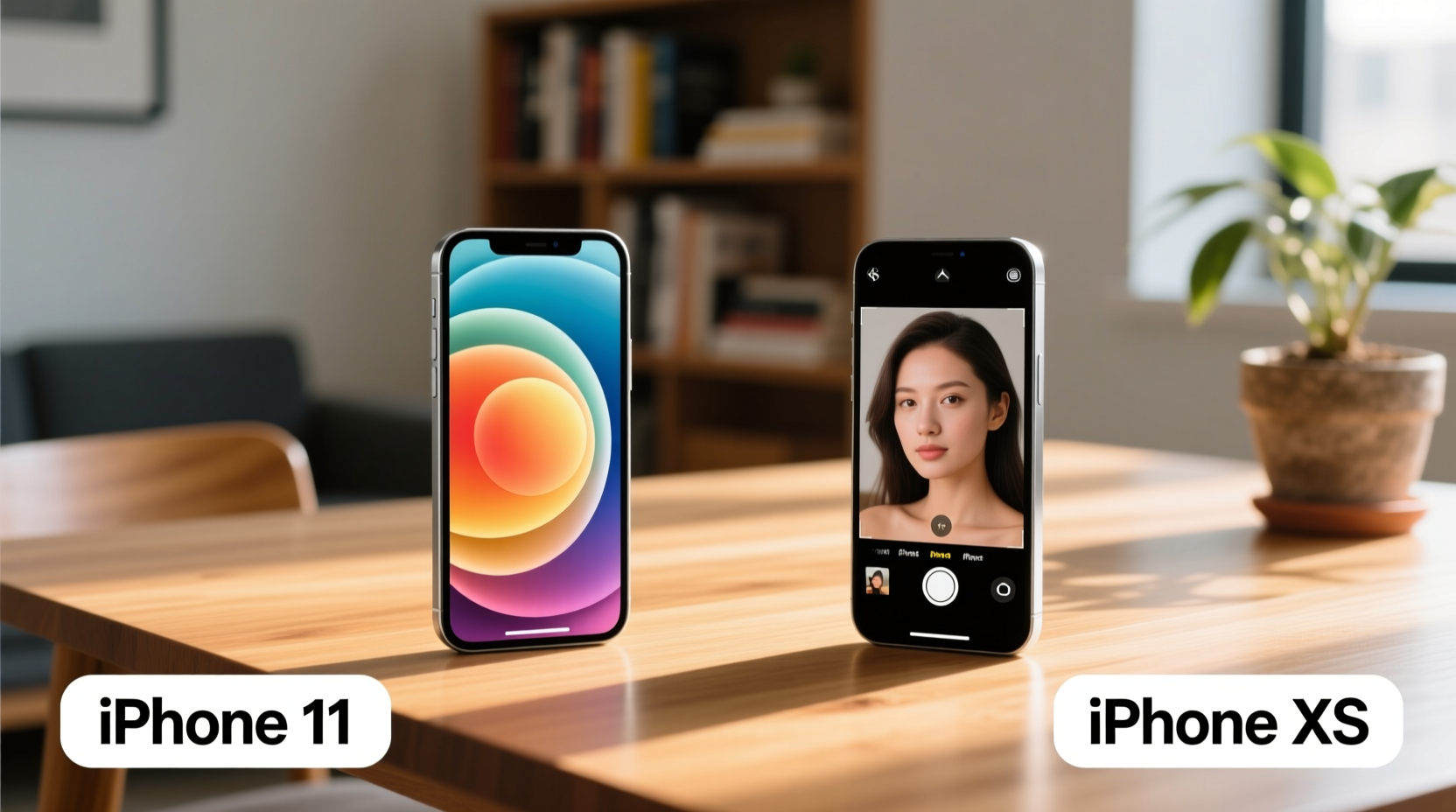
The most fundamental distinction between the two models lies in their camera setups.
The iPhone XS features a single 12MP wide-angle rear camera with an f/1.8 aperture, optical image stabilization (OIS), and Smart HDR. It was one of the best smartphone cameras of its time, delivering rich colors, accurate exposure, and strong low-light performance for 2018 standards.
In contrast, the iPhone 11 introduced a dual-camera system: a 12MP wide lens (f/1.8) paired with a 12MP ultra-wide lens (f/2.4). This addition dramatically expanded creative possibilities. For the first time in a mainstream iPhone, users could capture sweeping landscapes, tight interior shots, or dynamic group photos without stepping back.
Tip: If you frequently shoot architecture, travel scenes, or large groups, the ultra-wide lens on the iPhone 11 offers tangible benefits the XS can't match.Image Quality Comparison: Daylight, Low Light, and Dynamic Range
In daylight conditions, both phones produce sharp, well-balanced images. The XS handles color science beautifully, with natural skin tones and vibrant but not oversaturated skies. However, the iPhone 11's Smart HDR 2 processes more detail in highlights and shadows, resulting in better dynamic range, especially in high-contrast scenes like backlit portraits or bright windows indoors.
Low-light performance is where the gap widens. The iPhone 11 introduced Night mode—a computational photography feature that uses longer exposures and AI processing to brighten dark scenes while preserving detail and minimizing noise. The XS lacks this entirely. While its OIS helps stabilize shots in dim lighting, it cannot match the clarity and brightness of a Night mode photo from the 11.
“Night mode changed the game for mobile photography. It allows users to capture usable images in near-darkness—something previously reserved for dedicated cameras.” — David Kim, Mobile Imaging Analyst at DXOMARK
That said, the XS still performs respectably in moderate low light. With steady hands and adequate ambient light, it can produce clean results. But if you often take indoor evening photos, concerts, or nightscapes, the iPhone 11 has a clear advantage.
Dual Camera System: How Useful Is the Ultra-Wide Lens?
The ultra-wide lens on the iPhone 11 isn’t just a gimmick—it solves real-world problems. Need to fit everyone into a photo in a small room? Want to capture the full facade of a building? The 120-degree field of view makes these scenarios effortless.
However, image quality on the ultra-wide sensor is noticeably softer than the main lens, especially around the edges. It also lacks OIS, making it more prone to blur in motion or low light. Still, for occasional use, its utility outweighs its limitations.
The XS, limited to digital zoom and cropping, forces compromises. To simulate a wider shot, you’d need to step back or accept lower resolution from zooming out digitally—a lossy process compared to true optical ultra-wide capture.
Video Capabilities: Subtle But Meaningful Upgrades
Both phones support 4K video at up to 60fps and deliver excellent stabilization and audio quality. However, the iPhone 11 improves on several fronts:
- Better extended dynamic range for video (up to 60fps vs. 30fps on XS)
- Improved microphone performance for clearer audio in windy environments
- Enhanced video stabilization using data from both rear cameras
- Support for QuickTake video recording directly from photo mode
If you regularly record videos—whether vlogs, family moments, or social media clips—the iPhone 11 offers smoother, more flexible recording options. The ability to switch seamlessly between photo and short video without leaving the camera app adds convenience the XS doesn’t provide.
Real-World Example: Travel Photography Upgrade
Consider Sarah, a frequent traveler who owned an iPhone XS since 2018. On a recent trip to Iceland, she found herself struggling to capture the vast glaciers and narrow alleyways of Reykjavik. Indoors, her restaurant photos were grainy due to poor lighting, and she missed wide-angle opportunities without realizing how much context she was losing.
She borrowed an iPhone 11 for her next outing. Immediately, the ultra-wide lens let her frame entire waterfalls without backing up on slippery terrain. At a dimly lit northern lights tour, Night mode automatically activated, producing bright, detailed long-exposure shots her XS would have rendered as dark blurs.
Sarah concluded: “The XS took great photos when conditions were ideal. But the 11 gave me confidence in any environment. The upgrade wasn’t flashy—it was functional.”
Performance and Software Longevity
Beyond camera specs, consider software support. Both devices run iOS 17, but Apple typically phases out support based on chipset performance. The iPhone 11 uses the A13 Bionic chip; the XS uses the A12. While both are fast, the A13 ensures slightly better future-proofing. As computational photography becomes more demanding—with features like Photographic Styles, Deep Fusion, and upcoming AI tools—the iPhone 11 may receive optimized updates longer.
This doesn’t mean the XS will stop working. But if you plan to keep your phone beyond 2024, the iPhone 11 offers a safer bet for continued compatibility with new camera algorithms and editing tools.
Comparison Table: iPhone 11 vs iPhone XS Camera Features
| Feature | iPhone 11 | iPhone XS |
|---|---|---|
| Rear Cameras | Dual: 12MP Wide + 12MP Ultra-Wide | Single: 12MP Wide |
| Aperture (Main) | f/1.8 | f/1.8 |
| Ultra-Wide Aperture | f/2.4 | N/A |
| Night Mode | Yes (Wide & Ultra-Wide) | No |
| Smart HDR | Smart HDR 2 | Smart HDR (1st gen) |
| Video Recording | 4K up to 60fps, Extended DR, QuickTake | 4K up to 60fps, Standard DR |
| OIS | Main camera only | Main camera only |
| Firmware Longevity | Expected through 2025+ | Likely ends by 2024–2025 |
Is the Upgrade Worth It?
For casual photographers who mostly shoot in daylight and value simplicity, the iPhone XS remains perfectly capable. Its camera produces pleasing, consistent results and hasn’t aged poorly. If you're happy with your current photos and don’t need ultra-wide framing or Night mode, staying put is reasonable.
But if you want greater creative control, better performance in challenging lighting, and access to modern computational features, the iPhone 11 is a meaningful upgrade. The dual-camera system opens new compositional doors, and Night mode alone justifies the switch for many users.
Tip: Before upgrading, test an iPhone 11 at a retail store or borrow one. Take sample photos in environments you commonly shoot—your kitchen, backyard, or commute—to see real differences firsthand.FAQ
Can the iPhone XS take wide-angle photos?
No, the XS lacks a dedicated ultra-wide lens. You can use third-party clip-on lenses, but they reduce image quality. Digital zooming out isn’t equivalent to true optical ultra-wide capture.
Does the iPhone 11 camera make a big difference for social media?
Yes, especially on platforms like Instagram where visual variety matters. The ultra-wide lens adds versatility, and Night mode ensures your evening stories look crisp and engaging.
Will the iPhone XS get Night mode in a software update?
No. Night mode requires both hardware calibration and neural engine processing tied to the A13 chip and later. Apple did not backport it to A12 devices like the XS.
Final Verdict: Make the Choice That Fits Your Life
The iPhone XS was a flagship device with a superb camera for its era. Even today, it holds up remarkably well in optimal conditions. But technology evolves—and the iPhone 11 represents a leap forward in accessibility, intelligence, and flexibility.
If you’re considering an upgrade purely for photography, ask yourself: Do I want more tools at my disposal? Do I often shoot in low light or tight spaces? Am I planning to keep this phone for another two years?
If most answers are yes, the iPhone 11 delivers tangible improvements that enhance real-world usability. It’s not about chasing specs—it’s about gaining confidence that your phone can handle whatever moment you want to preserve.
🚀 Ready to evaluate your next move? Try side-by-side photo tests, assess your shooting habits, and decide whether capability or consistency matters most to you. Share your experience—what made you stick with the XS or switch to the 11?