After a party, team meeting, or even a casual coffee with friends, some people feel energized and uplifted. Others—especially introverts—might feel drained, irritable, mentally foggy, or emotionally overwhelmed. This isn’t just tiredness; it’s what many call an “introvert hangover.” It’s the emotional and mental fatigue that follows extended social interaction, even when the experience was enjoyable. Unlike extroverts, who gain energy from being around others, introverts expend it. Recognizing the signs early is essential to prevent burnout and maintain long-term well-being.
The concept of a “social battery” has gained traction as a metaphor for how much social energy a person has at any given time. For introverts, this battery depletes quickly during interaction and recharges in solitude. Ignoring the warning signs can lead to chronic stress, anxiety, and reduced productivity. Understanding what an introvert hangover feels like—and how to respond—is not indulgence; it’s self-preservation.
What Is an Introvert Hangover?
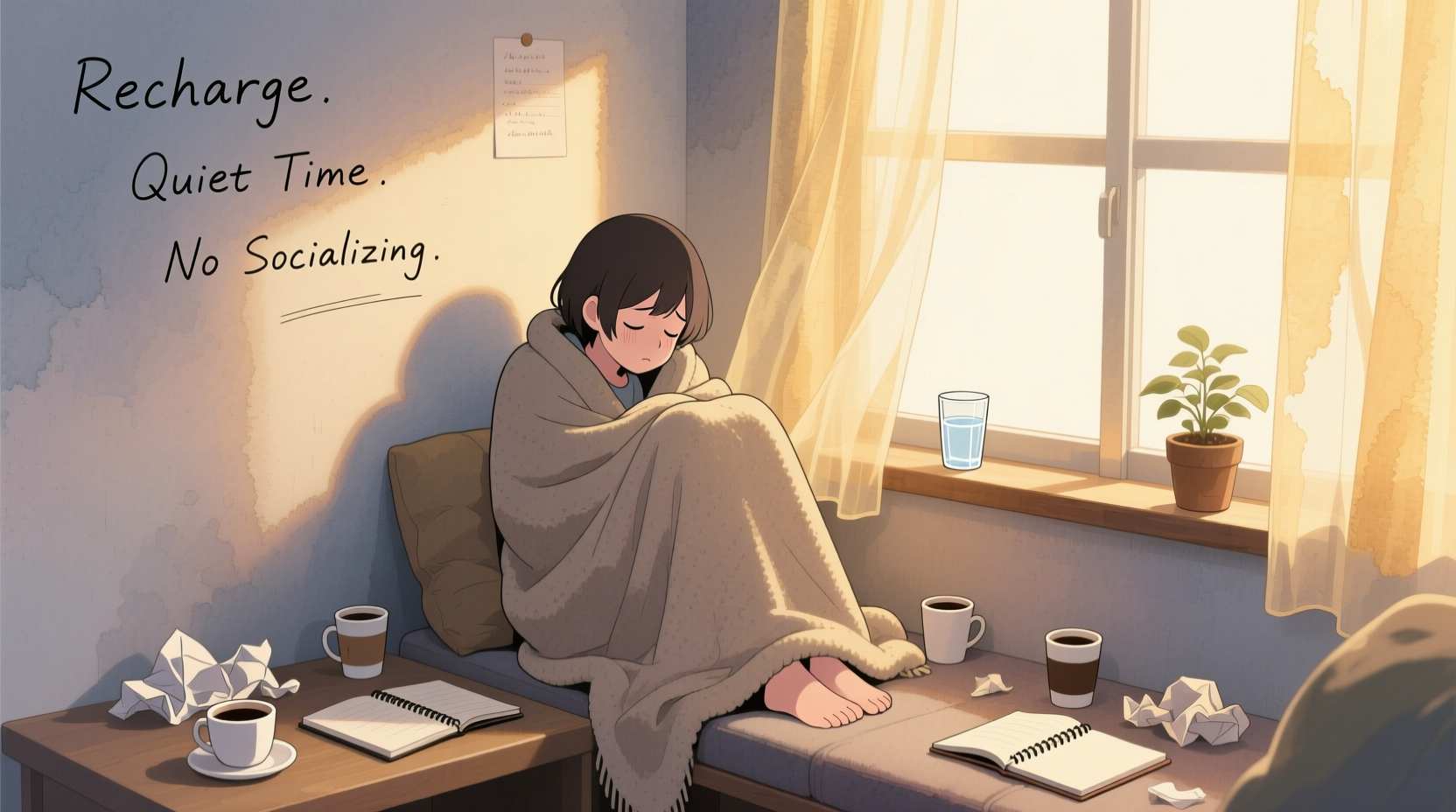
An introvert hangover isn’t about alcohol or physical illness. It’s a psychological and physiological response to overstimulation. Introverts process information more deeply, are highly attuned to their environment, and often absorb emotional cues from others. Prolonged social engagement forces them into constant sensory and cognitive processing, which drains mental resources.
Dr. Marti Olsen Laney, author of *The Introvert Advantage*, explains: “Introverts have a different nervous system wiring—they’re more sensitive to dopamine, the neurotransmitter linked to reward and external stimulation. While extroverts thrive on high levels of it, introverts become overstimulated more easily.” This biological difference means that even positive interactions require recovery time.
Think of it like running a marathon. You might finish strong and proud, but your body still needs rest, hydration, and nourishment. Similarly, after a socially rich day, your mind and emotions need downtime to reset.
“Introversion isn’t shyness or antisocial behavior—it’s a preference for lower-stimulation environments where deep thinking and reflection can occur.” — Dr. Susan Cain, author of *Quiet: The Power of Introverts in a World That Can’t Stop Talking*
Common Signs You’re Experiencing an Introvert Hangover
Not all social fatigue looks the same. Symptoms vary by individual, but certain patterns consistently emerge. Recognizing these early can help you intervene before exhaustion takes hold.
- Mental fog or difficulty concentrating: Tasks that usually feel manageable suddenly seem overwhelming. You might forget simple things, struggle to focus, or zone out during conversations.
- Emotional sensitivity: Small frustrations feel huge. You might snap at loved ones, cry unexpectedly, or feel unusually anxious without a clear cause.
- Physical fatigue: Even after a full night’s sleep, you feel heavy, sluggish, or physically drained—like you’ve been carrying a weight all day.
- Irritability or short temper: Normally patient people may find themselves annoyed by noise, interruptions, or minor inconveniences.
- Desire to isolate: The thought of answering texts, attending calls, or seeing anyone—even close friends—feels exhausting. You crave silence and solitude.
- Sensory overload: Lights seem brighter, sounds louder, and smells stronger. Crowded spaces or background chatter become unbearable.
- Lack of motivation: You avoid tasks you normally enjoy, such as reading, creating, or exercising, because everything requires too much effort.
How Long Does an Introvert Hangover Last?
There’s no universal timeline. Recovery depends on the intensity and length of social exposure, your baseline energy level, and how quickly you begin recharging. For some, a few hours of quiet in the evening suffice. For others—especially after large gatherings or back-to-back meetings—recovery can take a full day or more.
A quick coffee with a colleague might only drain 20% of your social battery, while a wedding or networking event could deplete it entirely. The key is not to wait until you’re completely empty. Just as you wouldn’t drive a car until the tank hits zero, don’t push your mental reserves to collapse.
Recovery Time Based on Social Load
| Type of Interaction | Social Battery Drain | Estimated Recovery Time |
|---|---|---|
| One-on-one conversation (30 min) | 15–25% | 1–2 hours of low stimulation |
| Team meeting (1 hour, 5+ people) | 40–60% | 3–5 hours or overnight |
| Social event (party, conference) | 75–100% | 12–48 hours |
| Back-to-back interactions (no breaks) | 100%+ | 2+ days |
This table isn’t rigid—your personal thresholds may differ. But it illustrates why understanding your limits matters. If you attend a two-day conference with minimal downtime, expect a significant recovery period afterward.
Strategies to Recharge Your Social Battery
Recharging isn’t passive; it’s intentional. Solitude alone doesn’t guarantee recovery if your environment remains stimulating or your mind stays active with unresolved thoughts. Effective recharging requires deliberate choices.
1. Create a Restorative Environment
Choose a space free from noise, screens, and interruptions. Dim the lights, play soft instrumental music or nature sounds—or embrace silence. Remove shoes, change into comfortable clothes, and signal to others that you’re unavailable.
2. Engage in Low-Stimulation Activities
Not all quiet time is equal. Passive scrolling or watching fast-paced shows can still overstimulate. Instead, opt for activities that calm the nervous system:
- Reading fiction or poetry
- Gentle stretching or yoga
- Journalling thoughts or emotions
- Walking in nature (alone)
- Sketching, coloring, or crafting
3. Practice Sensory Withdrawal
After heavy social input, give your senses a break. Turn off notifications, put your phone in another room, and avoid multitasking. Let your brain process the day without additional input.
4. Use Breathwork or Meditation
Controlled breathing activates the parasympathetic nervous system, which helps your body shift from “fight-or-flight” to “rest-and-digest” mode. Try the 4-7-8 method: inhale for 4 seconds, hold for 7, exhale slowly for 8. Repeat 4–5 times.
5. Schedule Buffer Time
If you know a big event is coming, block out recovery time afterward. Treat it like a non-negotiable appointment. Cancel plans if needed. Rescheduling a meeting is less costly than prolonged burnout.
Tip: Set an auto-responder on your email or messaging apps after intense social days: “I’m recharging today and will respond tomorrow.”Mini Case Study: Recovering After a Networking Conference
Maya, a freelance graphic designer and self-identified introvert, attended a three-day creative industry conference. She prepared thoroughly, scheduled meaningful one-on-ones, and received positive feedback on her portfolio. Publicly, she seemed engaged and confident.
Privately, by the second day, she felt increasingly scattered. She skipped lunch to hide in her hotel room, avoided group dinners, and struggled to remember names. On the final morning, she nearly missed her presentation due to mental fog.
After returning home, Maya slept for 10 hours straight. The next day, she couldn’t open her laptop without feeling nauseous. Simple client emails felt impossible. She realized she’d ignored her body’s signals for too long.
With guidance from a therapist, Maya now builds recovery protocols into her schedule. Before any event, she plans at least one full day of solitude afterward. She also uses a “battery meter” app to log her energy hourly during events, helping her step away before depletion. As a result, she reports higher satisfaction with networking and improved work quality post-event.
Checklist: How to Recharge Effectively After Social Overload
Use this checklist to restore balance when you notice introvert hangover symptoms:
- ✅ Acknowledge the fatigue—don’t dismiss it as laziness or weakness.
- ✅ Remove yourself from stimulating environments (noise, crowds, bright lights).
- ✅ Silence digital devices or switch to airplane mode.
- ✅ Hydrate and eat something light and nourishing (avoid heavy meals).
- ✅ Spend 20–30 minutes in complete silence or with calming audio.
- ✅ Journal briefly: “What did I feel today? What do I need now?”
- ✅ Delay decision-making or complex tasks for at least 12 hours.
- ✅ Communicate boundaries: “I need some time to myself tonight.”
- ✅ Engage in a repetitive, soothing activity (e.g., folding laundry, walking).
- ✅ Sleep if possible—your brain consolidates social experiences during rest.
Frequently Asked Questions
Is an introvert hangover a sign of social anxiety?
No. While both involve discomfort in social settings, they’re fundamentally different. Social anxiety is rooted in fear of judgment or embarrassment and often persists even in small groups. An introvert hangover occurs after genuine, sometimes enjoyable, interaction and stems from neurological overstimulation—not fear. Many introverts love deep conversations but need time to recover afterward.
Can extroverts experience something similar?
Yes, but rarely in the same way. Extroverts may feel tired after long events, but they typically recharge through social connection, not isolation. An extrovert might unwind by calling a friend; an introvert would likely seek silence. However, anyone can experience sensory overload in chaotic environments, regardless of personality type.
What if I can’t take time off after social events?
Even small resets help. Step outside for five minutes of fresh air. Close your eyes and breathe deeply. Take a walk during lunch. Listen to calming music with headphones. Micro-recovery moments can slow battery drain and make full recovery easier later. The goal isn’t perfection—it’s sustainability.
Conclusion: Honor Your Energy Like You Would Honor Your Health
An introvert hangover isn’t a flaw—it’s feedback. It’s your nervous system signaling that you’ve given generously of your attention, empathy, and presence. In a culture that often glorifies busyness and constant connectivity, choosing to rest is an act of resistance and wisdom.
You don’t need to apologize for needing solitude. You don’t need to “push through” exhaustion to prove your worth. By recognizing the signs early and responding with compassion, you protect your creativity, relationships, and mental clarity.
Start today: reflect on your last social interaction. Did you feel energized—or drained? What small step can you take to honor your need for recharge? Whether it’s scheduling downtime, setting boundaries, or simply allowing yourself to be still, your future self will thank you.
🚀 Your social battery matters. Share this article with someone who needs permission to rest—or leave a comment about how you recharge after social events.