
In living rooms across the country, a quiet transformation is underway. The familiar scent of pine, the ritual of untangling lights, and the careful placement of ornaments on a towering evergreen—long-standing traditions of the holiday season—are being reconsidered. In their place, some families are opting for something radically different: synchronized indoor drone light shows. These dazzling aerial displays, where small drones float and dance in choreographed patterns, project festive shapes and messages within the home. As technology reshapes how we celebrate, a pressing question emerges: Are families truly switching from traditional Christmas trees to indoor drone light shows?
The answer isn’t a simple yes or no. Instead, it reflects a broader cultural evolution—one where tradition and innovation coexist, sometimes in tension, sometimes in harmony. While most households still embrace the classic tree, a growing number are experimenting with tech-driven alternatives, especially in urban apartments, multigenerational homes, or among younger, tech-savvy parents seeking new ways to captivate children during the holidays.
The Rise of Indoor Drone Light Shows
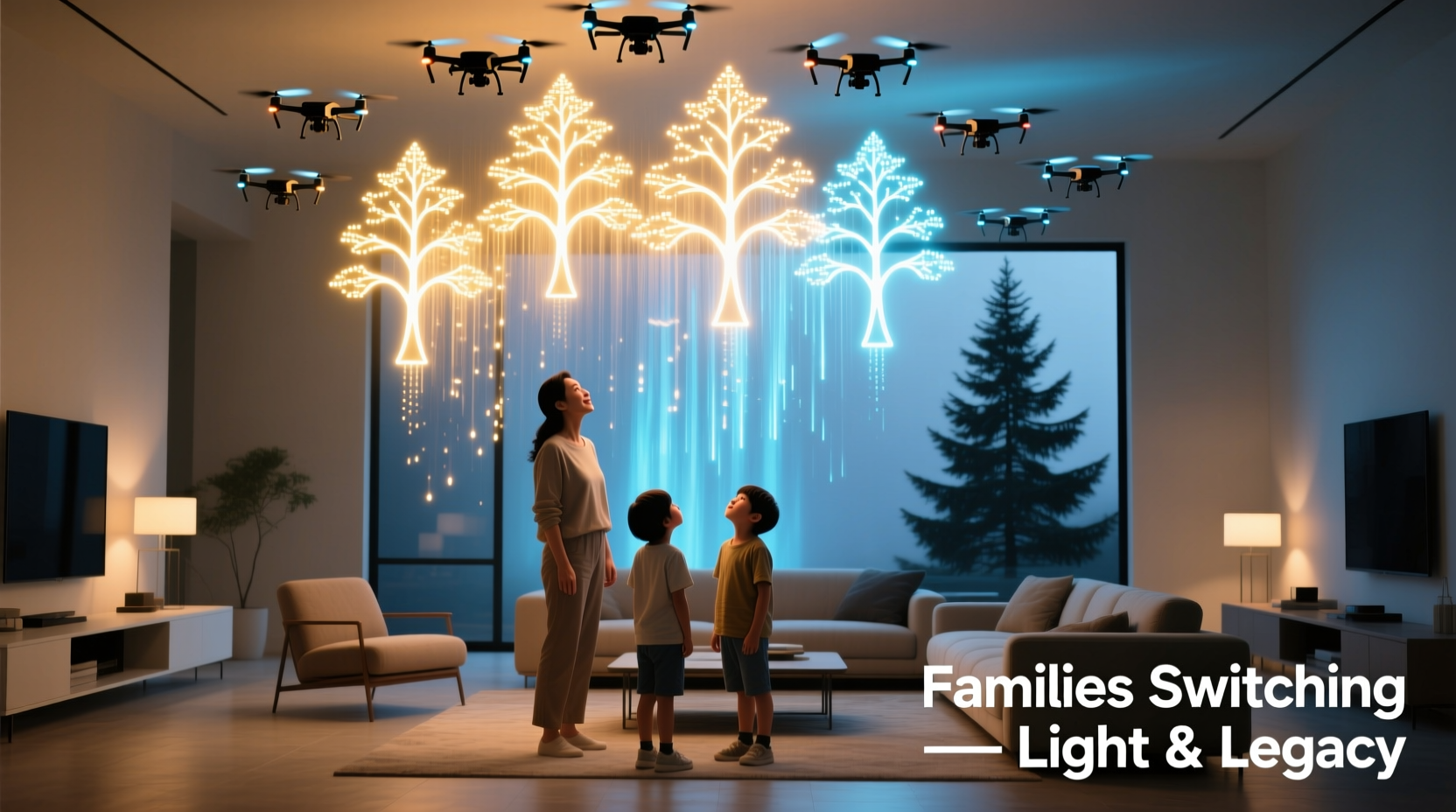
Drones were once associated with military operations or outdoor photography. Today, they’re entering our homes as entertainment tools. Companies like SkyDancers and AeroGlow have developed compact, lightweight drones designed specifically for indoor use. These models are equipped with bright LED lights, motion sensors, and wireless synchronization software that allows them to perform complex routines set to music—all controlled via smartphone apps.
An indoor drone show typically features between 6 and 20 drones flying in precise formations. They might trace the shape of a star, spell out “Joy,” or mimic falling snowflakes above the coffee table. The entire setup fits in a small case, charges quickly, and requires minimal space—making it ideal for city dwellers with limited room.
What makes these displays compelling isn’t just their novelty, but their interactivity. Unlike a static tree, drone shows can change nightly. One evening features Santa’s sleigh; the next, a countdown to Christmas morning. Children often gather around in awe, watching the glowing figures float mid-air like digital fireflies.
Tip: For optimal indoor drone performance, clear ceiling fans, chandeliers, and tall furniture from the flight zone and ensure Wi-Fi signals don’t interfere with control.Why Families Are Considering the Switch
The appeal of drone light shows lies in their convenience, safety, and modern aesthetic. Consider the practical challenges of maintaining a real tree: sourcing one, transporting it, watering it daily, sweeping up needles for weeks, and eventually disposing of a dried-out husk in January. Artificial trees solve some issues but still require storage space and assembly time.
In contrast, drone kits take minutes to set up, leave no mess, and pose no fire hazard when used properly. For families with pets or toddlers, eliminating sharp ornaments and electrical tangles is a significant advantage. Additionally, drone shows offer accessibility—those with mobility issues or small living spaces may find drones far more manageable than a six-foot tree.
There’s also an environmental angle. Real trees, though biodegradable, often travel long distances and consume water and care during their short indoor lifespan. Artificial trees can last years but are typically made from PVC and non-recyclable materials. Drones, while electronic, are reusable for multiple seasons and increasingly built with sustainable components.
“Technology doesn’t erase tradition—it reinterprets it. Families aren’t abandoning meaning; they’re finding new vessels for it.” — Dr. Lena Torres, Cultural Anthropologist, University of Michigan
Traditional Trees: More Than Just Decoration
Despite the rise of high-tech alternatives, the traditional Christmas tree remains deeply symbolic. Rooted in centuries-old customs, the evergreen tree represents life during winter’s darkest months. For many, decorating the tree is not about aesthetics alone—it’s a ritual rich with memory and connection.
Think of the handcrafted ornament passed down through generations, the slightly lopsided angel placed atop the tree by a five-year-old, the shared laughter when the string of lights refuses to work. These moments build emotional equity over time. Psychologists note that rituals enhance family bonding and provide children with a sense of stability and belonging.
Moreover, the sensory experience of a real tree—the smell of pine, the texture of branches, the warmth of twinkle lights—engages multiple senses in a way screens and drones cannot fully replicate. Neurological studies suggest that multisensory experiences create stronger emotional memories, which may explain why so many adults recall childhood Christmases around the tree with such clarity.
A Family’s Choice: Tradition Meets Innovation
Consider the Reynolds family in Portland, Oregon. For years, they followed a strict holiday routine: cut down a tree the first weekend of December, play classic carols, and spend Sunday afternoon decorating together. But last year, their eldest son, a robotics enthusiast, introduced a drone light kit he’d built for a school project.
Initially skeptical, the parents agreed to try it alongside the tree. What happened surprised them. The drone show became a nightly event—the kids choreographed new routines, syncing drones to pop songs and animated stories. Meanwhile, the tree remained the centerpiece for gift-giving and quiet reflection.
“We didn’t replace anything,” says Sarah Reynolds. “We added something. The tree still holds our memories. The drones hold our imagination.”
Their story illustrates a growing trend: integration, not replacement. Many families aren’t choosing between trees and drones—they’re using both, assigning each a distinct role in their celebration.
Comparing the Two: A Practical Breakdown
| Feature | Traditional Tree (Real) | Traditional Tree (Artificial) | Indoor Drone Light Show |
|---|---|---|---|
| Setup Time | 30–60 minutes | 20–40 minutes | 5–10 minutes |
| Storage Space | Large (outdoor shed or attic) | Large (box or bag) | Small (carry-on size) |
| Maintenance | Daily watering, needle cleanup | Dusting, untangling lights | Battery charging, software updates |
| Lifespan | 1 season | 5–10 years | 3–7 years (with care) |
| Child Engagement | Moderate (decorating) | Moderate (decorating) | High (interactive, dynamic) |
| Safety Risks | Tipping, dry fire hazard | Tipping, electrical faults | Minor collisions, battery overheating |
| Emotional Resonance | Very High | High | Moderate to High (growing) |
When Technology Enhances Tradition
The most successful holiday celebrations balance novelty with continuity. Rather than viewing drones and trees as competitors, forward-thinking families are blending them creatively. Some use drones to “reveal” the tree at the start of the season. Others program drones to circle the tree like animated stars or deliver tiny gifts from branch to branch.
Schools and community centers have begun adopting hybrid displays, combining physical trees with overhead drone performances during winter festivals. These events attract wider audiences, including teens who might otherwise feel disconnected from traditional ceremonies.
Still, experts caution against letting spectacle overshadow substance. The risk isn’t that technology will erase tradition, but that it could dilute its meaning if used thoughtlessly.
Tip: Use drone shows to highlight meaningful moments—like lighting the first candle or reading a favorite holiday story—rather than as constant background entertainment.Step-by-Step: Creating a Hybrid Holiday Display
- Assess your space: Measure ceiling height and clear any obstacles. Most indoor drones require at least 7 feet of vertical clearance.
- Choose your roles: Decide whether the tree will be the emotional centerpiece and the drones the dynamic performer—or vice versa.
- Select compatible themes: Match drone colors and patterns to your tree’s decor (e.g., gold drones with a rustic farmhouse tree).
- Plan key moments: Schedule drone routines for special evenings—Christmas Eve, New Year’s countdown, or family video calls.
- Involve everyone: Let children design drone paths or narrate shows, while older relatives share stories beside the tree.
- Test and refine: Run a trial show without an audience to adjust timing, volume, and flight paths.
- Preserve memories: Record the display and save choreography files to reuse or modify next year.
FAQ: Common Questions About the Shift
Are indoor drone light shows safe around children and pets?
Yes, when used according to manufacturer guidelines. Most holiday drones are designed with soft propeller guards, low-speed modes, and collision detection. However, supervision is recommended, especially during initial flights. Keep pets at a safe distance until animals acclimate to the movement and sound.
Can drone shows replace the emotional value of a Christmas tree?
For now, most families say no—not entirely. While drones offer excitement and wonder, they lack the tactile, sensory, and historical depth of a tree. However, as families create new rituals around drone programming and storytelling, emotional attachment can grow over time.
How much do indoor holiday drone kits cost?
Entry-level kits with 6 drones range from $200 to $400. Premium sets with 12–20 drones, advanced software, and custom animation tools can cost $800–$1,500. Most include carrying cases, chargers, and app access. While the upfront cost is higher than an artificial tree, the reusability offsets long-term expenses.
Checklist: Evaluating Your Holiday Setup
- ☐ Assess available space and ceiling height
- ☐ Determine your family’s priorities—tradition, convenience, interactivity, or sustainability
- ☐ Compare budget for one-time purchase vs. long-term use
- ☐ Research safety ratings and user reviews for drone models
- ☐ Involve all family members in the decision-making process
- ☐ Consider a trial run before fully committing
- ☐ Plan how to integrate—or distinguish—new tech with existing traditions
Conclusion: A Season of Possibility
The conversation around indoor drone light shows versus traditional trees isn’t really about technology replacing tradition. It’s about how families adapt meaning-making in a changing world. The Christmas tree has endured because it’s more than wood and wire—it’s a vessel for love, memory, and hope. Drones, in their early stages, are beginning to carry similar weight for a new generation.
Families aren’t switching wholesale. They’re evolving. Some will keep the tree sacred and untouched. Others will welcome drones as joyful additions. And many will find a middle path—where blinking LEDs in the sky complement the warm glow of lights on a fir bough.
What matters most isn’t the form of the celebration, but the presence within it. Whether gathered beneath a canopy of green or looking up at floating constellations of light, what defines the season is togetherness. The rest is just decoration.
💬 How are you celebrating this season? Are you holding onto tradition, embracing innovation, or blending the two? Share your story and inspire others to rethink what the holidays can be.