Traveling with electronics requires more than just tossing them into your luggage. Whether you're carrying premium over-ear headphones, in-ear monitors, or a mix of cables and adapters, how you store and protect them can determine whether they arrive functional—or tangled, scratched, or broken. Two popular solutions dominate the conversation: dedicated headphone bags and versatile packing cubes. While both aim to bring order to your gear, they serve different needs and offer distinct advantages. Understanding their strengths helps travelers make smarter choices based on trip length, device value, and personal organization style.
Understanding the Core Differences
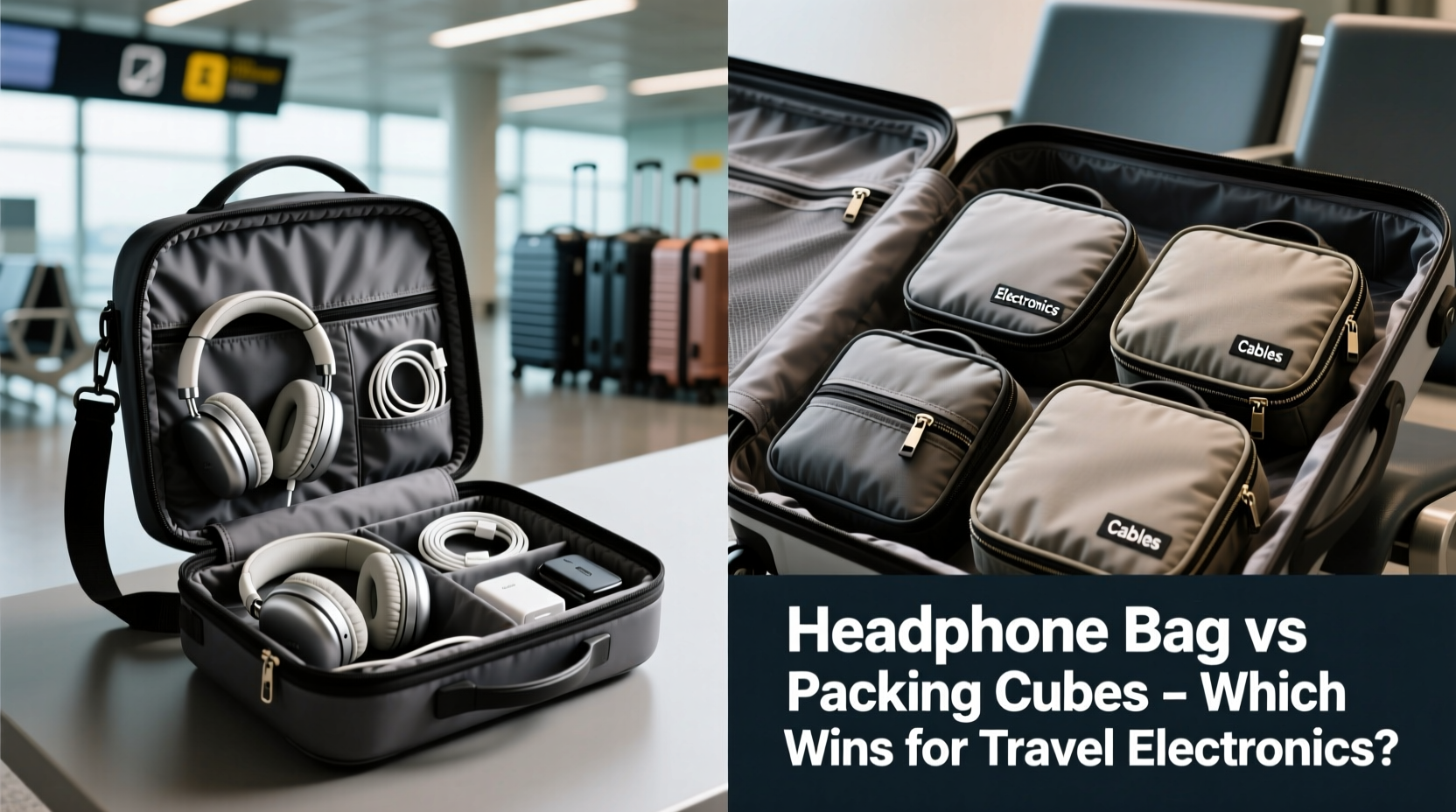
A headphone bag is typically a small, padded case designed specifically for audio equipment. It often features molded compartments, soft linings, and secure closures to prevent scratches and impact damage. Most are sized to fit one pair of headphones and maybe a few accessories like cables or ear tips.
Packing cubes, on the other hand, are fabric organizers used to compartmentalize clothing and gear inside luggage. Available in various sizes and materials, some include padded versions suitable for electronics. Unlike headphone bags, they aren’t purpose-built for headphones but can be adapted to hold multiple devices—tablets, chargers, earbuds, and even small cameras.
The key distinction lies in specialization versus flexibility. A headphone bag excels at protecting a single high-value item. Packing cubes prioritize modularity and multi-use functionality, letting you group related items together regardless of category.
Protection and Durability: What Keeps Your Gear Safest?
When it comes to safeguarding delicate electronics, physical protection matters most. Headphone bags usually outperform standard packing cubes in this area due to their rigid or semi-rigid construction. Many feature EVA hard shells or dense foam padding that absorb shocks during transit. Zippers are often reinforced, and interiors use microfiber or flocking to prevent surface abrasion.
Packing cubes made from nylon or polyester offer minimal impact resistance unless specifically padded. Even then, their softer structure means less defense against crushing forces—like when someone steps on your suitcase or it gets stacked under heavy luggage. However, high-end travel cubes now come with hybrid designs: water-resistant exteriors, padded dividers, and RFID-blocking pockets, narrowing the gap between general organizers and specialized cases.
“Dedicated cases reduce wear by up to 70% compared to loose storage,” says Daniel Lin, product durability analyst at GearTest Labs. “For expensive headphones, a form-fitting bag isn’t luxury—it’s insurance.”Tip: If using a packing cube for electronics, place it in the center of your suitcase, surrounded by soft clothing for added cushioning.
Space Efficiency and Organization
Packing cubes shine when maximizing limited luggage space. Their rectangular shape allows efficient stacking, minimizing dead zones in suitcases. You can assign one cube exclusively to electronics—charging bricks, USB hubs, headphones, dongles—and another to cables, keeping everything segmented yet consolidated.
Headphone bags, while protective, tend to have irregular shapes that don’t stack neatly. They may leave unused gaps in your luggage, especially if you only own one pair of headphones. However, their compact size makes them ideal for carry-on use or slipping into backpack side pockets for quick access.
For digital nomads or frequent business travelers who carry multiple gadgets, packing cubes provide superior scalability. One medium-sized padded cube can house a noise-canceling headset, power bank, wireless earbuds, and a cable organizer—all accessible without unpacking half the bag.
Comparison Table: Headphone Bag vs Packing Cube
| Feature | Headphone Bag | Packing Cube |
|---|---|---|
| Primary Purpose | Dedicated headphone protection | General luggage organization |
| Impact Resistance | High (foam/hard shell) | Low to moderate (unless padded) |
| Capacity Flexibility | Low (fixed layout) | High (adaptable interior) |
| Luggage Integration | Poor (awkward shapes) | Excellent (stackable design) |
| Multipurpose Use | No | Yes (clothes, toiletries, tech) |
| Quick Access | Good (external pocket options) | Variable (depends on placement) |
Real-World Scenario: A Business Traveler’s Dilemma
Consider Sarah, a marketing consultant who flies weekly between New York and Chicago. Her kit includes Sony WH-1000XM5 headphones, AirPods Pro, two charging cables, a universal adapter, and a portable SSD. On her first few trips, she used a sleek EVA headphone case. It protected the Sony cans perfectly—but everything else rattled loosely in her backpack. Retrieving her earbuds meant digging through layers of gear.
She switched to a set of three packing cubes: one padded tech cube, one for shirts, and one for toiletries. The tech cube held all her electronics snugly, with internal elastic loops securing each item. Not only did her luggage feel lighter and more organized, but she could remove just the tech cube when going through airport security. After six months, her headphones showed no signs of wear, and she never misplaced a cable again.
Sarah’s experience illustrates a broader trend: as travelers carry more interconnected devices, specialized single-item cases become impractical. Modular systems win when versatility and accessibility matter as much as protection.
Step-by-Step: Choosing the Right Solution for Your Needs
Follow this decision framework to determine whether a headphone bag or packing cube suits your travel style:
- Assess your electronics load. Do you travel with one primary device (e.g., headphones), or multiple gadgets? Single-device users benefit from dedicated bags.
- Evaluate trip frequency. Frequent flyers gain more from reusable, adaptable systems like packing cubes.
- Check luggage type. Suitcases with structured compartments work better with cubes; minimalist backpacks may favor slim headphone cases.
- Prioritize protection level. High-end headphones ($300+) warrant maximum cushioning—opt for a hard-shell case or padded cube placed centrally in luggage.
- Test accessibility needs. If you use headphones inflight, choose a solution that allows fast retrieval without unpacking.
Tips for Maximizing Either Option
- Wrap cables around a cardboard tube or use silicone wraps to avoid tangles.
- Label your packing cubes with icons or colored tags for instant recognition.
- Use silica gel packs inside any electronic container to reduce moisture buildup.
- Avoid overstuffing cubes—pressure can damage connectors and battery casings.
- Clean interiors periodically with a dry microfiber cloth to remove dust and oils.
Frequently Asked Questions
Can I use a regular packing cube for expensive headphones?
You can, but not ideally. Standard fabric cubes lack sufficient padding. If you must, select a padded tech cube with closed-cell foam lining and surround it with soft clothing for shock absorption.
Are headphone bags worth it for budget models?
Not always. If your headphones cost under $100 and are used casually, a simple pouch or repurposed box might suffice. Save dedicated cases for high-value or frequently traveled gear.
Do packing cubes save space or just organize better?
They do both. Compression cubes actively reduce volume by squeezing air out, while all types improve spatial efficiency through structured packing, reducing wasted gaps.
Final Verdict: Which Is Actually Better?
There’s no universal winner. For travelers focused on protecting a single, high-end pair of headphones—especially those checking luggage—a dedicated headphone bag offers unmatched safety. Its tailored fit and rugged build justify its niche role.
However, for most modern travelers managing a growing ecosystem of devices, packing cubes—particularly padded tech-specific ones—deliver greater long-term value. They streamline packing, enhance accessibility, and adapt as your gear evolves. When combined with smart habits like cable management and strategic placement in luggage, they provide adequate protection without sacrificing flexibility.
The best approach may be hybrid: use a compact headphone case within a tech packing cube. This layered method gives you the precision of dedicated protection and the organizational power of modular travel systems.
🚀 Ready to upgrade your travel setup? Audit your current electronics packing method today—replace chaos with clarity, and protect your investments with smarter organization.