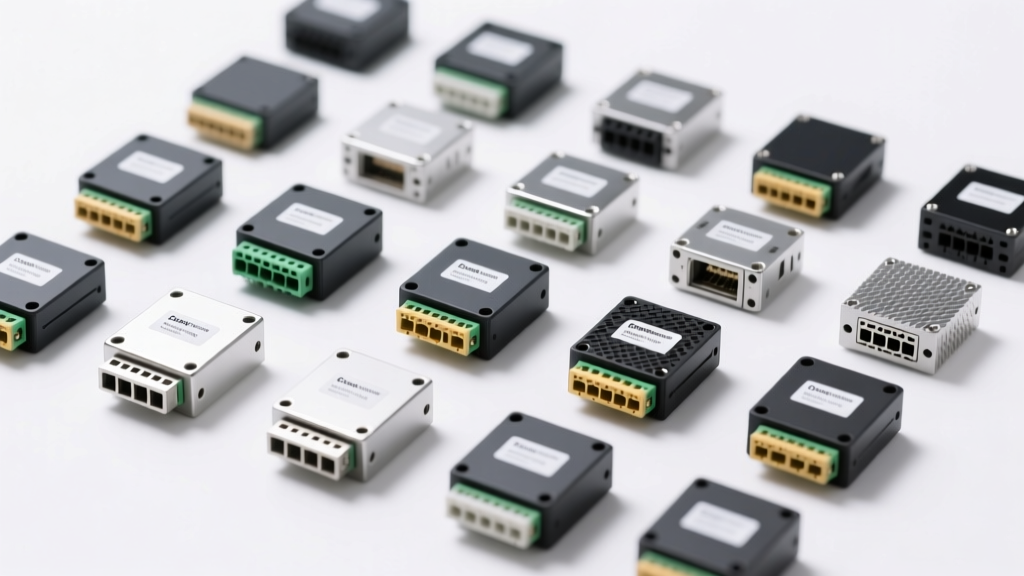
Types of Capacitor Micro Switches
A capacitor micro switch is a precision electromechanical device that uses a capacitor-based mechanism to control circuit states with high reliability and minimal power consumption. These switches are widely used in applications requiring accurate sensing, low-energy operation, and long service life. Unlike traditional mechanical switches, capacitor micro switches utilize electrostatic charge storage to initiate switching actions, making them ideal for sensitive electronic systems.
Available in various configurations, each type of capacitor micro switch is engineered to meet specific operational demands—from simple on/off control to complex circuit routing and momentary activation. Understanding the different types helps in selecting the right switch for your application.
Single Pole Single Throw (SPST)
The most basic configuration, the SPST micro switch controls a single circuit with one input and one output terminal. It functions as a straightforward on/off switch, making it ideal for applications requiring simple circuit interruption.
Advantages
- Simple and reliable design
- Low power consumption
- Easy to integrate into basic circuits
- Cost-effective for mass production
Limitations
- Limited to single-circuit control
- No alternate path functionality
- Not suitable for complex switching tasks
Best for: Lighting controls, power buttons, basic appliance switches
Single Pole Double Throw (SPDT)
An SPDT micro switch features one common terminal and two output terminals, allowing it to switch between two circuits. This enables the redirection of current flow from one path to another, offering greater flexibility than SPST switches.
Advantages
- Enables circuit selection between two paths
- Supports switching and routing functions
- Ideal for mode selection in electronic devices
- Compatible with capacitor-based sensing for smooth transitions
Limitations
- Slightly more complex wiring
- Higher component cost than SPST
- Requires precise alignment for reliable contact
Best for: Mode selectors, relay controls, HVAC systems, dual-function devices
Double Pole Single Throw (DPST)
A DPST micro switch controls two separate circuits simultaneously using two poles. When activated, both circuits are either connected or disconnected at the same time, providing synchronized control—ideal for safety-critical or high-power applications.
Advantages
- Simultaneous control of two circuits
- Enhanced safety in power interruption
- Reduces need for multiple switches
- Excellent for isolating dual-power lines
Limitations
- Larger footprint than single-pole variants
- Higher manufacturing cost
- Not suitable for independent circuit control
Best for: Industrial machinery, dual-motor systems, emergency stop circuits
Momentary vs. Latching
This classification refers to the actuation behavior of capacitor micro switches. Momentary switches only remain active while pressure is applied (e.g., push-to-make or push-to-break), while latching switches toggle between on and off states with each press, maintaining their position without continuous input.
Advantages
- Momentary: Ideal for temporary activation (e.g., doorbells, microwaves)
- Latching: Maintains state without user input (e.g., power toggles)
- Both types benefit from capacitor-based stability and low wear
Limitations
- Momentary switches require constant actuation for sustained operation
- Latching types may need reset mechanisms in fault conditions
- Capacitor integration adds sensitivity to voltage fluctuations
Best for: Momentary: User interfaces, safety triggers | Latching: Control panels, power management systems
| Type | Circuit Control | Operation Mode | Power Efficiency | Typical Applications |
|---|---|---|---|---|
| SPST | Single circuit, on/off | Toggle or momentary | High | Appliances, lighting, basic electronics |
| SPDT | One input, two outputs | Circuit selection | High | Mode switches, relays, HVAC controls |
| DPST | Dual circuits, simultaneous | On/off (dual) | Very High | Industrial equipment, safety systems |
| Momentary/Latching | Behavior-based operation | Temporary or persistent | Optimized by design | User interfaces, control panels |
Expert Tip: When using capacitor micro switches in low-power or battery-operated devices, ensure the capacitor charge threshold is calibrated to prevent false triggering due to voltage drops or environmental interference.
Material & Durability of Capacitor Micro Switches
Capacitor micro switches are essential components in a wide range of electronic and electromechanical systems, from household appliances to industrial automation equipment. The choice of materials used in their construction significantly influences their performance, longevity, and reliability under varying environmental and electrical conditions. Understanding the material composition and durability factors helps in selecting the right switch for specific applications, ensuring consistent operation and minimizing failure risks.
Housing Materials: Protection and Structural Integrity
Plastic Housings
Plastic enclosures are widely used in consumer electronics and light-duty applications due to their lightweight nature and ease of manufacturing. Common materials include polycarbonate (PC), acrylonitrile butadiene styrene (ABS), and nylon, all of which offer good insulation properties and resistance to moisture and dust.
These materials are cost-effective and allow for complex molding designs, making them ideal for compact or aesthetically sensitive devices. However, plastic housings are less resistant to mechanical impacts, high temperatures, and prolonged UV exposure, which can lead to cracking or deformation over time.
Metal Housings
Metal enclosures—typically made from stainless steel, aluminum, or zinc alloys—provide superior mechanical strength and thermal stability. They are especially suited for harsh industrial environments where switches may be exposed to vibration, extreme temperatures, or physical impact.
Additionally, metal housings offer better electromagnetic shielding, which is critical in high-noise electrical environments. While more expensive and heavier than plastic, their enhanced durability and protection make them a preferred choice for mission-critical or outdoor applications.
Contact Materials: Conductivity and Longevity
The electrical contacts within a micro switch are among the most critical components, responsible for completing and interrupting the circuit. These contacts are subjected to repeated mechanical stress and electrical arcing, necessitating materials that combine high conductivity with wear and corrosion resistance.
For high-load or high-cycle applications, contact materials are engineered to resist pitting, erosion, and fretting corrosion, ensuring long-term reliability and consistent electrical performance.
Actuator Durability: Functionality and Wear Resistance
The actuator is the external component that initiates the switching action when pressed or engaged. Its material and design directly affect user experience, tactile feedback, and operational lifespan.
Plastic Actuators
Commonly used in cost-sensitive and lightweight applications, plastic actuators (e.g., made from ABS or polycarbonate) offer design flexibility and smooth operation. They are ideal for devices with infrequent switching cycles.
However, repeated mechanical stress can lead to cracking or deformation, especially in high-temperature environments. Their lower wear resistance makes them less suitable for industrial or high-frequency use.
Metal Actuators
Metal actuators, often made from stainless steel or brass, provide superior strength and longevity. They withstand millions of actuation cycles without deformation and are resistant to environmental degradation.
These are preferred in ruggedized equipment, safety systems, and industrial controls where reliability is paramount. The added weight and cost are justified by their extended service life and consistent performance.
Rubber or elastomer actuators are also used in certain designs, particularly membrane switches. While they offer excellent tactile feel and noise dampening, they are prone to aging, UV degradation, and compression set over time, requiring periodic inspection and replacement.
Internal Components: Supporting Long-Term Performance
Beyond the housing and contacts, several internal components contribute to the overall durability and functionality of capacitor micro switches:
| Component | Common Materials | Key Benefits | Typical Applications |
|---|---|---|---|
| Housing | Plastic (ABS, PC), Metal (Stainless Steel, Zinc) | Insulation, lightweight vs. strength, EMI shielding | Consumer electronics, industrial controls |
| Contacts | Copper alloys, Gold/Nickel/Silver plating | High conductivity, corrosion resistance | Signal switches, power relays |
| Actuator | Plastic, Metal, Rubber | Tactile feedback, durability, flexibility | Appliances, safety interlocks, control panels |
| Internal Springs | Beryllium copper, Spring steel | High fatigue resistance, consistent force | High-cycle switches, precision instruments |
| Insulators | Ceramic, Thermoplastics | Dielectric strength, thermal stability | High-voltage, high-temperature environments |
Important: When selecting a capacitor micro switch, always consider the operating environment—temperature, humidity, electrical load, and mechanical stress. Using a switch with inappropriate materials can lead to premature failure, safety hazards, or system downtime. Opt for switches with IP ratings for dust and moisture protection in harsh environments, and ensure compliance with relevant industry standards (e.g., UL, CE, RoHS) for reliability and regulatory approval.
Commercial Use Cases of Capacitor Micro Switches
Capacitor micro switches are essential electromechanical components widely used across commercial and industrial sectors due to their enhanced reliability, durability, and resistance to electrical arcing. Unlike standard micro switches, capacitor micro switches incorporate a built-in capacitor that suppresses voltage spikes and prevents contact welding, making them ideal for high-cycle and high-load applications. Their ability to operate consistently under demanding conditions has led to widespread adoption in critical systems where performance and longevity are paramount.
Industrial Equipment
Capacitor micro switches are a cornerstone in industrial automation and machinery control systems. They are commonly integrated into production lines, assembly equipment, and automated manufacturing cells to monitor position, actuate processes, and ensure operational safety.
- Used to control the start/stop functions of motors, conveyors, and robotic arms based on mechanical actuation
- Employed in safety interlocks to halt machinery when access doors or guards are opened
- Integrated into limit sensing systems to detect the end-of-travel positions of moving parts
- Preferred in harsh environments (dusty, humid, or high-vibration settings) due to sealed enclosures and robust construction
Key benefit: Their arc-suppressing capacitor extends contact life, reducing maintenance frequency and minimizing unplanned downtime in continuous-operation facilities.
HVAC Systems
In commercial heating, ventilation, and air conditioning (HVAC) systems, capacitor micro switches play a vital role in monitoring and regulating system parameters to maintain efficiency and prevent damage.
- Used as fluid level sensors to activate pumps or shut down systems when water or refrigerant levels exceed safe thresholds
- Installed in ductwork to detect airflow blockages or fan failures via pressure differentials
- Integrated into furnace safety circuits to monitor door closure and flame rollout conditions
- Commonly found in rooftop units and chillers in large buildings such as hospitals, data centers, and high-rises
Critical advantage: The capacitor helps eliminate contact pitting caused by inductive loads from relays and solenoids, ensuring long-term reliability in 24/7 HVAC operations.
Home Appliances
While increasingly replaced by solid-state sensors in modern appliances, capacitor micro switches are still utilized in many household devices where mechanical simplicity and cost-effectiveness are valued.
- Used in washing machines and dishwashers to detect door closure before cycle initiation
- Integrated into dryers to stop the drum motor when the door is opened
- Employed in ovens and microwaves as safety interlocks to disable heating elements when doors are ajar
- Found in coffee makers and refrigerators to control timers and indicator lights
Design advantage: The built-in capacitor protects switch contacts from arcing when controlling inductive loads like solenoid valves or small motors, significantly improving lifespan compared to standard micro switches.
Transportation Systems
Capacitor micro switches are widely used in commercial transportation applications, where reliability under vibration, temperature extremes, and frequent cycling is essential.
- Installed in train and subway systems to monitor door positions and ensure safe operation
- Used in fleet vehicles (buses, delivery trucks) for seat occupancy detection and door interlock systems
- Integrated into control panels for power distribution, brake status monitoring, and emergency shutoffs
- Employed in elevators and escalators for step-level detection and safety cutoffs
Operational benefit: Their ability to handle high inrush currents and resist contact welding makes them ideal for controlling solenoids, relays, and lighting systems in transit environments.
Professional Insight: When selecting capacitor micro switches for commercial applications, prioritize units with IP67 or higher ingress protection ratings for dust and moisture resistance. Additionally, verify electrical ratings match the load type (resistive vs. inductive) to maximize service life. For high-reliability sectors like healthcare or public transit, opt for switches from manufacturers with ISO 9001 certification and comprehensive testing protocols.
| Application Sector | Primary Function | Key Switch Requirements | Expected Lifespan (Cycles) |
|---|---|---|---|
| Industrial Machinery | Position sensing, safety interlocks | Dust/water resistance, high cycle endurance | 1–10 million |
| HVAC Systems | Fluid level, airflow monitoring | Corrosion resistance, arc suppression | 500,000–2 million |
| Home Appliances | Door safety, cycle control | Compact size, low current switching | 100,000–500,000 |
| Transportation | Door status, occupancy detection | Vibration resistance, wide temp range | 500,000–5 million |
Additional Considerations for Commercial Deployment
- Contact Protection: The integrated capacitor absorbs voltage transients, preventing contact welding and extending switch longevity in inductive circuits.
- Environmental Durability: Look for switches with sealed housings (NEMA 4X or IP67) for use in wet, dusty, or corrosive environments.
- Regulatory Compliance: Ensure switches meet relevant standards such as UL, CE, or RoHS, especially for use in public infrastructure.
- Mounting Flexibility: Many models offer panel, surface, or snap-in mounting options for easy integration into existing systems.
- Customization Options: Some manufacturers offer tailored actuator types (roller, lever, plunger) and electrical configurations for specialized applications.
How To Choose the Right Capacitor Micro Switch: A Comprehensive Buyer's Guide
Selecting the appropriate capacitor micro switch is a critical decision that impacts the reliability, safety, and performance of electronic and electromechanical systems. Whether you're sourcing components for industrial equipment, consumer appliances, or HVAC systems, understanding the key selection criteria ensures optimal functionality and long-term value. This guide outlines the essential factors to consider when choosing capacitor micro switches for your clients' applications.
Note: The term "capacitor micro switch" may be a misnomer—micro switches are typically mechanical limit switches, while capacitors are passive energy storage components. This guide assumes the intent is to select micro switches used in circuits involving capacitors or general-purpose applications. Always verify technical terminology with manufacturers to avoid confusion.
1. Operational Requirements
The primary consideration when selecting a micro switch is the specific operational needs of the application. Micro switches are employed across a wide range of industries, including industrial automation, home appliances, medical devices, and heating, ventilation, and air conditioning (HVAC) systems. Each environment imposes unique demands on the switch’s performance.
To ensure compatibility:
- Identify the type of actuation required (e.g., lever, plunger, roller) based on the mechanical movement in the system
- Determine the necessary actuation force and travel distance for reliable contact operation
- Assess whether the switch will be used for intermittent signaling or continuous load switching
- Ensure the switch can handle the expected frequency of operations without degradation
Matching the micro switch’s mechanical and electrical behavior to the application ensures consistent performance and minimizes premature failure.
2. Longevity and Durability
Micro switches are often mission-critical components, and frequent replacement can lead to downtime and increased maintenance costs. While high-quality micro switches may have a higher upfront cost, their long service life typically offers better return on investment.
Key factors influencing longevity include:
- Electrical Endurance: Measured in operational cycles (often 50,000 to over 1 million), this indicates how many times the switch can be cycled before performance degrades
- Mechanical Robustness: High-quality internal springs, contacts, and housing materials resist wear and fatigue
- Brand Reputation: Reputable manufacturers use precision engineering and rigorous quality control to ensure reliability
Always request lifecycle testing data from suppliers and prioritize switches designed for high-cycle applications when reliability is paramount.
3. Switch Configuration and Ratings
The electrical configuration of the micro switch must align with the circuit design and control logic of the device. Common configurations include:
- SPST (Single Pole, Single Throw): Simple on/off function; ideal for basic control circuits
- SPDT (Single Pole, Double Throw): Allows switching between two circuits; useful for changeover applications
- DPST (Double Pole, Single Throw): Controls two circuits simultaneously; enhances safety in high-power devices
- DPDT (Double Pole, Double Throw): Provides full circuit reversal; used in motor control and complex switching
In addition to configuration, verify the following electrical ratings:
- Maximum voltage and current (AC/DC)
- Resistive vs. inductive load ratings
- Power handling capacity (wattage)
Exceeding these ratings can lead to arcing, contact welding, or catastrophic failure.
| Switch Type | Typical Applications | Key Advantages | Limitations |
|---|---|---|---|
| SPST | Simple on/off controls, safety interlocks | Low cost, compact, easy to integrate | Limited functionality |
| SPDT | Mode selectors, relay controls | Versatile, supports changeover circuits | Slightly larger footprint |
| DPST | Power disconnects, dual-circuit control | Enhanced safety, simultaneous switching | Requires more space and wiring |
| DPDT | Motor direction control, complex automation | Full circuit control, high flexibility | Higher cost and complexity |
4. Environmental Resistance
The operating environment plays a crucial role in determining the appropriate micro switch housing and sealing. Exposure to dust, moisture, chemicals, or extreme temperatures can compromise switch performance.
Material choices include:
- Plastic Housings: Lightweight, corrosion-resistant, and cost-effective. Suitable for indoor or mild environments. However, they may degrade under UV exposure or high heat.
- Metallic Housings (e.g., stainless steel, brass): Offer superior durability, heat resistance, and protection against physical damage. Ideal for industrial, outdoor, or harsh environments. Though heavier and more expensive, they provide longer service life under stress.
Additionally, consider:
- IP Rating: Look for switches with appropriate Ingress Protection (e.g., IP67 for dust-tight and water-resistant performance)
- Operating Temperature Range: Ensure the switch functions reliably in the expected thermal conditions
- Vibration and Shock Resistance: Critical for automotive, aerospace, or heavy machinery applications
5. Regulatory Compliance and Certifications
Micro switches used in commercial or industrial products must comply with regional and industry-specific safety standards. Non-compliant components can lead to product recalls, liability issues, or failed certifications.
Common certifications to look for include:
- UL/CSA: Required for electrical safety in North America
- CE: Indicates conformity with health, safety, and environmental standards in the European Economic Area
- RoHS: Ensures the switch is free from hazardous substances like lead and cadmium
- REACH: Addresses chemical safety and environmental impact
- IEC Standards: International Electrotechnical Commission guidelines for global compatibility
Always request official certification documents from the manufacturer and verify that the exact switch model is listed under the certification.
Expert Tip: When sourcing micro switches for clients, build relationships with suppliers who provide full technical documentation, including datasheets, test reports, and compliance certificates. This not only ensures product reliability but also simplifies your client’s product certification process.
Final Selection Checklist
- ✅ Match switch type (SPST, SPDT, etc.) to circuit requirements
- ✅ Verify electrical ratings exceed application demands
- ✅ Confirm mechanical actuation method suits the device design
- ✅ Select housing material based on environmental conditions
- ✅ Ensure the switch meets all relevant safety and regulatory standards
- ✅ Evaluate lifecycle ratings for long-term reliability
- ✅ Source from reputable manufacturers with proven quality control
Choosing the right micro switch is more than a technical decision—it's a strategic one that affects product performance, safety, and customer satisfaction. By systematically evaluating operational needs, durability, electrical specifications, environmental factors, and compliance, you can confidently select components that deliver lasting value to your clients.
If in doubt, consult with application engineers or request samples for testing in real-world conditions before finalizing bulk purchases.
Frequently Asked Questions About Capacitor Micro Switches
Q1: Can capacitor micro switches handle high loads?Yes, capacitor micro switches are specifically engineered to handle high electrical loads, making them ideal for demanding industrial and commercial applications. Unlike standard micro switches, they incorporate a built-in capacitor that suppresses electrical arcing and eliminates contact chatter—a phenomenon that occurs when switch contacts rapidly bounce open and closed upon initial actuation under load.
This bouncing can cause electrical noise, premature wear, and even damage to connected control systems. The integrated capacitor absorbs the transient energy during switching, ensuring a clean, stable connection. As a result, these switches provide reliable performance in motor controls, heating systems, industrial automation, and other high-cycle environments where durability and signal integrity are critical.
Q2: What is the typical lifespan of a capacitor micro switch?Under normal operating conditions and in a controlled environment, capacitor micro switches typically have a mechanical lifespan of at least 1 million operations. Some high-quality models can exceed 5–10 million cycles depending on design and usage.
However, actual lifespan can be significantly influenced by several external factors:
- Environmental Conditions: Exposure to moisture, dust, corrosive chemicals, or extreme temperatures (both high and low) can degrade internal components and insulation, shortening service life.
- Electrical Load: Operating the switch near or beyond its rated voltage and current limits increases stress on contacts and the capacitor, accelerating wear.
- Switching Frequency: High-cycle applications may require derating or specialized models to maintain longevity.
- Vibration and Mechanical Shock: Excessive vibration can cause internal loosening or micro-fractures over time.
Regular inspection and proper selection based on application demands help maximize operational life.
Q3: How can you improve the durability of capacitor micro switches?While the inherent durability of a capacitor micro switch is determined by its design and build quality, users can take proactive steps to extend its service life and ensure optimal performance:
- Select the Right Environment: Use the switch only in environments it's rated for—indoor, dry, temperature-stable locations unless specifically designed for harsh conditions (e.g., IP67-rated for dust and water resistance).
- Match Electrical Ratings: Always ensure the switch’s voltage and current ratings exceed or match the actual load. Overloading causes overheating and contact degradation.
- Avoid Mechanical Overstress: Ensure proper actuator alignment and avoid excessive force or misalignment during operation.
- Use Surge Protection: In circuits with inductive loads (like motors or solenoids), consider additional external surge suppression (e.g., varistors or snubber circuits) to reduce stress on the internal capacitor.
- Regular Maintenance: In critical systems, periodic inspection for signs of arcing, discoloration, or loose connections can prevent unexpected failures.
Ultimately, durability is maximized not by modifying the switch, but by selecting the right model for the job and operating it within its specified parameters.
Q4: What special considerations should be taken when selecting capacitor micro switches for clients?Selecting the right capacitor micro switch for a client requires a thorough understanding of both the application and the technical specifications. Key considerations include:
- Operational Load Requirements: Determine the voltage (AC/DC), current, and type of load (resistive, inductive, or motor-driven). Inductive loads generate back-EMF, making the capacitor’s arc suppression even more critical.
- Environmental Conditions: Assess temperature range, humidity, exposure to chemicals, and presence of dust or water. Choose sealed or ruggedized models (e.g., with rubber boots or metal housings) for harsh environments.
- Electrical Ratings: Verify that the switch meets or exceeds the required voltage and current ratings. Look for certifications like UL, CE, or CCC for compliance and safety assurance.
- Lifespan and Duty Cycle: For high-frequency applications, prioritize switches with higher cycle ratings. Consider derating (using a switch rated for higher loads) to improve reliability.
- Mounting and Actuator Type: Ensure compatibility with the client’s equipment—lever, plunger, roller, or snap-action actuators may be needed depending on the mechanism.
- Regulatory and Industry Standards: Some industries (e.g., food processing, medical devices) require specific materials or certifications (e.g., FDA-compliant seals, RoHS).
By carefully evaluating these factors, engineers and suppliers can recommend capacitor micro switches that deliver long-term reliability, safety, and cost-efficiency for their clients’ unique applications.