Smartphones have made photography more accessible than ever, but when you're traveling and want to capture moments with richer detail, dynamic range, and authentic color, a dedicated compact camera can make all the difference. The right pocketable model offers better lenses, larger sensors, manual controls, and low-light performance that even flagship phones struggle to match. For travelers who value both convenience and quality, these cameras strike the perfect balance—small enough to slip into a jacket or jeans pocket, yet powerful enough to outperform mobile devices in real-world shooting conditions.
The key isn’t just size—it’s smart engineering. Full manual exposure control, fast apertures, optical zoom without digital degradation, and RAW file support allow creative freedom far beyond automated phone algorithms. Whether you’re hiking through narrow alleys in Kyoto, chasing golden hour in Santorini, or documenting street life in Marrakech, having a capable compact camera means never settling for a grainy night shot or a flat HDR blend again.
Why Compact Cameras Still Matter in the Age of Smartphones
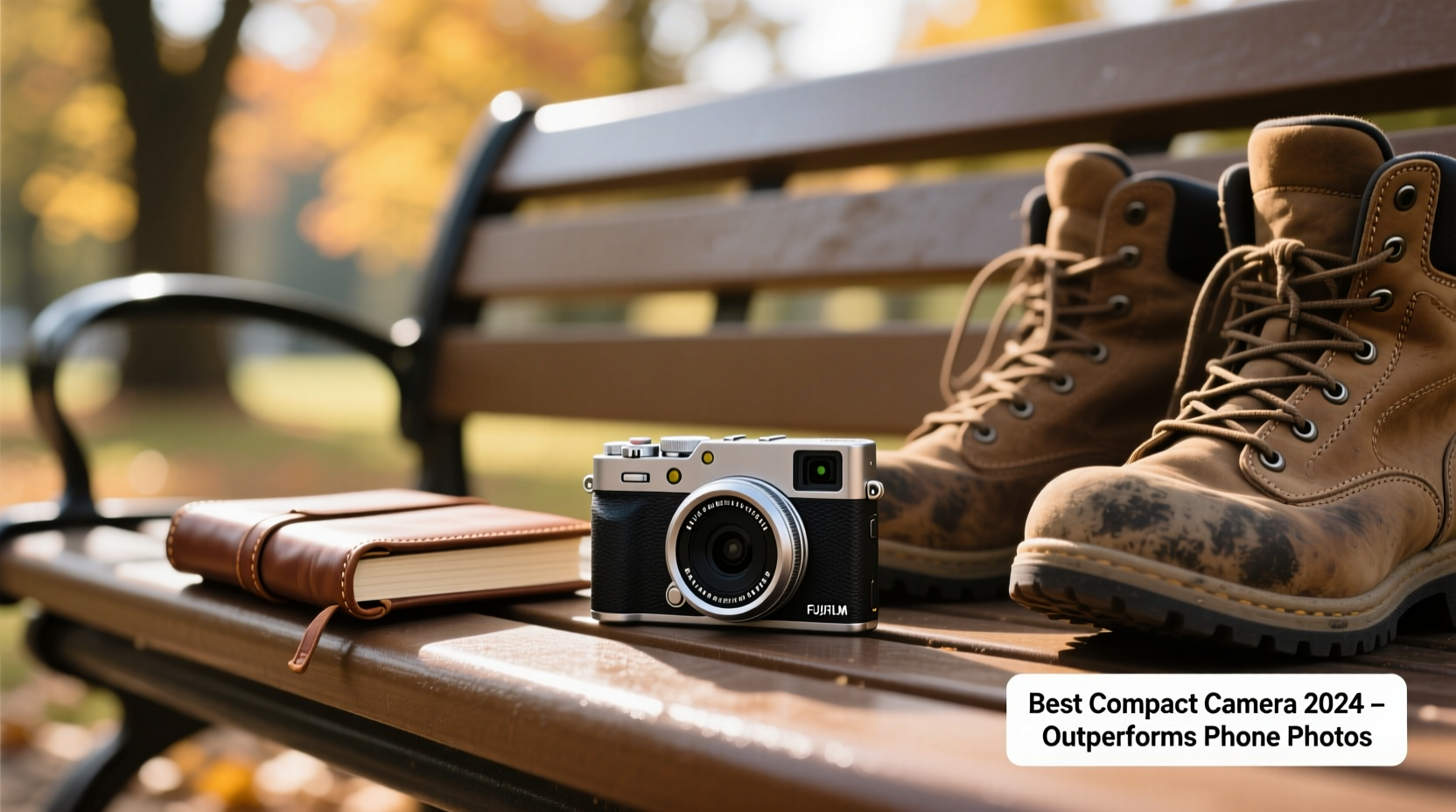
Despite massive improvements in computational photography, smartphones are inherently limited by physics. Tiny sensors and fixed-focus lenses restrict their ability to capture light effectively, especially in dim environments. They rely heavily on software stacking, which often results in unnatural skin tones, excessive noise reduction, or ghosting in moving scenes. A high-end compact camera sidesteps these compromises.
Models like the Sony RX100 series or Ricoh GR III use significantly larger sensors (typically 1-inch or APS-C) compared to phone sensors, allowing them to gather more light and produce images with greater depth and tonal range. Their optics are also purpose-built: wide-aperture prime or zoom lenses designed by optical engineers rather than mass-produced modules optimized for cost and thinness.
“Dedicated cameras give photographers control over focus, depth of field, and motion blur—elements essential for storytelling that most phone users never get to explore.” — Daniel Kim, Travel Photographer & Instructor
Beyond image quality, there's the experience of photography itself. Using a real shutter button, viewfinder, and physical dials encourages mindfulness. You compose deliberately, consider lighting, and engage with your subject. This intentionality often leads to more meaningful images than the endless scroll of quick snaps taken on a touchscreen.
Tip: Turn off automatic upload features when using a compact camera abroad—save data and enjoy the moment without distractions.Top 5 Pocket-Sized Cameras That Outperform Phone Photography
Choosing the right compact camera depends on your priorities: sensor size, lens speed, portability, and ease of use. Below is a curated list of models proven to deliver exceptional image quality while remaining truly pocketable.
| Model | Sensor Size | Lens (equiv.) | Max Aperture | Weight | Best For |
|---|---|---|---|---|---|
| Sony RX100 VII | 1-inch | 24–200mm | f/2.8–f/4.5 | 302g | Versatile travel, wildlife spotting |
| Ricoh GR III | APS-C | 28mm | f/2.8 | 257g | Street photography, minimalists |
| Panasonic Lumix LX100 II | M4/3 | 24–75mm | f/1.7–f/2.8 | 392g | Low-light shooters, videographers |
| Fujifilm X100V | APS-C | 35mm | f/2.0 | 478g | Classic aesthetics, film lovers |
| Casio Exilim EX-FR200 | 1/2.3\" | 28mm | f/2.5 | 56g (modular) | Adventure travelers, action shots |
The Sony RX100 VII stands out for its remarkable 8x zoom in a slim body and industry-leading autofocus, making it ideal for unpredictable travel scenarios. Meanwhile, the Ricoh GR III wins fans for its unmatched sharpness and discreet profile—perfect for candid urban exploration. Though slightly heavier, the Fujifilm X100V delivers a retro shooting experience with modern hybrid viewfinding and Fujifilm’s celebrated color science.
Key Features That Beat Smartphone Photos
To consistently surpass phone image quality, look for these technical advantages:
- Larger sensors: APS-C or 1-inch sensors capture more light and detail than smartphone chips.
- Wider apertures: Lenses with f/2.8 or faster let in more light and create pleasing background blur (bokeh).
- Optical zoom: Unlike digital cropping, true optical zoom maintains resolution across distances.
- Manual controls: Adjust shutter speed, aperture, and ISO manually for creative precision.
- RAW support: Shoot in RAW format for maximum flexibility during post-processing.
- Dedicated viewfinders: Many compacts include electronic viewfinders (EVF), crucial in bright sunlight where phone screens wash out.
For example, the Panasonic LX100 II combines a fast Leica-branded lens with full manual dials and a built-in EVF. In contrast, even the latest iPhone must simulate bokeh through dual-camera parallax calculations and machine learning—an approximation that fails with complex edges or close-up subjects.
Real-World Example: Capturing Venice at Dusk
Photographer Maria Tran traveled to Venice with only her Ricoh GR III and an iPhone 15 Pro. While both captured the gondolas gliding under arched bridges, the differences were stark. The iPhone struggled with mixed lighting—overexposing the sky while shadowing the buildings. Its Night mode took multiple seconds to process, blurring movement in the water. The Ricoh, set to aperture priority at f/2.8 and ISO 800, produced a single sharp frame with balanced highlights and natural color gradation. No computational tricks, no ghosting—just clean, organic detail.
“I didn’t miss a shot,” she said. “The GR III was always ready, focused instantly, and looked beautiful straight out of camera. My phone kept trying to ‘fix’ what wasn’t broken.”
How to Choose the Right Compact Camera for Your Travel Style
Your ideal camera should align with how and where you travel. Consider these factors before purchasing:
- Size vs. Zoom Trade-off: If you hike or backpack, prioritize weight and dimensions. But if you visit zoos or distant landmarks, a zoom lens like the RX100 VII’s 200mm reach may be worth the slight bulk.
- Fixed Lens vs. Interchangeable: True pocketability requires fixed lenses. Interchangeable systems like Micro Four Thirds or mirrorless DSLRs offer versatility but sacrifice compactness.
- Weather Sealing: Models like the Ricoh GR III include dust and moisture resistance—essential for rainy cities or dusty trails.
- Battery Life: Compact cameras typically last 200–300 shots per charge. Carry spares if you shoot extensively.
- Video Needs: Some compacts, like the LX100 II, support 4K video with mic input; others prioritize stills.
Travel Photography Checklist Before You Buy
Use this checklist to ensure your next compact camera meets real-world demands:
- ✅ Fits comfortably in front pants pocket or small jacket pouch
- ✅ Sensor is 1-inch or larger (APS-C preferred)
- ✅ Lens starts at 28mm or wider (good for interiors and landscapes)
- ✅ Maximum aperture of f/2.8 or lower
- ✅ Supports RAW + JPEG simultaneously
- ✅ Has manual exposure modes (M, Av, Tv)
- ✅ Includes EVF or flip-up screen for flexible composition
- ✅ Battery life exceeds 200 shots (CIPA-rated)
- ✅ Offers Wi-Fi or Bluetooth for easy photo transfer
- ✅ Comes with spare battery or USB charging capability
Getting the Most Out of Your Compact Camera on the Road
Having the right tool is only half the battle. Here’s how to maximize its potential during travel:
Step-by-Step: Optimizing Settings for Common Scenarios
- Daylight Exploration: Use aperture priority (A/Av) mode. Set f/5.6 for deep focus or f/2.8 for portraits. Keep ISO at 100–200.
- Golden Hour: Switch to manual mode. Start with 1/250 sec, f/4, ISO 100. Adjust as light fades.
- Low Light / Indoor: Open aperture fully (e.g., f/1.7). Increase ISO to 800–1600. Use tripod or stabilize against walls.
- Fast Action: Use shutter priority (S/Tv) at 1/500 sec or faster. Enable continuous autofocus and burst mode.
- Backlit Scenes: Meter off mid-tones or use exposure compensation (+1 EV). Avoid relying solely on auto-HDR.
Carry a small microfiber cloth to wipe lens haze caused by humidity or fingerprints. Avoid changing lenses outdoors to prevent dust ingress—even sealed bodies benefit from protection.
Frequently Asked Questions
Can a compact camera really beat my iPhone or Android phone?
Yes, especially in low light, high contrast, or when capturing motion. Larger sensors and better optics allow for truer colors, less noise, and greater dynamic range. Phones use aggressive processing that can smear fine textures and distort skin tones.
Are these cameras allowed in museums and tourist sites?
Most small cameras are permitted where phones are allowed. However, some institutions ban all cameras with interchangeable lenses or flash use. Always check local rules. The discreet nature of compact cameras often makes them less conspicuous than smartphones.
Do I need to edit photos from these cameras?
You don’t have to, but you can. Shooting in RAW gives you room to recover shadows, adjust white balance, and sharpen details non-destructively. Even JPEGs from high-end compacts often look more natural than heavily processed phone outputs.
Final Thoughts: Elevate Your Travel Memories
Travel is fleeting. The way you document it shapes how you remember it. While smartphones offer convenience, they often flatten the richness of lived experience into algorithmically smoothed thumbnails. A compact camera puts creativity back in your hands—literally. With thoughtful design, superior optics, and intuitive controls, these tools empower you to capture not just what you saw, but how it felt.
From dawn mist rising over Angkor Wat to the laughter of locals at a roadside market in Oaxaca, the best travel photos tell stories. And those stories deserve more than what a phone can provide. Investing in a capable, pocketable camera isn’t about technical superiority alone—it’s about intention, presence, and the joy of crafting meaningful images that endure.
🚀 Ready to upgrade your travel photography? Pick one of the cameras above, pack it alongside your passport, and see how much more your journey comes alive through a real lens.