For city dwellers in compact apartments, holiday decorating often means balancing festive spirit with spatial reality. Traditional Christmas trees, even tabletop versions, can dominate a living room or hallway, leaving little room for movement or other seasonal decor. Enter the fiber optic Christmas tree — a modern, low-profile alternative promising shimmering lights without the bulk. But are these illuminated novelties truly worth it for apartment living? The answer depends on your priorities: space efficiency, maintenance, ambiance, and long-term value.
Fiber optic trees use bundles of thin, flexible strands that transmit light from a base unit, creating a starry glow without bulbs, wires, or branches. Marketed as “maintenance-free” and “space-saving,” they appeal to renters, minimalists, and those wary of shedding evergreens. But how do they perform in real-world urban settings? Let’s break down their practicality, aesthetics, and suitability for small homes.
Space Efficiency: Why Size Matters in Apartment Living
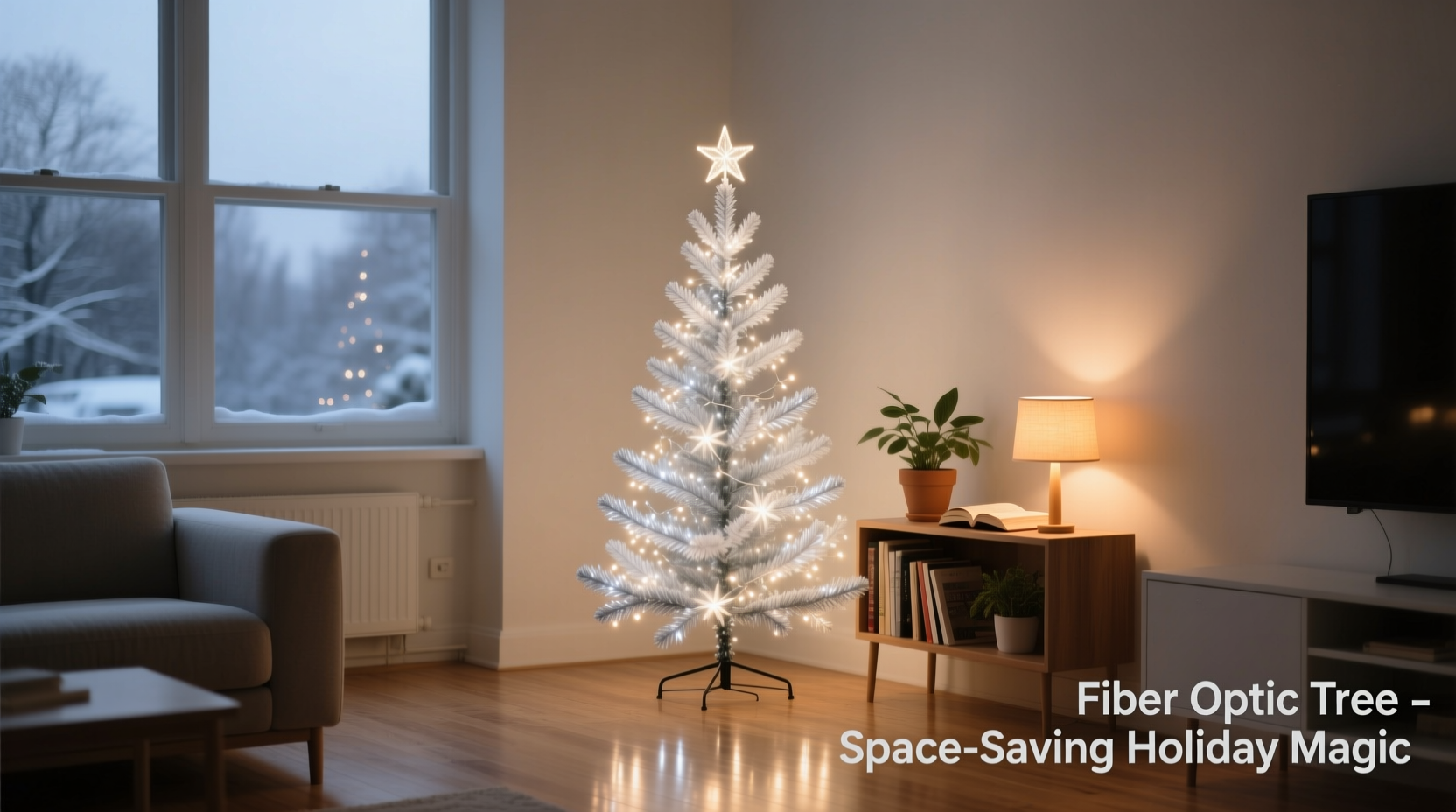
In studio apartments or one-bedroom units, every square foot counts. A standard 6-foot artificial tree requires at least 3–4 feet of floor diameter and can obstruct traffic flow, especially near doorways or kitchen areas. Fiber optic trees, by contrast, are typically narrow and vertical, often no wider than 12–18 inches. Their slim profile allows placement in corners, beside bookshelves, or even on countertops without dominating the room.
Many models range from 24 to 48 inches tall, making them ideal for side tables, desks, or window sills. Unlike traditional trees that need assembly, fluffing, and stand installation, fiber optic versions usually unfold or assemble in under five minutes. Some are even wall-mountable, freeing up floor space entirely.
Tip: Measure your intended display area before purchasing. Prioritize height-to-width ratio — look for trees with a footprint under 20 inches for tight spaces.For renters who move frequently, portability is another advantage. Most fiber optic trees disassemble into compact boxes, often smaller than shoeboxes. This makes storage between seasons effortless — no attic, garage, or closet wrestling required.
Ambiance and Aesthetics: Light vs. Tradition
The visual experience of a fiber optic tree differs significantly from a conventional Christmas tree. Instead of layered branches adorned with ornaments, these trees emit a soft, diffused glow through thousands of tiny light points. The effect is more ethereal than festive — resembling a glowing icicle or celestial column rather than a pine tree.
Some models offer color-changing LEDs at the base, allowing transitions between cool white, warm white, blue, green, or multicolor modes. Others include twinkling or pulsing effects, enhancing the dreamy atmosphere. However, this comes at a cost: most fiber optic trees cannot support traditional ornaments. The strands are too fragile to hold hooks or tinsel, limiting personalization.
“Fiber optic trees trade tactile tradition for minimalist elegance. They work best when you prioritize mood lighting over nostalgic ornamentation.” — Lena Torres, Interior Designer & Urban Lifestyle Consultant
This aesthetic shift may not appeal to everyone. Families with children or long-standing decoration rituals might find the lack of ornament-hanging disappointing. But for design-conscious individuals who favor Scandinavian minimalism, modern décor, or cozy ambient lighting, a fiber optic tree can serve as a striking centerpiece without clutter.
Practical Comparison: Fiber Optic vs. Other Small-Space Trees
To determine whether fiber optic trees are worth it, compare them directly with other space-efficient alternatives. The table below outlines key factors across three popular types of compact holiday trees.
| Feature | Fiber Optic Tree | Tabletop Artificial Tree (18–36\") | Wall-Mounted or Slim Profile Tree |
|---|---|---|---|
| Footprint | Very small (12–18\") | Small to medium (18–24\") | Zero (wall) or narrow (7–10\") |
| Ornament Capacity | None or minimal | Full (miniature ornaments) | Moderate (hooks or pockets) |
| Assembly Time | Under 5 minutes | 10–20 minutes | 5–15 minutes |
| Storage Size | Compact (often under 1 ft³) | Medium (box or bag) | Flat-packed or rollable |
| Ambiance | Glowing, futuristic | Traditional, cozy | Modern, decorative |
| Price Range | $30–$80 | $25–$100 | $40–$120 |
While fiber optic trees excel in footprint and ease of setup, they fall short in customization. If hanging family heirlooms or handmade decorations is important, a small artificial tree may be more satisfying despite requiring slightly more space.
Mini Case Study: A Studio Apartment Holiday Makeover
Jessica, a graphic designer in Brooklyn, lives in a 450-square-foot studio where her bed doubles as a couch and her dining table folds against the wall. Last year, she tried a 4-foot pre-lit artificial tree but found it blocked access to her closet and made the space feel cramped. After disassembling it twice during guest visits, she decided to try a 36-inch fiber optic tree advertised as “ultra-slim.”
She placed it in a corner behind her desk, where its cool-white glow reflected off a mirrored wall, creating an illusion of depth. Without ornaments, the setup felt incomplete at first, so she added a few LED-lit snowflakes on nearby shelves and draped fairy lights around her window frame. The result was a cohesive, luminous vignette that didn’t sacrifice functionality.
“I don’t miss hanging ornaments as much as I thought I would,” Jessica said. “The tree feels like part of the lighting design now, not just a holiday prop. And packing it away took 30 seconds — I just unplugged it and slid it into a drawer.”
Her experience illustrates how fiber optic trees can integrate seamlessly into small, multifunctional spaces — especially when paired with complementary lighting elements.
Maintenance and Longevity: What to Expect Over Time
Fiber optic trees require almost no upkeep. There’s no dusting of branches, no tangled lights to fix, and no shedding. Most models are powered by a single LED bulb in the base, which can last 25,000 hours or more — effectively years of seasonal use. If the light fails, replacement bulbs are inexpensive and widely available.
The fiber strands themselves are durable under normal conditions but can degrade if bent sharply or exposed to prolonged heat or direct sunlight. Avoid placing the tree near radiators or south-facing windows to prevent discoloration or brittleness.
Tip: Wipe the base and lower stem with a dry cloth monthly. Never use liquid cleaners on the fiber sections — moisture can damage light transmission.Unlike traditional trees that lose needles or become misshapen after years of storage, fiber optic models retain their form indefinitely. However, fashion trends may render them dated faster. Their futuristic look fits well in modern interiors but can clash with rustic or vintage décors.
Step-by-Step Guide: Choosing and Setting Up a Fiber Optic Tree in an Apartment
Follow this sequence to ensure your fiber optic tree enhances your space without complications.
- Measure Your Space: Identify a location — corner, shelf, or wall — and note available height and width. Allow at least 2 inches of clearance around the tree.
- Determine Desired Ambiance: Decide whether you want steady white light, color-changing effects, or twinkling modes. Consider dimmable options for nighttime use.
- Select Size and Style: Choose a height proportional to the room. Taller trees (36–48\") make vertical statements; shorter ones (24\") suit desks or nightstands.
- Check Power Requirements: Most plug into standard outlets. If outlet access is limited, consider battery-operated models (though these are less common and may require frequent replacements).
- Assemble and Position: Unpack and connect the fiber sections to the base. Place on a stable, level surface. Avoid high-traffic zones where it could be knocked over.
- Enhance the Display: Surround with reflective surfaces, small candles (LED), or complementary décor to amplify the glow without adding physical bulk.
- Store Properly Off-Season: Disassemble and return to original packaging. Store in a cool, dry place away from pressure or sharp objects.
Checklist: Is a Fiber Optic Tree Right for You?
- ✅ Do you have less than 2 square feet of floor space to dedicate to a tree?
- ✅ Are you renting and unable to modify walls or install permanent fixtures?
- ✅ Do you prefer ambient lighting over traditional ornament displays?
- ✅ Do you move frequently or need easy storage solutions?
- ✅ Are you looking for a low-maintenance, plug-and-play option?
- ❌ Do you have young children who enjoy decorating a tree with ornaments?
- ❌ Are sentimental ornaments a core part of your holiday tradition?
- ❌ Do you live in a home with strong thematic décor (e.g., rustic cabin, vintage glam)?
If you answered “yes” to most of the positive items and “no” to the negatives, a fiber optic tree is likely a worthwhile investment.
Frequently Asked Questions
Can I add any decorations to a fiber optic tree?
Generally, no. The fiber strands are delicate and not designed to support hooks, clips, or hanging items. Attempting to decorate may cause breakage or reduce light diffusion. Instead, enhance the surrounding area with themed figurines, garlands, or projected lights.
Are fiber optic trees safe for apartments?
Yes. They produce minimal heat, use low-voltage LEDs, and have no open flames or hot components. Most meet UL safety standards and are safe around curtains, furniture, and pets. Always unplug when leaving the apartment for extended periods.
How long do fiber optic trees last?
With proper care, 5–10 years or more. The LED base is the most likely component to fail, but replacements are affordable. Avoid bending the fibers sharply and protect from UV exposure to maximize lifespan.
Conclusion: Making the Most of Limited Space
Fiber optic Christmas trees aren’t for everyone, but for apartment dwellers constrained by size, mobility, or minimalist tastes, they offer a compelling solution. They save space, simplify setup, and deliver a unique luminous charm unmatched by traditional trees. While they lack the tactile joy of ornament-hanging, their role as ambient centerpieces can elevate a small space during the holidays without sacrificing functionality.
The decision ultimately hinges on what kind of holiday experience you value. If convenience, clean lines, and effortless elegance matter more than tradition, a fiber optic tree is not only worth it — it may become a cherished part of your urban holiday ritual.
🚀 Ready to rethink your holiday setup? Measure your space today and explore compact fiber optic models that blend seamlessly into your apartment. Share your small-space tree ideas in the comments — inspire others to celebrate smarter, not bigger!