For anime fans and art collectors alike, displaying beloved characters and scenes is more than decoration—it's a personal statement. But as much as we love vibrant prints of iconic moments from series like *Attack on Titan* or *Demon Slayer*, one concern remains constant: will the colors last? Sunlight, humidity, and even indoor lighting can degrade artwork over time, leading to faded, dull displays that no longer reflect their original brilliance. When choosing between traditional framed art and Japanese-style anime wall scrolls, longevity under environmental stress becomes a critical factor. Understanding how each format handles light exposure, material degradation, and preservation techniques helps you make an informed decision for lasting visual impact.
Understanding Fading in Art Displays
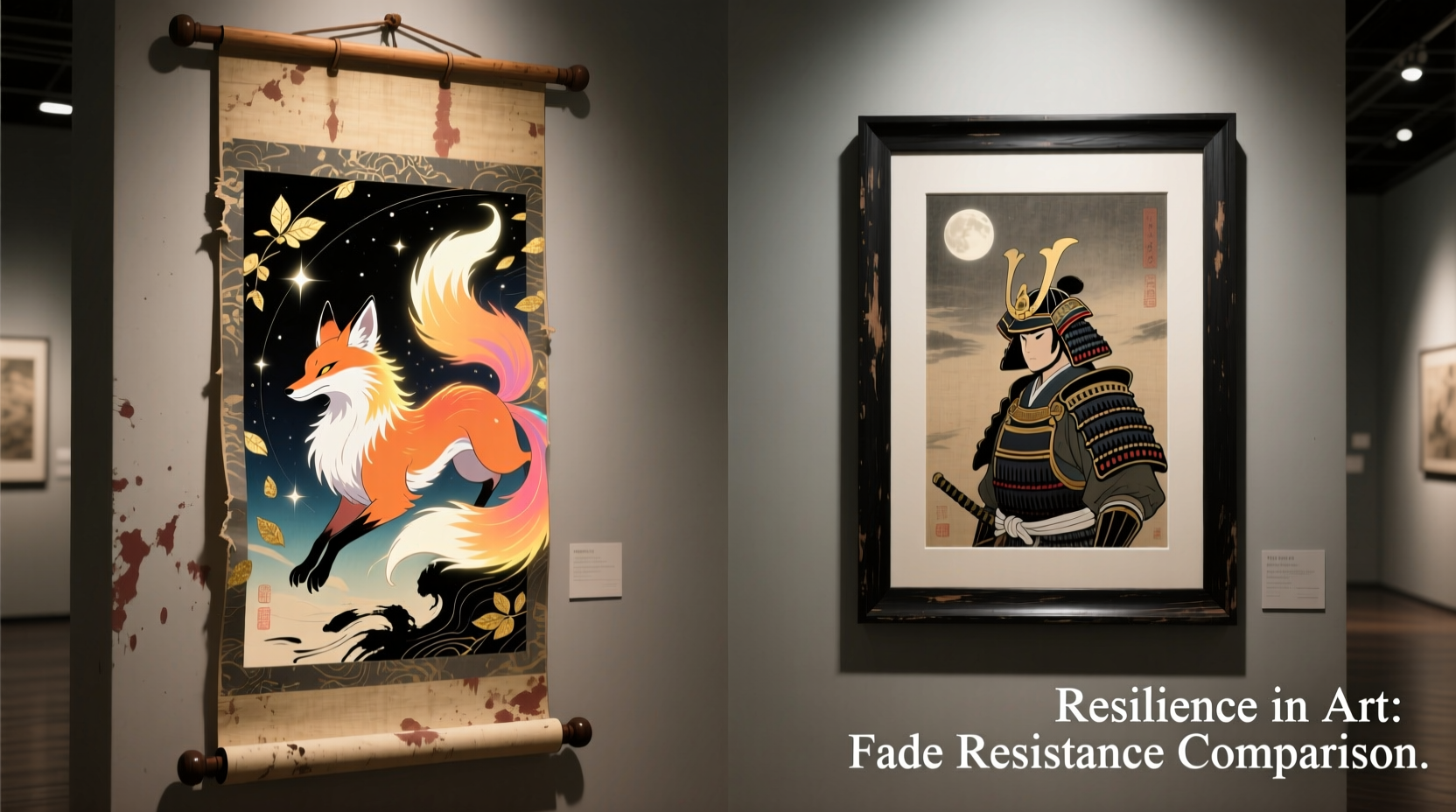
Fading occurs when pigments in printed or painted artwork break down due to prolonged exposure to ultraviolet (UV) light, heat, and atmospheric pollutants. This process, known as photodegradation, affects all types of colorants—whether inkjet dyes, archival pigments, or traditional paints. The rate at which fading happens depends not only on light intensity but also on the quality of materials used in both printing and mounting.
Two key factors influence fade resistance:
- Print medium: The type of ink and paper (or fabric) used during production.
- Display protection: Whether the artwork is shielded by glass, laminated coating, or hung directly exposed.
In the context of anime decor, most products fall into two categories: framed wall art (typically matted and behind glass) and wall scrolls (fabric-based, often unframed and rolled for hanging). Each has distinct advantages and vulnerabilities when it comes to resisting long-term fading.
How Framed Art Resists Fading
Framed art is widely considered the gold standard for preserving visual media. When properly constructed, a frame acts as a protective barrier against environmental damage. Most high-quality framed anime prints use UV-filtering acrylic or glass, which blocks up to 99% of harmful UV rays—the primary cause of pigment breakdown.
Beyond UV protection, framing offers additional layers of defense:
- Sealed backing: Prevents dust and moisture from reaching the print surface.
- Acid-free matting: Reduces chemical reactions that yellow paper over time.
- Air gap between glass and print: Minimizes condensation and sticking risks.
Professional-grade giclée prints on archival paper, combined with museum-quality framing, can retain full color integrity for 75–100 years under normal indoor lighting conditions. Even budget-friendly pre-framed anime posters benefit significantly from being enclosed, especially if they include basic anti-UV coatings.
“Framing isn’t just about presentation—it’s conservation. A good frame slows fading by orders of magnitude.” — Dr. Lena Torres, Conservation Scientist, National Institute of Museum Studies
The Reality of Anime Wall Scrolls and Light Exposure
Anime wall scrolls—often called *kakemono* in traditional Japanese contexts—are typically made from polyester or silk-like synthetic fabric, printed with dye-sublimation or direct inkjet methods. They’re lightweight, portable, and designed to hang vertically using wooden rods at the top and bottom. While aesthetically striking and popular among anime enthusiasts for their cultural flair, these scrolls lack inherent protection against fading.
Because most wall scrolls are displayed without any glazing or sealant, the printed surface is fully exposed to ambient light. Even indirect sunlight streaming through windows contains enough UV radiation to initiate slow but steady color deterioration. Over time, reds and purples (common in anime palettes) tend to fade first due to their less stable molecular structure.
That said, not all scrolls are created equal. Higher-end models use advanced printing techniques such as:
- Dye-sublimation printing: Infuses ink into the fabric fibers rather than laying it on top, improving wash-fastness and moderate lightfastness.
- Latex or pigment-based inks: More resistant to UV than standard dye inks.
- Coating treatments: Some manufacturers apply anti-UV sprays or laminates post-print.
Despite these improvements, no scroll matches the physical shielding offered by a sealed frame. Without active environmental control, expect noticeable fading within 3–5 years if placed near a window or under strong artificial lighting.
Tip: Hang anime wall scrolls in low-light areas—such as bedrooms away from windows—or rotate them seasonally to minimize continuous exposure.Comparative Analysis: Wall Scrolls vs Framed Art
To clarify the differences in fade resistance, here’s a side-by-side comparison based on real-world performance and material science principles.
| Feature | Framed Art | Wall Scroll |
|---|---|---|
| UV Protection | High (with UV-filtering glass/acrylic) | Low to none (unless specially coated) |
| Material Stability | Paper or canvas, often acid-free | Synthetic fabric, prone to static & dust |
| Expected Fade Resistance | 75+ years (archival standards) | 3–10 years depending on ink/fabric |
| Maintenance Needs | Occasional glass cleaning | Dusting; spot-cleaning only |
| Portability | Low (bulky, fragile glass) | High (rolls easily, lightweight) |
| Cost Range | $50–$300+ | $20–$100 |
This table highlights a core trade-off: framed art excels in preservation but sacrifices convenience and flexibility. Wall scrolls offer ease of storage and installation but require careful placement to avoid premature fading.
Preservation Strategies for Both Formats
Regardless of your choice, proactive care extends the life of any artwork. Consider the following best practices tailored to each display method.
Framed Art Care Routine
- Use frames with UV-protective glazing—acrylic is lighter and safer than glass for large pieces.
- Avoid hanging near south-facing windows where sunlight is strongest.
- Clean glass with microfiber cloth and non-ammonia cleaner to prevent scratching.
- Inspect backing periodically for signs of moisture or pest intrusion.
- Replace mounts and mats every 10–15 years if discoloration appears.
Wall Scroll Maintenance Tips
- Dust regularly with a soft brush or lint-free cloth to prevent grime buildup.
- Never fold or crease the fabric—store rolled around a tube when not in use.
- Apply a UV-resistant fabric spray (tested on inconspicuous area first).
- Rotate multiple scrolls every few months to distribute light exposure.
- Keep away from HVAC vents to reduce dryness and static-induced dust attraction.
Real-World Example: Preserving a Limited-Edition Genshin Impact Print
A collector in Seattle purchased a limited-edition anime wall scroll featuring a collaboration between *Genshin Impact* and a renowned digital artist. Excited to display it, she hung the scroll in her living room, directly across from large sliding glass doors. Within 14 months, customers who visited her online art shop began commenting that the photo didn’t match the current state of the piece—the once-vivid blues and golds had noticeably dulled.
She replaced the original with a professionally framed version, this time choosing a black wood frame with UV-protective acrylic and acid-free matting. Placed on a north-facing wall with minimal daylight, the new display showed no visible change after two years. Meanwhile, she stored the faded scroll in a dark closet, wrapped in acid-free tissue, preserving it as a historical artifact of the collection.
This case illustrates how environment—not just product quality—dictates longevity. Identical artwork, different fates based solely on display conditions.
Expert Recommendations for Long-Term Display
According to conservators at the International Association of Paper and Textile Preservation, the ideal strategy combines high-quality materials with intelligent placement.
“The weakest link determines lifespan. You could have the most fade-resistant ink, but if it’s on unprotected fabric in bright light, degradation begins immediately.” — Dr. Rajiv Mehta, IAPTP Senior Conservator
Experts recommend:
- Investing in professional framing for permanent displays.
- Using wall scrolls for temporary exhibitions or rotating collections.
- Monitoring light levels with a lux meter—ideally keeping illumination below 50 lux for sensitive prints.
- Choosing pigment-based inks over dye-based whenever possible, regardless of medium.
Frequently Asked Questions
Can I laminate an anime wall scroll to protect it from fading?
Lamination is generally not recommended for fabric-based scrolls. Heat and pressure during lamination can warp or melt synthetic fibers, and trapped moisture may lead to mold. Instead, consider UV-blocking fabric sealants applied lightly and evenly with a spray.
Do LED lights cause fading in anime artwork?
Standard LED lights produce very little UV radiation and minimal heat, making them one of the safest options for illuminating artwork. However, prolonged exposure—even under LEDs—can still contribute to gradual fading over many years. It’s best to turn off display lighting when not needed.
Is there a way to restore a faded anime wall scroll?
Once pigments degrade, restoration is extremely limited. Cleaning won’t revive lost color, and re-dyeing risks damaging the base material. Digitally reprinting the image onto new fabric is often the most effective solution for replacing heavily faded scrolls.
Action Plan: Maximizing Artwork Lifespan
To get the most out of your anime art collection, follow this step-by-step guide:
- Evaluate your space: Identify areas with direct sunlight or strong artificial lighting.
- Choose the right format: Opt for framed art in high-exposure zones; use scrolls in controlled environments.
- Verify print quality: Look for terms like “archival pigment ink,” “UV-resistant coating,” or “dye-sublimation” when purchasing.
- Install thoughtfully: Hang artwork away from windows, skylights, and bright lamps.
- Monitor and maintain: Inspect every 6 months for fading, dust, or warping.
- Rotate and rest: Give displayed pieces breaks in dark, climate-stable storage to extend life.
Final Thoughts: Beauty Meets Longevity
Both anime wall scrolls and framed art bring joy and personality to homes, but they serve different roles in a collector’s strategy. Framed art stands as a long-term investment in visual permanence, offering superior protection against the inevitable forces of light and time. Wall scrolls, while more vulnerable, provide versatility, cultural authenticity, and ease of change—perfect for celebrating seasonal favorites or limited releases.
The choice isn’t about which is universally better, but which aligns with your lifestyle, space, and commitment to preservation. By understanding the science of fading and applying practical safeguards, you can enjoy vibrant anime displays for years without compromise.
🚀 Ready to protect your favorite anime art? Audit your current displays today—move one piece away from sunlight, clean another, or plan your next upgrade with UV-safe framing. Small actions now ensure vivid memories tomorrow.