There’s a particular ache that comes with hearing a song from your youth—the one you played on repeat during long summer drives, school dances, or quiet nights under dimmed lights. Even decades later, these melodies can bring tears to your eyes or instantly transport you back in time. But why do childhood songs resonate so deeply? The answer lies at the intersection of neuroscience, psychology, and the unique way our brains encode memories tied to music.
Unlike other sensory experiences, music has a privileged pathway into the brain’s emotional centers. When paired with formative life stages—especially childhood—it becomes woven into the fabric of personal identity. This article explores the scientific mechanisms behind this phenomenon, explains why early musical exposure leaves lasting emotional imprints, and offers insights into how we can harness this connection for emotional well-being.
The Brain's Musical Time Machine
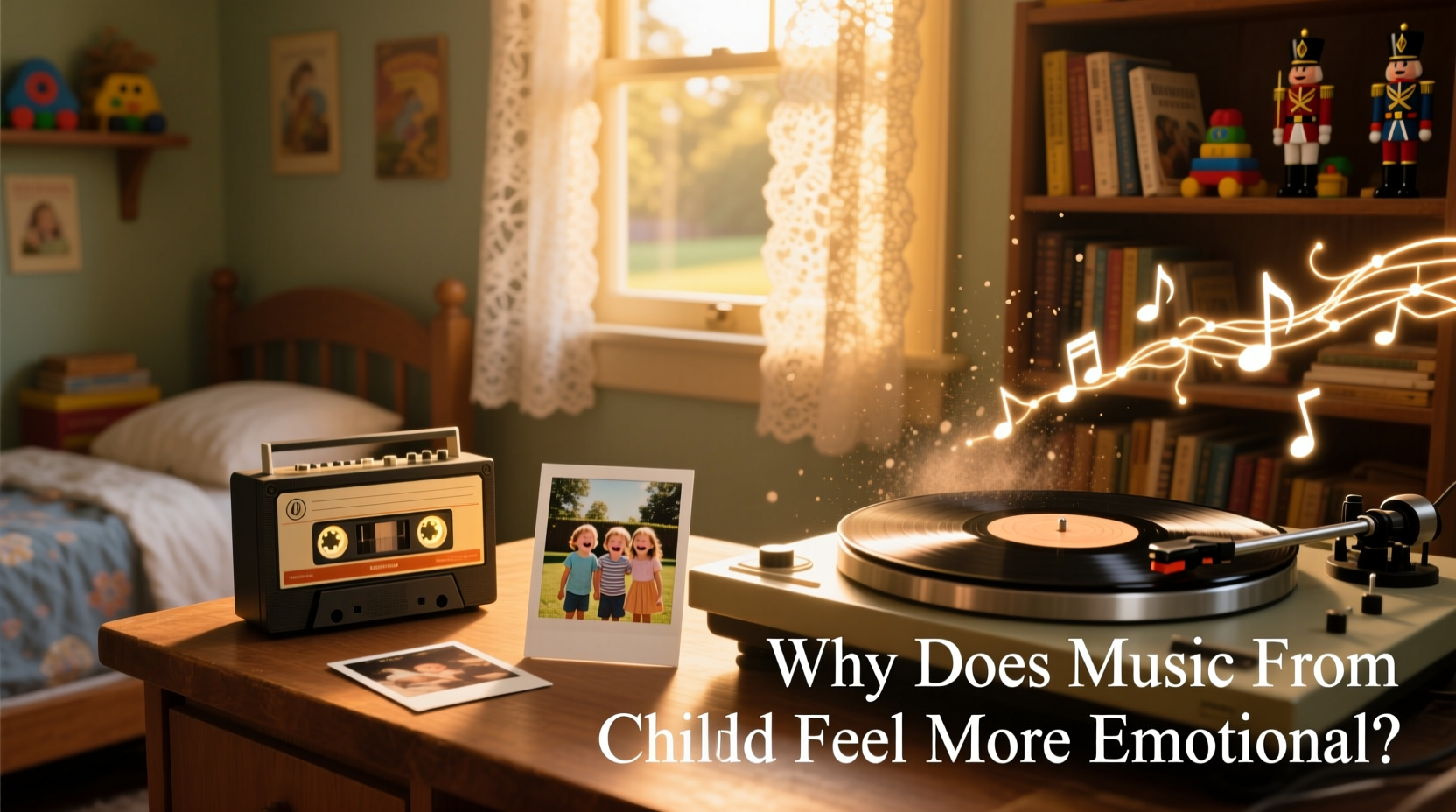
The human brain treats music differently than spoken language or visual stimuli. Neuroimaging studies show that listening to music activates multiple regions simultaneously: auditory cortex for sound processing, motor areas when we tap along, and limbic structures responsible for emotion and memory.
One key player is the hippocampus, crucial for forming and retrieving autobiographical memories. During childhood, the hippocampus is highly active as the brain absorbs new experiences. When music plays in the background—on the radio, at home, or through shared family rituals—it becomes contextually embedded in those moments. Over time, the brain links the melody not just to the event, but to the mood, people, and even scents associated with it.
Dr. Petr Janata, cognitive neuroscientist at UC Davis, conducted pioneering research using fMRI scans to observe brain activity while participants listened to songs from their past. He discovered that the medial prefrontal cortex—a region involved in self-referential thinking and memory retrieval—lit up most strongly when subjects heard music from ages 10 to 30, peaking around adolescence.
“Music serves as a powerful catalyst for autobiographical recall because it engages both emotional and memory networks simultaneously.” — Dr. Petr Janata, Cognitive Neuroscientist
This means that when you hear a familiar tune from childhood, your brain doesn’t just recognize the notes—it reconstructs the entire emotional landscape of that time. A lullaby sung by a parent might trigger feelings of safety; a pop anthem from middle school could evoke social anxiety or exhilarating first friendships.
The Role of Emotional Salience and Repetition
Childhood is marked by novelty. First loves, first losses, major developmental shifts—all occur against a backdrop of intense emotional learning. Music heard during these periods gains what psychologists call “emotional salience”: heightened importance due to its association with strong feelings.
Moreover, children often listen to the same songs repeatedly. Whether it’s a favorite album, a school performance piece, or songs played daily on the way to school, repetition strengthens neural pathways. Each replay deepens the memory trace, making future recollection easier and more vivid.
Consider this: a teenager who listens to a breakup ballad every day for weeks isn't merely absorbing lyrics—they're encoding an emotional state alongside rhythm and harmony. Years later, hearing that song again reactivates the original emotional circuitry, sometimes with surprising intensity.
Tip: If you're feeling emotionally disconnected or nostalgic, try revisiting a playlist from your early teens. You may unlock buried emotions—and gain insight into unresolved experiences.The Reminiscence Bump: Why Adolescence Dominates Musical Memory
Psychologists have identified a phenomenon known as the reminiscence bump: the tendency for adults over 40 to recall events from ages 10 to 30 more vividly than any other period. Within this window, ages 12 to 25 are especially potent for musical memories.
Several factors contribute to this effect:
- Neuroplasticity peak: The adolescent brain is exceptionally adaptable, forming stronger synaptic connections in response to stimuli like music.
- Identity formation: Teens use music to explore values, beliefs, and group belonging. Songs become symbols of self-discovery.
- First-time experiences: Many emotional milestones—first kiss, first concert, leaving home—happen during this time, often accompanied by music.
A 2020 study published in Memory & Cognition found that participants were able to identify songs from their teenage years faster and with greater accuracy than those from later decades—even when controlling for exposure frequency. More importantly, they reported stronger emotional reactions to tracks from ages 13–19 than from any other age group.
This suggests that music from youth isn’t simply remembered better—it feels more meaningful because it helped shape who we became.
How Early Music Influences Identity and Mental Health
Music from childhood doesn’t just evoke memories—it helps construct them. Psychologist Dr. Adrian North from Curtin University argues that playlists function as “autobiographical soundtracks,” allowing individuals to narrate their lives through curated songs.
In therapeutic settings, clinicians use this principle in music-based reminiscence therapy, particularly with older adults or patients with dementia. Familiar songs from youth can spark lucid conversations, improve mood, and temporarily restore cognitive coherence—even in advanced stages of Alzheimer’s disease.
For example, a patient who hasn’t spoken coherently in months might suddenly sing along to a 1950s doo-wop track, recalling names of old friends or describing high school dances. The music bypasses damaged areas of the brain and accesses preserved neural networks where emotional memories reside.
“We’ve seen non-responsive patients light up when they hear a song from their youth. It’s not just nostalgia—it’s access to a core part of their identity.” — Dr. Concetta Tomaino, Co-Founder, Institute for Music and Neurologic Function
Even outside clinical contexts, reconnecting with childhood music can be healing. People recovering from trauma, grief, or depression often report comfort in returning to songs that once made them feel safe or joyful. These tracks serve as emotional anchors, reminding listeners of resilience and continuity across time.
Practical Applications: Using Childhood Music Mindfully
Understanding the emotional power of early music allows us to use it intentionally—not just for nostalgia, but for growth and healing. Below is a checklist to help you engage with your musical past in a constructive way.
🎵 Personal Music Reflection Checklist
- List 5 songs that defined your childhood or teenage years.
- Note where and when you first heard each one.
- Identify the emotions linked to each (e.g., joy, loneliness, freedom).
- Reflect: Do these songs represent parts of yourself you still carry?
- Use one song as a mindfulness prompt—listen fully, without distraction, and journal afterward.
Timeline: How Music Gets Embedded in Memory
Here’s a step-by-step breakdown of how a childhood song becomes emotionally charged over time:
- Initial Exposure (Age 6–16): Song is heard during a meaningful moment—family gathering, school event, alone time.
- Repetition: Played frequently via radio, cassette, CD, or streaming. Neural pathways begin strengthening.
- Emotional Pairing: The brain associates melody with feelings—excitement, sadness, love, rebellion.
- Autobiographical Linking: Memory of the event and the song fuse in the hippocampus and prefrontal cortex.
- Dormant Recall: After years of disuse, the song remains stored but inactive.
- Triggered Re-experiencing: Hearing the song years later reactivates full emotional and sensory memory.
This timeline illustrates why a single chord progression can unleash a flood of forgotten details: the smell of rain after school, the color of your bedroom walls, the voice of a friend who moved away.
Do’s and Don’ts of Engaging With Childhood Music
| Action | Do | Don’t |
|---|---|---|
| Revisiting old songs | Listen mindfully, reflect on changes in your life | Use exclusively to escape current reality |
| Sharing music with others | Discuss what songs meant to you growing up | Assume others share your emotional connection |
| Using music therapeutically | Pair with journaling or conversation | Rely solely on it to manage serious mental health issues |
| Curating playlists | Include diverse moods and eras for balance | Only focus on idealized \"golden era\" memories |
Mini Case Study: Maria and the Power of a Forgotten Lullaby
Maria, a 48-year-old teacher from Chicago, hadn’t thought about her childhood much until she attended her mother’s funeral. While sorting through old belongings, she found a worn cassette labeled “Lullabies – For Maria.” Curious, she played it on a vintage tape deck.
The first notes of “Edelweiss” began, sung in her mother’s soft alto voice. Instantly, Maria was eight years old again, tucked into bed, watching shadows dance on the ceiling. She broke down sobbing—not just from grief, but from rediscovering a version of herself she’d forgotten: small, cared for, innocent.
In the weeks that followed, Maria created a digital archive of the recordings. She started playing them before sleep, finding comfort in the continuity between past and present. Her therapist noted improved emotional regulation and increased willingness to discuss unresolved family dynamics.
Maria’s experience exemplifies how music preserves intimate emotional data—sometimes more accurately than photographs or diaries. It wasn’t just a song; it was proof of love, encoded in melody.
Frequently Asked Questions
Why do some childhood songs make me cry, even if they weren’t sad at the time?
Emotions triggered by music aren’t always about the original context. Tears may stem from a sense of loss—not for the song, but for the person you were when you first heard it. This is often called “melancholic nostalgia,” a bittersweet recognition of time passed and identities changed.
Can music from early childhood influence adult preferences?
Yes. Research shows that musical tastes stabilize around age 14 and remain remarkably consistent into adulthood. The brain develops tonal expectations, rhythmic patterns, and genre associations during this period, shaping lifelong preferences. That’s why many adults still prefer music from the ’80s, ’90s, or 2000s—even if newer genres dominate charts.
Is it unhealthy to listen to childhood music too often?
Not inherently. However, if listening becomes a way to avoid present challenges or reject new experiences, it may indicate emotional stagnation. Balance is key: honor your past while staying open to new sounds and growth.
Conclusion: Reclaim Your Soundtrack, Reconnect With Yourself
Music from childhood feels more emotional not because it was objectively better—but because it arrived at a time of profound transformation. It scored the moments when we first understood love, loss, independence, and longing. Those songs didn’t just accompany our lives; they helped shape them.
By understanding the science behind musical memory, we gain tools to navigate our inner worlds with greater awareness. Whether used for reflection, healing, or simple joy, these sonic time capsules remind us of who we’ve been—and who we still are beneath the layers of time.
💬 What song instantly takes you back to childhood? Share your story in the comments and connect with others reliving their own musical memories.








