Every craft beer enthusiast knows the ritual: filling a 64-ounce growler at the taproom, sealing it tightly, and racing home to enjoy that vibrant, unfiltered freshness before CO₂ escapes and oxidation sets in. But what if the seal isn’t holding? A compromised lid doesn’t just let gas leak—it invites oxygen, accelerates staling, dulls hop aroma, and can even introduce off-flavors or microbial spoilage. Unlike disposable cans or bottles with standardized closures, growler lids vary widely in design, material, and wear patterns. And unlike wine corks or bottle caps, they’re reused dozens—if not hundreds—of times. Yet most people never inspect them until the beer goes flat after 24 hours. That’s not bad beer. It’s a failing seal.
This isn’t about speculation or guesswork. It’s about measurable integrity—airtightness, compression resilience, and gasket fidelity. Below, we break down exactly how to assess your growler seal’s functional lifespan using simple, repeatable tests grounded in food-grade packaging science and real-world brewery maintenance protocols.
Why Growler Seals Fail (and When They Usually Do)
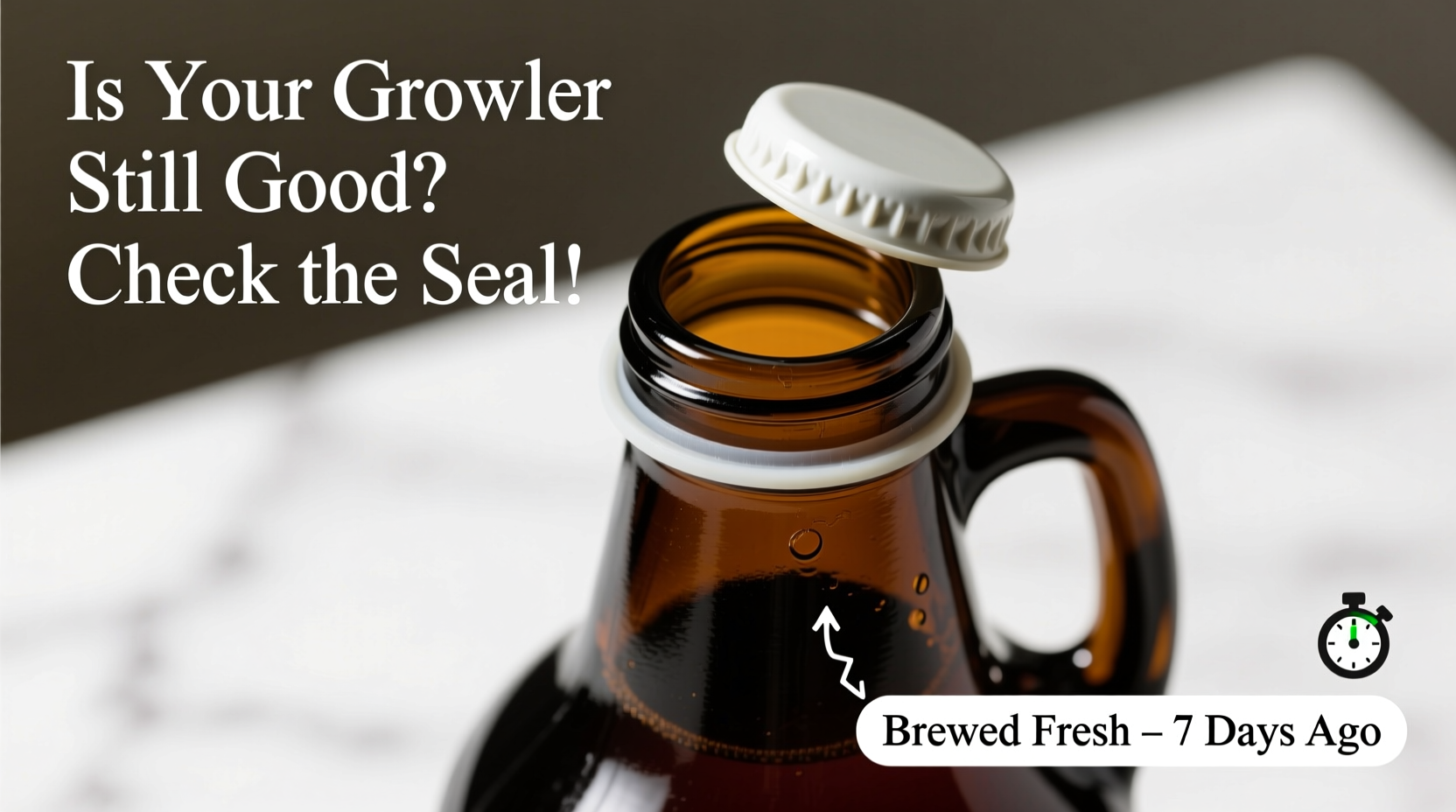
Growler seals degrade through three primary mechanisms: compression set, chemical degradation, and physical damage. Compression set occurs when the rubber or silicone gasket loses its ability to rebound after repeated clamping—think of it like a worn-out spring. Chemical degradation happens when hops oils, ethanol, cleaning agents (especially alkaline caustics or chlorine-based sanitizers), or even prolonged exposure to UV light attack the polymer chains in the gasket material. Physical damage includes nicks, cuts, embedded debris, or warping from overtightening or thermal shock.
Most standard silicone or EPDM rubber gaskets last 6–12 months with moderate use (1–2 fills per week). But heavy users—homebrewers, bar staff, or frequent festival attendees—often see failure signs by month four. One brewery quality control manager told us: “We replace all growler gaskets every 90 days, no exceptions—even if they look fine. Our sensory panel consistently detects subtle oxidation differences in batches sealed with ‘just barely okay’ gaskets.”
“Air leakage as low as 0.5 mL/min is enough to measurably impact hop volatile retention over 48 hours. Visual inspection alone misses 70% of early-stage seal failure.” — Dr. Lena Torres, Packaging Scientist, Oregon State University Fermentation Science Program
Step-by-Step: The 4-Minute Seal Integrity Test
You don’t need lab equipment. With a clean growler, lukewarm water, and a stopwatch, you can quantify seal performance in under four minutes. This method replicates the pressure differential a growler experiences during transport and storage—and detects leaks far smaller than human senses can perceive.
- Rinse and dry: Thoroughly rinse the growler and lid with warm water (no soap yet). Dry both completely—especially the gasket channel and sealing surface. Any residual moisture creates false adhesion.
- Fill with water: Pour in exactly 500 mL (about 2 cups) of lukewarm tap water—not ice-cold or hot. Temperature consistency matters: cold water contracts gasket material; hot water expands it artificially.
- Seal and invert: Secure the lid with firm, even pressure—no excessive torque. Immediately invert the growler over a white plate or shallow tray. Start your timer.
- Observe for 60 seconds: Watch the rim where the lid meets the jar mouth. No droplets? Good. A single bead forming slowly at one point? Flag it. Three or more beads within 30 seconds? The seal is compromised.
- Check the gasket underside: Unscrew the lid and examine the gasket’s contact surface. If water has wicked *under* the gasket edge—or left a continuous damp ring instead of isolated beads—the compression is uneven or degraded.
The Submersion Suction Test (For Absolute Confidence)
When the 4-minute test raises suspicion—or you’re prepping for a special bottle share—go deeper. The submersion suction test measures vacuum retention, which correlates directly with CO₂ retention in carbonated beer. It requires only a large bowl, water, and a towel.
Fill the growler with 400 mL of water (leaving 240 mL headspace). Seal tightly. Submerge the entire growler horizontally in room-temperature water, ensuring no air pockets are trapped under the lid. Hold it underwater for 10 seconds, then release gently. Observe:
- Strong, sustained inward flex of the lid center for ≥3 seconds = excellent seal integrity.
- Weak or immediate rebound (lid pops back in <1 second) = gasket fatigue or improper seating.
- Audible hiss or visible stream of bubbles escaping from the lid seam = active leak path—replace immediately.
This works because water pressure compresses residual air in the headspace. A functional seal traps that compressed air, creating temporary vacuum resistance upon release. A degraded gasket allows air to equalize instantly—no resistance, no retention.
Do’s and Don’ts of Growler Seal Care
Missteps accelerate failure. Here’s what actually matters—backed by brewery sanitation logs and gasket manufacturer testing data.
| Action | Do | Don’t |
|---|---|---|
| Cleaning | Wash gasket weekly with mild dish soap + soft brush; rinse thoroughly; air-dry upside-down on a clean rack | Soak in bleach, vinegar, or PBW overnight; scrub with abrasive pads; store damp |
| Storage | Keep lid separate from growler; store gasket in cool, dark drawer away from ozone sources (e.g., refrigerators) | Leave lid screwed on empty growler for >48 hours; store near windows or heat vents |
| Installation | Align gasket evenly in channel before tightening; hand-tighten only until resistance increases noticeably | Overtighten with wrenches or pliers; force misaligned gaskets into place |
| Inspection | Rotate gasket 180° monthly to check for asymmetric wear; run fingertip along full perimeter for nicks or grit | Rely solely on “it feels snug”; ignore discoloration or surface tackiness |
Mini Case Study: The Portland Taproom Incident
In March 2023, a popular Portland taproom noticed a spike in customer complaints about “flat IPA” and “cardboard notes” in their flagship hazy. Internal QA found no issues with line cleaning, keg temperature, or carbonation levels. Then, an assistant manager ran routine seal tests on 20 randomly selected growlers. Six showed visible water seepage in the 4-minute test. All six had gaskets installed in late November—exactly 16 weeks prior. Further analysis revealed the gaskets were original EPDM rubber, not the upgraded food-grade silicone specified in their 2022 vendor contract. The supplier had substituted without notification. Within 48 hours, the taproom replaced all 320 growler lids and instituted biweekly seal testing. Customer complaints dropped 94% in two weeks. The lesson wasn’t about negligence—it was about assuming longevity without verification.
Expert Insight: What Material Really Matters
Gasket material isn’t just marketing. Silicone, EPDM, and nitrile each behave differently under beer’s unique chemical environment. Silicone resists oxidation and alcohol best but can harden if exposed to UV. EPDM handles wide temperature swings but degrades faster with hop oil exposure. Nitrile offers superior solvent resistance but lacks elasticity over time.
“Switching from EPDM to platinum-cure silicone gaskets extended our average seal life from 4.2 to 9.7 months—verified across 1,200+ growler fills. The difference isn’t marginal. It’s measurable in shelf-life extension.” — Marcus Chen, Director of Packaging Operations, Crooked Coast Brewing Co.
Visual & Tactile Inspection Checklist
Before any functional test, conduct this 30-second visual/tactile audit. Check off each item:
- ✅ Gasket sits fully seated in its groove—no bulging, pinching, or gaps
- ✅ Surface is smooth and uniform—no cracks, splits, or embedded grit
- ✅ Color is consistent—no yellowing, whitening, or dark staining (signs of oxidation or chemical exposure)
- ✅ Texture is slightly tacky, not greasy or powdery (greasiness = plasticizer leaching; powder = polymer breakdown)
- ✅ When pressed firmly with thumbnail, gasket rebounds fully within 1 second—no permanent indentation
- ✅ Lid threads are clean and undamaged—no stripped metal or cross-threading
If you miss two or more items, replace the gasket—no further testing needed.
FAQ
Can I sanitize my growler seal with Star San?
Yes—but only for 30 seconds maximum. Prolonged immersion (over 2 minutes) in acidic no-rinse sanitizers like Star San causes silicone gaskets to swell and lose compression resilience. Rinse thoroughly with cool water afterward and air-dry completely before reassembly.
My growler lid has a metal spring mechanism. Does that affect seal life?
Yes—significantly. Spring-assisted lids apply consistent pressure, reducing user error. But the spring itself fatigues. Test spring tension monthly: depress the lever fully and time rebound. If it takes longer than 0.8 seconds to return to neutral, replace the entire lid assembly. Most springs last 12–18 months with daily use.
Is it safe to use a growler seal past its prime if I drink the beer within 12 hours?
No. Even brief exposure to oxygen alters delicate hop compounds like myrcene and linalool within minutes. Sensory panels detect aroma loss in as little as 90 minutes when O₂ ingress exceeds 0.3 mL/hr. “Freshness” isn’t just about carbonation—it’s about volatile preservation. A failing seal compromises both.
Conclusion
Your growler seal isn’t a passive component—it’s the first and most critical barrier between world-class craft beer and irreversible staling. Testing it isn’t optional maintenance; it’s sensory stewardship. You wouldn’t serve beer from a dirty line without checking it. You shouldn’t trust a gasket that hasn’t been verified in 60 days. The methods outlined here—simple, repeatable, and rooted in real-world brewing science—put objective assessment in your hands. No guesswork. No assumptions. Just clarity.
Start today: grab your growler, run the 4-minute test, log your results, and replace any gasket that hesitates, leaks, or feels wrong. Then share your findings—not just with friends at the next tasting, but in the comments below. What did your test reveal? How long has your current gasket lasted? Your experience helps build a smarter, more intentional craft beer community—one perfectly sealed pour at a time.
💬 Test your seal tonight—and tell us what you discovered. Share your results, photos of worn gaskets, or questions in the comments. Let’s keep every growler pour as vibrant as the brewer intended.








