
If you've opened your sourdough starter only to be greeted by a sharp, nail-polish-like odor, you're not alone. The smell of acetone—often described as fruity, chemical, or reminiscent of rubbing alcohol—is surprisingly common among both new and experienced bakers. While unsettling at first, this aroma doesn't necessarily mean your starter is ruined. In fact, it’s often a sign that your sourdough culture is communicating its needs. Understanding the science behind this scent, what triggers it, and how to respond can make the difference between discarding a viable starter and nurturing it back to health.
What Causes the Acetone Smell in Sourdough Starters?
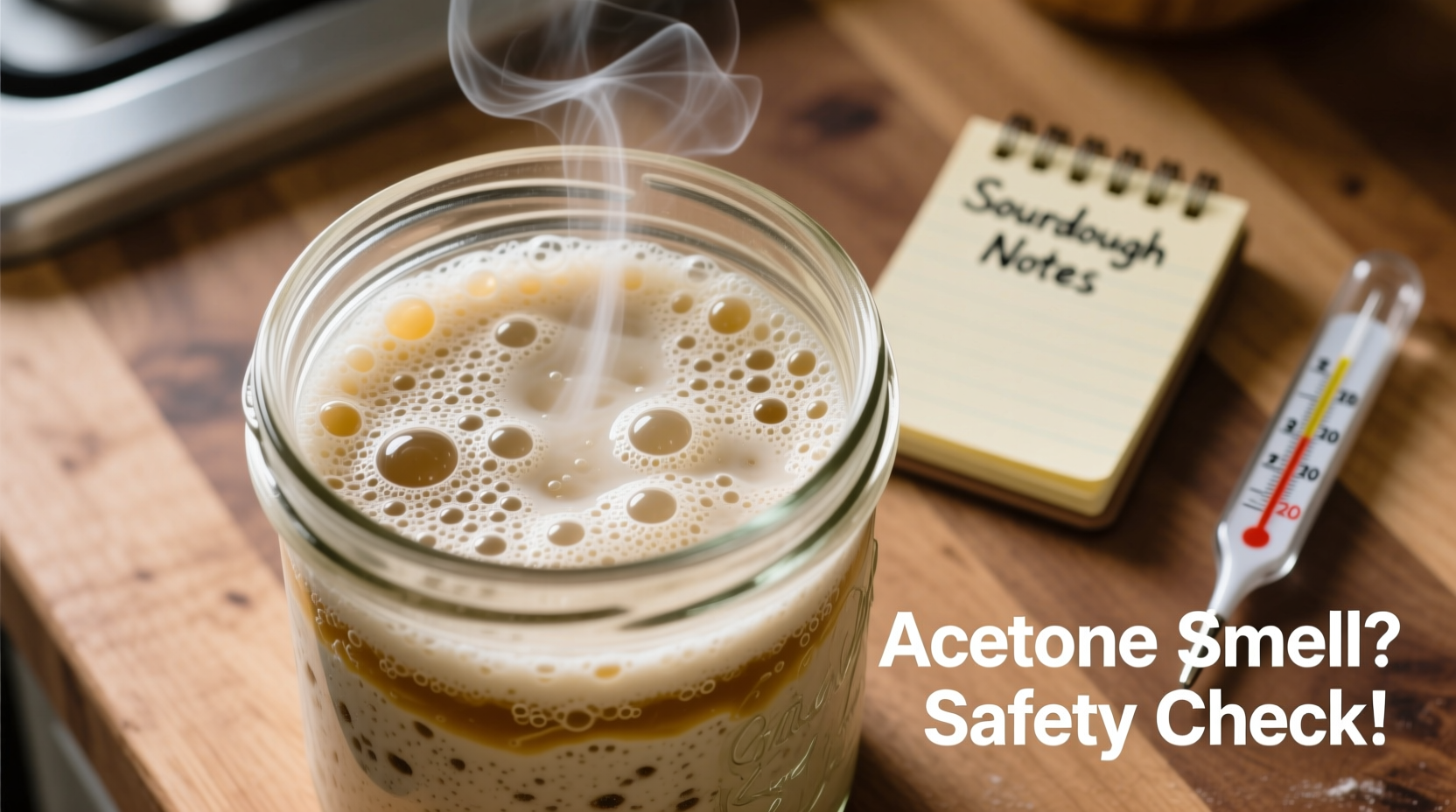
Sourdough starters are living ecosystems composed primarily of wild yeast and lactic acid bacteria (LAB), most commonly Lactobacillus species. These microorganisms feed on the carbohydrates in flour, producing carbon dioxide, ethanol, and organic acids as byproducts. When food is scarce, certain metabolic pathways become more dominant.
The acetone-like smell typically arises when your starter runs out of readily available sugars. In such conditions, the bacteria begin breaking down stored energy reserves through a process called ketosis. During ketosis, acetoacetic acid is produced and spontaneously breaks down into acetone and carbon dioxide. This is the same compound found in nail polish remover, which explains the sharp, pungent odor.
This phenomenon usually occurs when a starter hasn’t been fed for an extended period. It’s especially common in refrigerated starters, where microbial activity slows but doesn’t stop entirely. Over time, the microbes consume all accessible starches and begin metabolizing their own waste products, leading to the accumulation of ketones like acetone.
Tip: A small amount of acetone smell after several days without feeding is normal. If the smell persists after regular feedings, further action may be needed.Is an Acetone-Smelling Starter Safe to Use?
Yes, in most cases, a sourdough starter that smells like acetone is still safe to use. The presence of acetone does not indicate harmful contamination. Instead, it signals hunger—not spoilage. However, there are important distinctions to make between a hungry starter and one that has gone bad.
A healthy but hungry starter will exhibit:
- A strong acetone or alcohol smell
- A layer of dark liquid (hooch) on top
- Possible separation or graininess
- No mold, pink streaks, or foul rotting odors
In contrast, a spoiled starter may show visible signs of contamination such as fuzzy mold (white, green, or black), pink or orange discoloration, or a putrid, sewage-like stench. These are red flags indicating unwanted microbial growth, likely from improper hygiene or contaminated ingredients.
“An acetone smell is a cry for food, not a death sentence. With proper feeding, most starters bounce back within 24–48 hours.” — Dr. Karl DeSiel, Microbial Fermentation Scientist
How to Revive a Hungry, Acetone-Smelling Starter
Reviving a neglected starter is usually straightforward. The key is consistency and patience. Below is a step-by-step guide to restore balance to your culture.
Step-by-Step Guide to Restoring Your Starter
- Discard most of the starter. Remove all but about 25g of the original culture. This helps reduce acidity and concentrate active microbes.
- Feed with fresh flour and water. Mix the remaining 25g with 50g of room-temperature water and 50g of unbleached all-purpose or whole wheat flour.
- Repeat every 12 hours. Continue feeding twice daily at consistent intervals, always discarding down to 25g before each feeding.
- Observe for signs of life. Look for bubbles, expansion (ideally doubling in size), and a pleasant tangy or yogurty aroma.
- Wait until fully active. A revived starter should rise predictably within 4–8 hours after feeding and pass the float test (a spoonful placed in water floats).
Most starters recover within two to three days of regular feeding. If your starter shows no signs of life after four consecutive feedings, consider starting over or obtaining a new culture.
Preventing Acetone Buildup: Best Practices for Maintenance
Prevention is simpler than revival. By understanding your starter’s feeding rhythm and storage needs, you can avoid acetone development altogether.
Feeding Frequency Based on Storage Method
| Storage Method | Feeding Frequency | Risk of Acetone Smell | Tips |
|---|---|---|---|
| Room Temperature (70–75°F) | Every 12–24 hours | Low (if fed regularly) | Keep in a loosely covered jar; feed twice daily if baking frequently. |
| Refrigerated (40°F) | Once weekly or every 10–14 days | Moderate to High | Always bring to room temperature and feed 2–3 times before baking. |
| Infrequent Use (Long-Term Storage) | Every 2–3 weeks | Very High | Consider drying or freezing backup cultures for extended breaks. |
Temperature plays a critical role. Cooler environments slow fermentation, allowing acids and ketones to accumulate gradually. Warmer environments accelerate yeast activity, reducing the window for acetone formation—but requiring more frequent feedings.
Tip: Stirring your starter daily—even when refrigerated—helps redistribute nutrients and gases, delaying hooch and acetone formation.Real Example: Recovering a Neglected Starter After Vacation
Sarah, a home baker in Portland, returned from a two-week trip to find her sourdough jar topped with a thick layer of grayish liquid and emitting a strong solvent-like odor. Worried she had lost her year-old starter, she nearly discarded it. Instead, she followed a revival protocol: she poured off the hooch, stirred the remaining paste, and began feeding it twice daily with equal parts water and bread flour.
By day two, small bubbles appeared. On day three, the starter doubled in volume within six hours of feeding. She used it to bake a loaf that rose beautifully and had a balanced, tangy flavor. Sarah now keeps a backup dried starter in her freezer and feeds her main culture weekly, even when not baking.
Her experience illustrates that neglect isn’t fatal—and that sensory cues like smell should be interpreted in context, not panic.
Do’s and Don’ts When Dealing With Acetone Smell
| Action | Recommended? | Reason |
|---|---|---|
| Smell the starter to assess condition | ✅ Yes | Odor is a key indicator of microbial health and balance. |
| Pour off the hooch before feeding | ✅ Yes | Hooch contains excess alcohol and acids; removing it reduces stress on the culture. |
| Use the starter immediately despite the smell | ❌ No | High acidity and low yeast activity can lead to poor rise and off-flavors. |
| Switch to whole grain flour during revival | ✅ Yes | Whole rye or whole wheat flour provides more nutrients and minerals to boost recovery. |
| Store starter in a tightly sealed container | ❌ No | Trapped gases can build pressure; always use a loose lid or cloth cover. |
Frequently Asked Questions
Can I bake with a starter that smells like acetone?
It’s not advisable. While technically safe, an acetone-smelling starter is weak and imbalanced. Baking with it may result in dense loaves, excessive sourness, or incomplete rise. Wait until the starter is bubbly, doubles predictably, and smells pleasantly tangy or fruity before using it.
Why does my starter produce hooch so quickly?
Hooch forms when the starter consumes available sugars and begins producing alcohol. Rapid hooch development suggests your starter is underfed or too warm. Try feeding more frequently, reducing ambient temperature, or increasing the ratio of fresh flour to starter during feedings (e.g., 1:2:2 instead of 1:1:1).
Does the type of flour affect acetone production?
Yes. White all-purpose flour ferments quickly but offers fewer nutrients. Whole grain flours, especially rye, support a broader microbial diversity and can help stabilize the culture, reducing ketone buildup. Rotating flours or using a blend can improve resilience.
Final Checklist: Responding to Acetone Smell
- ✅ Check for mold or discoloration—discard if present
- ✅ Pour off any hooch
- ✅ Discard down to 25g of starter
- ✅ Feed with 50g water and 50g flour (preferably whole grain)
- ✅ Repeat every 12 hours for 2–3 days
- ✅ Monitor for doubling and bubbles
- ✅ Perform a float test before baking
- ✅ Adjust feeding schedule based on storage and usage
Conclusion: Listen to Your Starter, Don’t Fear the Smell
The acetone smell in your sourdough starter is not a failure—it’s feedback. It tells you that your microbial community is alive, active, and simply in need of nourishment. With consistent care, the right feeding routine, and a bit of observation, you can transform a lethargic, chemically-scented paste into a vibrant leavening agent capable of producing exceptional bread.
Don’t let a temporary odor discourage you. Some of the most robust starters have endured periods of neglect and emerged stronger. Treat your culture with patience, respond to its cues, and you’ll develop a deeper understanding of the living process behind real sourdough.
💬 Have you revived a smelly starter successfully? Share your story or ask questions in the comments—your experience could help another baker save their sourdough!








