
Nostalgia has a powerful pull. For many gamers, revisiting the pixelated worlds of Super Mario Bros., the chiptune melodies of The Legend of Zelda, or the arcade-perfect precision of Street Fighter II isn’t just entertainment—it’s emotional time travel. But how we access that past has changed dramatically. Today, you can relive those moments either through original retro hardware or via software-based emulation. One path demands investment in aging technology; the other offers instant access at minimal cost. So, which is truly worth it? Is the authenticity of original hardware justified by its price tag, or does modern emulation deliver the same experience—better, even?
The debate isn’t just about functionality. It touches on preservation, ethics, personal values, and what “gaming” means to different people. Some swear by the tactile feel of an original controller, while others prioritize convenience and enhancements like save states and upscaling. As retro gaming continues to surge in popularity, understanding the trade-offs between buying real hardware and using emulators is essential for making informed choices.
The Allure of Original Hardware: Why People Still Buy Retro Consoles
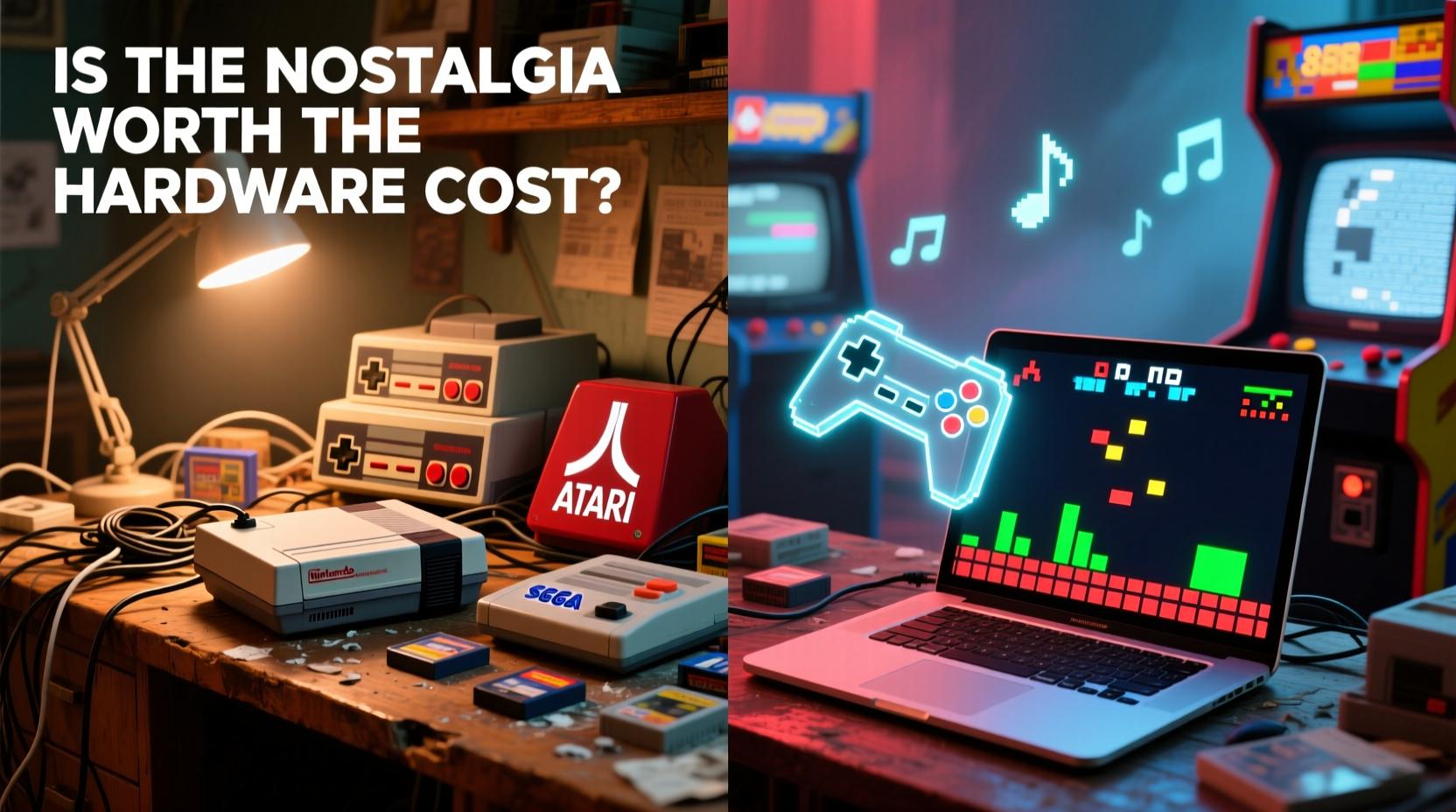
There’s something undeniably special about powering up a genuine Nintendo Entertainment System, Sega Genesis, or PlayStation 1. The weight of the console, the click of the cartridge slot, the warm glow of CRT scanlines—all contribute to an experience that transcends gameplay. For collectors and purists, this authenticity is irreplaceable.
Original hardware provides the exact conditions under which games were designed and tested. Input lag, audio fidelity, and visual output are all true to the era. Enthusiasts often argue that playing Super Metroid on an actual SNES connected to a CRT TV delivers a level of immersion no emulator can replicate—not because emulation is technically flawed, but because the entire sensory environment is part of the memory.
Additionally, physical ownership carries emotional and cultural value. Holding a sealed copy of EarthBound or finding a mint-condition TurboGrafx-16 feels like uncovering history. This sentiment drives a booming collector’s market where rare cartridges routinely sell for thousands of dollars.
Tip: If you're collecting retro consoles, always test them with known-working games before purchasing. Many units on resale sites have degraded capacitors or laser mechanisms.Emulation: Convenience, Flexibility, and Ethical Gray Areas
Emulation allows users to run old game code on modern devices—PCs, smartphones, handhelds like the Anbernic RG35XX, or even Raspberry Pi setups. Emulators such as RetroArch, Dolphin (for GameCube/Wii), and PCSX2 (for PS2) offer features far beyond original hardware: high-resolution rendering, rewind functions, custom shaders, and netplay for multiplayer across continents.
From a practical standpoint, emulation wins on accessibility. You don’t need to hunt down fragile hardware, deal with RF interference, or maintain multiple AV cables. A single microSD card can hold every NES game ever released. Updates to emulators continually improve compatibility and accuracy—some now achieving near-perfect cycle-level precision.
However, legality remains a gray zone. While writing an emulator is legal, distributing copyrighted BIOS files or game ROMs without owning the original title violates intellectual property laws. That said, many users justify downloading ROMs if they already own the physical copy, citing fair use and preservation. Still, companies like Nintendo have aggressively pursued takedown notices and lawsuits against ROM sites, emphasizing that unofficial distribution undermines developer rights.
“Preservation is not piracy. But neither is piracy a sustainable model for honoring the work of creators.” — Frank Cifaldi, Director of the Video Game History Foundation
Cost Comparison: What Are You Really Paying For?
Let’s look at the numbers. Building a functional retro setup with authentic hardware involves more than just buying a console. Consider this breakdown:
| Component | Original Hardware Cost | Emulation Equivalent |
|---|---|---|
| NES Console (working) | $80–$150 | Free (emulator) |
| SNES Controller | $30–$60 (used) | $0 (keyboard or $20 USB pad) |
| Retrode or SD2SNES (for ROM loading) | $70+ | Built into most emulators |
| CRT TV or upscaler (e.g., OSSC) | $100–$300+ | Modern monitor (already owned) |
| Five licensed NES games | $100–$300+ (depending on rarity) | Free (if self-ripped from owned copies) |
| Total Estimated Entry Cost | $380–$800+ | $20–$50 (optional controller) |
This stark contrast reveals why emulation dominates among casual retro fans. Even budget-conscious hardware enthusiasts face rising prices due to scarcity and speculation. Meanwhile, emulation setups can be built for under $50 and scaled up with better controllers or dedicated handhelds.
A Real Example: Two Gamers, Two Approaches
Consider Mark and Lena, both in their early 30s, who grew up playing PlayStation 1 games.
Mark decided to rebuild his childhood setup. He bought a used PS1 from eBay for $60, spent $40 on a composite cable, another $70 on a CRT he found locally, and $200 acquiring physical copies of Final Fantasy VII, Metal Gear Solid, and Crash Bandicoot. When the console died after six months, he paid $50 to have it professionally cleaned and recapped. His total investment: around $420. But he says there’s no substitute for inserting a disc, hearing the drive spin up, and seeing that iconic green startup screen.
Lena, meanwhile, downloaded PCSX2 and dumped her old PS1 discs using a modded console. She plays on her laptop with a DualShock 4, enjoys 1080p resolution, and uses save states to skip grinding sections. Her only expense was a $25 USB adapter. She finishes games faster, experiments more freely, and doesn’t worry about disc rot. Yet she admits missing the ritual—the smell of the plastic case, the manual, the box art.
Both experiences are valid. Mark pays for authenticity; Lena prioritizes efficiency and enhancement. Neither approach diminishes the joy of the games themselves.
When Hardware Makes Sense (And When It Doesn’t)
Buying retro consoles isn’t inherently better or worse—it depends on your goals.
- Choose original hardware if: You value preservation, collectibility, or tactile authenticity. You want to teach younger generations how games were played historically. You enjoy tinkering with AV setups, mods, or restoration projects.
- Choose emulation if: You care about convenience, performance, or accessibility. You want to play obscure titles without paying collector prices. You appreciate quality-of-life improvements like fast-forward during cutscenes or rewind after mistakes.
Hybrid approaches also exist. Some enthusiasts use flash carts like the EverDrive or Polymega to play digital versions of games on real hardware—combining reliability with authenticity. Others maintain one “showpiece” console while relying on emulation for daily play.
Tip: If you own physical games, consider creating your own ROM backups for personal use. This respects copyright while giving you a safety net against media degradation.Step-by-Step: How to Decide What’s Right for You
- Assess your priorities. Are you playing for nostalgia, completionism, or pure enjoyment? Each goal favors different tools.
- Set a realistic budget. Determine how much you’re willing to spend—and whether ongoing maintenance (new controllers, repairs) fits within it.
- Test both methods. Try a free, legal emulator like RetroArch with homebrew games or freeware titles to get a feel for the interface.
- Research availability. Check how hard it is to find working hardware for your favorite system. Neo Geo AES consoles, for example, are prohibitively expensive; Game Boy systems are abundant and affordable.
- Consider long-term sustainability. Cartridges and discs degrade. Lasers wear out. Emulators evolve. Which ecosystem will still function in ten years?
- Make your choice—or mix both. There’s no rule saying you can’t own a SNES for weekend retro sessions and use emulation for deep RPG grinds.
FAQ
Is emulation illegal?
Emulators themselves are legal to download and use. However, downloading copyrighted ROMs without owning the original game is a violation of copyright law in most countries. Ripping ROMs from games you physically own sits in a legal gray area but is widely practiced for personal backup.
Can emulation match the accuracy of original hardware?
High-level emulators like higan (now bsnes) achieve near-perfect cycle accuracy, meaning they simulate the original system’s processor timing down to the nanosecond. Most mainstream emulators prioritize usability over absolute accuracy but still offer excellent compatibility. True pixel-perfect, lag-free replication requires significant computing power and technical tuning.
Are retro mini consoles a good alternative?
Official mini consoles like the NES Classic or Sega Genesis Mini offer curated libraries and plug-and-play simplicity. They’re built on emulator technology but packaged authentically. Downsides include limited game selection, short cables, and discontinued production driving secondary market prices up. Still, they represent a legal, convenient middle ground.
Conclusion: Nostalgia Has Value—But So Does Practicality
The question isn’t whether nostalgia is worth the hardware cost—it’s what kind of experience you’re seeking. If your heart races at the sound of a Sega Genesis startup jingle or the texture of an original D-pad, then yes, the cost may be justified. There���s dignity in preserving the full context of gaming history, down to the flicker of interlaced video.
But if your goal is simply to re-experience great games without frustration, emulation offers unmatched flexibility. It democratizes access, enables innovation, and ensures that classic titles remain playable long after their hardware has failed.
In the end, both paths honor the legacy of retro gaming. Whether you’re blowing into cartridges or mapping buttons on a touchscreen, what matters is that these games continue to be played, remembered, and loved.
💬 What’s your take? Do you play retro games on original hardware or through emulation? Share your story, setup, or favorite emulator settings in the comments below.








