For acoustic guitarists who perform live or record at home, capturing a natural, balanced sound is essential. While microphones are ideal in studio settings, they’re often impractical on stage. Enter the soundhole pickup: a discreet, magnetic device that fits into your guitar’s soundhole and converts string vibrations into an electrical signal. Unlike complex under-saddle systems, soundhole pickups offer plug-and-play simplicity with minimal modification to your instrument. The best part? You don’t need to spend hundreds to get great tone. There are several affordable options that deliver clarity, feedback resistance, and dynamic response—perfect for gigging musicians, singer-songwriters, and hobbyists alike.
Why Choose a Soundhole Pickup?
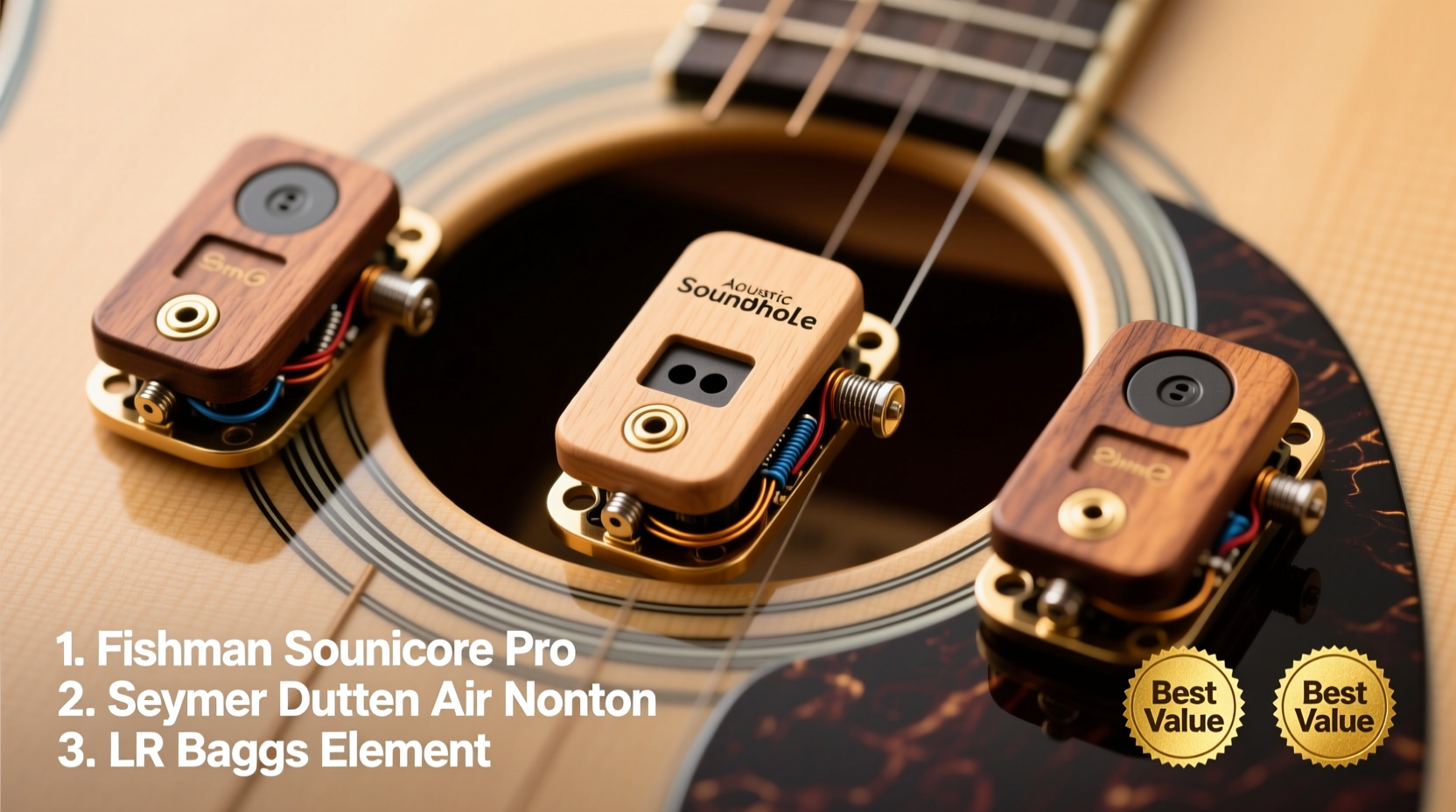
Soundhole pickups occupy a unique niche between passive convenience and tonal authenticity. They work like electric guitar pickups, using magnetic coils to sense string movement. Because they rely on magnetism rather than pressure or contact points, they preserve the guitar’s natural resonance without requiring invasive installation.
This makes them ideal for players who:
- Rent or share instruments
- Play vintage or delicate guitars they don’t want to modify
- Need a quick setup for open mics, busking, or small venues
- Want a backup amplification option without permanent hardware
Unlike piezo systems—which can sound quacky or overly bright—soundhole pickups tend to produce a warmer, more familiar tone reminiscent of classic electric-acoustic blends.
Tip: Always test a soundhole pickup before tightening clamps—some models can scratch finishes if not padded properly.Top Affordable Picks That Deliver Professional Results
You don’t have to sacrifice quality for price. These five soundhole pickups combine affordability (under $100), ease of use, and strong sonic performance.
- L.R. Baggs Align Magnetic Soundhole Pickup – At around $99, this is one of the most refined entry-level options. It features adjustable pole pieces for balanced volume across strings and a slim profile that avoids interfering with picking hand motion. Its tone leans warm with excellent note definition, making it suitable for fingerstyle and light strumming.
- DiMarzio DP130 Magnetic Soundhole Pickup – Priced near $70, this veteran favorite offers punchy midrange and clear highs. Originally designed for archtops, it works beautifully on steel-string acoustics. Its passive design requires no battery, and its compact size fits nearly all standard soundholes.
- LR Baggs.lyx – A sleek, minimalist option at $89, the .lyx uses neodymium magnets for increased sensitivity and reduced weight. It delivers a smooth, even response and includes a detachable preamp for gain shaping. Best suited for players who value aesthetics and modern tone shaping.
- K&K Sound Pure Mini HB – While technically a hybrid (it combines a small magnetic unit with an internal mic), this $85 system captures both string vibration and body resonance. Ideal for players seeking a fuller, more ambient sound without feedback issues in low-volume environments.
- Donner DAP-1 Acoustic Pickup – Under $50, this budget-friendly model punches above its weight. It offers a warm, rounded tone and secure spring-loaded mounting. Though lacking advanced EQ controls, it’s a reliable choice for beginners or backup use.
Comparison Table: Features at a Glance
| Model | Price | Installation | Tone Profile | Battery Required? |
|---|---|---|---|---|
| L.R. Baggs Align | $99 | Clamp-on | Warm, balanced | No |
| DiMarzio DP130 | $70 | Clamp-on | Bright, articulate | No |
| LR Baggs .lyx | $89 | Clamp-on + preamp | Smooth, modern | Yes (CR2032) |
| K&K Pure Mini HB | $85 | Clamp + internal mic | Full-bodied, natural | Yes (button cell) |
| Donner DAP-1 | $45 | Spring clamp | Warm, slightly dark | No |
What to Look for When Choosing a Budget-Friendly Option
Affordability shouldn’t mean compromise on core functionality. Focus on these key criteria when evaluating soundhole pickups:
- Fit and Finish: Ensure the clamp mechanism is padded and adjustable to avoid damaging your guitar’s finish.
- Tonal Balance: Listen for even response across bass and treble strings. Some cheaper models emphasize mids at the expense of clarity.
- Feedback Resistance: Passive magnetic designs naturally resist feedback better than piezos or mics—important for louder stages.
- Cable Management: Look for models with coiled cables or strain relief to prevent tangles and connection issues.
- Portability: If you travel frequently, prioritize lightweight, removable units that store easily.
“Even under $100, you can find a soundhole pickup that captures the soul of your guitar. It’s not about how much you spend—it’s about matching the tool to your playing style.” — Marcus Reed, Live Sound Engineer & Acoustic Specialist
Real-World Example: Sarah’s Coffeehouse Setup
Sarah, a singer-songwriter based in Asheville, NC, performs weekly at intimate cafes and farmers’ markets. She plays a 1970s Martin D-18 she doesn’t want to modify. After trying several clip-on mics that picked up ambient noise, she switched to the DiMarzio DP130. For under $75, she gained a reliable, feedback-free signal that cuts through softly without overpowering her vocals. “It’s invisible once I start playing,” she says, “and my audience always comments on how ‘real’ my guitar sounds through the PA.”
The DP130’s passive design means no batteries to replace, and its simple output lets her plug directly into a mixer or small amp. For Sarah, the pickup became a silent partner in her performances—effective, unobtrusive, and perfectly suited to her acoustic-first approach.
Step-by-Step Guide to Installing and Optimizing Your Soundhole Pickup
Getting the most from your pickup involves more than just clipping it in. Follow these steps for optimal results:
- Inspect the Fit: Loosely place the pickup in the soundhole. Adjust the arms so the unit sits level and centered, without pressing hard against the sides.
- Check Clearance: Ensure the pickup doesn’t interfere with your picking hand, especially if you rest your palm near the bridge.
- Plug In and Test: Connect to an amplifier or audio interface. Play each string individually to check for volume imbalances.
- Adjust Pole Pieces (if available): Use a small screwdriver to raise or lower individual poles to balance output. Lower buzzing strings; raise quieter ones.
- Set Gain Structure: Start with amp or interface gain low. Gradually increase until you achieve a clean signal without distortion.
- Position for Tone: Slight movement toward the neck or bridge can warm up or brighten the sound. Experiment subtly.
- Secure Cables: Use velcro straps or cable ties to prevent tripping hazards and reduce handling noise.
Frequently Asked Questions
Can soundhole pickups work on nylon-string guitars?
Magnetic soundhole pickups only work with ferromagnetic strings—typically steel or bronze. Nylon strings aren’t magnetic, so they won’t trigger the pickup. For classical guitars, consider a soundboard transducer or internal microphone instead.
Do I need a preamp with my soundhole pickup?
Most magnetic soundhole pickups are passive and function well without a preamp. However, adding a small inline preamp (like the L.R. Baggs Para DI) can provide tone shaping, volume boost, and impedance matching—especially useful when going direct to a PA or recording interface.
Will a soundhole pickup affect my guitar’s unplugged sound?
No. Since these pickups are non-invasive and don’t touch the soundboard, they have zero impact on the natural acoustic tone of your guitar when played without amplification.
Final Thoughts and Next Steps
Great tone doesn’t have to come with a steep price tag. Whether you’re playing backyard sessions or weekend gigs, today’s market offers soundhole pickups that blend affordability, reliability, and musicality. From the crisp clarity of the DiMarzio DP130 to the elegant refinement of the L.R. Baggs .lyx, there’s a solution tailored to every player’s needs and budget.
The right pickup isn’t just about sound—it’s about confidence. Knowing your guitar will project clearly, stay in tune with your voice, and withstand the rigors of live performance makes all the difference. Don’t wait for the “perfect” gear upgrade. Start with a solid, affordable soundhole pickup, learn its strengths, and build your amplified voice from there.
🚀 Ready to amplify your acoustic sound? Pick one of the models reviewed here, try it with your guitar, and experience how a simple addition can transform your live tone. Share your experience or ask questions in the comments below!








