When it comes to building a strong, defined core, two fitness practices consistently rise to the top: yoga and Pilates. Both are low-impact, accessible to most fitness levels, and celebrated for improving posture, stability, and body awareness. But if your primary goal is to tone your abs and build visible core strength, which delivers results faster? The answer isn’t as straightforward as choosing one over the other—it depends on your goals, body type, consistency, and how you practice each discipline.
This article breaks down the core-focused mechanics of yoga and Pilates, compares their effectiveness in developing abdominal definition, and provides evidence-based insights to help you decide which—or which combination—will get you closer to a stronger, more sculpted midsection.
Understanding Core Strength and Abdominal Toning
Before comparing yoga and Pilates, it’s essential to understand what “core strength” really means. The core includes not just the rectus abdominis (the “six-pack” muscles), but also the transverse abdominis (deep stabilizers), obliques, lower back, pelvic floor, and diaphragm. True core strength involves the ability to stabilize the spine, transfer force efficiently, and maintain posture under load or movement.
Toning the abs—achieving that lean, defined look—requires two components: muscle development and reduced body fat. While both yoga and Pilates can contribute to muscle engagement and endurance, neither alone will reveal visible abs without proper nutrition and overall body composition management.
The key difference lies in how each method activates and trains the core. Understanding these differences helps determine which approach may yield faster aesthetic and functional results.
How Yoga Builds Core Strength
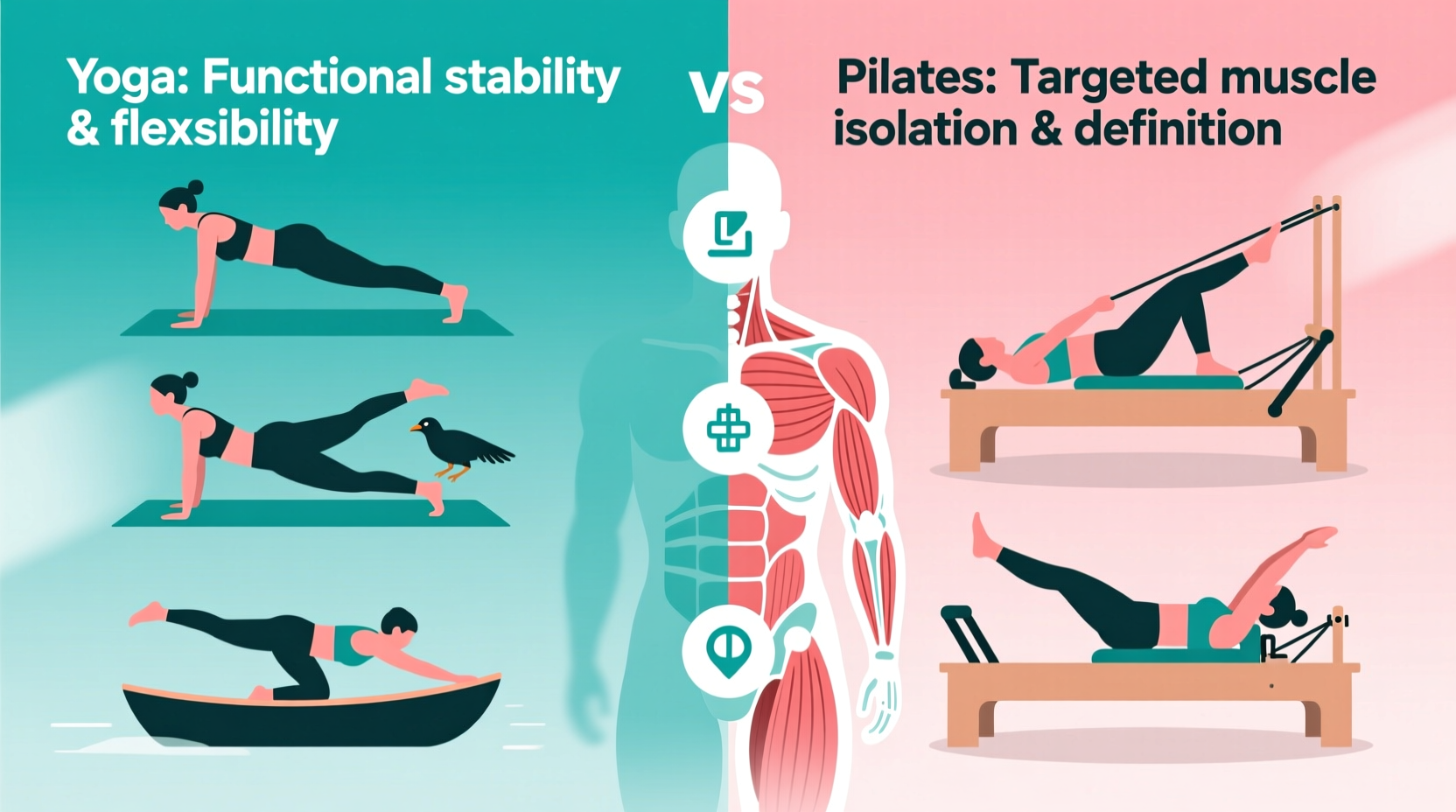
Yoga is an ancient practice rooted in breath, alignment, and mindfulness. While often associated with flexibility and relaxation, many yoga styles intensely engage the core. Poses like Plank, Boat (Navasana), Side Plank (Vasisthasana), and various arm balances require significant abdominal activation to maintain balance and form.
In Vinyasa or Power Yoga, transitions between poses—such as moving from Downward Dog to Chaturanga—demand continuous core stabilization. This dynamic engagement strengthens deep abdominal layers over time, particularly the transverse abdominis, which acts like a natural corset around the waist.
However, yoga typically emphasizes isometric contractions—holding a position without movement—over repetitive, targeted ab work. While this builds endurance and stability, it may not provide the same hypertrophic (muscle-building) stimulus as higher-repetition, resistance-based training.
Tip: Focus on engaging your navel toward your spine in every pose to maximize core activation during yoga practice.Styles like Ashtanga, Power Yoga, and Rocket Yoga are more physically demanding and offer greater core challenge than restorative or Yin yoga. Still, even in vigorous classes, the core work is integrated rather than isolated, meaning abs are trained as part of full-body movement.
How Pilates Targets the Abdominals
Pilates, developed by Joseph Pilates in the early 20th century, was designed specifically to strengthen the core—the “powerhouse” of the body. Unlike yoga, Pilates places deliberate, repeated emphasis on abdominal contraction, spinal articulation, and pelvic control.
Exercises such as the Hundred, Roll-Up, Teaser, and Single Leg Stretch are explicitly designed to target the rectus abdominis and obliques with controlled, precise movements. These exercises often involve concentric and eccentric muscle actions—shortening and lengthening under tension—which are more effective for building muscle definition.
Pilates also emphasizes \"scooping\" the abdominal wall inward, a technique that activates the deep transverse abdominis before any limb movement occurs. This pre-engagement trains neuromuscular control, making the core more responsive in daily activities and athletic performance.
With both mat and reformer variations, Pilates allows for progressive overload—adding resistance via springs or body positioning—making it easier to increase intensity over time. This scalability gives Pilates an edge in delivering measurable strength gains and visible toning, especially in the abdominal region.
“Pilates is unmatched when it comes to isolating and strengthening the deep core muscles. It’s not just about looking good—it’s about creating a foundation for all movement.” — Dr. Lindsey Lusson, Physical Therapist and Movement Specialist
Direct Comparison: Yoga vs Pilates for Abs
To evaluate which practice tones abs faster, consider the following factors:
| Factor | Yoga | Pilates |
|---|---|---|
| Core Activation Frequency | Moderate; integrated into poses and transitions | High; central focus of nearly every exercise |
| Type of Contraction | Primarily isometric (static holds) | Dynamic (concentric/eccentric) and isometric |
| Muscle Isolation | Low; core works as part of whole-body integration | High; specific exercises target abs directly |
| Progressive Overload Potential | Limited in traditional forms | High, especially with reformer equipment |
| Visible Toning Speed | Slower; gradual definition with consistent practice | Faster; noticeable changes in 4–8 weeks with regular sessions |
| Beginner Accessibility | High; many modifications available | Moderate; requires attention to precision and form |
The data suggests that while yoga supports core health and functional strength, Pilates offers a more direct, repeatable pathway to abdominal toning due to its focused, repetitive, and progressive nature.
Real-World Example: A 6-Week Transformation
Samantha, a 34-year-old office worker, wanted to strengthen her core after years of lower back discomfort and post-pregnancy weakness. She committed to three weekly workouts for six weeks, alternating between yoga and Pilates.
For the first three weeks, she practiced Vinyasa yoga three times a week. She noticed improved posture and endurance but minimal change in abdominal definition. In weeks four through six, she switched to mat Pilates using a guided program emphasizing core-centric sequences.
By week six, Samantha reported not only reduced back pain but also visible tightening of her waistline. Her clothes fit better, and she could perform full sit-ups for the first time in years. While she still valued yoga for stress relief, she credited Pilates with delivering faster, more tangible results in core toning.
Her experience reflects a common trend: individuals seeking aesthetic improvements in abdominal appearance often see quicker progress with Pilates due to its targeted approach.
Action Plan: How to Maximize Core Results
Whether you choose yoga, Pilates, or a blend of both, success depends on consistency, technique, and complementary lifestyle habits. Follow this step-by-step guide to accelerate core development:
- Choose the Right Style: For faster ab toning, prioritize Power Yoga or Ashtanga over gentle forms. With Pilates, start with mat classes focused on the “hundred” series and roll-ups.
- Practice 3–5 Times Per Week: Consistency trumps intensity. Even 20-minute daily sessions yield better results than sporadic hour-long classes.
- Engage Your Transverse Abdominis: Draw your lower belly inward (like zipping up a tight pair of jeans) before initiating any movement. This activates the deep core layer crucial for flattening the abdomen.
- Incorporate Progressive Challenges: Add resistance bands to Pilates moves or try advanced yoga arm balances to increase demand on the core.
- Pair with Nutrition: No amount of exercise will reveal abs without a balanced diet. Reduce processed sugars, manage portion sizes, and prioritize protein to support muscle growth and fat loss.
- Track Progress Beyond the Mirror: Measure improvements in endurance (e.g., holding Plank longer), reduced back pain, or improved breathing control—not just visual changes.
Frequently Asked Questions
Can yoga give you visible abs?
Yes, but slowly. Vigorous styles like Power Yoga can build abdominal endurance and contribute to muscle tone, especially when combined with a healthy diet. However, because yoga doesn’t isolate the abs as frequently or intensely as Pilates, visible definition may take several months of consistent practice.
Is Pilates better than crunches for abs?
In most cases, yes. Traditional crunches primarily work the upper rectus abdominis and can strain the neck and lower back. Pilates integrates the entire core, promotes spinal health, and engages deeper muscles like the transverse abdominis, leading to more balanced, functional strength and safer progression.
Can I do both yoga and Pilates?
Absolutely—and many fitness experts recommend it. Pilates builds strength and precision, while yoga enhances flexibility, breath control, and mental focus. Together, they create a well-rounded fitness regimen that supports long-term core health and overall wellness.
Final Verdict: Which Tones Abs Faster?
If your primary goal is to tone your abs and see visible changes in your midsection within weeks, Pilates has the clear advantage. Its systematic, repetitive focus on abdominal contraction, combined with opportunities for resistance and progression, makes it more effective for rapid core sculpting.
Yoga, on the other hand, excels in building foundational core stability, improving posture, and supporting holistic well-being. While it contributes to core strength, it does so as part of a broader physical and mental practice—ideal for long-term health, but less targeted for quick aesthetic results.
The smartest approach? Use Pilates as your core-toning engine and yoga as your recovery and mobility companion. This hybrid strategy leverages the strengths of both disciplines: speed of results from Pilates, balance and sustainability from yoga.
“You don’t have to choose between yoga and Pilates. Think of them as complementary tools. Pilates shapes the core; yoga protects it.” — Carlos Mendez, Certified Pilates & Yoga Instructor
Take Action Today
Don’t wait for the “perfect” routine to begin transforming your core. Start with just 15 minutes of targeted Pilates abdominal work three times this week. Focus on quality over quantity—engage deeply, move slowly, breathe fully. Pair it with mindful eating and track your progress weekly.
Share your journey in the comments below: Are you team yoga, team Pilates, or blending both? Your experience could inspire someone else to finally commit to a stronger, healthier core.
💬 Ready to sculpt your core? Try a 10-minute Pilates ab circuit tonight and feel the burn. Drop a comment with your favorite move!








