
The early 2000s are having a cultural moment. From low-rise jeans to butterfly clips, fashion cycles have brought back a wave of nostalgia that many label as “Y2K.” But as velour tracksuits, bedazzled denim, and matching two-piece sportswear sets reappear on runways and TikTok feeds, a critical question emerges: Are we genuinely experiencing a revival of Y2K fashion, or are we conflating it with contemporary athleisure? The lines between nostalgic throwbacks and modern comfortwear have blurred, and understanding the distinction matters—not just for style accuracy, but for how we interpret cultural memory through clothing.
Defining the Eras: Y2K Sportswear vs. Modern Athleisure
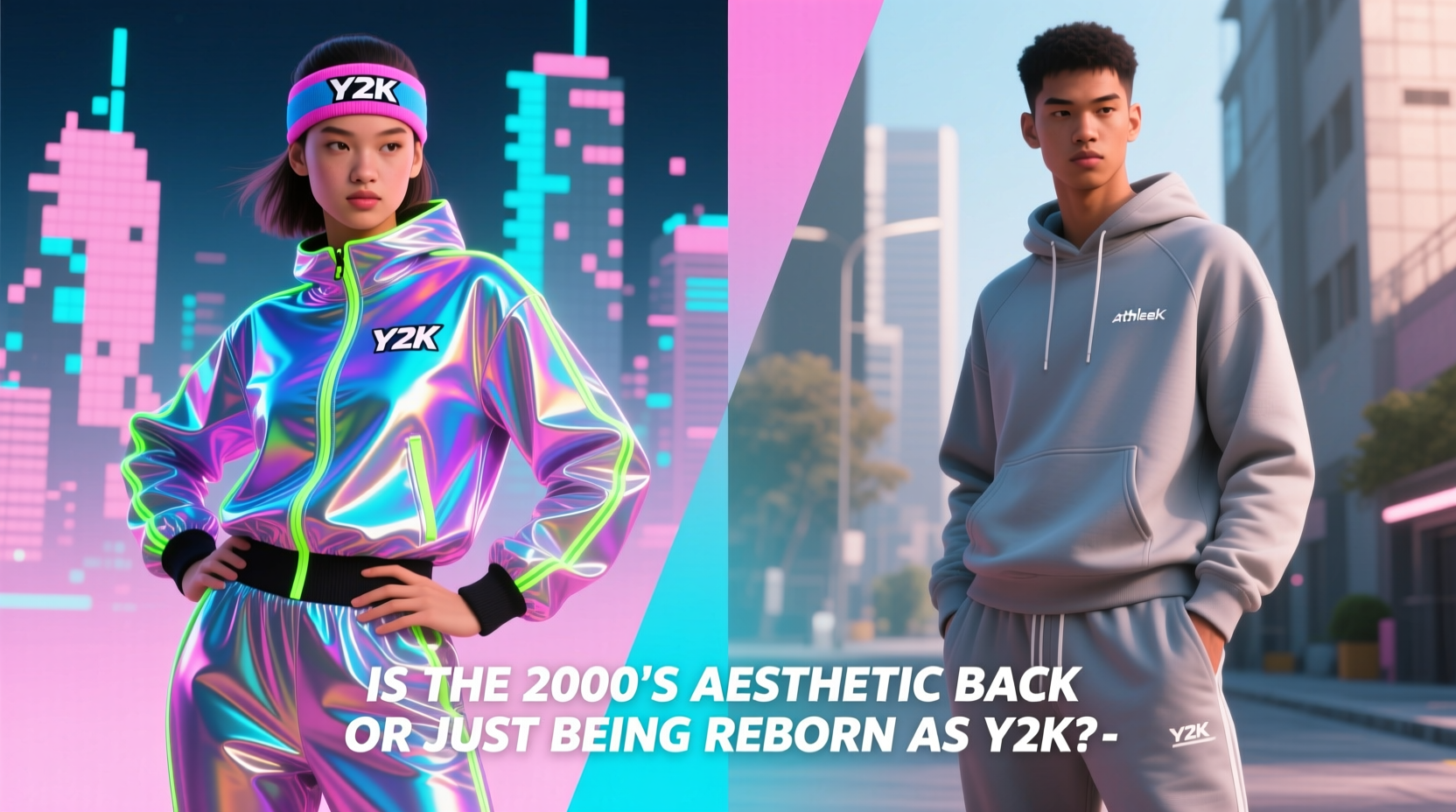
At first glance, a Juicy Couture-inspired velour set and an Lululemon matching hoodie-and-legging combo might look similar—both are coordinated, comfortable, and often worn outside the gym. But their origins, intentions, and cultural contexts differ significantly.
Y2K sportswear, dominant from roughly 1997 to 2005, was rooted in celebrity culture, luxury branding, and conspicuous consumption. Think Paris Hilton stepping out of a Bentley in a pink velour tracksuit, Britney Spears in rhinestone-studded crop tops paired with cargo pants, or Destiny’s Child in coordinated metallic ensembles. These looks were aspirational, flashy, and designed to be seen. Functionality wasn’t the goal; visibility was.
In contrast, modern athleisure emerged in the 2010s as a response to changing lifestyles—remote work, fitness culture, and a demand for versatility. Brands like Athleta, Alo Yoga, and Outdoor Voices built identities around performance fabrics, minimalism, and wellness. The aesthetic prioritizes comfort, mobility, and subtle branding. It's less about being seen and more about feeling capable.
Tip: When identifying true Y2K pieces, look for overt logos, synthetic shine (like patent finishes), and exaggerated silhouettes—hallmarks of early 2000s branding excess.A Cultural Shift in Fashion Values
The return of Y2K elements isn't just about aesthetics—it reflects broader societal shifts. In the early 2000s, optimism about technology, globalization, and consumerism fueled bold, futuristic designs. Metallics, holographic fabrics, and logo-heavy apparel mirrored a belief in progress and personal branding.
Today’s reinterpretation of Y2K style, however, exists in a post-pandemic world where authenticity, sustainability, and mental health awareness shape fashion choices. Many so-called “Y2K revivals” are actually minimalist takes on 2000s staples—think low-rise jeans without the bedazzling, or cropped hoodies made from organic cotton. The irony is palpable: we’re wearing the shapes of the past but stripping them of their original context.
“Nostalgia sells, but it rarely reconstructs. What we call ‘Y2K’ today is often a sanitized version of a much louder, more chaotic era.” — Dr. Lena Tran, Cultural Historian & Fashion Scholar
Key Differences: A Visual and Functional Breakdown
| Feature | Y2K Sportswear Sets | Modern Athleisure Outfits |
|---|---|---|
| Fabric | Polyester, velour, shiny synthetics | Moving moisture-wicking blends, recycled nylon, organic cotton |
| Branding | Large logos, visible labels (e.g., Juicy, Ed Hardy) | Subtle or no branding; focus on cut and drape |
| Silhouette | Baggy tops, low-rise bottoms, asymmetrical cuts | Tapered leggings, oversized but structured tops |
| Occasion | Worn as streetwear, clubbing, celebrity outings | Work-from-home, yoga, errands, casual meetings |
| Cultural Message | Wealth, glamour, youth culture | Wellness, balance, understated confidence |
This table highlights a fundamental truth: while both categories involve coordinated separates, their purposes diverge. Y2K was performative; athleisure is pragmatic. One celebrated excess, the other champions efficiency.
Are We Mislabeling Athleisure as Y2K?
Scroll through Instagram or TikTok, and you’ll see creators tagging basic black leggings and zip-up hoodies as “Y2K core.” This broad categorization risks flattening fashion history. Not every two-piece set from the 2020s qualifies as a Y2K revival. True Y2K sportswear was defined by its audacity—its embrace of plastic aesthetics, pop futurism, and hyper-feminine or hyper-masculine tropes.
Consider this: a 2003 Baby Phat ensemble often included a cropped jersey top, wide-leg denim, stiletto boots, and multiple gold chains. Compare that to a 2024 athleisure look: neutral-toned bike shorts, a relaxed tank, and chunky sneakers. Same decade inspiration? Perhaps. Same cultural DNA? Unlikely.
The confusion stems partly from generational distance. Millennials lived through Y2K; Gen Z is curating it from archives, music videos, and social media snippets. For younger audiences, any pre-2010 trend becomes “Y2K,” regardless of nuance. This retroactive labeling simplifies complex fashion evolution into digestible aesthetics.
Mini Case Study: The Velour Tracksuit’s Journey
In 2002, Juicy Couture sold $150 million in velour tracksuits. They were status symbols, endorsed by celebrities and worn unironically at premieres. Fast forward to 2022: Kim Kardashian re-released a capsule collection with Juicy, marketing it as a “nostalgic throwback.” While sales spiked, the context had shifted. Today’s buyers aren’t chasing exclusivity—they’re buying for nostalgia, often pairing the suits with white sneakers and minimal makeup, a far cry from the full glam looks of the original era.
This case illustrates how the same garment can symbolize different values across time. The fabric hasn’t changed, but the meaning has.
How to Wear Y2K Authentically (Without Falling Into Trend Traps)
If you're drawn to Y2K fashion, consider these steps to honor its spirit rather than dilute it:
- Research the era: Watch music videos from 2000–2005, study red carpet looks, and note how styling differed by region and subculture.
- Embrace exaggeration: True Y2K wasn’t subtle. If you’re wearing a crop top, pair it with low-slung cargos and a trucker hat tilted just so.
- Play with texture: Mix patent leather, metallic foil, and sheer mesh—materials that screamed “future” at the time.
- Avoid clean-minimalist pairings: Don’t wear a baby blue tracksuit with beige linen loafers. That’s not Y2K—it’s normcore borrowing shapes.
- Own the irony: Y2K fashion was often kitschy. Lean into that. Confidence sells the look more than authenticity ever could.
Checklist: Is Your “Y2K” Look Actually Y2K?
- ✅ Does it feature prominent logos or brand repetition?
- ✅ Is the fabric shiny, plush, or intentionally “cheap-looking”?
- ✅ Are the fits exaggerated (extra baggy or tightly cropped)?
- ✅ Would it look out of place in a yoga studio?
- ✅ Does it reference pop culture icons of the early 2000s (e.g., *The Simple Life*, MTV VMAs)?
If most answers are “no,” you’re likely wearing elevated athleisure—not a Y2K revival.
FAQ
Is athleisure just a rebranded version of Y2K sportswear?
No. While both involve matching sets, athleisure prioritizes function, fabric innovation, and subtlety. Y2K sportswear was about image, branding, and spectacle. They share visual DNA but serve different cultural roles.
Can I mix Y2K and athleisure styles?
Absolutely. Fashion thrives on hybridity. Try pairing a vintage Juicy hoodie with modern sculpting leggings. Just be intentional—know which elements are nostalgic and which are practical.
Why does accurate labeling matter in fashion?
Because context shapes meaning. Calling everything “Y2K” erases the unique social, economic, and technological forces that shaped early 2000s style. Precision helps us understand fashion as history, not just trend recycling.
Conclusion: Honoring the Past Without Mistaking It for the Present
The 2000s aesthetic isn’t simply “back”—it’s being reinterpreted. What we see today is less a resurrection and more a remix. True Y2K fashion was brash, unapologetic, and deeply tied to its moment. Modern athleisure, though visually adjacent, responds to different needs: comfort, sustainability, and emotional well-being.
Calling every matching set “Y2K” risks turning rich fashion history into a meme. Instead, let’s celebrate the specificity of each era. Whether you’re digging out old Von Dutch hats or investing in high-performance leggings, do it with awareness. Know why you’re wearing it, what it represents, and how it connects—or doesn’t—to the past.
💬 What do you think—is Y2K truly back, or are we just renaming comfortwear? Share your thoughts and favorite 2000s looks in the comments.








