When it comes to securing your keys, the choice between a woven rope keychain and a carabiner keychain might seem minor. But over time, this small decision impacts convenience, durability, and even safety. Whether you're an outdoor enthusiast, a minimalist urban commuter, or someone who values both function and style, understanding the strengths and weaknesses of each option can help you make a smarter long-term choice. This article breaks down both types in terms of construction, longevity, ease of use, and practical applications—so you can pick the right tool for your daily carry.
Material Composition and Build Quality
The foundation of any durable keychain lies in its materials and how they’re assembled. Woven rope keychains are typically made from high-tensile synthetic fibers like paracord, Dyneema, or nylon. These cords are tightly braided or twisted into a dense, flexible structure that resists fraying and stretching. The weaving process itself adds strength by distributing load across multiple strands, making the rope highly resistant to breaking under tension.
Carabiner keychains, on the other hand, are usually forged from aluminum, stainless steel, or titanium. Their strength depends heavily on the alloy used and whether they are cold-forged or cast. Most consumer-grade carabiners are rated for several kilonewtons of force—more than enough to handle everyday keyring stress. However, not all carabiners are created equal; cheaper models may use hollow gates or lower-grade metals that compromise durability.
Tip: Look for carabiners marked with a \"CE\" or \"UIAA\" rating—they meet international safety standards for climbing gear and offer superior reliability.Durability Comparison: Which Lasts Longer?
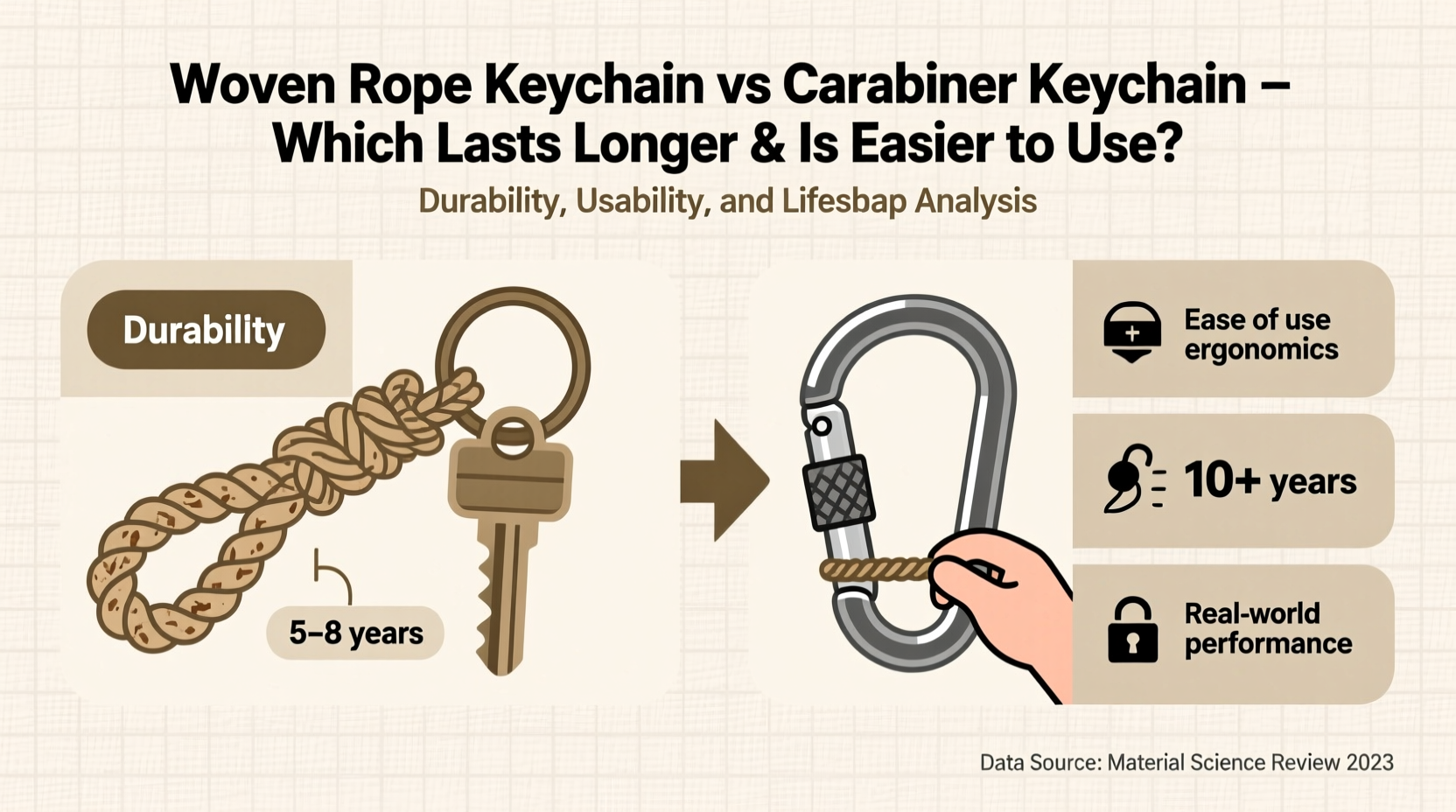
Longevity is where these two keychain types diverge significantly. A well-made woven rope keychain can last 5–10 years with regular use, especially if it’s made from abrasion-resistant materials like marine-grade polyester or coated nylon. Rope doesn’t corrode, rust, or suffer from metal fatigue. It also handles exposure to water, sand, and UV light better than many metals—though prolonged sun exposure can degrade some synthetics over time.
Carabiners, while strong, face different wear patterns. The moving parts—the gate mechanism and hinge—can accumulate dirt, grit, or moisture, leading to corrosion or stiff operation. Stainless steel versions resist rust but are heavier; aluminum ones are lightweight but more prone to scratches and gate wear. In field tests conducted by outdoor gear reviewers, budget carabiners began showing gate wobble after 18–24 months of daily use, reducing their structural integrity.
“Rope-based systems outperform metal clips in corrosive environments. Saltwater, humidity, and sand accelerate metal degradation—rope remains resilient.” — Dr. Lena Torres, Materials Engineer at Outdoor Gear Labs
Usability and Convenience in Daily Life
Ease of use is often overlooked until you’re fumbling with keys at night or trying to clip something quickly. Carabiners excel in quick attachment scenarios. Need to hang your keys on a backpack loop, belt D-ring, or bike frame? A simple flick of the gate does the job instantly. This makes them ideal for hikers, climbers, EDC (everyday carry) enthusiasts, and anyone who frequently attaches/detaches gear.
Woven rope keychains require a bit more effort. They usually attach via a lanyard loop or sliding knot system. While slower to connect than a carabiner, they offer greater customization. Some users tie intricate knots like the diamond knot or monkey fist for grip and aesthetics. Others appreciate the soft feel in hand compared to cold metal. However, removing individual keys can be trickier since the ring isn't always directly accessible.
| Feature | Woven Rope Keychain | Carabiner Keychain |
|---|---|---|
| Lifespan (average) | 5–10 years | 3–7 years |
| Water Resistance | Excellent (synthetic fibers) | Good (stainless), Poor (aluminum) |
| Attachment Speed | Moderate | Fast |
| Weight | Light | Light to Medium |
| Key Access | Sometimes limited | Direct and easy |
| Rust/Corrosion Risk | None | Yes, depending on material |
Real-World Use Case: Urban Commuter vs. Outdoor Adventurer
Consider two users: Maya, a city-dwelling office worker who walks to work and occasionally travels, and Jordan, a weekend backpacker who hikes coastal trails and camps in humid forests.
Maya prefers her woven rope keychain because it feels comfortable in her pocket, doesn’t clink against her phone or wallet, and matches her minimalist aesthetic. She rarely needs to detach her keys, so the slightly slower access isn’t an issue. After three years of use, her paracord lanyard shows minimal wear—just slight fading from sunlight.
Jordan uses a stainless steel carabiner clipped to his belt loop. On trail runs, he quickly detaches his keys to stash them in a dry bag or attach to a rescue whistle. But after two seasons of salt spray and muddy conditions, he notices grit buildup in the gate. He replaces it annually as part of his gear maintenance routine. If he spent more time near oceans, he’d likely switch to a rope-based system to avoid corrosion.
Tip: Rotate your keychain seasonally—use a carabiner in dry climates and a rope lanyard near coasts or during winter when road salts accelerate metal corrosion.Step-by-Step Guide: Choosing the Right Keychain for Your Lifestyle
- Assess your environment: Do you live near the ocean, ride a bike daily, or walk through rainy areas? High moisture = favor rope.
- Evaluate attachment frequency: If you regularly clip/unclip keys, a carabiner saves time and effort.
- Check key weight: Heavy key rings (over 5 oz) stress carabiner gates. Opt for reinforced models or distribute weight with a rope lanyard.
- Test comfort: Carry both types for a week. Does metal dig into your leg? Does rope tangle easily?
- Review replacement history: How often have past keychains failed? Frequent breakage suggests upgrading material quality.
Common Pitfalls to Avoid
- Using climbing-rated carabiners solely for keys: Overkill and expensive. Save those for actual climbing.
- Tying knots that jam: Some decorative knots become impossible to untie after loading. Stick to proven designs like the double fisherman’s bend.
- Ignoring gate wear: A loose or sticky carabiner gate is a failure waiting to happen. Replace it before it opens unexpectedly.
- Choosing cotton rope: Natural fibers absorb water, rot, and weaken. Always go for synthetic braided cord.
Frequently Asked Questions
Can I combine a woven rope with a carabiner?
Absolutely. Many users attach a small carabiner to the end of a rope lanyard. This gives you the comfort and style of rope with the quick-attach functionality of a clip. Just ensure the connection point (knot or shackle) is secure and regularly inspected.
Are woven rope keychains safe for heavy keys?
Yes—if made from high-strength fiber. Paracord has a minimum tensile strength of 550 lbs. Even with knots reducing that by 40–50%, it still far exceeds the weight of typical key sets. For extra assurance, choose triple-braided or Dyneema-core ropes.
Do carabiners wear out my keys?
Possibly. The metal-on-metal contact between a carabiner and key rings can cause scratching or rounding of edges over time. This won’t affect function but may reduce resale value for collectible keys. Rope eliminates this friction entirely.
Final Recommendation: Match Function to Lifestyle
If maximum durability and resistance to environmental damage are your priorities, a high-quality woven rope keychain is likely the better long-term investment. It won’t corrode, weighs less, and maintains performance across diverse conditions. For those who value speed, mechanical reliability, and frequent reattachment, a well-built stainless steel carabiner offers unmatched convenience—provided you maintain it and replace it before signs of wear appear.
Ultimately, the longest-lasting keychain isn’t just about material—it’s about fit. The best design minimizes user frustration, withstands your specific conditions, and integrates seamlessly into your routine. Some people even keep both: a sleek rope lanyard for daily carry and a rugged carabiner reserved for outdoor adventures.
💬 What’s your go-to keychain? Have you switched from carabiner to rope—or vice versa—after a failure or insight? Share your experience and help others find their perfect match!








