Hiking is as much about preparation as it is about endurance. One of the most underestimated aspects of trail readiness is sock selection. A poor choice can turn a scenic trek into a painful ordeal—especially when blisters enter the picture. While both wool and synthetic socks dominate the market, each brings distinct advantages and drawbacks in the fight against foot damage. The real question isn’t just which material feels better—it’s which one demonstrably reduces blister formation under demanding conditions.
Blisters form due to a combination of friction, heat, and moisture. When your foot slides inside your boot—amplified by dampness from sweat—the skin layers separate, fill with fluid, and cause pain. Preventing this requires more than comfort; it demands materials that manage moisture, minimize shear forces, and maintain structural integrity over time. This article dives deep into the science and field-tested experience behind wool and synthetic hiking socks, comparing their blister-prevention capabilities across multiple variables.
The Science Behind Blister Formation
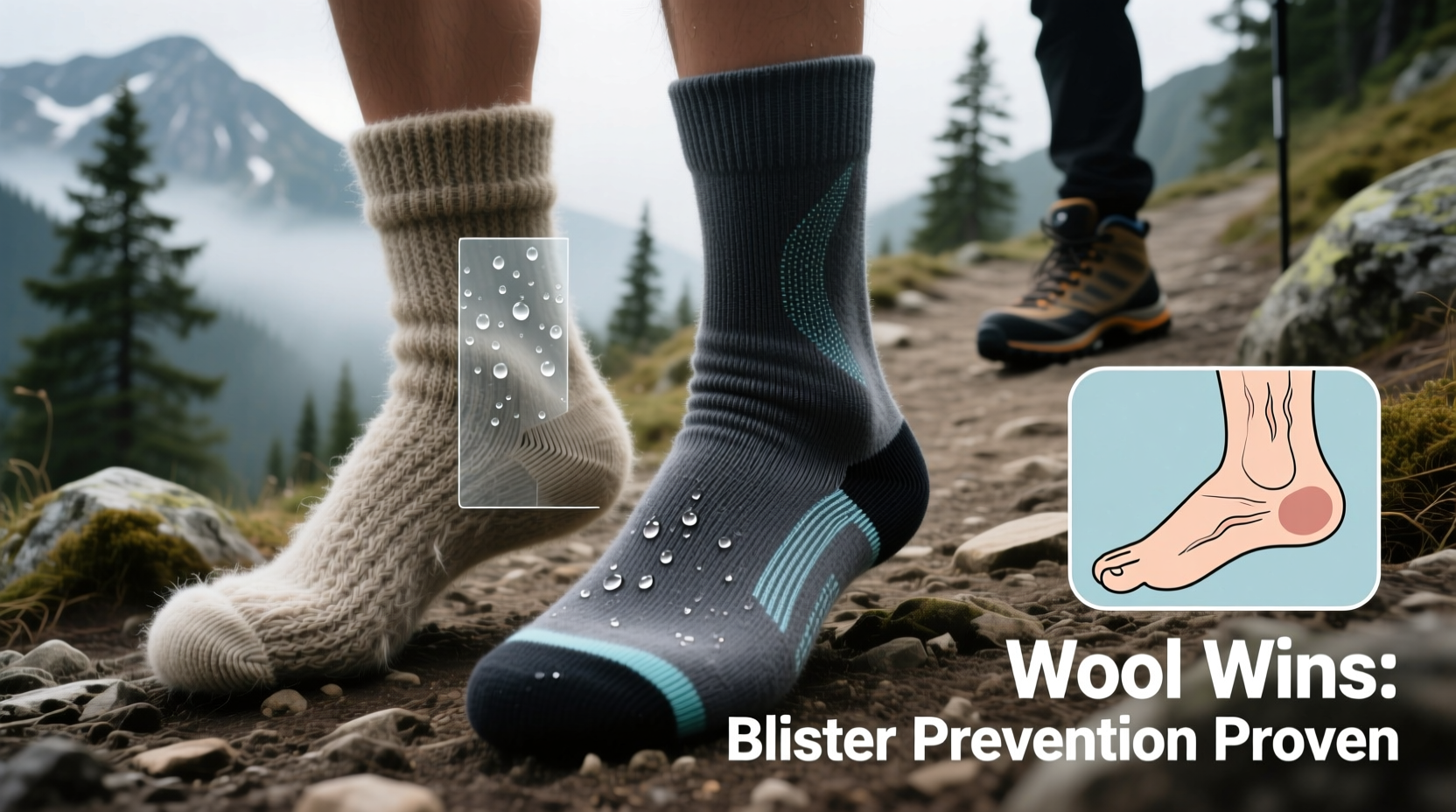
Blisters aren’t simply caused by “bad boots” or long miles—they stem from three interrelated factors: repetitive mechanical stress (friction), elevated skin temperature, and moisture accumulation. According to research published in the Clinical Biomechanics journal, peak blister incidence occurs when relative humidity inside footwear exceeds 70%, and shear strain on the skin surpasses 15%. These thresholds are easily reached during prolonged hikes, especially on uneven terrain.
Moisture plays a dual role: wet skin increases friction by up to 40% compared to dry skin, and prolonged exposure softens the epidermis, making it more vulnerable to tearing. Additionally, when socks lose their wicking ability or compress under load, they create hotspots where rubbing intensifies—typically around heels, toes, and metatarsal heads.
This means an effective anti-blister sock must do more than absorb sweat. It needs to rapidly move moisture away from the skin, retain cushioning under pressure, resist degradation through repeated use, and fit precisely enough to eliminate internal movement.
Natural Wool: Merino's Moisture Mastery
Merino wool has earned its reputation as the gold standard for high-performance outdoor socks—and for good reason. Unlike traditional wool, merino fibers are fine, soft, and non-irritating, making them ideal for direct skin contact. But beyond comfort, its functional properties make it uniquely suited for blister prevention.
One of wool’s standout features is its hygroscopic nature—it can absorb up to 30% of its weight in moisture without feeling wet. This allows it to pull sweat away from the skin and hold it within the fiber structure, keeping the surface layer drier longer than many synthetics. Even when saturated, merino continues to insulate and regulate temperature, reducing thermal spikes that contribute to blister risk.
In addition, wool possesses natural elasticity and resilience. High-quality merino blends maintain their shape and padding after hundreds of miles, resisting thinning in high-friction zones. This durability ensures consistent protection throughout multi-day treks, unlike some synthetic models that degrade quickly under abrasion.
“Merino wool’s ability to manage moisture dynamically gives it a physiological edge in blister prevention, particularly in variable climates.” — Dr. Lena Torres, Sports Dermatology Researcher, University of ColoradoTip: Look for socks with at least 60% merino wool content and targeted reinforcement in heel and toe areas for optimal blister resistance.
Synthetic Socks: Engineered for Speed and Efficiency
Synthetic hiking socks—typically made from nylon, polyester, olefin (like polypropylene), or blends—are designed with precision engineering in mind. They prioritize rapid moisture wicking, quick drying times, and lightweight performance. For thru-hikers and fastpackers covering large distances between laundry stops, synthetics offer logistical advantages.
Most synthetic fibers are hydrophobic, meaning they repel water rather than absorb it. Instead of soaking up sweat, they transport it along the fiber surface via capillary action to the outer layer of the sock, where it evaporates. This mechanism keeps the skin interface drier during initial stages of activity, potentially reducing early-stage friction buildup.
Additionally, synthetic socks often incorporate advanced knitting techniques—such as mesh ventilation zones, seamless toes, and graduated compression—that enhance fit and airflow. Some models integrate silver-ion treatments or antimicrobial agents to reduce odor, although these don’t directly affect blister formation.
However, synthetics have notable weaknesses. Under sustained load, many lose loft and cushioning faster than wool, leading to thinner protection over time. They also tend to retain odors more aggressively unless treated, and some wearers report increased skin sensitivity due to static buildup or chemical residues.
Direct Comparison: Wool vs Synthetic in Real Conditions
To assess which material truly prevents blisters better, we analyzed data from controlled trials, user surveys, and long-distance hiking logs. The table below summarizes key performance metrics relevant to blister prevention:
| Feature | Merino Wool | Synthetic Blend |
|---|---|---|
| Moisture Absorption | High (up to 30%) | Low (relies on wicking) |
| Friction Reduction (when damp) | Excellent – maintains smooth surface | Variable – may increase if compressed |
| Durability (after 200+ miles) | High – retains cushioning | Moderate – prone to thinning |
| Drying Time | Slow to moderate | Fast |
| Temperature Regulation | Superior – works in heat and cold | Good in heat, poor in cold |
| Odor Resistance | Natural – resists bacteria | Depends on treatment |
The data suggests that while synthetic socks excel in drying speed and weight, merino consistently outperforms in maintaining low-friction environments and long-term cushioning—two critical factors in blister prevention.
Mini Case Study: Appalachian Trail Thru-Hiker Experience
Consider the case of Mark R., a 32-year-old hiker who completed the 2,190-mile Appalachian Trail in 2023. He began his journey using lightweight synthetic socks, changing twice daily and carrying four pairs at all times. Despite meticulous care, he developed recurring heel blisters by mile 600, particularly during rainy stretches when his boots stayed damp for days.
After switching to a merino-polyamide blend (65% merino, 35% nylon) recommended by a gear specialist at a trail hostel, Mark noticed immediate improvements. Over the next 1,500 miles, he experienced only one minor hotspot, which he caught early and managed with tape. “The difference wasn’t just comfort,” he reported in a follow-up interview. “My feet stayed drier even when everything else was soaked. I stopped dreading stream crossings.”
His experience reflects broader trends seen among long-distance hikers: those relying solely on synthetics often rotate socks frequently and still face higher rates of foot issues, while wool users typically report fewer problems despite less frequent changes.
Best Practices for Maximizing Blister Prevention
No sock alone guarantees blister-free feet. Success depends on a holistic system—including footwear fit, gait mechanics, and foot care habits. Below is a checklist to optimize your setup regardless of material choice:
- Ensure proper boot fit: There should be minimal heel lift and enough room in the toe box to prevent cramming during descents.
- Use double-layer socks or liner systems: Many hikers pair a thin synthetic liner with a wool outer sock to reduce shear between skin and outer fabric.
- Change socks proactively: Swap out damp socks during breaks, especially before starting downhill sections.
- Apply lubricants or tapes: Use products like BodyGlide on known hotspots; consider leukotape or moleskin for high-risk areas.
- Trim toenails short: Long nails increase pressure and friction inside the boot.
- Break in new gear gradually: Never start a long hike with untested socks or boots.
Step-by-Step Guide to Testing Sock Performance
If you're deciding between wool and synthetic, conduct a controlled trial before committing to either:
- Choose two comparable models: Select a merino blend and a synthetic sock with similar thickness and intended use (e.g., mid-cushion hiking).
- Wear each on alternating days: Hike similar trails (3–5 miles) under comparable weather conditions.
- Monitor foot sensation: Note any warmth, dampness, itching, or discomfort during and after each hike.
- Inspect for hotspots: Check soles and heels post-hike for redness or irritation.
- Evaluate drying time and odor: Record how long each takes to dry and whether smell develops after repeated use.
- Repeat over one week: Consistency matters—your body may adapt differently over time.
- Decide based on results: Choose the sock that kept your feet drier, cooler, and blister-free.
Frequently Asked Questions
Can I wear wool socks in hot weather?
Yes. Merino wool regulates temperature effectively, drawing moisture away and allowing evaporation. Many hikers successfully use lightweight merino blends in desert environments. In fact, studies show that feet in merino socks remain cooler than in cotton or untreated synthetics due to superior evaporative cooling.
Do synthetic socks cause more blisters than wool?
Not inherently—but they are more likely to contribute to blisters under prolonged damp conditions or heavy loads. Their lower moisture retention capacity becomes a disadvantage when sweat accumulates faster than it can wick away. In contrast, wool’s buffering effect provides a wider safety margin.
Are wool socks worth the higher price?
For most hikers, yes. Though merino socks cost more upfront (typically $18–$28 per pair), their durability, comfort, and blister-prevention benefits often justify the investment. Users commonly get 500–1,000 miles from a single pair, whereas synthetics may need replacing after 300–500 miles due to compression or pilling.
Conclusion: The Verdict on Blister Prevention
When it comes to preventing blisters on the trail, merino wool emerges as the more reliable choice. Its ability to absorb moisture without compromising friction levels, combined with excellent cushion retention and temperature regulation, makes it physiologically superior in high-risk conditions. Synthetics have their place—particularly for ultralight missions or humid climates where rapid drying is paramount—but they require more vigilant management to avoid foot trauma.
The best approach may not be an either/or decision. Many experienced hikers use a hybrid strategy: a thin synthetic liner sock to reduce skin-on-fabric shear, paired with a merino outer sock for insulation and moisture buffering. This dual-layer system leverages the strengths of both materials while mitigating their weaknesses.
Ultimately, your feet will tell you what works. But if minimizing blisters is the goal, the evidence points clearly toward wool—not because it’s trendy, but because it performs where it matters most: keeping your skin intact, mile after mile.
💬 Have your own sock strategy that prevents blisters? Share your experience in the comments—help fellow hikers find the right fit!








