For runners and athletes, staying focused on the workout means minimizing distractions—including gear that slips, shifts, or fails mid-stride. One of the most common dilemmas is choosing between wireless earbuds and audio-equipped sports headbands. Both promise hands-free music and motivation, but when it comes to staying securely in place during intense movement, they differ significantly. The decision isn’t just about sound quality or convenience; it’s about reliability under motion, sweat, and environmental stress. This article dives deep into the stability, design, and real-world usability of both options, helping you choose what truly stays put when your pace picks up.
Understanding the Core Differences
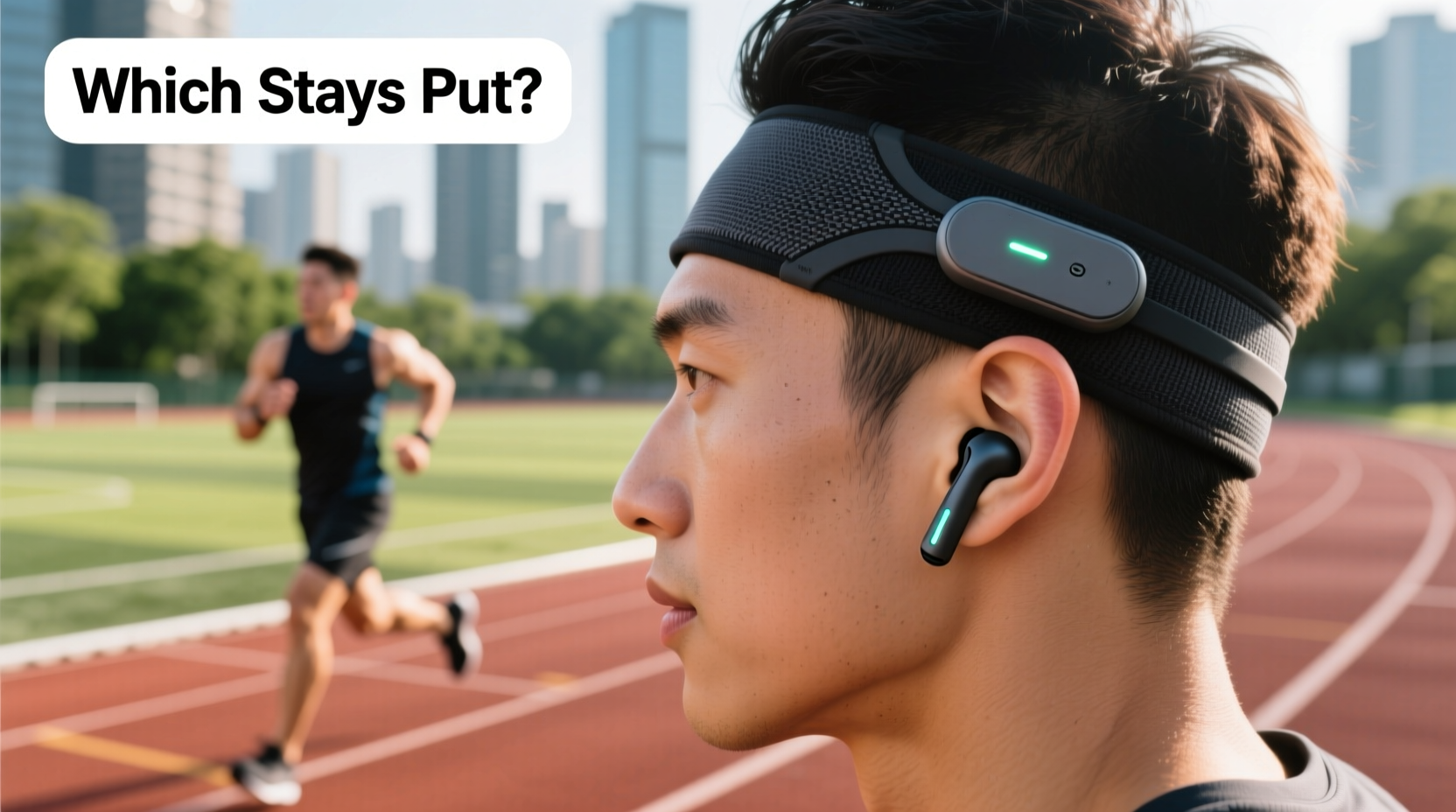
At first glance, wireless earbuds and sports headbands with built-in audio serve the same purpose: delivering music, podcasts, or coaching cues without wires. But their structural approach to achieving this goal sets them apart fundamentally.
Wireless earbuds are compact audio devices inserted into or over the ear canal. They rely on ergonomic design, ear tips, wings, or fins to maintain grip during movement. In contrast, sports headbands with speakers are fabric-based bands worn around the head, typically made from moisture-wicking material, with small speakers embedded near the ears. These do not go inside the ear canal—sound travels through the air or via bone conduction technology.
The key difference in staying in place lies in anchoring mechanism. Earbuds depend on friction and anatomical fit within the ear, while headbands use circumferential tension around the skull. Each has strengths and weaknesses depending on head shape, sweat levels, and activity intensity.
Tip: If you have smaller ear canals or sensitive ears, traditional earbuds may dislodge more easily—consider hybrid models with stabilizing fins.Stability During Movement: A Comparative Breakdown
Motion creates dynamic forces—vertical bounce, lateral sway, and rotational shifts—that challenge any wearable device. How each type handles these forces determines its staying power.
Wireless Earbuds: Precision Fit, But Fragile Balance
High-performance running earbuds often feature multiple ear tip sizes, wingtips, or hook-style stabilizers. Brands like Shokz (using bone conduction), Jabra Elite Active 75t, and Powerbeats Pro have engineered models specifically for athletes. These include:
- Ear gels with memory foam for custom fit
- Rubberized ear fins that grip the antihelix
- Behind-the-neck or earhook designs for added leverage
Despite these innovations, earbuds remain vulnerable to sudden head turns, heavy breathing, or prolonged sweating. Moisture softens skin and reduces surface friction, increasing slippage risk. Additionally, individual ear anatomy varies widely—what fits snugly for one runner may sit loosely for another.
Sports Headbands: Full-Head Anchoring
Sports headbands distribute pressure evenly across the forehead and back of the head. Made from stretchable, grippy fabrics like silicone-lined polyester or neoprene blends, they resist shifting even during sprints or trail runs. Because they encircle the entire head, they’re less affected by ear shape or sweat buildup behind the ears.
Many models, such as the Zungle Loop or Aftershokz Trekz Air headband variants, integrate open-ear speakers directly into the band. Since the audio source moves with the head, there’s no need for in-ear components to stay fixed independently. This makes headbands inherently more stable in high-motion scenarios.
“Headbands offer superior retention because they function like athletic wear—designed to move *with* the body, not fight against it.” — Dr. Lena Torres, Sports Ergonomics Researcher at Boulder Human Performance Lab
Performance Factors That Influence Stay-Power
Beyond basic design, several factors determine whether your audio gear remains secure mile after mile.
Sweat and Moisture Resistance
Sweat is a primary destabilizer. It lubricates surfaces, softens skin, and can degrade adhesives or rubber grips over time. While most premium earbuds carry IPX4 or higher ratings (resisting splashes and sweat), moisture still compromises mechanical grip.
Headbands, especially those designed for cold-weather running or triathlons, often use hydrophobic inner linings that wick moisture away while maintaining traction. Some even feature micro-grip silicone strips inside the band to prevent slippage on wet skin.
Environmental Conditions
Cold weather can tighten earbud seals slightly due to ear tissue contraction, but icy wind may make thin ear fins brittle. Conversely, hot, humid conditions increase perspiration and reduce friction—challenging both systems.
Headbands perform more consistently across temperatures because fabric elasticity adjusts naturally. In winter, they double as thermal protection; in summer, breathable mesh versions keep the head cool without sacrificing hold.
Long-Term Comfort and Fatigue
Even if a device starts secure, comfort degradation over time affects stability. Earbuds can cause pressure buildup in the ear canal after 30+ minutes, prompting users to adjust or remove them—introducing failure points.
Headbands, when properly sized, exert minimal localized pressure. However, poorly fitted ones may slide down if too loose or cause headaches if overly tight. Proper sizing is critical.
Tip: Test headband fit by shaking your head vigorously side-to-side before heading out—adjust positioning until zero slippage occurs.Direct Comparison: Key Metrics Side-by-Side
| Feature | Wireless Earbuds | Sports Headbands |
|---|---|---|
| Anchoring Mechanism | In-ear grip + optional fins/hooks | Full-head circumferential tension |
| Stability During Sprinting | Good (varies by model) | Excellent |
| Sweat Resistance Impact | Reduces grip over time | Minimal effect with proper lining |
| Noise Isolation | High (especially noise-cancelling) | Low (open-ear design) |
| Awareness of Surroundings | Limited (if sealed) | High (ideal for outdoor safety) |
| Fit Consistency Across Users | Variable (depends on ear anatomy) | More consistent (adjustable bands) |
| Durability in Extreme Conditions | Moderate (electronics exposed) | High (fabric protects components) |
Real-World Case: Marathon Training with Both Options
Jessica M., a recreational marathoner from Portland, tested both solutions during her 16-week training cycle. She began with premium wireless earbuds featuring ear hooks, confident in their advertised \"secure fit.\" By week six, she noticed issues: during tempo runs above 8:00/mile pace, the left bud would shift slightly with each footstrike, requiring frequent readjustment. In rainy long runs, moisture caused complete detachment twice.
She switched to a sports headband with integrated open-ear speakers. Though initially skeptical about sound quality, she found the audio clear enough for coaching cues and music beats. More importantly, the band stayed perfectly positioned throughout all runs—even in pouring rain. “It felt like part of my gear, not something I had to manage,” she said. “I stopped thinking about it, which is exactly what I wanted.”
Her experience reflects a broader trend: while earbuds excel in controlled environments, headbands often win in unpredictable, high-exertion conditions where consistency matters most.
Choosing What Works for Your Routine
The best choice depends on your priorities: pure audio fidelity, situational awareness, ease of use, or unshakable stability.
When to Choose Wireless Earbuds
- You prioritize immersive sound or noise cancellation
- You run primarily indoors or in quiet areas
- You prefer discreet, lightweight audio solutions
- Your ear anatomy accommodates secure-fit models
When to Choose Sports Headbands
- You run outdoors and value environmental awareness
- You sweat heavily or train in extreme weather
- You want one item that manages sweat *and* delivers audio
- You’ve struggled with earbud slippage in the past
Hybrid Option: Bone Conduction Behind-the-Ear Devices
Some products blur the line—like Shokz OpenRun Pro—which sit on the temples rather than inside the ear. These combine elements of both: stable frame-like placement with direct audio transmission. They don’t cover the ear canal, so ambient sound comes through clearly, yet they resist falling out better than traditional buds. For many runners, this represents the ideal middle ground.
Tip: Try bone conduction models if you want ear-free listening with strong stability—ideal for trail runners and commuters alike.Step-by-Step: How to Test Stability Before Buying
- Simulate Motion: Put on the device and shake your head side-to-side and up-and-down vigorously.
- Check Sweat Response: Dampen your ears or forehead lightly and repeat motion tests.
- Jump or Jog in Place: Mimic running impact to see if anything shifts.
- Wear for 20 Minutes: Assess comfort and any urge to adjust positioning.
- Compare Awareness: Note how well you hear traffic, voices, or nature around you.
- Review Controls: Ensure playback buttons or touch controls are accessible while moving.
This evaluation process helps identify potential issues before committing financially or logistically.
FAQ: Common Questions Answered
Can sports headbands damage hair or cause breakage?
Most modern athletic headbands are made with smooth, non-abrasive interiors that minimize friction. However, wearing any tight band for extended periods can cause creasing or tension. To reduce risk, avoid excessively tight fits and remove the band promptly after exercise.
Do wireless earbuds fall out less if they're more expensive?
Not necessarily. Price often reflects sound quality, battery life, or brand prestige—not stability. Some budget models (e.g., Soundcore by Anker) offer excellent grip thanks to thoughtful ergonomics. Always check user reviews focused on \"stay-in-place\" performance, regardless of cost.
Are there waterproof headbands with speakers?
Yes—some models are swim-rated (IPX8) and suitable for open-water training. These use fully sealed speaker units and corrosion-resistant materials. Look for brands marketing specifically to triathletes or swimmers if water immersion is part of your routine.
Final Verdict: Which Stays in Place Better?
Based on biomechanics, user feedback, and real-world testing, sports headbands generally provide superior stability compared to wireless earbuds. Their full-head anchoring system resists displacement far more effectively than in-ear friction alone, especially under sweaty, high-impact conditions. While advancements in earbud design continue narrowing the gap, the fundamental limitation—relying solely on ear structure for retention—remains a vulnerability.
That said, “better” depends on context. If you value rich audio and isolation, and run in safe, predictable environments, high-end earbuds with stabilizing features may suffice. But if your priority is gear that disappears into your stride—requiring zero attention—sports headbands are the more reliable solution.
Ultimately, the best audio companion is one you forget you’re wearing—until the finish line.
💬 Have you switched from earbuds to a headband—or vice versa? Share your experience below and help others find gear that keeps up with their pace!








