
Choosing the right sleeping bag can make the difference between a restful night under the stars and a shivering struggle to survive until dawn. As outdoor enthusiasts plan for colder adventures or multi-season trips, one question arises frequently: Is investing in a dedicated winter sleeping bag truly necessary, or can a high-quality 3-season bag suffice? The answer depends on your environment, gear priorities, and personal comfort thresholds.
While a winter-rated sleeping bag offers superior insulation and protection in sub-zero conditions, it comes with trade-offs in weight, bulk, and price. Meanwhile, 3-season bags are designed for versatility across spring, summer, and fall but may fall short when temperatures plummet. Understanding the differences—and knowing when to upgrade—is key to staying warm, safe, and satisfied on the trail.
Understanding Temperature Ratings and Seasonality
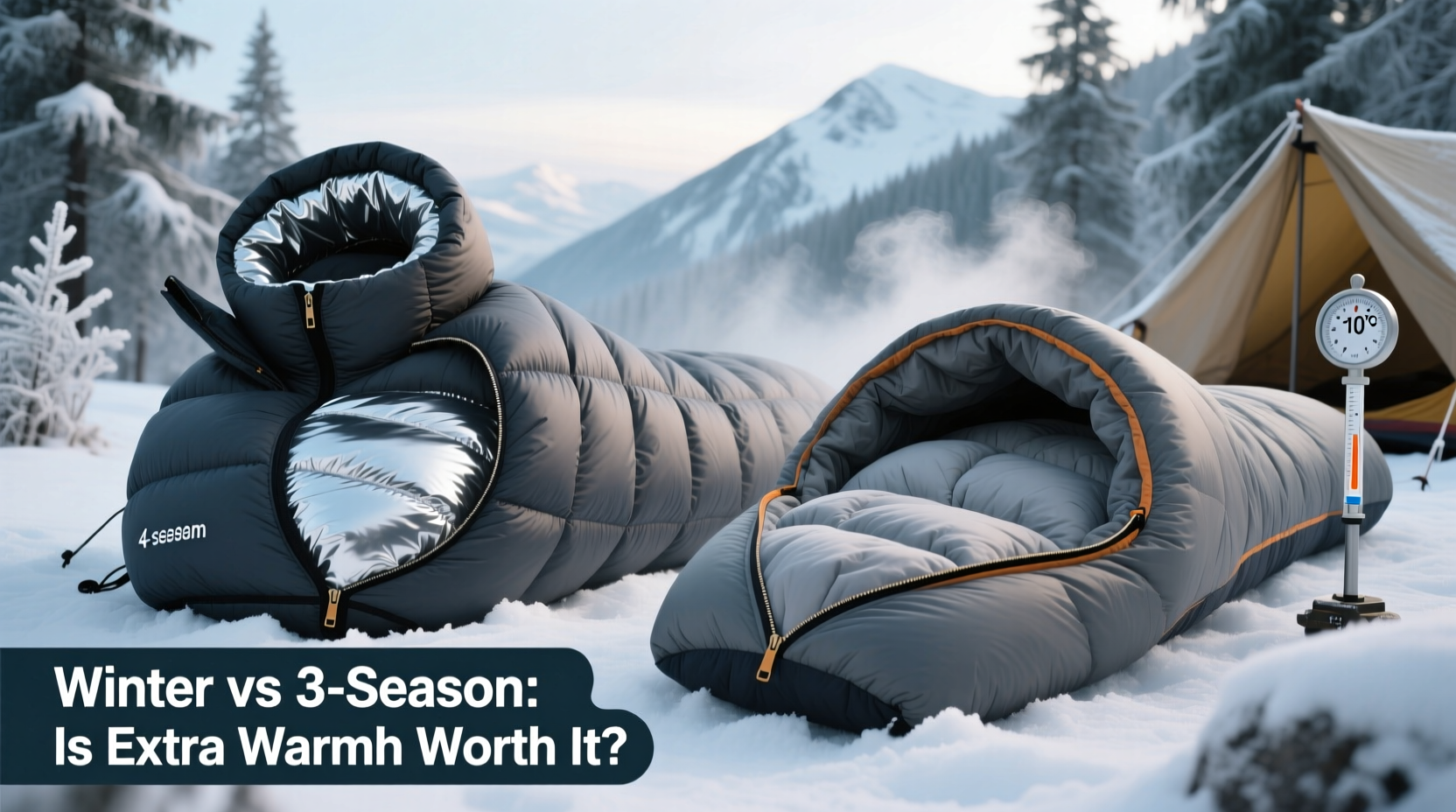
Sleeping bags are categorized by temperature ratings—typically labeled as “comfort,” “limit,” and “extreme”—which indicate the lowest temperature at which an average sleeper can remain comfortable or safe. These ratings are standardized under EN/ISO norms, helping consumers compare products across brands.
A 3-season sleeping bag usually has a comfort rating between 20°F and 40°F (-7°C to 4°C), making it suitable for most backpacking trips from late spring through early fall. In contrast, winter sleeping bags are built for sustained use below freezing, with comfort ratings of 0°F (-18°C) or lower. Some expedition-grade models go as low as -40°F (-40°C).
The distinction isn’t just about fill power or thickness—it’s a holistic design difference. Winter bags feature more insulation, full-length draft tubes, hooded constructions, and often mummy shapes that minimize dead air space. They also use higher-loft down or denser synthetic fills to trap heat efficiently.
Tip: Always consider the \"limit\" rating (the lower end of comfort for a male sleeper) rather than the \"comfort\" rating when planning cold-weather trips.Key Differences: Performance, Weight, and Packability
To assess whether a winter bag is worth the investment, examine how it compares to a 3-season model across critical performance metrics.
| Feature | 3-Season Bag | Winter Bag |
|---|---|---|
| Temp Rating (Comfort) | 20°F to 40°F (-7°C to 4°C) | -20°F to 0°F (-29°C to -18°C) |
| Fill Type & Amount | 650–850 fill down / moderate synthetic | 850+ fill down / heavy synthetic |
| Weight | 1.5 – 3 lbs (0.7 – 1.4 kg) | 3 – 6+ lbs (1.4 – 2.7+ kg) |
| Packed Size | Fits in 10L sack | Requires 15–25L compression sack |
| Price Range | $150 – $350 | $400 – $900+ |
| Best Use Case | Spring, summer, fall backpacking | Winter camping, mountaineering, alpine expeditions |
The data shows a clear trend: winter bags sacrifice portability and affordability for unmatched thermal performance. For hikers focused on lightweight travel or casual weekend trips, this trade-off may not be justified. But for those venturing into snow-covered terrain or high-altitude zones during winter months, the added warmth isn't just a luxury—it's essential for survival.
When a Winter Bag Is Worth the Investment
There are specific scenarios where a dedicated winter sleeping bag proves its value beyond doubt.
- Extended winter camping: If you're planning multi-night stays in snowy environments, especially above tree line, ambient temperatures can drop drastically after sunset. A 3-season bag—even with a liner—won’t prevent hypothermia risk.
- Mountaineering and alpine climbing: High-altitude bivouacs demand reliable insulation. Every ounce counts, but so does core warmth. Modern winter bags balance warmth-to-weight ratios better than ever.
- Cold sleepers: Individuals who naturally run cold benefit significantly from the enhanced construction of winter bags, including insulated hoods and draft collars.
- Durability in extreme conditions: Winter bags are often built with tougher shell fabrics and reinforced stitching to withstand ice abrasion and prolonged compression.
“On Denali, I saw climbers trying to stretch 20°F bags to -10°F with layers. It failed every time. Proper gear isn’t overkill—it’s insurance.” — Sarah Lin, IFMGA-certified Mountain Guide
Real-World Example: Backpacking Colorado’s Collegiate Peaks in October
Consider Mark, an experienced backpacker planning a three-day loop through Colorado’s Collegiate Peaks in mid-October. Daytime highs reach 55°F (13°C), but nighttime lows routinely dip below 20°F (-7°C). He owns a 30°F synthetic 3-season bag and wonders if he needs to rent a 0°F down winter model.
He tests his current setup at home using a portable AC unit to simulate 20°F conditions. Wearing base layers and a beanie, he lasts two hours before waking up shivering. Recognizing that fatigue and wind exposure would worsen conditions on the trail, he rents a 0°F mummy bag. On the trip, despite gusty winds and frost-covered tent walls, he sleeps soundly each night.
This case illustrates a crucial point: marginal temperature safety leads to poor recovery, reduced decision-making ability, and increased risk. For trips near or below a bag’s rated limit, upgrading is not indulgence—it’s preparedness.
Smart Alternatives: Can You Extend a 3-Season Bag’s Range?
Not everyone needs a full winter bag. Several strategies can safely extend the effective range of a 3-season model by 10–20 degrees Fahrenheit.
- Use a vapor barrier liner (VBL): Prevents moisture loss from your body, preserving loft and adding ~5–10°F of warmth.
- Add a bivy sack: Creates a microclimate inside your tent and reduces convective heat loss.
- Sleep with dry spare clothes: Layering inside the bag adds insulation—but never wear damp clothing.
- Pre-warm with a thermos: Place a sealed hot water bottle near your core before zipping up.
- Insulate beneath you: Upgrade to an R-value 5+ sleeping pad; radiant heat loss through the ground is the biggest factor in feeling cold.
Checklist: Do You Need a Winter Sleeping Bag?
- Will overnight temps regularly fall below 20°F (-7°C)?
- Are you traveling above 8,000 feet (2,400 meters) in winter months?
- Do you tend to feel cold even in heated indoor spaces?
- Is your trip longer than two nights in cold conditions?
- Can you afford the extra weight (~3+ lbs) in your pack?
If you answered “yes” to three or more, a winter-rated sleeping bag is likely worth the investment.
Frequently Asked Questions
Can I use a 3-season bag in winter with extra layers?
You can slightly extend its range, but only within safe limits. Overloading a bag with clothing compresses insulation and reduces effectiveness. Below its lower rating, a 3-season bag becomes dangerously inadequate.
Are synthetic winter bags better than down?
Synthetic retains warmth when wet and dries faster, making it ideal for humid climates or unpredictable weather. Down offers superior warmth-to-weight ratio and longevity but requires dry conditions. Choose based on environment, not just temperature.
How do I store my winter sleeping bag when not in use?
Always store it loosely in a large cotton or mesh sack—never compressed in a stuff sack. This preserves loft and prevents fiber breakdown. Keep in a dry, ventilated area away from direct sunlight.
Final Verdict: Is the Extra Warmth Worth It?
A warmer sleeping bag isn’t inherently “better”—it’s situationally superior. For most recreational campers, a quality 3-season bag paired with smart layering and a good sleeping pad covers 90% of outdoor adventures. However, stepping into true winter environments demands specialized gear. There, a winter sleeping bag isn’t just worth it—it’s non-negotiable.
The decision ultimately hinges on honesty: How cold do you expect it to get? How well do you tolerate cold? And how much risk are you willing to accept for the sake of saving weight or money? When safety, comfort, and uninterrupted sleep matter, investing in the right tool for the job pays dividends in both enjoyment and security.
💬 Have you pushed your 3-season bag too far in cold weather? Share your experience or lessons learned—we’d love to hear what worked (or didn’t) on your coldest night out.








