For much of the 20th century, American boxers stood at the pinnacle of the sport. From Jack Dempsey to Muhammad Ali, Sugar Ray Robinson to Joe Louis, the United States produced not only champions but icons who transcended the ring. Their dominance wasn't just about individual talent—it was rooted in deep cultural currents, socioeconomic realities, and institutional support that shaped generations of fighters. Understanding why Americans once ruled the boxing world offers insight into both the evolution of the sport and broader shifts in society.
The Golden Age of American Boxing: A Cultural Powerhouse
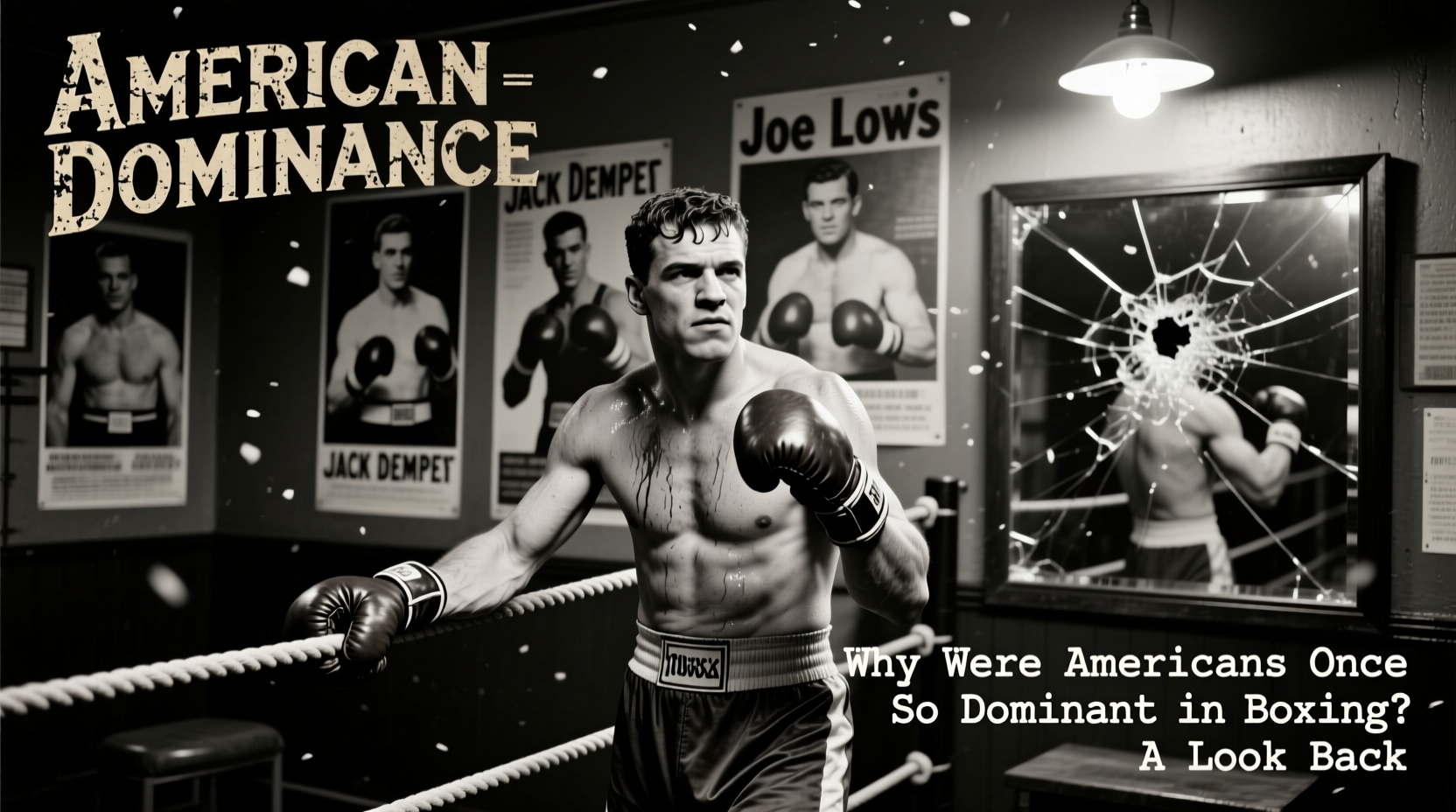
From the 1920s through the 1980s, American boxing thrived on visibility, accessibility, and prestige. Major bouts were national events, broadcast on radio and later television, drawing millions of viewers. Fighters became household names, celebrated in newspapers, magazines, and films. This era cultivated an environment where boxing wasn’t just a path out of poverty—it was a legitimate route to fame and fortune.
Cities like New York, Chicago, Detroit, and Philadelphia were hotbeds for boxing gyms, amateur circuits, and local promoters. Neighborhood clubs offered free or low-cost training, creating pipelines from the streets to the stadiums. The Amateur Athletic Union (AAU) and Golden Gloves tournaments served as proving grounds, funneling raw talent into professional careers.
“Boxing was more than a sport—it was a ladder. For many young men with few options, it was the only way up.” — Thomas Hauser, boxing historian and author of *Muhammad Ali: His Life and Times*
Socioeconomic Drivers Behind the Rise
America’s boxing dominance was inextricably linked to economic hardship. During the Great Depression and post-war urbanization, many young men—particularly from African American, Irish, Italian, and Latino communities—turned to boxing as a means of survival. Gyms doubled as community centers, offering discipline, mentorship, and physical conditioning.
In inner cities, boxing trainers often acted as surrogate fathers, instilling values of hard work and resilience. The sport provided structure in environments where formal education and job opportunities were limited. Success in the ring could mean financial security, travel, and social mobility.
Tip: Economic necessity often fuels athletic excellence. When opportunity is scarce, sports become a viable escape route.The Role of Media and National Identity
No other country elevated boxers to mythic status quite like the United States. Figures like Rocky Marciano, undefeated and emblematic of American grit, or Muhammad Ali, whose charisma and activism made him a global symbol, became larger than life. Their stories were amplified by Hollywood, newsreels, and widespread media coverage.
Ali, in particular, transformed boxing into theater. His poetic trash talk, political stance, and unmatched skill turned fights into cultural moments. When he faced Sonny Liston, George Foreman, or Joe Frazier, it wasn’t just about titles—it was about race, war, religion, and identity. These narratives captivated audiences and cemented boxing’s place in the American psyche.
Television played a pivotal role. Networks like CBS and ABC regularly aired fights, making stars out of champions and giving fans weekly access to the action. Promoters such as Don King and Bob Arum knew how to sell drama, ensuring high ratings and public engagement.
Systemic Infrastructure That Fueled Success
Beyond culture and media, America built a robust infrastructure for developing boxers. Consider the following elements that contributed to sustained dominance:
- Amateur programs: The Golden Gloves, AAU, and later USA Boxing created competitive pathways for youth and adults.
- Gym networks: Legendary training spaces like Gleason’s Gym in Brooklyn or Kronk Gym in Detroit nurtured champions under disciplined coaching.
- Promotional ecosystem: A competitive market of promoters, managers, and broadcasters ensured visibility and financial incentive.
- Regulatory frameworks: State athletic commissions standardized rules and safety protocols, lending legitimacy to the sport.
This ecosystem allowed talent to be identified early, refined systematically, and showcased effectively. Unlike many countries where boxing struggled for funding or recognition, the U.S. treated it as a mainstream enterprise.
Timeline: Key Eras of American Boxing Dominance
| Decade | Era/Champions | Key Developments |
|---|---|---|
| 1920s–30s | Jack Dempsey, Joe Louis | Rise of radio broadcasts; Louis becomes national hero during WWII |
| 1940s–50s | Sugar Ray Robinson, Rocky Marciano | Golden Gloves expands; TV begins airing fights |
| 1960s–70s | Muhammad Ali, Joe Frazier, George Foreman | Global media attention; Ali-Frazier rivalry peaks |
| 1980s | Sugar Ray Leonard, Mike Tyson, Marvin Hagler | HBO and Showtime launch fight series; pay-per-view emerges |
| 1990s–2000s | Oscar De La Hoya, Roy Jones Jr., Evander Holyfield | Decline in grassroots development; rise of international competition |
Why the Decline? Shifting Tides in Sport and Society
By the late 1990s, American dominance began to wane. While fighters like Floyd Mayweather Jr. and Andre Ward maintained elite status, the depth of American talent thinned. Several interrelated factors explain this shift:
- Rise of football and basketball: Young athletes increasingly pursued safer, more lucrative careers in team sports with college scholarships and NBA/NFL pathways.
- Loss of urban gym culture: Many inner-city gyms closed due to funding cuts, gentrification, or lack of sponsorship.
- Increased risk awareness: Growing understanding of CTE (chronic traumatic encephalopathy) deterred parents from enrolling children in boxing.
- Globalization of the sport: Countries like Mexico, the Philippines, Ukraine, and Cuba developed strong amateur systems and produced world-class fighters.
- Fragmentation of media: With fewer network broadcasts, boxing lost its mass audience, reducing exposure and earning potential.
Today, while American fighters still compete at the highest levels, the sheer volume of champions and contenders has diminished compared to mid-century peaks.
Mini Case Study: The Fall of the Kronk Gym Legacy
In Detroit, the Kronk Recreation Center was once the epicenter of championship boxing. Under trainer Emanuel Steward, it produced legends like Thomas Hearns, Hilary Ariza, and Lennox Lewis. Its red-and-gold trunks were synonymous with power and precision.
But as auto industry jobs vanished and city budgets shrank, the gym’s influence faded. Though Steward opened a private Kronk Gym later, the community-based model eroded. Without municipal support and youth outreach, recruitment slowed. By the 2010s, few American champions emerged from similar grassroots pipelines.
This story mirrors broader trends: when social investment in boxing declines, so does competitive output.
Revival Possibilities: Can America Reclaim Its Place?
There are signs of renewal. Organizations like Ringside Career Academy and non-profits focused on youth boxing are reviving mentorship models. Digital platforms allow fighters to build followings independently. And Olympic success—such as Claressa Shields’ two gold medals—demonstrates that elite talent still exists.
Tip: Support local boxing gyms through donations or volunteering—community investment rebuilds pipelines.Checklist: Supporting the Next Generation of American Boxers
- ✅ Advocate for school and community boxing programs
- ✅ Encourage safe, regulated amateur competition
- ✅ Promote media coverage of domestic fight cards
- ✅ Support female and youth boxing initiatives
- ✅ Educate on brain safety without discouraging participation
Frequently Asked Questions
Were American boxers really more skilled, or just better promoted?
It was both. While promotion played a major role in visibility, American fighters of the mid-20th century benefited from intense competition and rigorous training regimens. The depth of talent meant only the most skilled rose to the top.
Is boxing still popular in the U.S. today?
At the elite level, yes—especially with pay-per-view events and star-driven matchups. But participation has declined significantly at the amateur and grassroots levels compared to its peak.
Can another American fighter become a global icon like Ali?
Possibly, but it would require not just skill but cultural resonance. The next Ali would need to combine athletic brilliance with compelling storytelling and social impact—a rare combination in any era.
Conclusion
America’s dominance in boxing was no accident. It emerged from a confluence of cultural reverence, economic necessity, media amplification, and institutional support. While the landscape has changed, the legacy remains. The question isn’t whether the U.S. can return to boxing prominence—it’s whether society is willing to rebuild the foundations that once made it possible.
💬 What do you think fueled American boxing’s golden age? Share your thoughts or memories of legendary fights in the comments below.








