
When Mindhunter premiered on Netflix in 2017, it was hailed as a groundbreaking entry into the true crime genre—a meticulously crafted, psychologically intense exploration of the FBI’s early days profiling serial killers. With its slow-burn narrative, authentic period detail, and standout performances by Jonathan Groff, Holt McCallany, and Anna Torv, the series quickly amassed a devoted fanbase. Yet after two critically acclaimed seasons, the show vanished—no third season, no official finale, just silence. For years, fans have asked: why was Mindhunter cancelled?
The truth is more nuanced than a simple cancellation. The show wasn’t axed due to low viewership or poor reception. Instead, a confluence of creative exhaustion, logistical hurdles, and shifting priorities at Netflix led to its indefinite suspension. What follows is a comprehensive look at the factors that prevented Mindhunter from continuing—and what might have been.
The Creative Vision and Its Limits
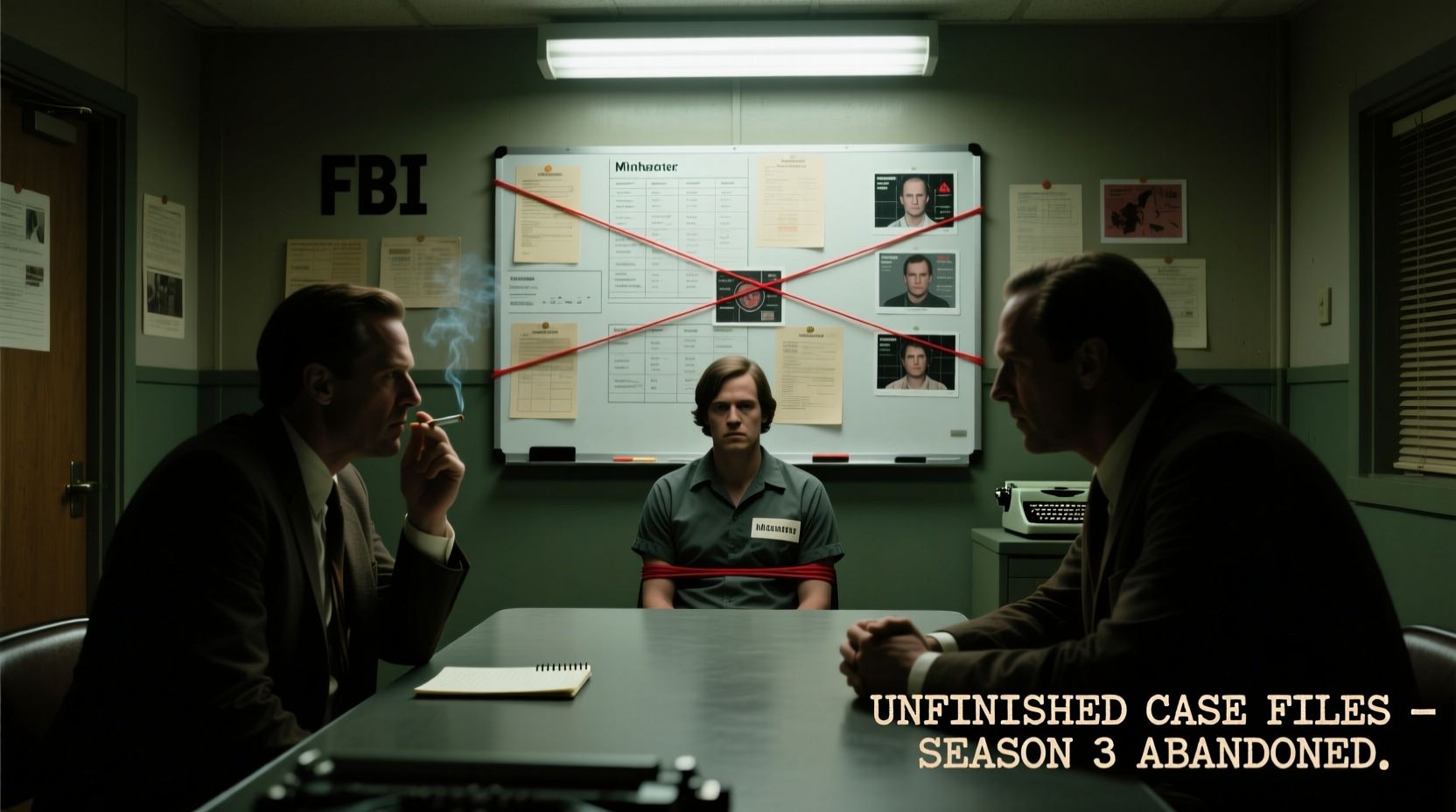
At the heart of Mindhunter was director David Fincher, whose obsessive attention to detail defined the show’s tone and pacing. Known for films like Seven, Zodiac, and Gone Girl, Fincher brought his signature aesthetic—dark, methodical, and deeply atmospheric—to the series. But this same perfectionism became both its strength and its Achilles’ heel.
Fincher has long been open about his demanding standards. Episodes often required dozens of takes, extensive location scouting, and painstaking post-production work. Season 2 alone took nearly a year to film and edit. By the time it wrapped in 2019, Fincher had grown increasingly disenchanted with the grind of episodic television.
“We were making an eight-hour movie. The process is exhausting when you’re doing it at that level of precision.” — David Fincher, in a 2021 interview with *Vanity Fair*
Moreover, the original plan for Mindhunter was always finite. The first two seasons loosely adapted John E. Douglas’s memoir of the same name, focusing on the birth of criminal profiling in the late 1970s and early 1980s. The intended arc included roughly five seasons, culminating in the aftermath of the Atlanta Child Murders and the psychological unraveling of Holden Ford (Jonathan Groff).
But as Fincher and co-creator Joe Penhall dug deeper, they realized the story was becoming less about procedural breakthroughs and more about Holden’s descent into obsession—a trajectory that risked alienating audiences expecting resolution rather than existential dread.
Tip: When a creator’s vision demands extreme precision, production timelines can stretch beyond sustainability—especially in high-pressure streaming environments.Production Challenges and Real-World Delays
One of the most tangible reasons Mindhunter stalled was its grueling production schedule. Unlike many Netflix originals shot rapidly with multiple directors, Mindhunter relied heavily on Fincher’s hands-on involvement. He directed nearly every episode, which meant filming could only proceed when he was available.
Season 2 wrapped in mid-2019. Talks for Season 3 began shortly after, with writers developing scripts that would explore the Green River Killer case in depth and further examine the toll of prolonged exposure to violence on agents. However, progress slowed due to creative disagreements about direction and pacing.
Then came 2020—and the global pandemic. Film and television productions shut down worldwide. While many shows adapted with safety protocols, Mindhunter’s return was never prioritized. Without Fincher’s momentum, cast availability shifted, and Netflix moved resources to faster-turnaround projects.
By 2021, key cast members had moved on. Jonathan Groff starred in Hamilton on Disney+, Holt McCallany appeared in Reacher, and Anna Torv returned to Fringe-era acclaim with roles in other dramas. Reassembling the ensemble became logistically difficult.
Netflix’s Shifting Priorities
While Mindhunter was beloved by critics and a core audience, it wasn’t a viral hit in the way Netflix increasingly favors. The platform thrives on binge-driven engagement—shows that explode in popularity within days. Mindhunter, with its deliberate pace and lack of sensationalism, didn’t generate the kind of social media buzz that fuels algorithmic promotion.
According to industry analysts, Netflix measures success not just by viewership but by “completion rate” and “shareability.” A show like Squid Game or Bridgerton checks both boxes. Mindhunter did neither. It had high completion (most who started watched through), but low virality. This made it a lower priority for renewal, especially given its high per-episode cost—estimated at $10–15 million.
| Show | Estimated Budget Per Episode | Viewership Model | Renewal Outcome |
|---|---|---|---|
| Mindhunter | $12 million | Slow-burn, niche audience | Paused indefinitely |
| Bridgerton | $10 million | Bingeable, mass appeal | Renewed for multiple seasons |
| The Witcher | $15 million | Franchise-driven, global reach | Continued despite mixed reviews |
As Netflix pivoted toward globally scalable content—action series, reality shows, and international hits—the fate of a dialogue-heavy, U.S.-centric drama like Mindhunter grew uncertain. Even with a passionate fanbase, it lacked the broad demographic pull to justify its expense.
A Case Study: What Season 3 Could Have Been
In interviews, Fincher and Penhall have outlined the planned trajectory for Season 3. It would have focused on Gary Ridgway, the Green River Killer, whose capture in 2001 marked a turning point for behavioral science in law enforcement. Unlike earlier cases studied in isolation, Ridgway’s prolonged evasion highlighted systemic failures—overworked detectives, jurisdictional conflicts, and the limits of profiling without forensic evidence.
More importantly, Season 3 would have deepened the internal fractures within the Behavioral Science Unit. Holden Ford, increasingly dogmatic, would clash with Bill Tench (McCallany) over ethics and methodology. Wendy Carr (Torv) would have faced personal turmoil as her sexuality became a target in a conservative workplace. The season would end not with a solved case, but with the unit being sidelined by DNA-centric investigations—marking the end of an era.
This arc, while thematically rich, posed storytelling challenges. It leaned further into ambiguity, offering fewer cathartic resolutions. In today’s TV landscape, where audiences often demand closure, such a direction carried financial risk.
“The tragedy isn’t that the story wasn’t told—it’s that the story was too honest to be continued.” — Joe Penhall, writer, in a 2022 podcast appearance
Timeline of Key Events Leading to the Hiatus
Understanding the cancellation requires looking at the timeline of decisions and external pressures:
- 2017: Season 1 released to critical acclaim; immediate renewal for Season 2.
- 2018–2019: Season 2 filmed under Fincher’s exacting direction; delayed release to August 2019.
- Late 2019: Writers begin developing Season 3; initial scripts completed by early 2020.
- March 2020: Global production halt due to COVID-19 pandemic.
- 2020–2021: Fincher shifts focus to Mank, his Orson Welles biopic, which releases in December 2020.
- Mid-2021: Netflix quietly removes Mindhunter from active development slate.
- 2022–2023: Cast and crew confirm the show is effectively on hold, with no current plans to resume.
Though never officially “cancelled,” the absence of movement, combined with public statements from those involved, makes a return highly unlikely.
FAQ: Common Questions About the Cancellation
Was Mindhunter cancelled because of low ratings?
No. While Mindhunter wasn’t a breakout hit in terms of raw viewership numbers, it performed well among its target audience and maintained high completion rates. The issue wasn’t popularity—it was cost, pace of production, and alignment with Netflix’s evolving content strategy.
Will there ever be a Season 3 of Mindhunter?
As of 2024, there are no plans for a third season. David Fincher has stated he’s “not interested” in returning unless the story can be told in full—which would require a significant time commitment. Given his current projects, including potential films, a revival seems improbable.
Could another studio pick up the show?
Technically possible, but unlikely. The rights are tied to Netflix, and the show’s identity is inseparable from Fincher’s direction and the existing cast. Recasting or rebooting would undermine its authenticity. Most insiders consider the story closed.
Checklist: What Fans Can Do Now
While the show may never continue, fans can still engage meaningfully with its legacy:
- Revisit Season 2’s final episodes, which subtly foreshadow Holden’s downfall.
- Read John E. Douglas’s original Mindhunter book for historical context.
- Explore related documentaries like The Sons of Sam: A Descent Into Darkness, which touches on similar themes.
- Support true crime reform initiatives—many of the issues raised in the show remain relevant today.
- Engage in online communities to keep discussions alive and preserve the show’s cultural impact.
Conclusion: An Unfinished Masterpiece
Mindhunter wasn’t cancelled in the traditional sense—it faded out, a casualty of artistic ambition meeting industrial reality. It stands as a rare example of prestige television that valued depth over spectacle, character over plot twists. Its absence leaves a gap in the true crime landscape, where so many successors prioritize shock value over psychological insight.
Perhaps the most fitting tribute is to recognize that some stories don’t need closure to matter. The unresolved tension, the unanswered questions, the haunting silences—these were part of Mindhunter’s power all along. It challenged viewers to sit with discomfort, to question the cost of understanding evil.
💬 What do you think should have happened in Season 3? Share your theories, reflections, or favorite moments from Mindhunter in the discussion forums. Let’s keep the conversation alive.








