
In the winter of 1891, a young physical education instructor in Springfield, Massachusetts, faced a growing problem: his students were restless, unmotivated, and physically inactive during the cold months. Indoor activities were limited, and existing sports like football and baseball were too rough or unsuitable for gymnasium play. In response to this challenge, Dr. James Naismith devised a new game—one that would not only solve an immediate fitness issue but would go on to become one of the most popular sports in the world. But why was basketball invented? The answer lies at the intersection of necessity, innovation, and educational philosophy.
The Winter Dilemma That Sparked Innovation
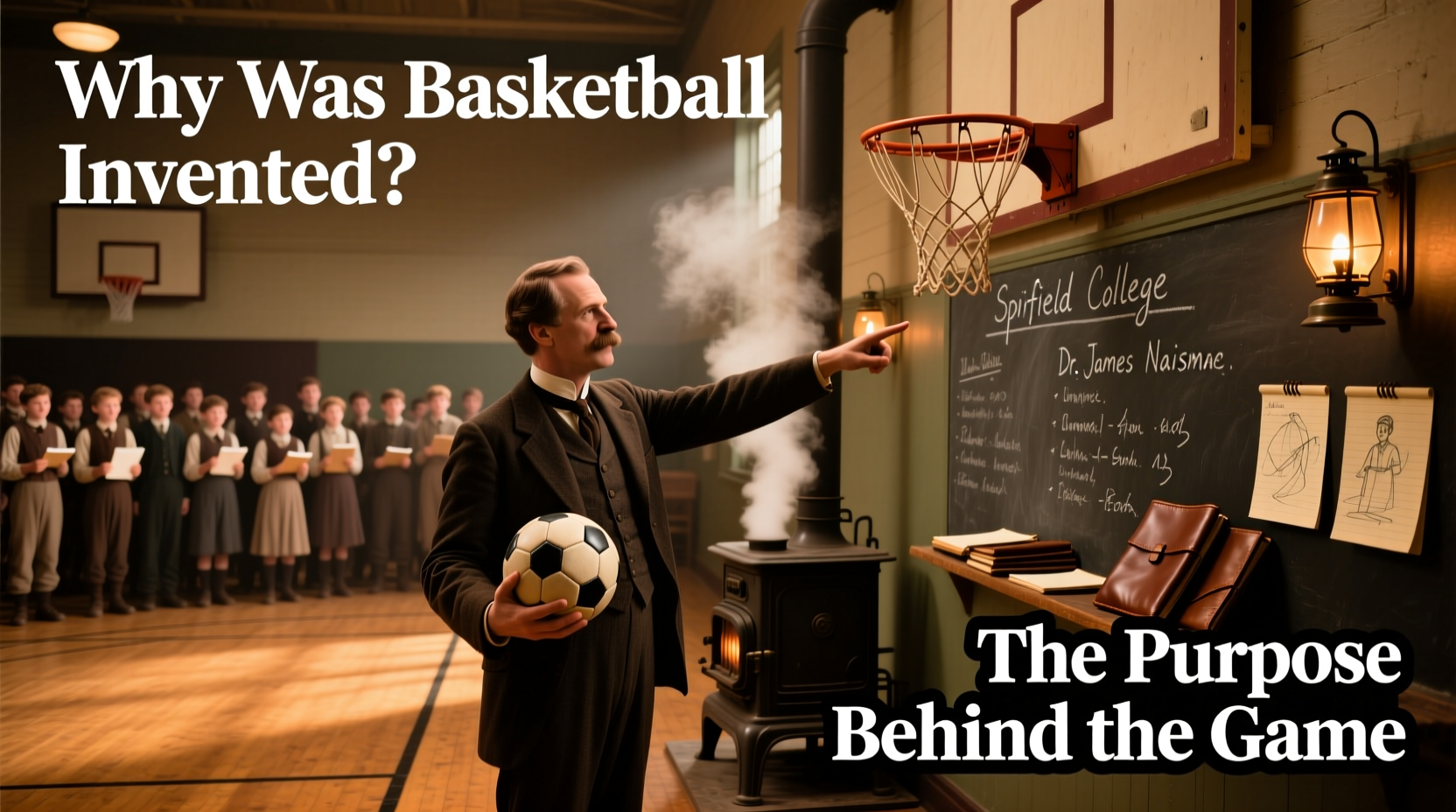
At the International YMCA Training School (now Springfield College), James Naismith was tasked with keeping students active during the harsh New England winters. Outdoor games were impractical, and indoor alternatives lacked engagement. The existing options—like calisthenics or marching drills—were monotonous and failed to inspire enthusiasm. What Naismith needed was a game that could be played indoors, required minimal space, minimized physical contact, and still promoted cardiovascular health and teamwork.
Dr. Luther Gulick, head of the physical education department, gave Naismith an ultimatum: create a new indoor sport within two weeks or face student disengagement. The criteria were clear:
- It had to be safe and minimize injuries.
- It needed to be playable in a confined gymnasium.
- It should rely on skill rather than brute strength.
- It had to maintain player interest throughout the season.
These constraints shaped the very foundation of what would become basketball.
Tip: Naismith’s approach shows how limitations can drive creativity—constraints often lead to breakthrough innovations.The Birth of Basketball: A Simple Game with a Big Purpose
Naismith began experimenting with various ball games, drawing inspiration from childhood games like \"duck on a rock,\" where players tried to knock a stone off a perch. He realized that a goal placed above head level would discourage physical contact, since players couldn’t guard it by standing directly in front. Using a soccer ball and two peach baskets nailed to the balcony railing of the gym—10 feet high—he established the basic setup.
On December 21, 1891, the first game of basketball was played. It bore little resemblance to today’s fast-paced sport. There were no dribbling rules, no backboards, and the baskets remained closed—meaning someone had to retrieve the ball with a ladder after each score. Yet, despite its simplicity, the game was an instant success. Students were engaged, competitive, and physically active.
Naismith didn’t set out to invent a global phenomenon. His goal was far more practical: to keep young men healthy and disciplined during the winter months. As he later wrote, “I fixed up some goals… and I made up rules to fit these goals.”
“Basketball was not born out of a desire for fame or fortune. It was created to solve a real problem in physical education.” — Dr. James Naismith
Purpose Behind the Game: More Than Just Exercise
Beyond physical fitness, Naismith had deeper educational and moral objectives. He believed in the “muscular Christianity” philosophy common among YMCA leaders of the time—a belief that physical activity cultivated character, discipline, and ethical behavior. Basketball was designed not just to strengthen bodies, but to teach cooperation, fair play, and mental sharpness.
The original 13 rules emphasized non-violence and strategic thinking. For example:
- No shouldering, holding, or tripping was allowed.
- The ball could be thrown in any direction with one or both hands.
- A jump ball followed every made basket—encouraging continuous play.
These rules reflected Naismith’s vision: a game where intelligence and agility triumphed over aggression. He wanted to eliminate the brutality seen in football while preserving competition and excitement.
Timeline of Early Development (1891–1900)
The evolution of basketball in its first decade was rapid. Here is a step-by-step look at key milestones:
- 1891: First game played in Springfield, MA, using peach baskets and a soccer ball.
- 1892: Naismith publishes the original 13 rules in the school newsletter.
- 1893: First women’s game played at Smith College, adapted with modified rules.
- 1895: Backboards introduced to prevent spectators from interfering.
- 1898: First professional league, the National Basketball League, is formed.
- 1900: The first intercollegiate game is played between the University of Chicago and the University of Iowa.
This timeline illustrates how quickly basketball spread across schools, colleges, and eventually professional circuits. Its adaptability and low equipment requirements made it accessible worldwide.
How Basketball Spread Across the World
YMCA instructors carried the game wherever they went. By 1893, basketball was being played in Canada. Within a decade, it had reached China, India, and Europe. American soldiers introduced it during World War I, setting up temporary courts in military camps across France and Germany. The sport’s simplicity—requiring only a ball and a hoop—made it ideal for global dissemination.
Colleges soon embraced basketball as a legitimate athletic program. The formation of the NCAA helped standardize rules and promote intercollegiate competition. Meanwhile, the invention of the bottomless net in 1893 eliminated the need to climb ladders after each basket, accelerating gameplay and spectator appeal.
| Year | Milestone | Impact |
|---|---|---|
| 1891 | First game played | Proved indoor team sport viability |
| 1892 | 13 rules published | Standardized gameplay |
| 1893 | Women’s game begins | Expanded inclusivity |
| 1898 | First pro league formed | Laid groundwork for NBA |
| 1936 | Olympic debut in Berlin | Established global legitimacy |
FAQ: Common Questions About Basketball’s Origins
Was basketball invented for entertainment or education?
Basketball was primarily invented for educational purposes—to provide a structured, safe, and engaging form of indoor physical activity. While it quickly became entertaining, its original intent was rooted in physical education and character development.
Why did Naismith choose a height of 10 feet for the basket?
The 10-foot height was determined by the existing architecture of the gym. The balcony railing where the baskets were hung was exactly 10 feet above the floor. This accidental measurement became the official standard and remains unchanged today.
Did James Naismith profit from inventing basketball?
No. Naismith never patented the game and received no royalties. He viewed basketball as a public service, not a commercial product. It wasn’t until decades later that the sport generated massive revenue, long after his death in 1939.
Tip: Naismith’s selflessness underscores the power of innovation for public good—sometimes the greatest legacies come without financial reward.Legacy and Lasting Impact
Today, basketball is a global powerhouse—played by over 450 million people worldwide. From pickup games in city parks to billion-dollar NBA franchises, the sport has evolved far beyond Naismith’s modest gym. Yet, its core principles remain intact: teamwork, strategy, and physical engagement.
The game’s accessibility continues to fuel its popularity. All you need is a ball and a hoop. No expensive gear, large fields, or specialized training. This simplicity, built into its DNA from day one, is what allowed basketball to thrive in urban neighborhoods, rural schools, and international communities alike.
“The moment I saw the first game, I knew I had created something special—not because it was perfect, but because it brought people together.” — James Naismith, in a 1937 interview
Conclusion: Rediscovering the Why Behind the Game
Understanding why basketball was invented offers more than historical curiosity—it reminds us that great ideas often emerge from simple needs. James Naismith didn’t set out to change the world. He wanted to keep a handful of students active during winter. Yet, by focusing on safety, fairness, and engagement, he created a timeless game that transcends culture, language, and geography.
Basketball’s origin story is a lesson in purpose-driven innovation. Whether you’re a coach, player, or fan, remembering its roots can deepen your appreciation for the sport. Next time you hear the bounce of a ball or the swish of a net, consider the quiet gym in Springfield where it all began—not with fame or profit, but with a teacher’s determination to make a difference.
💬 What does basketball mean to you? Share your thoughts on how the game has impacted your life—whether through fitness, community, or personal growth.








