Net 30 payment terms are standard in many industries, especially for B2B transactions and freelance contracts. On the surface, they seem fair: deliver the work, send the invoice, and get paid within 30 days. But for freelancers and small businesses operating with tight margins, Net 30 can create serious financial strain. What appears to be a professional courtesy often translates into delayed income, increased risk of non-payment, and operational instability.
This isn’t about rejecting standard practices—it’s about understanding when Net 30 works against you and how to respond strategically. Whether you're a solo designer, a consultant, or running a small agency, recognizing the hidden costs of Net 30 is essential for long-term sustainability.
The Hidden Cost of Waiting 30 Days
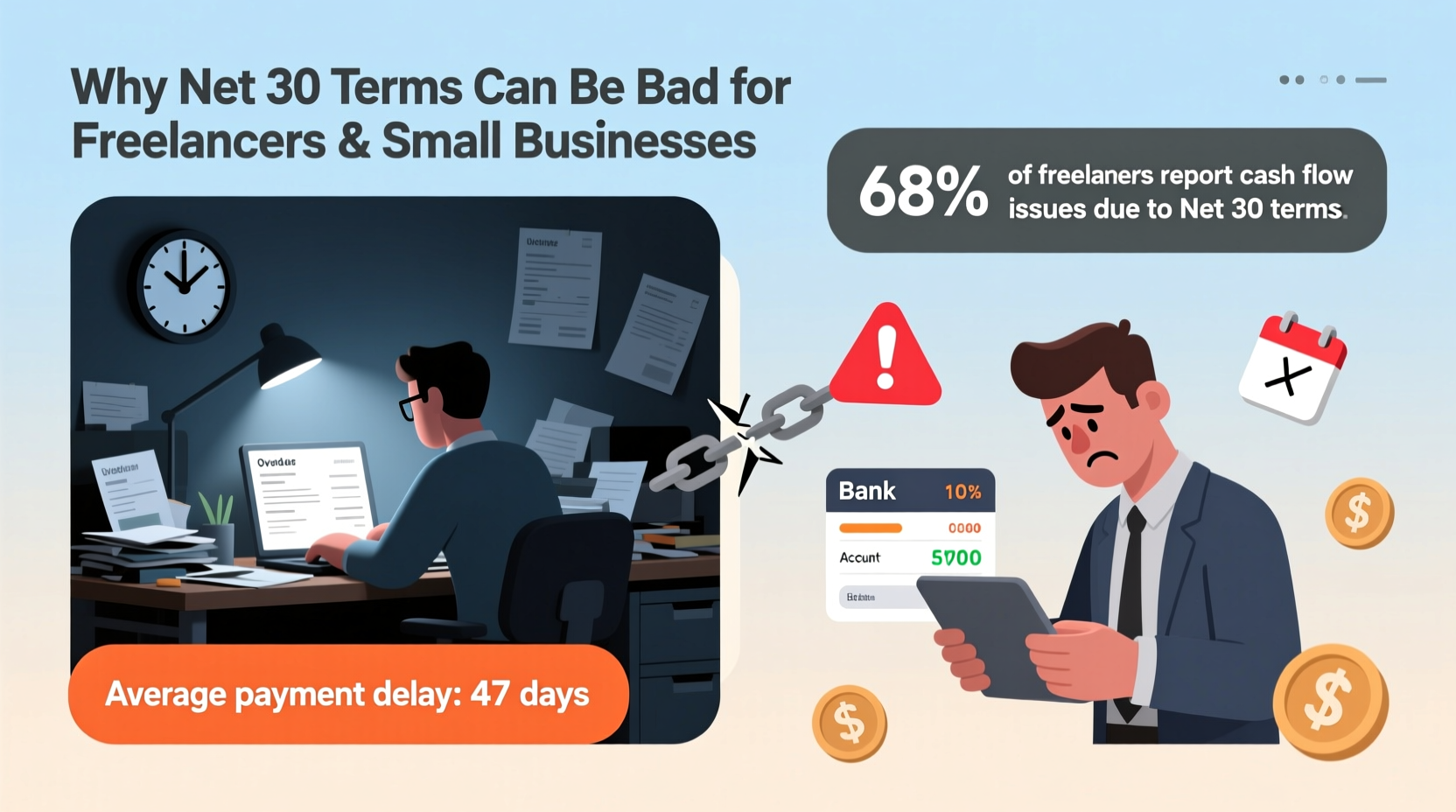
Cash flow is the lifeblood of any small operation. Unlike large corporations with reserves and credit lines, freelancers and small businesses typically operate on a paycheck-to-paycheck basis. When you agree to Net 30, you’re effectively extending an interest-free loan to your client—often without realizing it.
Consider this: if you complete a $5,000 project today, you won’t see that money for a month. During that time, you still need to cover rent, software subscriptions, taxes, and personal expenses. That delay forces many freelancers to dip into savings, rely on credit cards, or delay other client work to manage their own obligations.
Tip: Always calculate your monthly burn rate before agreeing to any payment terms. If your expenses exceed incoming payments during waiting periods, Net 30 becomes a liability.Common Risks of Net 30 Agreements
- Late or missed payments: Net 30 doesn’t guarantee payment on day 30. Many clients pay late—sometimes by weeks or months—without penalty.
- Cash flow gaps: Multiple Net 30 invoices outstanding at once can leave you unable to take on new projects or invest in growth.
- No interest compensation: You’re not being paid for the use of your capital, unlike traditional lending arrangements.
- Increased administrative burden: Chasing late payments consumes time and energy better spent on billable work.
- Client dependency: Relying on one or two clients with long payment cycles makes your business vulnerable to their internal delays.
“Extending Net 30 terms without safeguards turns your service into a financing tool for your client—not a value exchange.” — Rafael Torres, Small Business Finance Advisor
When Net 30 Makes Sense (and When It Doesn’t)
Not all Net 30 agreements are inherently bad. In certain contexts, they can help build trust and secure long-term partnerships. The key is knowing when to accept them—and when to push back.
| Scenario | Acceptable for Net 30? | Why / Why Not |
|---|---|---|
| New client, unproven payment history | No | High risk of non-payment; better to require deposit or upfront payment. |
| Established client with consistent on-time payments | Yes | Trust has been earned; terms support ongoing collaboration. |
| Project under $1,000 | Maybe | Lower financial impact if delayed; evaluate based on client reliability. |
| Large project ($5,000+) | No (unless structured) | Break into milestones with partial upfront payments to reduce exposure. |
| Working with government or academic institutions | Yes (but plan accordingly) | These entities often have fixed accounting cycles; adjust cash flow expectations. |
Real-World Example: A Freelancer’s Cash Flow Crisis
Sophia, a freelance web developer, landed a $7,500 contract with a mid-sized marketing firm. Excited by the opportunity, she agreed to Net 30 terms without requiring a deposit. She completed the project in two weeks and invoiced promptly.
By day 35, she still hadn’t been paid. Follow-up emails went unanswered. At day 45, she received a generic apology and a promise to “push it through accounts payable.” Finally, on day 62, the payment arrived—after three reminder calls and hours of lost productivity.
During that period, Sophia had to delay renewing her hosting services, put off purchasing a necessary plugin license, and used a high-interest credit card to cover groceries. The project, while professionally rewarding, cost her both financially and emotionally.
This is a common story. Net 30 becomes Net 60—or worse—when there are no consequences for delay.
Better Alternatives to Standard Net 30
You don’t have to accept Net 30 as the default. There are several more sustainable models that protect your business while maintaining professionalism.
- Require a deposit: Ask for 25–50% upfront before starting work. This secures commitment and covers initial costs.
- Milestone billing: Split larger projects into phases with payments due at each completion point (e.g., 30% at start, 40% at midpoint, 30% on delivery).
- Net 15 or due on receipt: For trusted clients or quick-turnaround work, shorten the window to improve cash flow.
- Early payment discounts: Offer a 2–5% discount for payment within 10 days to incentivize faster settlement.
- Retainer model: Charge a recurring monthly fee in advance for ongoing services, eliminating per-invoice delays.
Step-by-Step: How to Negotiate Better Payment Terms
If you're used to accepting Net 30 without question, shifting your approach takes preparation. Follow this sequence to gain confidence and control:
- Assess your financial needs: Know your minimum cash requirements per month and how delayed payments affect operations.
- Research the client: Check reviews, ask peers, or search for payment reputation before committing.
- Draft clear terms in your proposal: Specify payment structure (e.g., 50% upfront, 50% upon delivery) before signing.
- Communicate professionally: “To ensure smooth project execution, we require a 30% deposit to begin work.”
- Use contracts: Include late fees (e.g., 1.5% per month), payment deadlines, and dispute resolution clauses.
- Track and follow up: Automate invoice reminders at 7, 14, and 28 days to stay proactive.
Frequently Asked Questions
Isn’t Net 30 expected in most industries?
While common, it’s not universal. Many creative professionals, consultants, and tech freelancers now require deposits or shorter terms. Clients who value your work will respect reasonable boundaries.
What if a client refuses anything but Net 30?
Evaluate whether the project is worth the risk. You can accept—but factor in the delay by increasing your rate slightly to offset lost liquidity, or limit scope to a smaller trial project first.
Can I charge late fees legally?
Yes, in most jurisdictions, as long as they’re disclosed in your contract. Typical late fees range from 1% to 1.5% per month. Some states cap these rates, so check local laws.
Checklist: Protect Your Business From Net 30 Pitfalls
- ✅ Assess your monthly cash flow needs before taking on new clients
- ✅ Require a deposit for all new or large projects
- ✅ Use a written contract with clear payment terms and late fees
- ✅ Invoice immediately upon delivery or milestone completion
- ✅ Set up automated payment reminders
- ✅ Track aging receivables weekly
- ✅ Consider offering early payment discounts
- ✅ Avoid over-reliance on a single client with slow payments
Conclusion: Reclaim Control Over Your Cash Flow
Net 30 terms aren’t inherently wrong, but treating them as mandatory puts your business at risk. Every day you wait to get paid is a day you can’t reinvest in your tools, your skills, or your well-being. By setting stronger boundaries, offering flexible alternatives, and communicating confidently, you shift from being a passive vendor to a strategic partner.
Your expertise has value—and that value shouldn’t be diminished by outdated payment norms. Start renegotiating terms today. Even small changes—like adding a 25% deposit clause—can dramatically improve your financial stability and peace of mind.
💬 Have you been burned by Net 30? Or successfully negotiated better terms? Share your experience in the comments—your insight could help another freelancer avoid the same trap.








