
Soccer is the most popular sport in the world by a wide margin, with over 4 billion fans globally. Yet in the United States, it consistently ranks behind football, basketball, baseball, and even hockey in terms of viewership, media coverage, and cultural influence. While Major League Soccer has grown steadily since its inception in 1996, and U.S. national teams have achieved notable successes, soccer remains a niche sport for many Americans. The reasons are complex, rooted in history, economics, education systems, and deeply ingrained cultural preferences.
Historical Timing and the Crowded Sports Landscape
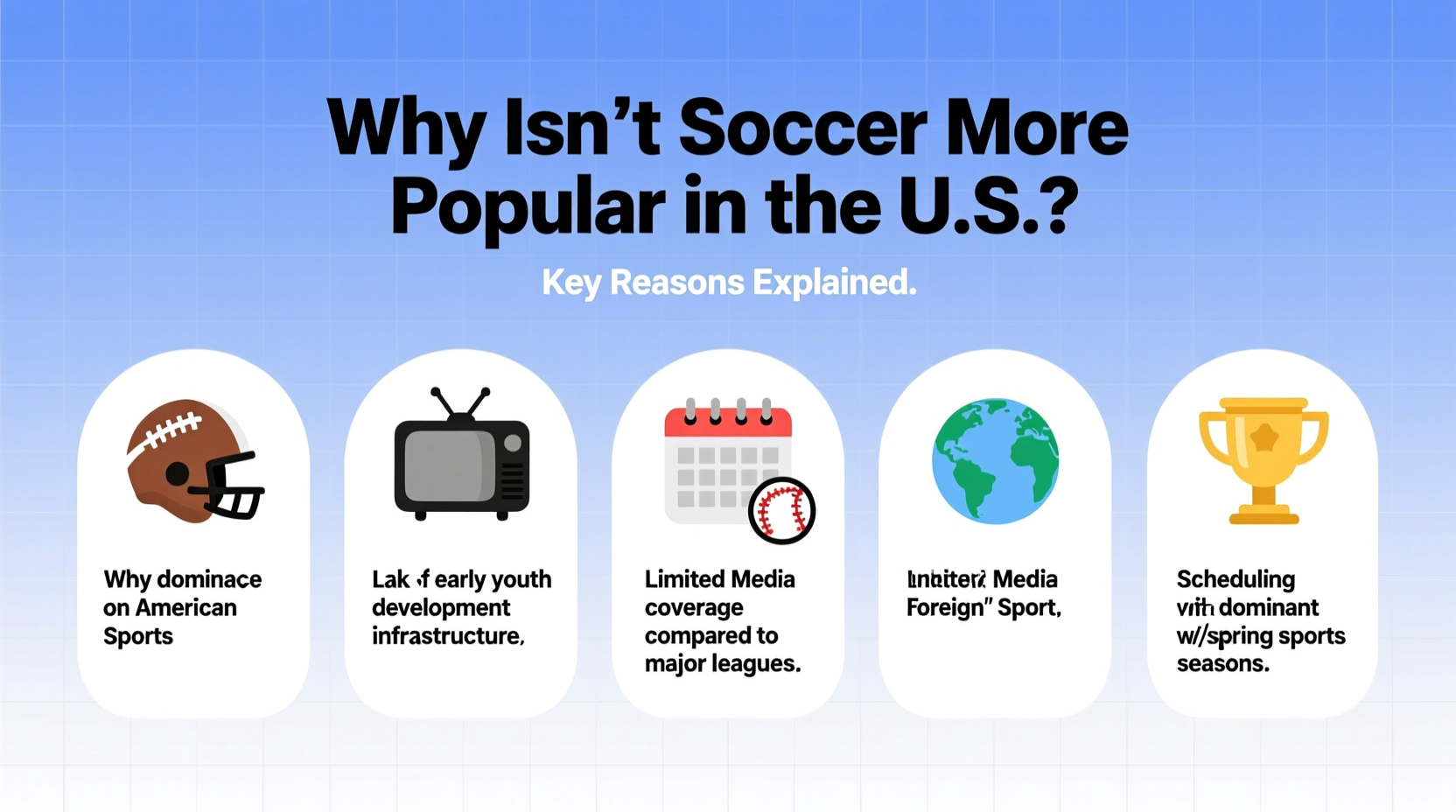
The United States developed its own distinct sporting culture during the 19th and early 20th centuries. Baseball was already dubbed “America’s pastime” by the 1870s, college football had gained a passionate following, and basketball emerged as a major urban sport by the early 1900s. When soccer began spreading globally, it arrived in a country where athletic identity was already firmly established around homegrown games.
Unlike in Europe or South America, where soccer evolved alongside national identities, the U.S. never experienced a period when soccer could become dominant. Attempts to popularize the sport—such as the North American Soccer League (NASL) in the 1970s—had brief success but ultimately failed due to financial instability and lack of grassroots infrastructure. By the time MLS launched in 1996, American audiences were already loyal to entrenched leagues like the NFL and NBA.
Tip: Understanding the timing of a sport’s introduction helps explain why some gain mass appeal while others remain secondary.Cultural Perception and Identity
In much of the world, soccer is more than a game—it’s a symbol of national pride, community, and working-class identity. In the U.S., however, football, basketball, and baseball are tied to regional pride, high school traditions, and family rituals. Friday night football under the lights or summer evenings at a minor league baseball park are deeply embedded in American life.
Soccer, particularly among older generations, has often been perceived as “foreign,” “soft,” or lacking in excitement due to low scoring and limited physical contact. This perception persists despite growing diversity and increased exposure through international tournaments like the World Cup. Even today, casual fans may view soccer as less accessible or emotionally engaging compared to the dramatic narratives of a Super Bowl comeback or a buzzer-beater in the NBA playoffs.
“American sports culture rewards clear winners, big hits, and individual heroics. Soccer’s subtlety and emphasis on collective play don’t always translate well to mainstream audiences.” — Dr. Rebecca Lang, Cultural Historian, University of Texas
Youth Sports Structure and Pathway Limitations
While millions of children play soccer recreationally in the U.S., the development pathway differs significantly from countries where elite talent emerges through club academies. In the U.S., youth soccer is largely privatized and expensive, with travel teams costing thousands of dollars annually. This creates socioeconomic barriers that limit access for lower-income families.
Meanwhile, college sports serve as a primary route for athlete development in American football, basketball, and baseball. But soccer’s collegiate model doesn’t produce players at the same level as European-style academy systems. Most top U.S. prospects still need to train abroad or join MLS academies to reach their potential—paths that aren’t widely available.
| Development Model | United States | European Countries |
|---|---|---|
| Primary Pathway | College + Private Youth Clubs | Club Academies (e.g., Barcelona La Masia) |
| Cost to Families | High (travel, coaching, equipment) | Often Subsidized or Free |
| Talent Identification | Decentralized, Pay-to-Play | Centralized Scouting Networks |
| Pro Integration | MLS Draft / Academy Contracts | Direct Promotion from Academy |
Media Coverage and Commercial Visibility
Broadcast rights and advertising shape public interest. In the U.S., networks prioritize sports that deliver consistent ratings and ad revenue. Despite record-breaking viewership during events like the 2022 Men’s World Cup, especially among younger demographics, soccer still receives far less regular media attention than the NFL or NBA.
MLS games are rarely shown on broadcast television; most are streamed on subscription platforms like Apple TV+, limiting accessibility. Compare this to the NFL’s Sunday dominance across multiple networks, or ESPN’s nightly NBA highlights. Without constant visibility, soccer struggles to build habitual viewership.
Additionally, marketing efforts have historically treated soccer as an “alternative” sport rather than a mainstream contender. Sponsors and broadcasters often focus on international stars (like Beckham or Messi) rather than building domestic narratives around American players or teams.
Mini Case Study: The Beckham Effect
When David Beckham joined the LA Galaxy in 2007, it sparked widespread media buzz and temporarily boosted MLS attendance and global awareness. Stadiums sold out, jersey sales surged, and international press followed his every move. However, once the novelty faded, long-term growth plateaued. The league gained prestige but didn’t fundamentally change how Americans engaged with the sport daily. It highlighted a recurring issue: relying on star power without parallel investment in grassroots engagement limits sustainable popularity.
Economic and Structural Challenges in Professional Leagues
Major League Soccer operates under a single-entity structure, meaning the league owns all teams and player contracts. While this helped stabilize the league in its early years, it also restricted competitive balance, wage growth, and team autonomy—factors that affect fan loyalty and player attraction.
Stadium locations often lack integration with urban centers, making games less accessible. Many MLS venues are suburban or shared with other sports, reducing atmosphere and walk-up attendance. Contrast this with European clubs rooted in specific neighborhoods for over a century, fostering deep generational ties.
- Limited promotion/relegation reduces stakes and drama compared to global leagues.
- Lower average salaries make it harder to retain top talent against European offers.
- Franchise fees exceed $500 million, discouraging new ownership groups and slowing expansion.
Checklist: What Would Help Soccer Grow in the U.S.?
- Integrate soccer into public school athletics programs nationwide.
- Subsidize youth soccer to reduce pay-to-play barriers.
- Negotiate broader broadcast deals with free-to-air networks.
- Develop stronger local identities for MLS clubs.
- Invest in elite academies linked directly to professional teams.
- Promote American-born stars through targeted media campaigns.
- Encourage more cross-promotion with international leagues.
FAQ
Is soccer growing in popularity in the U.S.?
Yes, particularly among younger, diverse, and urban populations. Viewership for the World Cup, Women’s World Cup, and NWSL has increased significantly. MLS attendance has risen steadily, and cities like Austin, Charlotte, and St. Louis have successfully launched new teams. Growth is real but gradual.
Why do Americans call it ‘soccer’ instead of ‘football’?
The term “soccer” originated in late 19th-century England as shorthand for “association football,” distinguishing it from “rugby football.” The U.S. adopted the term early on, before American football became dominant. As other countries dropped “soccer,” the U.S. retained it to avoid confusion with gridiron football.
Could the U.S. ever host a truly successful World Cup?
Absolutely. The U.S. hosted the 1994 FIFA World Cup successfully, setting attendance records. With improved stadiums, transit, and fan engagement strategies, the 2026 World Cup—co-hosted with Canada and Mexico—has strong potential to boost the sport’s profile permanently.
Conclusion
Soccer’s slower rise in the U.S. isn’t due to a lack of talent or interest, but rather a combination of historical inertia, structural inequities, and cultural preferences shaped over more than a century. The sport has made undeniable progress, yet it continues to compete for space in a saturated market dominated by deeply rooted institutions.
Real change will require coordinated investment—not just in leagues or broadcasting, but in schools, communities, and equitable access. The momentum is building, especially as new generations embrace global culture and digital media breaks down traditional viewing habits. For soccer to become truly mainstream in America, it must shift from being seen as an imported spectacle to a lived, local experience.
🚀 What do you think will finally push soccer into the American mainstream? Share your thoughts and join the conversation below.








