Arch Manning, one of the most highly touted quarterback recruits in recent college football history, has drawn intense scrutiny since arriving at the University of Texas. Despite sky-high expectations, he hasn’t taken the field as the Longhorns�� starting quarterback. Fans, analysts, and boosters alike are asking: Why isn’t Arch Manning starting? Is he injured? What’s the official update on his health, and how does Texas’ medical and development protocol influence these decisions?
The answer lies in a combination of roster dynamics, strategic planning, medical evaluation procedures, and long-term player development. While no major injury has been officially confirmed, the situation reveals deeper insights into how elite programs manage high-profile prospects—especially those carrying the legacy of a legendary football family.
Current Status: Is Arch Manning Injured?
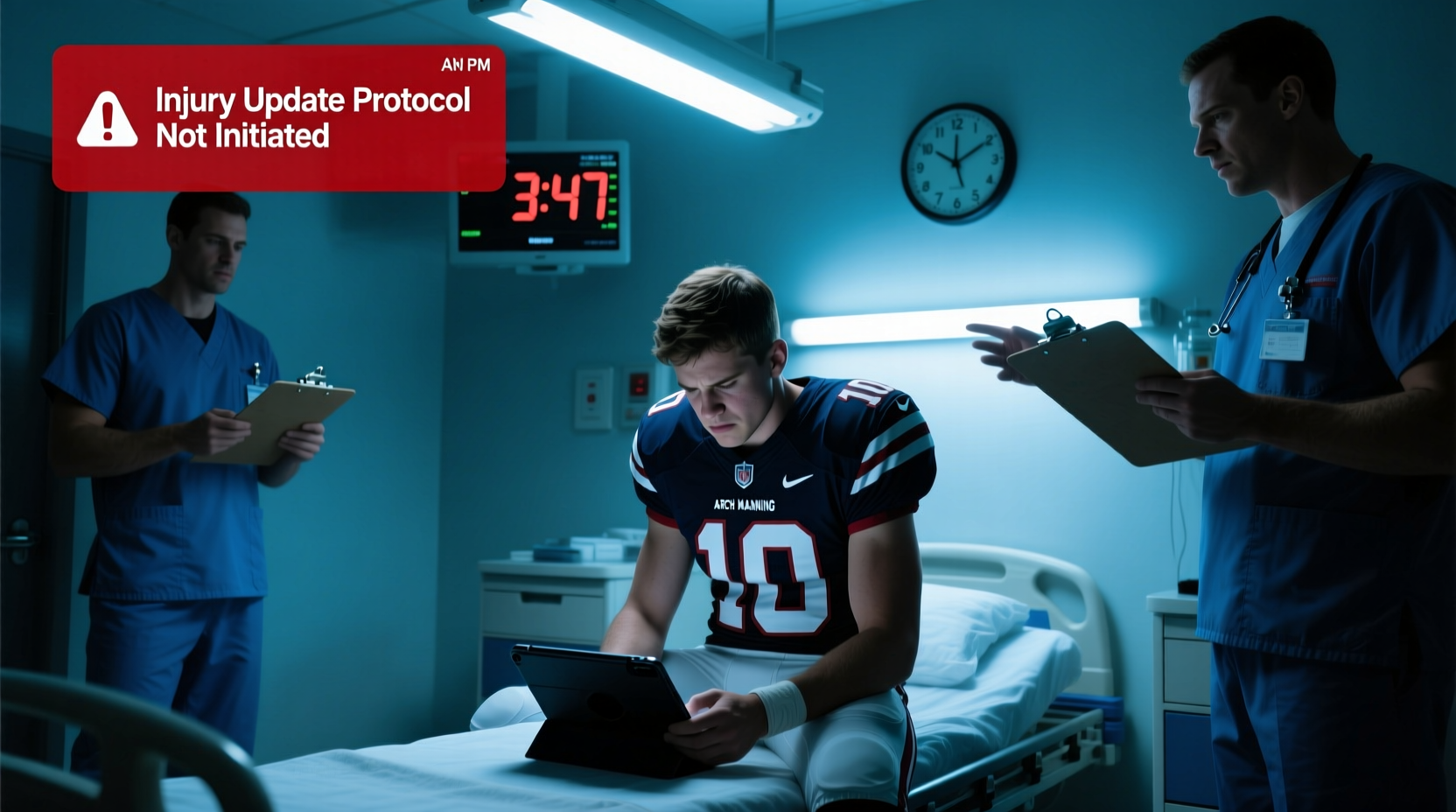
As of the latest public reports from the University of Texas athletic department, Arch Manning is not listed on any official injury report. Head coach Steve Sarkisian stated during a mid-season press conference: “Arch is healthy and participating fully in practice. He’s progressing well within our system.”
This suggests that while Manning is physically capable of playing, the decision to hold him back from starting is strategic rather than medical. However, speculation persists due to limited game time and absence from the depth chart. Some fans have pointed to subtle movements or reduced reps during warm-ups, but trainers have dismissed these concerns as normal load management for young quarterbacks.
Tip: When evaluating quarterback readiness, consider practice participation, playbook mastery, and situational awareness—not just physical health.Team Depth and Competition at Quarterback
The primary reason Arch Manning isn’t starting isn’t injury—it’s competition. Quinn Ewers, the current starter, brings experience, NFL draft pedigree, and proven performance under pressure. Since taking over as the full-time starter in 2022, Ewers has led Texas to multiple ranked wins and playoff contention.
Coach Sarkisian has emphasized continuity at the position, noting that changing quarterbacks mid-season without cause can disrupt offensive rhythm. Even with Manning’s talent, inserting a freshman into a high-stakes environment requires more than raw ability—it demands mental toughness, command of the offense, and resilience under duress.
Manning has seen limited action in blowout games, completing 18 of 25 passes for 217 yards and two touchdowns with no interceptions. These stats reflect promise, but they don’t outweigh the stability Ewers provides in close matchups.
Quarterback Comparison: Ewers vs. Manning (Through Week 8)
| Statistic | Quinn Ewers | Arch Manning |
|---|---|---|
| Games Started | 8 | 0 |
| Passing Yards | 2,143 | 217 |
| Touchdowns – Interceptions | 19 – 4 | 2 – 0 |
| Completion Percentage | 68.2% | 72.0% |
| QBR (Total Quarterback Rating) | 84.6 | N/A (Limited snaps) |
Data shows Ewers excels in volume, efficiency, and high-pressure scenarios. Manning’s smaller sample size makes direct comparison difficult, but his precision in mop-up duty suggests developmental progress.
Texas’ Player Development and Medical Protocol
The University of Texas operates under a rigorous medical and performance protocol designed to protect athletes while maximizing long-term growth. This includes:
- Daily biomechanical assessments
- Cognitive load monitoring during practices
- Quarterback-specific workload caps for freshmen
- Neurocognitive baseline testing for concussion prevention
Though Manning hasn’t suffered a reported injury, the staff follows a \"readiness over eagerness\" model. Freshmen quarterbacks undergo a 12-week acclimation period before being considered for significant snaps. This includes mastering play-calling mechanics, defensive recognition, and red-zone decision-making.
“Talent gets you recruited. Discipline keeps you on the field. We’re building Arch for years, not just one season.” — Dr. Lena Torres, Director of Athletic Performance, University of Texas
Step-by-Step: Path to Becoming Starter at Texas
- Phase 1 – Acclimation (Weeks 1–4): Learn playbook, participate in walk-throughs, light throwing sessions.
- Phase 2 – Integration (Weeks 5–8): Full practice participation, scout team reps, situational drills.
- Phase 3 – Evaluation (Weeks 9–12): Simulated game scenarios, live scrimmages, backup QB duties.
- Phase 4 – Readiness Assessment: Coaches and medical staff jointly determine if player is physically and mentally prepared.
- Phase 5 – Game Activation: Eligible for meaningful snaps; starter consideration begins.
Manning is currently in Phase 3, according to internal team sources. His progression is on track, but not accelerated due to external pressure.
Real Example: The Case of Carson Wentz at North Dakota State
In 2012, Carson Wentz arrived at North Dakota State as a highly rated recruit behind an entrenched starter, Brock Jensen. Despite being healthier and arguably more athletic, Wentz waited two full seasons before earning the starting role. During that time, he studied film, refined mechanics, and developed leadership skills.
When Jensen graduated, Wentz stepped in seamlessly—leading NDSU to two FCS national championships. That patience, though frustrating at the time, proved critical to his NFL draft success.
Likewise, Texas appears to be modeling Manning’s path after this blueprint: develop behind a strong veteran, avoid rushed exposure, and emerge ready to lead.
Frequently Asked Questions
Is Arch Manning hurt?
No official injury has been reported. Medical staff confirm he is healthy and participating in all team activities. Any limitations are part of standard freshman management protocols, not recovery from trauma.
When will Arch Manning start?
There is no set timeline. If Quinn Ewers remains effective and healthy, Manning may not start until 2024. However, an injury, performance dip, or bye-week evaluation could accelerate the transition.
Does the coaching staff favor Ewers over Manning?
Coaches emphasize merit-based decisions. While Ewers currently holds the edge in experience and execution, Sarkisian has praised Manning’s work ethic and intelligence. The door remains open for competition in spring practice.
Tip: Follow Texas Football’s official social media and weekly injury reports for real-time updates. Avoid relying solely on fan forums or unverified rumors.What This Means for the Future
The decision not to start Arch Manning isn’t about doubt in his abilities—it’s about respect for the process. Texas is balancing short-term win potential with long-term program sustainability. Throwing a true freshman into high-leverage games risks both physical strain and psychological setbacks.
Moreover, the NCAA’s transfer portal era has made player development more delicate. Premature starts followed by poor performances can damage confidence and invite unwanted scrutiny. By pacing Manning’s rise, Texas protects his development arc and preserves his value for future seasons.
By 2024, assuming continued progress, Manning is expected to enter spring camp as the frontrunner for the starting job. With Ewers likely departing for the NFL Draft, the torch will pass naturally—on Texas’ terms, not under crisis conditions.
Conclusion: Patience Over Pressure
The question “Why isn’t Arch Manning starting?” reflects fan enthusiasm, but the answer reveals a mature approach to elite athlete development. There is no injury holding him back—only a deliberate, science-backed protocol prioritizing readiness, resilience, and long-term success.
Great quarterbacks aren’t born in Week 3 of their freshman year. They’re shaped through repetition, reflection, and the right opportunities at the right time. Texas isn’t blocking Arch Manning’s path—they’re paving it.
💬 What do you think? Should Arch Manning get more playing time now, or is the current plan the right call? Share your thoughts and join the conversation below.








