In the world of tennis, scoring follows a rhythm unlike any other sport: 15, 30, 40, game. But when a player hasn’t scored a single point, they don’t say “zero” — they say “love.” It’s a peculiar phrase that has puzzled fans and newcomers alike for generations. Why is zero called \"love\" in tennis? The answer isn’t rooted in romance, as one might assume, but in history, language, and cultural interpretation. This article explores the most credible theories behind the term, traces its evolution, and explains how it became embedded in the global lexicon of the sport.
The Origins of Tennis Scoring
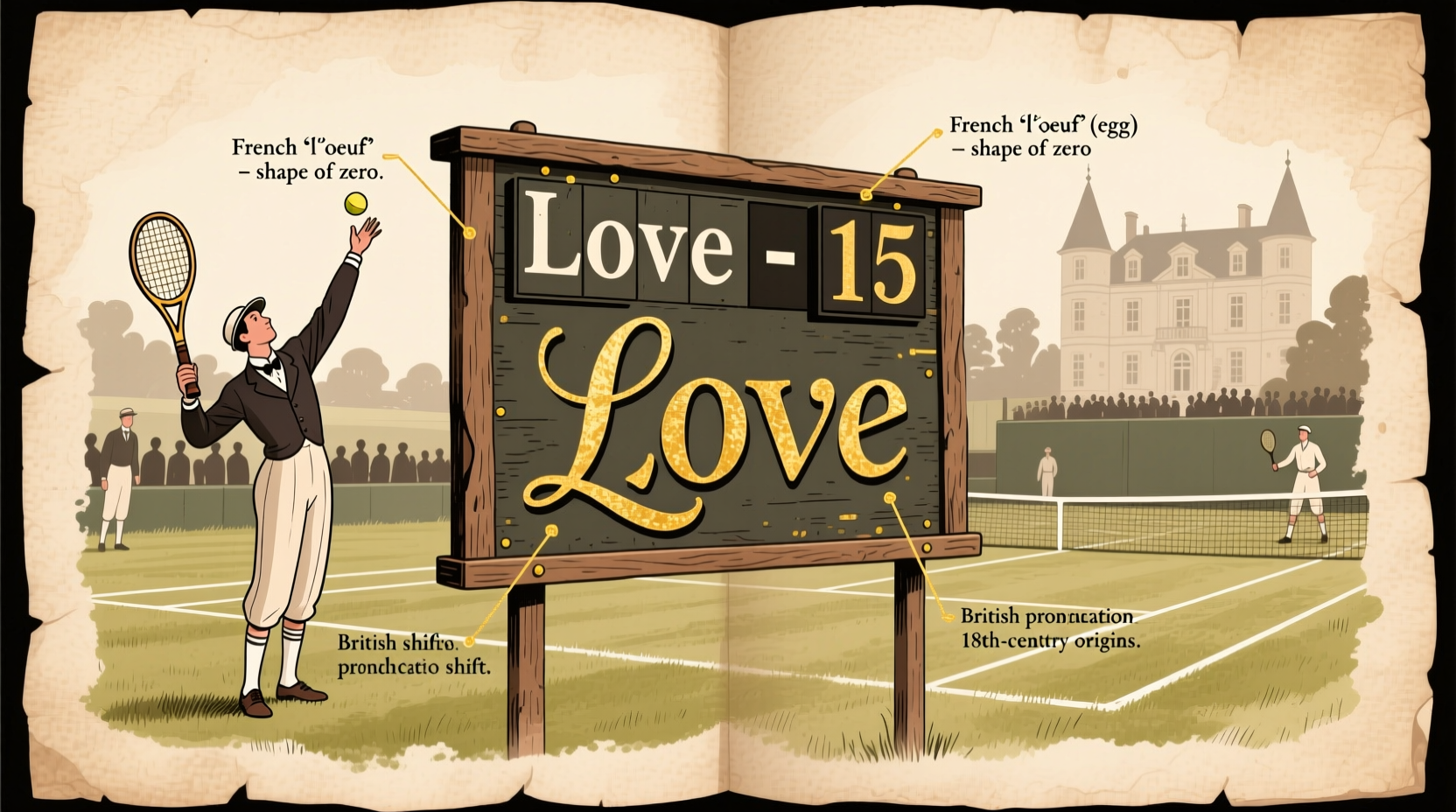
Tennis, particularly lawn tennis as we know it today, evolved from older racquet sports played in medieval France and England. The modern scoring system — 15, 30, 40, game — likely originated from the use of clock faces to track points. Each point advanced the hand by 15 minutes, with 60 marking the end of the game. When a player had not yet scored, the hand remained at 0 — or “zero o’clock.”
But why did “zero” become “love”? The shift from numerical terminology to symbolic language is where things get linguistically intriguing. Unlike most sports that use straightforward numerals, tennis clings to archaic expressions, and “love” stands out as the most poetic — and confusing — of them all.
Linguistic Theories Behind “Love”
Several compelling theories attempt to explain how “love” came to represent zero in tennis. While no single explanation has been definitively proven, historians and etymologists agree on a few plausible origins.
The French “L’Œuf” Theory
The most widely accepted theory ties back to the French word *l’œuf*, meaning “the egg.” In early real tennis (a precursor to modern lawn tennis), French players may have used *l’œuf* to describe a score of zero because an egg resembles the shape of a zero. When English speakers adopted the sport, they could have misheard or anglicized *l’œuf* as “love.”
This kind of phonetic transformation isn’t uncommon in language evolution. For example, the word “jumbo” entered English from Swahili via circus slang, and “coconut” comes from the Spanish *coco*, meaning “grinning face.” Similarly, *l’œuf* morphing into “love” fits a pattern of linguistic adaptation.
“Language often reshapes foreign words to fit familiar sounds. 'L’œuf' becoming 'love' is phonetically plausible and historically consistent with how English absorbed French terms.” — Dr. Helen Prescott, Historical Linguist, University of Oxford
The “Playing for Love of the Game” Theory
Another popular explanation is more sentimental: a player scoring zero is said to be playing for the “love of the game,” rather than for points. In this interpretation, “love” signifies passion, dedication, and sportsmanship — a noble pursuit despite the lack of points.
While this version is charming and frequently repeated in casual commentary, linguists are skeptical. There’s little historical evidence that the phrase was used in this context during the formative years of tennis. Moreover, the term “love” in scoring predates widespread use of the expression “playing for love” in sports. Still, the romantic notion persists in popular culture.
Dutch “Loof” or “Loofte”?
A less common but intriguing theory suggests Dutch influence. In old Dutch, *loof* meant “leaf,” which also resembles the shape of a zero. Some believe that Dutch players referred to zero as *loof*, and English speakers interpreted it as “love.” However, this theory lacks strong documentation and is considered speculative by most scholars.
Tip: When watching vintage tennis matches or reading classic commentaries, listen for regional variations in scoring calls — some announcers still use “nothing” instead of “love.”Historical Timeline of “Love” in Tennis
The journey of the word “love” into tennis terminology spans centuries. Here’s a timeline showing its gradual adoption:
- 12th–15th Century: Real tennis develops in France; scoring possibly uses clock faces. Zero is indicated visually, not verbally.
- 16th Century: French players reportedly use *l’œuf* to denote zero. English aristocrats adopt the game.
- 17th–18th Century: Anglicization of French terms begins. *L’œuf* may be misheard as “love” in spoken play.
- 1877: First Wimbledon Championship held. Official rules use “love” to denote zero in scoring.
- 20th Century: “Love” becomes standard in international tennis, used in broadcasts, rulebooks, and commentary.
- Present Day: “Love” is universally recognized, though its origin remains debated.
How “Love” Is Used in Modern Tennis Scoring
Understanding how “love” functions in actual gameplay helps clarify its role. Tennis scoring operates in points, games, and sets. Within a game, points progress as:
- 0 points = Love
- 1 point = 15
- 2 points = 30
- 3 points = 40
- 4 points = Game (if leading by two points)
Common score calls include:
- “Love-15”: One player has 0 points, the opponent has 1.
- “30-Love”: One player has 2 points, the other has none.
- “Love-All”: Both players start with zero points.
In doubles or singles matches, the server’s score is always announced first. So “Love-40” means the server has no points, while the receiver has three — a precarious position!
Scoring Examples Table
| Score (Server-Receiver) | Meaning | Situation |
|---|---|---|
| Love-15 | 0–1 points | Receiver wins first point |
| 30-Love | 2–0 points | Server leads comfortably |
| Love-40 | 0–3 points | Server facing triple break point |
| Love-All | 0–0 points | Start of a new game |
Mini Case Study: Wimbledon 1980 – Borg vs. McEnroe
No match illustrates the tension of “love” better than the legendary 1980 Wimbledon final between Björn Borg and John McEnroe. During the fourth-set tiebreak, McEnroe saved five championship points. At one critical moment, he stood at “Love-40” — down triple set point. The crowd fell silent as the scoreboard read zero for him. Yet, he fought back, converting each point until he won the tiebreak 18–16.
In commentary, announcers repeatedly said “Love-40,” emphasizing the direness of his position. The term wasn’t just symbolic — it underscored the stakes. Despite having “love” on the board, McEnroe played with everything. The irony was palpable: “love” meant nothing in points, but everything in drama.
Common Misconceptions About “Love”
Despite its long history, several myths persist about the term:
- Myth: “Love” means players are competing out of affection for each other.
- Reality: No historical evidence supports this; it’s a modern reinterpretation.
- Myth: The term originated in the Victorian era as a polite euphemism.
- Reality: Usage predates Victorian sensibilities and appears in 18th-century texts.
- Myth: “Love” is only used in British tennis.
- Reality: It’s standard in all English-speaking countries and official ITF (International Tennis Federation) rules.
Frequently Asked Questions
Why do tennis scores go 15, 30, 40 instead of 15, 30, 45?
The 40 instead of 45 is believed to stem from the clock-face scoring system. To prevent a game from being won by a single point, the third point was moved to 40 (instead of 45) so that one more point (10 minutes) would complete the 60-minute cycle. This allowed for deuce and advantage rules to extend the game if needed.
Is “love” used in other sports?
Rarely. A few racket sports like squash occasionally borrow tennis terminology, but “love” is almost exclusively associated with tennis. In cricket or football (soccer), zero is simply called “nil” or “zero.”
Do non-English speaking countries use “love”?
Not always. In French, zero is “zéro” or sometimes “un œuf” (an egg). In Spanish, it’s “cero.” However, during international competitions, commentators often use “love” due to its global recognition in tennis contexts.
Practical Tips for Understanding Tennis Scoring
For new fans, grasping the language of tennis can be challenging. Here’s a checklist to help you follow along:
- ✅ Remember: “Love” = 0 points.
- ✅ Server’s score is always called first.
- ✅ “Deuce” occurs at 40–40, requiring a two-point lead to win.
- ✅ After deuce, “advantage” means one player is one point from winning.
- ✅ Practice saying scores aloud: “Fifteen-Love,” “Forty-Thirty,” etc.
- ✅ Watch classic matches to hear native usage of “love” in context.
Conclusion: Embrace the Quirkiness
The term “love” in tennis is more than a linguistic oddity — it’s a living relic of the sport’s rich, cross-cultural history. Whether born from a misheard French word or shaped by centuries of tradition, it adds character to the game. Understanding its origins deepens appreciation for tennis not just as a physical contest, but as a cultural artifact.
Next time you hear “Love-All” at the start of a match, remember: you’re not just hearing a score. You’re hearing echoes of medieval courts, linguistic evolution, and the enduring charm of a sport that refuses to let go of its past.
🚀 Now that you know the story behind “love,” share it with a fellow fan or commentator. Knowledge turns casual viewing into deeper engagement — and that’s the real love of the game.








