Vintage Christmas train sets are more than just decorations—they’re heirlooms, memories in motion, and seasonal centerpieces that spark joy year after year. But when the holiday season arrives and you plug in your cherished set only to find it sputtering, stalling, or refusing to move altogether, disappointment quickly follows. The good news: most performance issues with vintage trains have clear causes and straightforward fixes. Whether your locomotive crawls like a tired turtle or derails at the first curve, understanding the underlying reasons can restore both function and nostalgia.
These classic electric trains—many from manufacturers like Lionel, American Flyer, or Marx—were built to last, but even well-made mechanical toys degrade over time. Dust accumulates, lubricants dry out, electrical contacts corrode, and track alignment shifts. The key to reviving smooth operation lies in systematic diagnosis and gentle restoration. This guide walks through the most common culprits behind sluggish or unreliable performance and offers practical solutions rooted in decades of collector experience.
Common Causes of Poor Performance
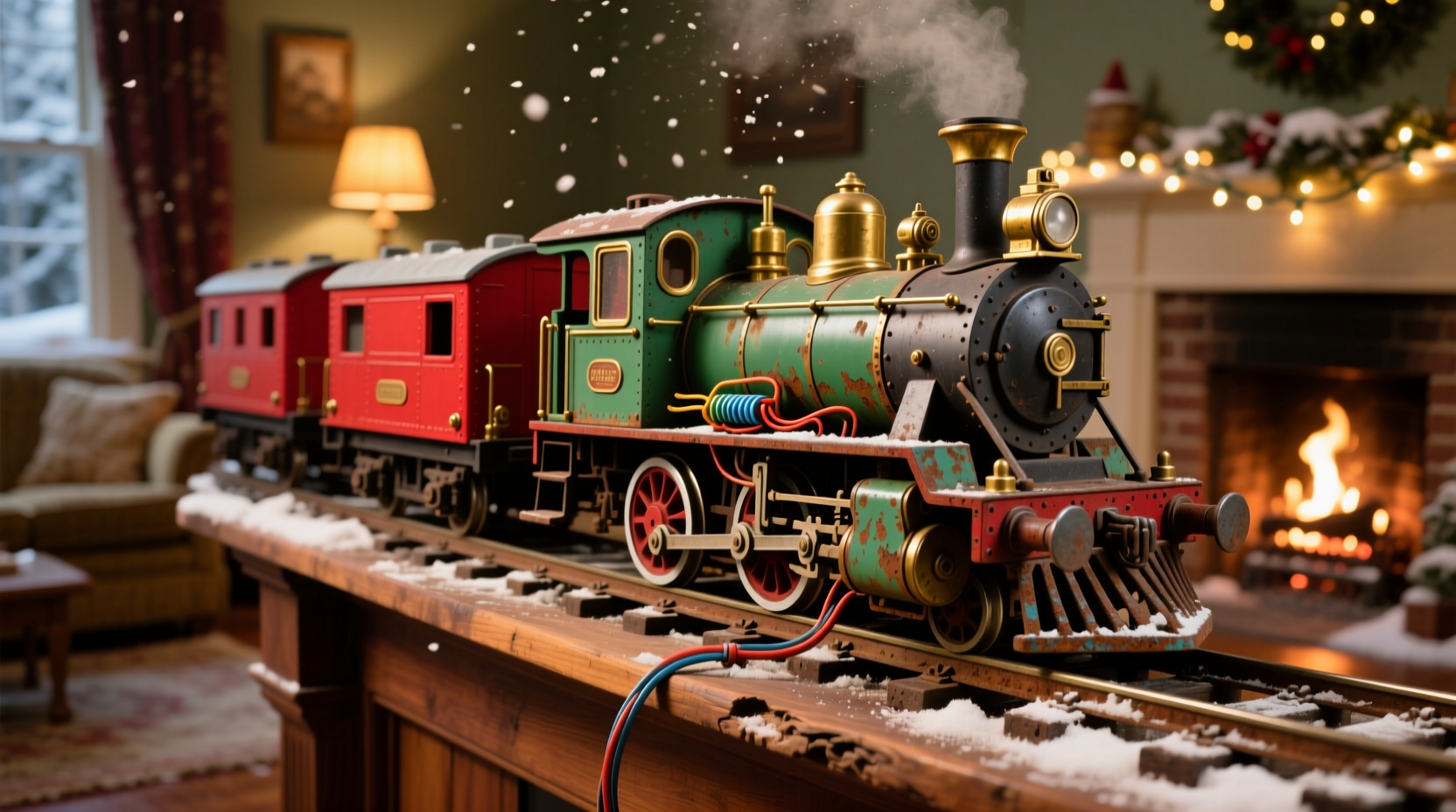
The charm of vintage train sets comes with an inherent trade-off: age-related wear. Unlike modern electronics, these mechanical systems rely on physical contact, moving gears, and analog power delivery—all vulnerable to degradation. Here are the primary reasons your train may no longer run as it once did:
- Dirt and debris buildup – Decades of storage expose tracks, wheels, and motors to dust, pet hair, and grime that impede conductivity and movement.
- Dried or hardened lubricants – Factory-applied grease and oil harden over time, increasing friction in gears and axles.
- Oxidized electrical contacts – Metal connectors on locomotives, cars, and track segments corrode, disrupting current flow.
- Track misalignment or warping – Plastic or metal track sections expand, contract, or warp with temperature changes, causing derailments or intermittent power loss.
- Worn motor brushes or commutators – In older DC motors, carbon brushes degrade and lose contact with the spinning armature.
- Frayed or damaged wiring – Insulation cracks over time, especially near connectors or where wires flex repeatedly.
Each of these issues can occur independently or compound one another. A dirty track might seem minor until combined with weak motor brushes—it becomes a complete system failure. Identifying which components are affected requires inspection, testing, and sometimes disassembly.
Tip: Always unplug the transformer before cleaning or inspecting any part of your train set to avoid short circuits or shocks.Step-by-Step Diagnosis and Restoration
Restoring smooth operation begins with methodical troubleshooting. Follow this timeline to isolate and resolve the issue efficiently.
- Inspect the track layout – Ensure all connections are snug. Gently wiggle each section to check for looseness. Look for visible bends, cracks, or discoloration.
- Clean the track surface – Use a lint-free cloth dampened with isopropyl alcohol (70% or higher) to wipe down rails. For stubborn oxidation, use a dedicated track eraser or fine steel wool (0000 grade).
- Check wheel cleanliness – Remove the locomotive and rolling stock. Clean wheels with alcohol and cotton swabs, focusing on the tread and flanges where grime collects.
- Test power delivery – Set the transformer to low voltage and use a multimeter to verify output. Alternatively, test with a known-working train if available.
- Examine the locomotive’s motor and pickup shoes – Open the shell carefully (consult model-specific guides if needed). Check that pickup shoes make firm contact with the track and aren’t bent or corroded.
- Lubricate moving parts – Apply a light machine oil (such as Tri-Flow or sewing machine oil) sparingly to gear teeth, axles, and bushings. Avoid plastic components.
- Reassemble and test incrementally – Run the train on a straight section first. Gradually reintroduce curves and switches while monitoring performance.
This process often resolves 80% of running issues. If problems persist, deeper mechanical or electrical faults may be present.
Troubleshooting Table: Symptoms and Solutions
| Symptom | Likely Cause | Solution |
|---|---|---|
| Train doesn’t start | No power delivery, dead motor, broken wire | Check transformer, clean track, inspect internal wiring |
| Stalls under load | Weak motor, dried lubricant, high friction | Lubricate gears, clean motor commutator, reduce train length |
| Runs erratically or surges | Intermittent electrical contact | Clean pickup shoes, check track joints, tighten screws |
| Derails on curves | Misaligned track, worn wheels, improper clearance | Adjust track radius, clean/realign wheels, inspect couplers |
| Makes grinding noise | Gear wear, lack of lubrication, foreign object | Disassemble motor block, inspect gears, re-lubricate |
Expert Insight: Preserving Function and Value
Collectors and restorers emphasize balance—maintaining operational integrity without compromising originality. Over-restoration can diminish historical value, while neglect ensures obsolescence.
“Many people assume old trains are disposable, but with proper care, a 1950s Lionel can run as smoothly today as it did in its first season. The key is preventive maintenance: clean after use, store properly, and never force a stuck mechanism.” — Daniel Reeves, Vintage Toy Train Conservator & Museum Curator
Reeves notes that original finishes, factory wiring, and stamped parts contribute significantly to collectible worth. When servicing, prioritize non-invasive methods. For example, instead of replacing vintage wiring, repair breaks with solder and heat-shrink tubing. Similarly, avoid painting or sanding original metal unless absolutely necessary.
Real Example: Reviving a 1953 Lionel 2026W
A collector in Ohio inherited his father’s 1953 Lionel Hudson steam locomotive. Though visually pristine, it refused to move beyond a few inches. Initial tests showed power reaching the track, but the motor hummed without turning the wheels.
After disassembly, he discovered hardened grease binding the worm gear and drive shaft. Cleaning with mineral spirits and reapplying synthetic lubricant restored mobility. He then polished the brass pickup shoes and adjusted their spring tension for better rail contact. The final step was aligning the track oval, which had developed a slight kink near a support leg.
Within two hours, the locomotive pulled six freight cars around the loop at steady speed—just as it had in 1953. “It wasn’t broken,” he said. “It was just tired and dusty.”
Essential Maintenance Checklist
To keep your vintage train running smoothly for future generations, follow this annual checklist:
- ✅ Clean all track sections with alcohol and soft cloth
- ✅ Wipe down locomotive and car wheels
- ✅ Inspect wiring for fraying or exposed conductors
- ✅ Test transformer output with a multimeter
- ✅ Lubricate gears and moving parts lightly
- ✅ Verify pickup shoe alignment and pressure
- ✅ Check for loose screws or cracked plastic
- ✅ Store in a climate-controlled environment away from sunlight
Frequently Asked Questions
Can I use WD-40 on my vintage train?
No. While WD-40 is excellent for displacing moisture and freeing rusted parts, it is not a long-term lubricant. It attracts dust and dries out quickly, potentially worsening friction. Use a lightweight synthetic oil designed for precision mechanics instead.
My train runs faster in one direction—why?
This is common in older AC-powered trains due to uneven brush wear or polarity-sensitive motor design. Clean the commutator and ensure both brushes move freely. If imbalance persists, consider replacing the motor brushes with matched pairs from a specialty supplier.
Is it safe to run a 60-year-old transformer?
Yes, if tested. Old transformers can develop insulation breakdown or overheating risks. Use a multimeter to check output stability and inspect for bulging, burning smells, or frayed cords. Many collectors now use modern regulated power supplies that mimic vintage voltage behavior without the fire hazard.
Conclusion: Keep the Tradition Moving
Your vintage Christmas train set isn’t just a toy—it’s a moving piece of family history. When it falters, the fix is rarely complex, but it does require patience and respect for its age. Most performance issues stem from simple neglect: dirt, dried lubricants, and minor misalignments. With careful cleaning, targeted lubrication, and thoughtful handling, these mechanical marvels can continue delighting audiences for decades to come.
Don’t let a sluggish engine dim the holiday spirit. Diagnose systematically, act gently, and maintain consistently. These trains were built to endure; they only ask for a little attention in return.
💬 Have a restoration success story? Share your experience in the comments and inspire fellow collectors to keep their vintage trains running smoothly.








