
Homebrewed kombucha should burst with effervescence—a crisp, tangy fizz that dances on the tongue. But when your bottles come out flat, lifeless, or barely tingling, it’s more than a disappointment; it’s a puzzle. Carbonation failure is one of the most common frustrations among home fermenters, yet it’s often rooted in simple, correctable mistakes. Whether you're a first-time brewer or have been brewing for years, understanding the science behind carbonation and the environmental factors at play can turn your flat batches into sparkling success.
Kombucha carbonation occurs during a secondary fermentation phase, where yeast consumes sugar and produces carbon dioxide (CO₂) in a sealed environment. Without the right conditions—temperature, sugar, time, and vessel integrity—this process stalls. Below, we break down the most frequent causes of poor carbonation, how to diagnose them, and what to do next.
The Science Behind Kombucha Fizz
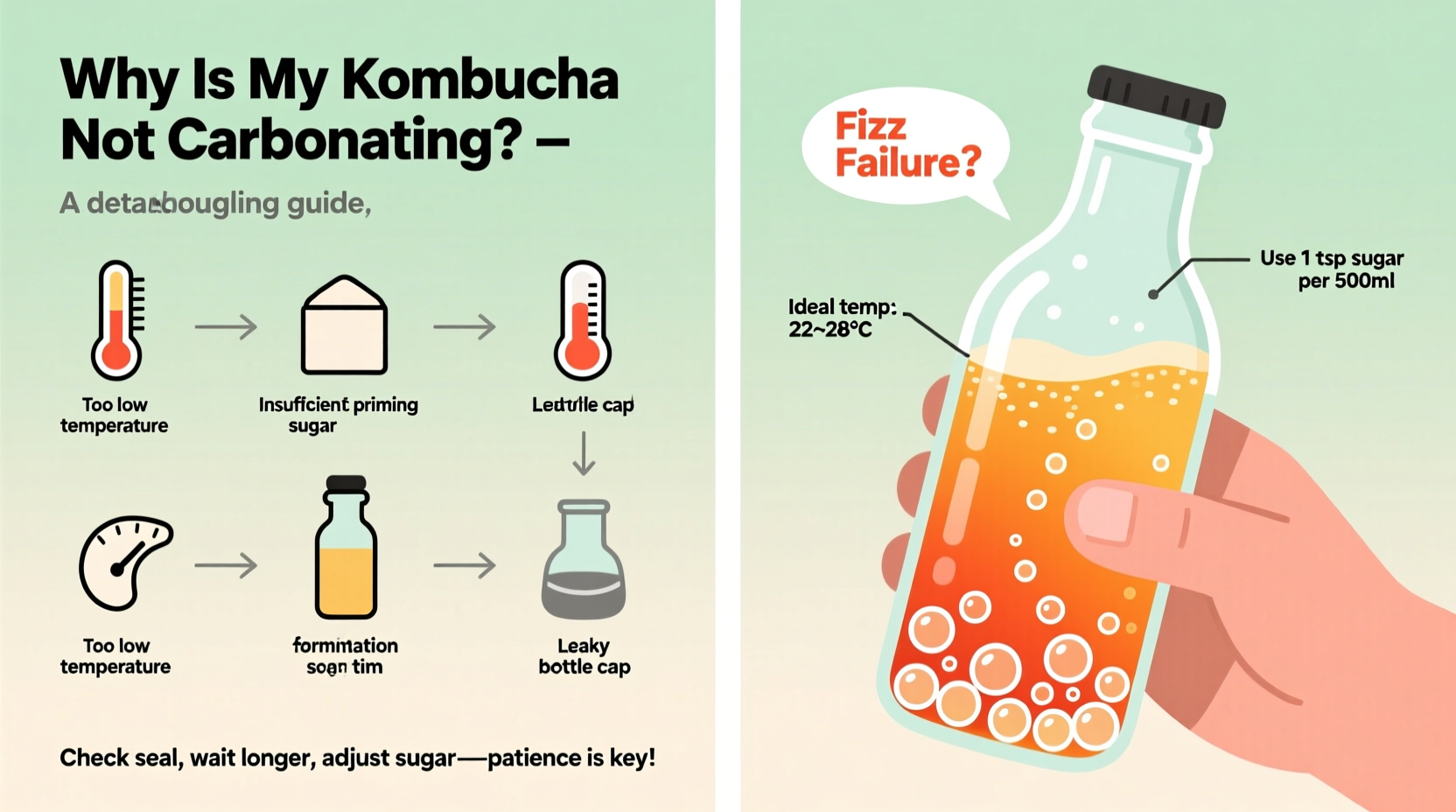
Carbonation in kombucha is a byproduct of anaerobic fermentation. During the second fermentation (or “bottle conditioning”), residual sugars are consumed by yeast cells trapped inside airtight bottles. As they metabolize these sugars, they produce alcohol and CO₂. Since the gas cannot escape, it dissolves into the liquid, creating bubbles.
This process depends on three key components:
- Active yeast: The SCOBY (Symbiotic Culture of Bacteria and Yeast) contains strains like Saccharomyces cerevisiae and Zygosaccharomyces bailii, which thrive on sugar and generate CO₂.
- Sugar source: Even small amounts of fermentable sugar—added directly as fruit, juice, or plain sugar—are essential to fuel CO₂ production.
- Airtight seal: Pressure must build inside the bottle. If gas leaks, no carbonation forms.
When any of these elements are missing or compromised, carbonation fails. The good news? Most issues are preventable with attention to detail.
Tip: Always use flip-top or plastic soda bottles designed for pressure retention. Mason jars with standard lids are not reliably airtight for carbonation.Common Causes of Flat Kombucha (and How to Fix Them)
1. Inadequate Sugar for Secondary Fermentation
No sugar means no food for yeast—and no CO₂. Many brewers skip adding extra sugar after the primary ferment, assuming the remaining sweetness is enough. It rarely is.
To ensure proper carbonation, add 1–2 teaspoons of sugar per 16-ounce bottle. Fruit juice, dried fruit, or even a slice of ginger can provide both flavor and fermentable carbohydrates.
2. Poor Sealing Containers
If CO₂ escapes, it won’t dissolve into your kombucha. Common culprits include:
- Mason jar lids that don’t create an airtight seal
- Cracked or worn gaskets on flip-top bottles
- Plastic bottles that feel soft or expand unevenly
Test your bottles: Fill one with water, seal it, and shake. Any leakage indicates a faulty seal.
3. Temperature Too Low
Yeast slows dramatically below 68°F (20°C). At temperatures under 65°F (18°C), fermentation may stall completely. Cold kitchens, basements, or seasonal drops can sabotage carbonation.
Ideally, keep bottled kombucha between 72–78°F (22–26°C) for 2–5 days during secondary fermentation. Use a seedling mat or warm cupboard if needed.
4. Over-Fermenting the First Brew
If your initial ferment lasts too long, yeast consumes nearly all available sugar. What remains may be insufficient for carbonation. A kombucha that tastes overly vinegary before bottling likely lacks fuel for fizz.
Monitor pH and taste: Stop primary fermentation when the brew reaches a tart but balanced profile—usually between pH 3.0 and 3.5, around 7–10 days depending on temperature.
5. Using Pasteurized or Heat-Treated Ingredients
Adding pasteurized fruit juice, cooked syrups, or heat-treated flavorings can introduce preservatives or kill active cultures. Sulfites, benzoates, and high heat deactivate yeast.
Always use raw, unpasteurized ingredients. If using store-bought juice, check labels for “no preservatives” and “unfiltered.”
“Carbonation isn’t magic—it’s microbiology. You’re farming yeast, not just bottling tea.” — Dr. Lena Torres, Fermentation Scientist, Oregon State University
Troubleshooting Checklist: Why Your Kombucha Isn’t Fizzy
Use this checklist to diagnose and correct carbonation issues:
Checklist: Achieving Proper Kombucha Carbonation- ✅ Did I add fresh sugar or fruit to each bottle?
- ✅ Are my bottles airtight and pressure-rated?
- ✅ Is the room temperature between 72–78°F (22–26°C)?
- ✅ Was the primary ferment stopped before becoming too sour?
- ✅ Are my bottles stored away from direct sunlight and drafts?
- ✅ Am I waiting long enough? (Minimum 3 days for secondary ferment)
- ✅ Have I burped any bottles prematurely, releasing built-up CO₂?
Step-by-Step Guide to Rescue Flat Kombucha
If your batch turned out flat, don’t pour it out. You can often revive it with a few adjustments.
- Refrigerate immediately – Stop all fermentation to preserve current flavor and acidity.
- Open each bottle and add 1 teaspoon of cane sugar or 2 tablespoons of fruit juice per 16 oz.
- Reseal tightly using verified airtight bottles. Replace cracked or warped lids.
- Return to a warm space (72–78°F) for 2–4 additional days.
- Burp carefully after 48 hours to test pressure. If resistance builds, let it continue.
- Chill thoroughly before opening to stabilize carbonation and prevent geysering.
Note: Plastic bottles are ideal for monitoring progress. Gently squeeze daily. When the bottle feels rock-hard, carbonation is likely complete.
Do’s and Don’ts of Kombucha Carbonation
| Do’s | Don’ts |
|---|---|
| Add 1 tsp sugar or 2 tbsp fruit per 16 oz bottle | Assume leftover sugar is enough for carbonation |
| Use flip-top glass bottles or thick PET plastic | Use mason jars with regular metal lids |
| Ferment bottles at 72–78°F (22–26°C) | Store bottles in cold garages or refrigerators during f2 |
| Wait at least 3–5 days before chilling | Refrigerate immediately after bottling |
| Label bottles with brew date to track progress | Forget to burp bottles occasionally if fermenting longer than 7 days |
Real Example: Sarah’s Seasonal Carbonation Struggle
Sarah brewed kombucha year-round in her Portland apartment. Every summer, her bottles were perfectly fizzy. But each fall, her batches came out flat. She changed nothing in her recipe—same SCOBY, same tea, same sugar amount.
The issue? Temperature. Her kitchen cooled from 76°F in July to 64°F by October. The yeast slowed to a crawl. After placing her bottles on a seedling heating mat wrapped in a towel, her carbonation returned within two weeks. She now keeps a thermometer near her brew station and adjusts placement seasonally—on top of the fridge in winter, away from AC vents in summer.
Sarah’s experience shows that consistency matters more than complexity. Small environmental shifts can derail fermentation, but minor corrections restore balance.
Advanced Tips for Consistent Fizz
Once you’ve mastered the basics, consider these pro-level strategies:
- Use ginger bug or water kefir grains as boosters: Adding a spoonful introduces robust, CO₂-producing cultures.
- Try forced carbonation: For guaranteed fizz, carbonate chilled kombucha with a whipped cream dispenser (using nitrous or CO₂ chargers).
- Control headspace: Fill bottles to within 1–2 inches of the top. Too much air slows CO₂ dissolution; too little risks over-pressurization.
- Experiment with sugar types: Dextrose (glucose) ferments faster than sucrose. Honey adds complexity but may inhibit some yeasts.
FAQ: Common Questions About Kombucha Carbonation
Can I carbonate kombucha without adding more sugar?
Only if sufficient residual sugar remains from the primary ferment. Most fully fermented batches lack enough sugar for carbonation. Adding a small amount of fresh sugar or fruit is the most reliable method.
How long does secondary fermentation take?
Typically 2–7 days at 72–78°F. Cooler temps extend this period. Check firmness of plastic bottles or gently open one to test fizz after 3 days.
Why did my bottle explode?
Over-carbonation due to excessive sugar, warm storage, or prolonged fermentation. Always use pressure-safe bottles, monitor temperature, and refrigerate promptly once carbonated. Never leave bottles unattended for more than 7–10 days.
Final Thoughts: From Flat to Fabulous
Flat kombucha doesn’t mean failed kombucha. More often than not, it signals a mismatch between microbial needs and environmental conditions. By respecting the biology of yeast and ensuring optimal fermentation parameters, you can consistently produce sparkling, refreshing brews.
Start with clean, airtight bottles. Add a pinch of sugar. Keep things warm. Be patient. These simple steps transform uncertainty into confidence. Each batch teaches you more about your unique brewing ecosystem—from ambient temperature to SCOBY strength.
💬 Have a carbonation success story or a stubborn flat batch? Share your experience in the comments. Let’s build a community of fizzy experts together.








