If you’ve ever sipped a bottle of raw, unpasteurized kombucha and felt unexpectedly lightheaded, slightly warm, or even mildly euphoric—especially after just one serving—you’re not imagining things. That subtle “buzz” is real, and it��s rooted in the very biology of fermentation. Kombucha isn’t just tea and bacteria: it’s a dynamic, living ecosystem where yeast converts sugar into ethanol, and bacteria convert much (but not all) of that ethanol into organic acids. The result? A low-alcohol functional beverage that sits in a fascinating regulatory and physiological gray zone. This article explains exactly how and why kombucha can produce measurable alcohol, what factors tip the balance toward higher ABV, how commercial producers manage it—and most importantly, what it means for *you* as a consumer or home brewer.
How Kombucha Fermentation Naturally Produces Alcohol
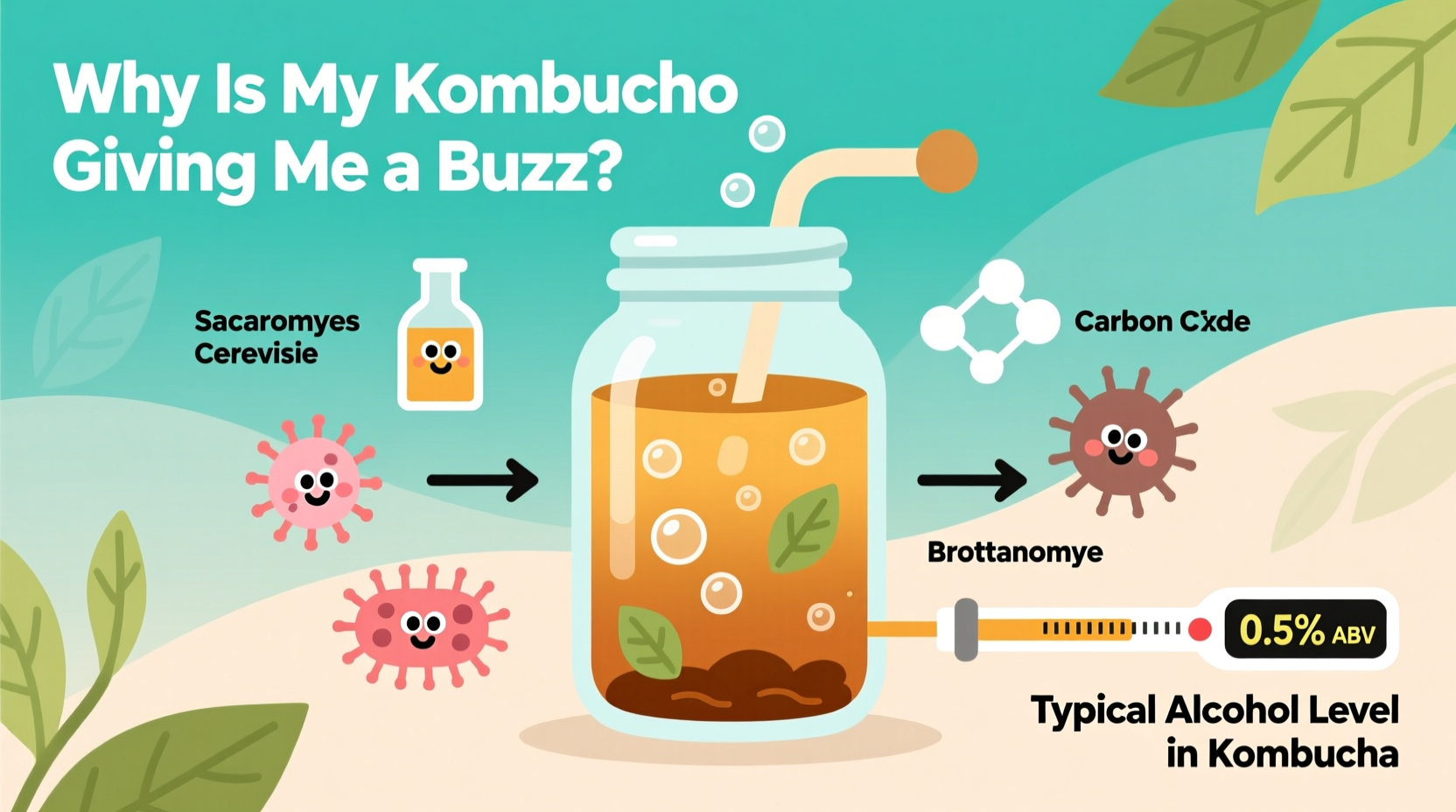
Kombucha begins as sweetened tea inoculated with a symbiotic culture of bacteria and yeast (SCOBY). While bacteria like Acetobacter and Gluconobacter dominate the later stages—converting ethanol into acetic, gluconic, and other organic acids—the yeast component (Saccharomyces cerevisiae, Brettanomyces bruxellensis, Zygosaccharomyces bailii, among others) drives the initial alcoholic fermentation. Yeast consumes sucrose and glucose, producing carbon dioxide, heat, and ethanol as primary metabolic byproducts:
C 6H 12O 6 → 2 C 2H 5OH + 2 CO 2 + energy
This reaction occurs rapidly in the first 3–7 days of primary fermentation, especially at warmer temperatures (24–28°C / 75–82°F). Crucially, bacterial oxidation of ethanol into acid is *not instantaneous*. It requires oxygen, time, and favorable pH conditions. If fermentation is cut short, bottled too early, or stored under anaerobic conditions (e.g., tightly sealed bottles during secondary fermentation), ethanol accumulates faster than bacteria can metabolize it.
Unlike beer or wine—where fermentation is intentionally optimized for ethanol yield—kombucha’s alcohol production is a *byproduct*, not the goal. Yet because it’s biologically inevitable, every batch contains some level of ethanol. What varies—and what determines whether you feel a buzz—is how much remains unconverted when you drink it.
Typical Alcohol Levels: From Trace to Noticeable
Most commercially available kombucha sold as a “non-alcoholic beverage” in the U.S. must contain less than 0.5% alcohol by volume (ABV) at the time of packaging—per FDA and TTB regulations. However, that number is often misleading. Here’s why:
- Post-packaging fermentation: Live cultures continue fermenting inside sealed bottles, especially if stored at room temperature. ABV can rise 0.1–0.3% over 7–14 days—even in refrigerated products.
- Batch variability: Home batches regularly test between 0.5–2.5% ABV, depending on sugar content, temperature, fermentation duration, and SCOBY strain.
- Secondary fermentation: Adding fruit juice or extra sugar before bottling dramatically boosts ethanol production. One study found that adding 10g/L of apple juice increased final ABV from 0.7% to 1.9% in just 48 hours.
The human threshold for perceiving alcohol effects varies widely—but many people begin to notice subtle physiological shifts (increased heart rate, warmth, mild relaxation, or reduced inhibition) at blood alcohol concentrations (BAC) equivalent to ~0.02–0.04%. For a 70 kg (154 lb) adult, consuming 350 mL (~12 oz) of kombucha at 1.8% ABV delivers roughly the same ethanol dose as half a standard beer (14 g ethanol). That’s enough to cause a noticeable effect—particularly on an empty stomach, after sleep deprivation, or for individuals with low alcohol tolerance or ALDH2 enzyme deficiency (common in East Asian populations).
| Fermentation Stage | Average ABV Range | Key Influencing Factors |
|---|---|---|
| Day 3–5 (primary) | 0.3–0.8% | High sugar, warm temp, vigorous yeast activity |
| Day 7–10 (primary, fully fermented) | 0.5–1.2% | Lower pH, rising acidity, bacterial dominance |
| Secondary (24–72 hrs, fruit added) | 1.0–2.5% | Fruit sugar type, headspace O₂, ambient temp |
| Commercial “non-alcoholic” (lab-tested at release) | 0.2–0.4% | Pasteurization, filtration, strict timing, cold chain |
| Home brew (untested, room-temp stored) | 0.8–2.0% (common); up to 3.0% (rare) | Yeast strain, vessel sealing, ambient conditions |
Why Some People Feel It More Than Others
A “buzz” from kombucha isn’t universal—and its intensity depends less on the beverage alone and more on the interplay between biochemistry and physiology. Three major variables explain individual sensitivity:
- Genetic alcohol metabolism: Up to 40% of people of East Asian descent carry a variant of the ALDH2 gene that reduces acetaldehyde breakdown. This leads to rapid flushing, nausea, and palpitations—even at low doses. For them, 0.8% ABV kombucha may feel like 2% wine.
- Empty stomach absorption: Ethanol absorbs fastest on an empty stomach. Drinking kombucha first thing in the morning—or between meals—can spike BAC within 15–20 minutes.
- Medication or supplement interactions: Antifungals (e.g., fluconazole), certain antibiotics (e.g., metronidazole), and even high-dose niacin impair alcohol metabolism. Probiotic supplements containing Saccharomyces boulardii may also amplify yeast-driven fermentation in the gut—potentially contributing to systemic ethanol exposure.
A Real-World Example: The “Buzz Bottle” Incident
In early 2022, a Portland-based kombucha brand launched a limited “Wild Harvest” line using heirloom SCOBYs and wild-foraged berry purees. Within weeks, customers reported dizziness, drowsiness, and even failed roadside breathalyzer tests (though below legal DUI thresholds). Lab analysis revealed bottles tested at 2.1–2.7% ABV—well above the 0.5% legal ceiling for non-alcoholic labeling. The company had relied on spot-checking only the first batch and assumed secondary fermentation would stabilize. Instead, inconsistent bottling temperatures and variable fruit sugar content created runaway ethanol production in later runs.
The recall was voluntary but costly—and it underscored a critical truth: fermentation is not linear. Small deviations compound. A 2°C increase in storage temp can double yeast metabolic rate. A 5% variation in honey sweetness can shift final ABV by 0.4%. Without precise measurement (hydrometer or ethanol-specific refractometer) and controlled conditions, predicting alcohol content remains an educated guess—not a guarantee.
What Experts Say About Safety and Regulation
Regulatory ambiguity continues to challenge both producers and consumers. In the U.S., kombucha straddles two agencies: the FDA (food safety) and the Alcohol and Tobacco Tax and Trade Bureau (TTB), which regulates anything ≥0.5% ABV as an alcoholic beverage—requiring formula approval, labeling compliance, and excise tax reporting.
“The notion that ‘kombucha is naturally non-alcoholic’ is scientifically inaccurate. It’s inherently low-alcohol—and legally, that distinction hinges entirely on measurement timing and storage conditions. Producers who claim ‘zero alcohol’ are either pasteurizing, filtering, or misrepresenting.”
— Dr. Elena Rodriguez, Microbiologist & Former TTB Fermentation Compliance Advisor
Dr. Rodriguez co-authored the 2023 TTB guidance update clarifying that “alcohol content must be verified *at the point of consumer consumption*, not just at bottling.” This means retailers storing kombucha in warm backrooms—or consumers leaving bottles on countertops—may inadvertently create regulated alcoholic beverages without realizing it.
Practical Steps to Manage Alcohol Content at Home
If you brew kombucha yourself—or choose brands carefully—you can significantly reduce unintended alcohol exposure. Follow this evidence-informed sequence:
- Measure starting and ending gravity: Use a calibrated hydrometer before and after fermentation. Calculate ABV using the formula: (OG – FG) × 131.25. Target a final gravity (FG) of 1.004–1.008 for balanced acidity and minimal residual alcohol.
- Control temperature strictly: Keep primary fermentation between 22–25°C (72–77°F). Avoid garages, attics, or near ovens—heat spikes accelerate yeast over bacterial activity.
- Limit secondary fermentation: Cap at 24 hours for flavor infusion. Skip fruit additions entirely if sensitive—or use dried, low-sugar fruits (e.g., goji, mulberries) instead of juices.
- Refrigerate immediately after bottling: Cold (<4°C / 39°F) halts >95% of yeast activity. Store upright to minimize yeast contact with sediment.
- Test before drinking: Use an affordable ethanol test strip (e.g., VinoLab Alcohol Test Kit) on a small sample. Discard batches testing >1.0% ABV if avoiding any psychoactive effect.
Do’s and Don’ts for Mindful Kombucha Consumption
| Action | Do | Don’t |
|---|---|---|
| Label reading | Look for “unpasteurized,” “raw,” and “contains live cultures”—these indicate active fermentation potential | Assume “organic” or “gluten-free” means low alcohol |
| Storage | Keep refrigerated at ≤4°C (39°F) and consume within 7 days of opening | Leave unopened bottles at room temperature for >48 hours |
| Dosing | Start with 60–120 mL daily; observe effects over 3 days | Drink >500 mL on an empty stomach, especially if new to kombucha |
| Home brewing | Use a pH meter—target 2.8–3.2 at bottling (lower pH inhibits yeast) | Rely solely on taste or fizz to judge readiness |
| Medical context | Disclose regular kombucha use to your doctor if taking antifungals, sedatives, or liver-metabolized drugs | Assume “natural” means safe alongside all medications |
FAQ
Can I get drunk from kombucha?
It’s extremely unlikely—but physiologically possible under specific conditions. To reach legal intoxication (0.08% BAC), a 70 kg adult would need to consume ~1.2 L of 2.5% ABV kombucha in under 60 minutes on an empty stomach. That volume would likely cause severe gastric distress first. Still, impaired coordination or drowsiness at lower doses is documented and should be taken seriously—especially before driving or operating machinery.
Does “hard kombucha” differ only in alcohol content?
No. Hard kombucha (typically 4–7% ABV) is a fundamentally different product. It uses selected high-ethanol yeast strains, extended anaerobic fermentation, added fermentables (malt, cane sugar), and often includes hops or spirits for flavor. It’s brewed, filtered, and stabilized like beer—not cultured like traditional kombucha. Its microbiome is largely inactive, and its health claims lack clinical support.
Why do some brands list “0.0% alcohol” on labels?
They’re either pasteurized (killing all microbes and halting fermentation), filtered to remove yeast, or using non-fermentative acidification (e.g., adding vinegar). These products retain tartness but lose probiotic benefits and enzymatic activity. They are functionally flavored vinegar drinks—not true kombucha.
Conclusion
Your kombucha buzz isn’t a fluke, a marketing gimmick, or a sign something’s wrong with the batch—it’s fermentation working exactly as evolution designed it to. Ethanol is nature’s original preservative, and in kombucha, it’s the energetic spark that makes the whole system hum. Understanding that doesn’t mean avoiding kombucha—it means engaging with it more intentionally. Measure when you can. Chill when you should. Listen to your body when it signals sensitivity. And remember: the most beneficial kombucha isn’t the strongest, the fizziest, or the most “buzz-worthy.” It’s the one that supports your digestion, respects your biochemistry, and fits seamlessly into your wellness rhythm—without surprise side effects.
💬 Have you experienced unexpected effects from kombucha—or successfully lowered your home-brew ABV? Share your method, measurement tool, or cautionary note in the comments. Real-world data helps us all brew and choose smarter.








